
To set up a calm, non-echo room for calls, start by identifying and addressing sound reflections—add soft furnishings like rugs, curtains, and upholstered furniture to absorb sound. Install acoustic panels or foam tiles on walls, and hang blankets or art to break up sound waves. Use quality microphones and position them correctly for clear audio. Keep your space quiet and clutter-free, and you’ll create a peaceful environment that improves call quality—continue to discover more effective tips for optimizing your space.
Key Takeaways
- Use sound-absorbing materials like thick curtains, rugs, and acoustic panels to reduce reflections and echoes.
- Arrange furniture with soft upholstery to dampen sound and prevent sound bouncing.
- Minimize reflective surfaces such as glass or hard walls, or cover them with sound-absorbing decor.
- Position microphones close to your mouth and away from reflective surfaces for clearer audio.
- Create a clutter-free, tranquil environment with soft lighting and calming decorations to enhance focus.
As an affiliate, we earn on qualifying purchases.
Diagnose Your Room’s Acoustic Problems
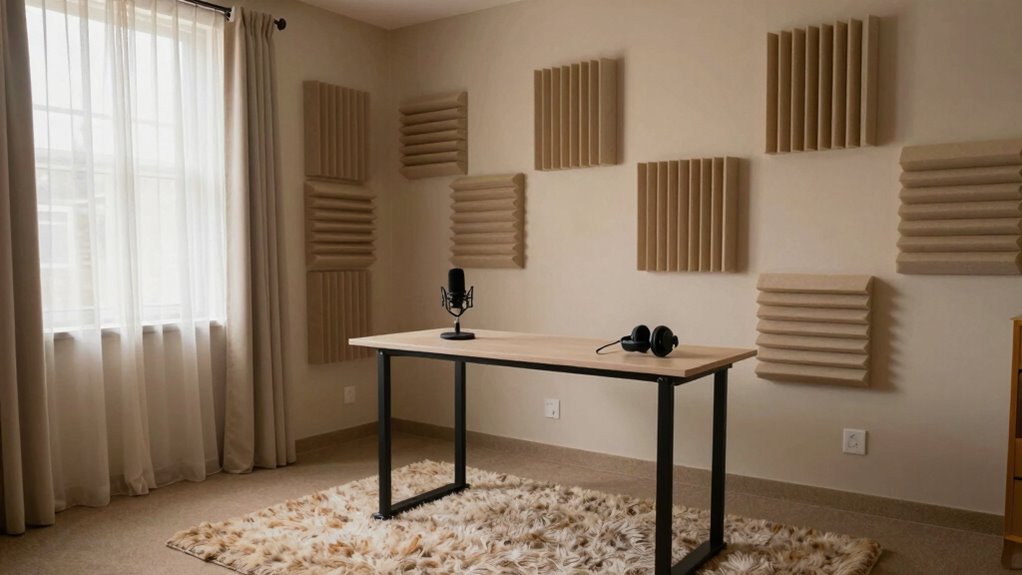
To effectively improve your room’s acoustics, you first need to identify what’s causing the echo and noise issues. Start by examining your room dimensions, as larger or irregularly shaped spaces tend to create more sound reflections. Notice if sounds bounce excessively or if certain frequencies echo loudly. Pay attention to how sound behaves when you speak or play audio—are there obvious reverberations? Once you recognize these problems, consider the role of acoustic treatments. These treatments, such as soft furnishings, rugs, or wall panels, help absorb or diffuse sound waves, reducing echo. Understanding room acoustics and how sound interacts within your space helps you plan effective acoustic treatments, ensuring your area is optimized for clear, noise-free calls. Additionally, assessing sound absorption properties can guide you in choosing the right materials to improve your room’s sound quality. Evaluating soundproofing techniques can further enhance your setup by minimizing external noise intrusion. Recognizing how sound behavior varies in different environments is crucial for tailoring your acoustic solutions effectively, and experimenting with different sound diffusion methods can help break up sound reflections for a more balanced acoustic environment.
As an affiliate, we earn on qualifying purchases.
DIY Soundproofing Tips to Minimize Echo

Once you’ve identified the sources of sound reflection in your room, implementing simple DIY soundproofing measures can substantially reduce echo. Start by adding soundproofing materials like thick curtains or rugs to absorb sound waves. Installing acoustic panels on walls can further dampen reflections, creating a more controlled sound environment. You can also hang blankets or foam tiles to target specific echo-prone areas. To help visualize, here’s a quick guide:
| Material/Method | Best Use |
|---|---|
| Acoustic panels | Cover large wall surfaces for echo control |
| Thick curtains | Block sound reflections from windows |
| Rugs or carpets | Absorb sound on floors |
| Foam tiles | Add to walls for targeted sound absorption |
| Hanging blankets | Reduce echo in specific spots |
Additionally, incorporating sound absorption techniques like strategic placement of soft furnishings can enhance the overall effectiveness of your soundproofing efforts. These methods work best when combined with an understanding of sound reflection, which is the primary cause of unwanted echoes in a room. Implementing these methods can also prevent unwanted sound reflections, making your space more suitable for clear communication. Incorporating positive thoughts and intentions can create a more harmonious atmosphere, which is beneficial for both personal well-being and effective communication during calls.
As an affiliate, we earn on qualifying purchases.
Choose Furniture and Decor to Absorb Sound

Choosing the right furniture and decor can make a significant difference in absorbing sound and reducing echo in your room. Wall mounted art not only adds visual interest but can also help break up sound waves, preventing them from bouncing around. Opt for plush rugs to cover hard flooring, as their thick fibers absorb sound rather than reflect it. Incorporate upholstered chairs and sofas, which further dampen noise and create a cozy atmosphere. Strategically placing soft textiles and decorative elements will help create a space that minimizes echo during your calls. Keep in mind that the goal is to add materials that naturally soak up sound while maintaining a clean, calming aesthetic. Incorporating sound absorption techniques can further enhance the acoustic quality of your space. Using sound-absorbing materials like acoustic panels or foam tiles can significantly reduce reverberation and improve overall clarity. This balance will ensure your room feels comfortable and conducive to clear, focused conversations. Utilizing digital resources like sound-absorbing panels can further enhance the acoustic quality of your space.
As an affiliate, we earn on qualifying purchases.
Set Up Technology for Clear, Echo-Free Calls

Effective technology setup is essential for ensuring your calls are clear and free of echo. Start by choosing quality microphones and speakers that minimize background noise, which can cause distractions and echo. Proper microphone placement is vital—position it close to your mouth but away from reflective surfaces to reduce unwanted sound reflections. Use noise-canceling headphones if possible, as they block out external background noise and prevent echo from your speakers. Adjust your microphone sensitivity settings to avoid capturing unnecessary sounds. Regularly test your audio setup before important calls, ensuring clarity and minimizing echo. Keep cables organized and away from reflective surfaces to further reduce sound distortions. Incorporating soundproofing techniques into your space can also significantly enhance audio quality by reducing ambient noise and echo. Being mindful of room acoustics and furniture placement can help prevent sound wave reflections that cause echo. Additionally, using acoustic panels can further dampen sound reflections and improve overall audio clarity. Considering proper room dimensions can also play a role in reducing echoes and improving sound quality. To optimize your setup, soundproofing materials can be added to walls and floors to further minimize echo and external noise. With these adjustments, your calls will be crisp, clear, and free of distracting echoes.
Keep Your Workspace Calm and Focused During Calls

After optimizing your technology setup, the next step is creating a workspace that promotes calmness and focus during calls. Minimize background noise by closing windows, turning off nearby appliances, and choosing a quiet time for calls. Adjust lighting to reduce glare and shadows—use soft, natural light or warm-colored lamps to create a soothing environment. To keep your workspace focused, clear clutter and add calming elements like plants or a simple picture. These small changes help eliminate distractions and set a tranquil tone. Imagine a space with soft lighting, a tidy desk, and peaceful surroundings, making it easier to concentrate on your conversation and stay composed throughout your call.
Frequently Asked Questions
How Do I Measure My Room’s Acoustic Quality Effectively?
You measure your room’s acoustic quality by conducting sound level measurements using a decibel meter, noting how sound reflects or dampens. Test different spots to identify echo hotspots. Consider acoustic treatment options like adding soft furnishings, bass traps, or diffusers, and re-measure to see improvements. This process helps you fine-tune your space, ensuring clear calls and a calmer environment.
What Are Budget-Friendly Ways to Improve Room Acoustics?
To improve room acoustics affordably, start with DIY acoustic panels made from affordable soundproofing materials like foam or mass-loaded vinyl. Hang these panels on walls to absorb sound and reduce echo. You can also use thick curtains, rugs, or furniture to dampen noise further. Rearranging furniture to break up sound reflections helps, and sealing gaps with weatherstripping minimizes outside noise, creating a calmer, more professional call environment without breaking the bank.
How Often Should I Reassess My Room’s Sound Environment?
You should reassess your room’s sound environment every few months, especially after changing furniture placement or adding decorative wall hangings. As you update your space, sound absorption and echo levels can shift, affecting call clarity. Regularly checking guarantees your room stays calm and non-echoing. By observing how new decor and furniture impact acoustics, you keep your environment optimized for clear, distraction-free calls.
Can Plants Help Reduce Echo in a Room?
Yes, plants can help reduce echo in a room. By strategically placing plants around your space, you enhance acoustic absorption, which minimizes sound reflections. Taller plants or ones with broad leaves work best, so consider placing them near walls or corners where echo tends to bounce. Not only do they absorb sound, but they also add a calming, natural aesthetic to your environment, making your calls more comfortable.
What Are Common Mistakes to Avoid When Soundproofing a Room?
Avoid common soundproofing mistakes like neglecting decorative wall panels and soft furnishings, which are essential for absorbing sound. Don’t leave gaps around doors or windows, as they undermine your efforts. Using only dense materials without considering room acoustics can also backfire. Instead, focus on layering treatments like plush rugs, curtains, and wall panels to effectively reduce echo and create a calm, quiet environment for calls.
Conclusion
Creating a calm, echo-free room for calls is simple with the right approach. Don’t let worries about costs or effort hold you back—many DIY solutions are affordable and easy to implement. By diagnosing your space, adding sound-absorbing furniture, and optimizing your tech setup, you’ll enjoy clearer calls and a more focused workspace. Start today; a peaceful, professional environment is within your reach, even on a budget.