📊 Full opportunity report: From Filing Cabinet To Searchable Records In A Small Office on IdeaNavigator AI — validation score, market gap, and execution plan.
TL;DR
IdeaNavigator AI describes a proposed document-scanning app for small nonprofits, clinics and law offices, designed to turn photographed paperwork into named, searchable PDFs. The proposal recommends testing it with five offices; no pilot results, product launch or verified accuracy figures are reported.
IdeaNavigator AI has proposed a document-scanning app that would convert paper records at small offices into named, searchable PDFs, with a five-office pilot suggested as the first test. The plan targets nonprofits, clinics and law offices, but it describes a product opportunity rather than a launched service: no pilot results, accuracy data or customer commitments are reported.
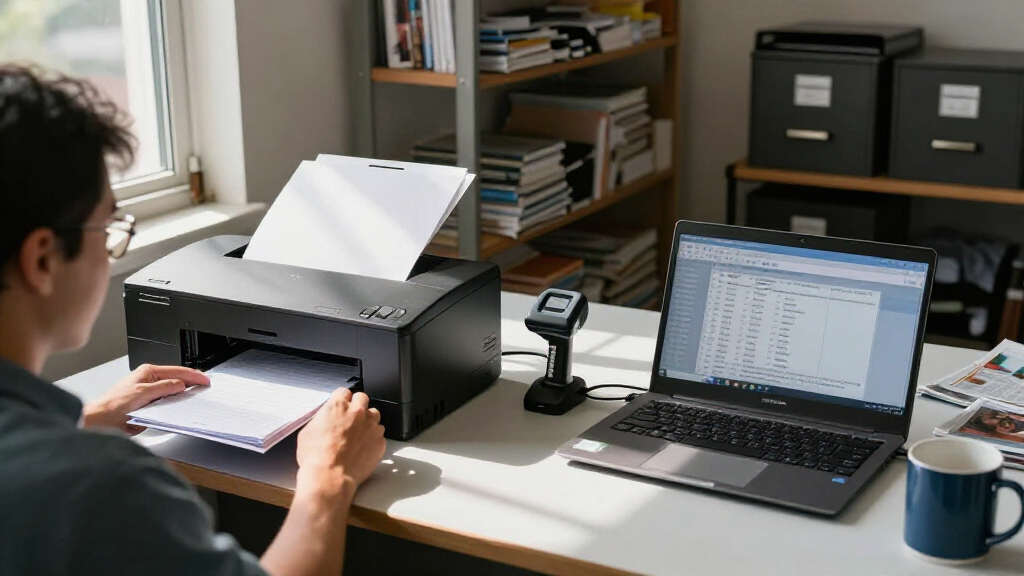
The proposed workflow is designed for an office manager handling a backlog of forms, invoices and other records. A user would photograph a stack of documents with a phone; the app would apply optical character recognition (OCR), suggest a document category and filename, then save searchable PDFs to a shared folder. An invoice might be labeled with its type, date and vendor, according to the product outline.
The problem identified is not simply that paper must be scanned. Generic scanning apps can leave small offices with unsorted image files, without useful filenames or extracted fields, making the resulting archive difficult to search. The proposed app would combine text recognition with document classification and basic data extraction to reduce manual filing.
To test the idea, IdeaNavigator AI recommends a one-week pilot with five small offices, each scanning a real backlog of 200 documents. The suggested measures are the rate of correct automatic classification and whether participating offices would pay per seat. The business model under consideration is a monthly subscription with a page-volume cap and charges for usage above it. These are proposed test conditions and pricing mechanics, not reported pilot findings or an established offer.
Making Small-Office Records Searchable
If it works reliably, the proposed workflow could address a practical administrative burden: staff at small organizations often need to retrieve older records while also handling incoming paperwork. Searchable text, consistent filenames and shared storage could make it easier to locate an invoice or intake form than searching through cabinets or folders of generic scan files.
The idea is aimed at offices without dedicated IT staff, so ease of setup and day-to-day accuracy would matter as much as the underlying recognition technology. A classification error could place a sensitive or time-critical document in the wrong folder, while poor text extraction could make a file hard to find. The proposed pilot’s accuracy measure is therefore central to judging whether automation saves work rather than adding a review burden.
The commercial question is also unresolved. A subscription priced by seat and document volume could fit organizations with recurring scanning needs, but the outline supplies no price, cost estimate or evidence that offices would pay. The recommended willingness-to-pay test recognizes that technical performance alone would not establish demand.
document scanner app for small offices
As an affiliate, we earn on qualifying purchases.
As an affiliate, we earn on qualifying purchases.
From Paper Backlogs to OCR
The proposal focuses on small nonprofits, clinics and law firms, where records can include intake forms, invoices and other organizational documents. It frames the gap between a basic scan and a usable digital filing system: capturing an image does not automatically make a document identifiable, searchable or consistently stored.
IdeaNavigator AI says on-device and API-based OCR, together with layout-aware models, are now inexpensive and accurate enough to support automatic naming, categorization and field extraction without a dedicated IT team. That is the proposal’s rationale for testing the workflow. It is not accompanied by benchmark results, named technology providers or independent evidence establishing the accuracy or cost of a particular implementation.
The suggested test is deliberately small: five offices, one week and 200 backlog documents per office. That would expose the app to real paperwork rather than a demonstration set, but the outline does not specify how document types would be distributed, how errors would be judged or how sensitive records would be handled. Those details would affect how much could be concluded from the trial.
searchable PDF scanner for law offices
As an affiliate, we earn on qualifying purchases.
As an affiliate, we earn on qualifying purchases.
Pilot Results Have Not Been Reported
No product launch or completed pilot is described. There are no reported classification rates, OCR results, customer feedback or willingness-to-pay findings. The five-office exercise is a recommendation for validating the idea, not evidence that the workflow has already been tested.
Other open questions include which file formats and shared-folder services would be supported, whether users must review every suggested filename, and how the system would handle handwriting, poor-quality images, duplicate pages or documents containing multiple record types. The proposal also gives no details on access controls, retention, encryption or other safeguards for potentially sensitive nonprofit, medical or legal records.
Pricing remains unsettled: the outline proposes a per-seat subscription, a page allowance and overage charges but gives no amounts. It is also unclear whether the intended recognition would run on a phone, through an external service or through a combination of both. No organization, vendor or implementation partner is identified.
As an affiliate, we earn on qualifying purchases.
A Five-Office Trial Is Proposed
The next step set out in the proposal is to recruit five small offices and run a one-week trial using real backlogs of 200 documents each. The evaluation would track correct automatic classification and ask participants whether they would pay for the service on a per-seat basis. No start date, participating offices or commitment to run the pilot has been announced in the material available.
For the test to show whether the idea is practical, results would need to clarify how accuracy is measured, how often staff must correct suggestions and whether documents can be found after filing. Feedback on privacy practices, setup time and pricing would also help distinguish a useful workflow from a scanning tool that shifts work into digital folders.
Until those results are available, the proposal remains an early-stage product concept. Whether the app can reduce filing effort, meet records-handling needs and attract paying customers is still unverified.
Source: IdeaNavigator AI
office document classification app
As an affiliate, we earn on qualifying purchases.
As an affiliate, we earn on qualifying purchases.
Key Questions
What would the proposed app do?
It would let staff photograph paper documents, then use OCR and classification to suggest a document type and filename and save searchable PDFs to a shared folder. The workflow is a proposal, not a reported launched product.
Who is the app intended for?
The concept targets office managers at small nonprofits, clinics and law offices that handle paper-heavy records without dedicated IT teams.
Has the app been tested?
No completed test or accuracy result is reported. IdeaNavigator AI recommends a one-week pilot with five offices, each scanning 200 real backlog documents.
How might the service charge customers?
The proposed model is a monthly subscription per seat with a page-volume cap and additional charges above that limit. No prices or confirmed customer demand are given.
What remains unknown about the idea?
Its real-world classification and OCR accuracy, privacy and security measures, supported storage services, pricing and willingness to pay have not been established in reported results.
Source: IdeaNavigator AI