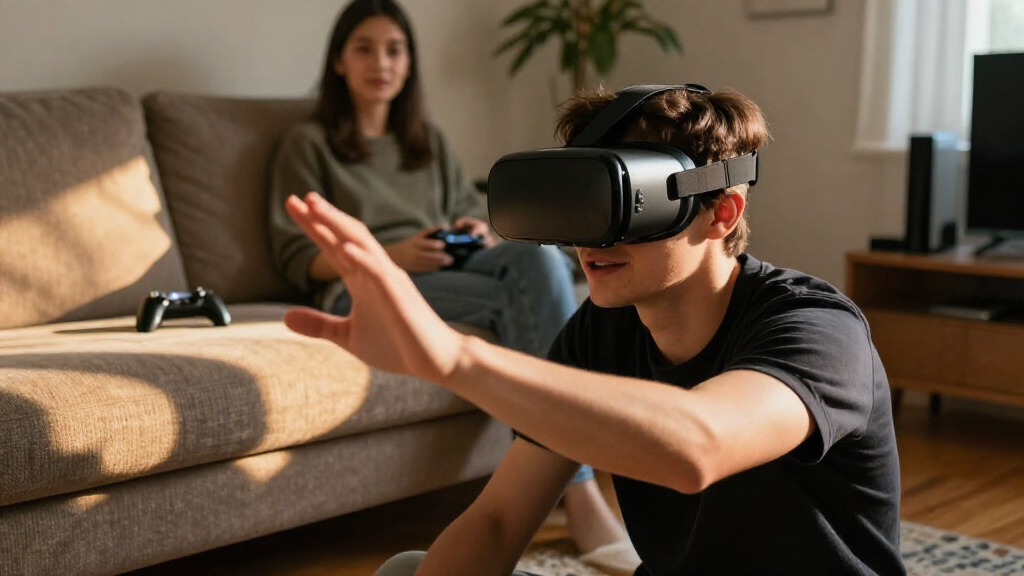

For most players, the Meta Quest 3 512GB is the best overall VR gaming headset here, pairing standalone play with PC VR support and a sharper mixed-reality experience than the Quest 3S models. The Meta Quest 3S 256GB is a more approachable wireless option, while the Pimax Crystal Super is aimed at PC gamers who put visual detail ahead of convenience. The main choice is between an easy-to-set-up standalone headset and a PC-connected system that can deliver higher-end visuals but needs more hardware and space. Lens clarity, comfort, game access, and whether your PC can handle VR also shape the decision. Read on for how the 15 options compare and which tradeoffs fit different players.

Get the latest gadgets delivered free with Prime
- Fast, free delivery on millions of items
- Prime Video, Amazon Music and more included
- Member-only deals all year
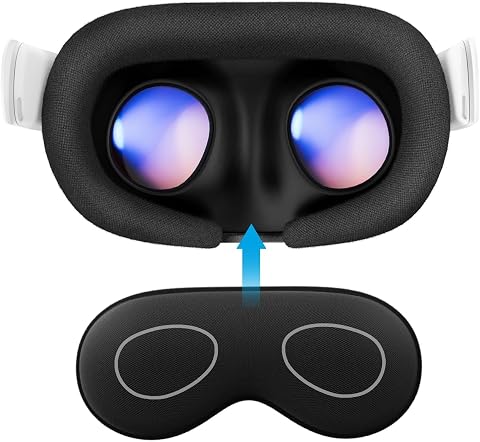
Complete the kit

Key Takeaways
- Quest 3 512GB is the most balanced pick in this lineup: standalone access and PC VR support make it more versatile than the Quest 3S, while its larger storage suits a broader game library.
- Pimax Crystal Super and Crystal Light target PC enthusiasts who prioritize visual detail; they trade the Quest family’s simpler setup for dependence on a capable gaming PC.
- The Quest 3S models offer wireless standalone play at two storage capacities, but their Fresnel lenses have a narrower clear viewing area than Quest 3’s pancake lenses.
- The HTC Vive XR Elite and Vive Focus Vision add mixed-reality and PC-connected options, but their flexibility brings more setup choices than a straightforward Quest headset.
- The two Quest 2 listings, the older Rift S, and renewed Quest 3S models may suit buyers focused on specific compatibility or condition needs, but they are less straightforward long-term picks than current new standalone options.
| Pimax Crystal Super PC VR Headset with 3840 × 3840 Resolution per Eye |  | Best for Visual Detail | Resolution: 3840 × 3840 per eye | Display: QLED with Mini-LED local dimming | Pixel density: 50 pixels per degree | VIEW LATEST PRICE | See Our Full Breakdown |
| HTC Vive XR Elite Mixed Reality and PC VR Headset with Deluxe Pack | 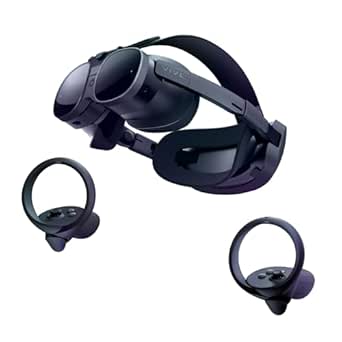 | Best Convertible Headset | Resolution: 3840 × 1920 combined | Display: LCD | Field of view: 110 degrees | VIEW LATEST PRICE | See Our Full Breakdown |
| Pimax Crystal Light PC VR Headset with QLED Display |  | Best for High-Refresh PC VR | Resolution: 2880 × 2880 per eye | Display: QLED with local dimming and HDR | Refresh rate: Up to 120 Hz | VIEW LATEST PRICE | See Our Full Breakdown |
| Meta Quest 2 128GB All-in-One Virtual Reality Headset (Renewed) |  | Best for a Simple Standalone Setup | Storage: 128 GB | Resolution: 1832 × 1920 per eye | Display refresh rate: 120 Hz | VIEW LATEST PRICE | See Our Full Breakdown |
| Meta Quest Pro 256 GB VR Headset with VR Field Trips Subscription |  | Best for Mixed Reality and Controllers | Storage: 256 GB | RAM: 12 GB | Resolution: 1920 × 1080 per eye | VIEW LATEST PRICE | See Our Full Breakdown |
| Meta Quest 3 512GB VR Headset with Gorilla Tag Cardboard Monkenaut Bundle and 3-Month Meta Horizon+ Trial |  | Best Overall | Storage: 512 GB | Processor: Snapdragon XR2 Gen 2 | Memory: 8 GB RAM | VIEW LATEST PRICE | See Our Full Breakdown |
| Meta Quest 3S 128GB VR Headset with Batman: Arkham Shadow |  | Best for Beginners | Storage: 128 GB | Operating system: Meta Horizon OS | Platform: Standalone | VIEW LATEST PRICE | See Our Full Breakdown |
| HTC VIVE Focus Vision Wired Bundle XR Headset |  | Best for PC VR and Tracking | Display resolution: 2448 × 2448 pixels per eye | Field of view: Up to 120 degrees | Refresh rate: 90 Hz | VIEW LATEST PRICE | See Our Full Breakdown |
| Meta Quest 3S 128GB VR Headset with Gorilla Tag Bundle |  | Best for Gorilla Tag Fans | Storage: 128 GB | Processor: Snapdragon XR2 Gen 2 | Memory: 8 GB RAM | VIEW LATEST PRICE | See Our Full Breakdown |
| Meta Quest 3S 256GB Wireless VR Headset |  | Best Value for a Larger Game Library | Storage: 256 GB | RAM: 8 GB | Processor: Snapdragon XR2 Gen 2 | VIEW LATEST PRICE | See Our Full Breakdown |
| Meta Quest 2 128GB VR Headset with Silicone Cover and Adjustable Knuckle Straps |  | Best for a Familiar Standalone Setup | Storage: 128 GB | Display: LCD | Resolution: 1832 × 1920 pixels per eye | VIEW LATEST PRICE | See Our Full Breakdown |
| Oculus Rift S PC-Powered VR Gaming Headset |  | Best for a Dedicated Windows PC | Platform: PC VR | Operating system: Windows | Display: LCD | VIEW LATEST PRICE | See Our Full Breakdown |
| Meta Quest 3S 128GB VR Headset (Renewed Premium) |  | Best for Standalone Mixed Reality | Storage: 128 GB | Processor: Snapdragon XR2 Gen 2 | Memory: 8 GB RAM | VIEW LATEST PRICE | See Our Full Breakdown |
| Meta Quest 3S 256GB Virtual Reality Headset (Renewed Premium) | | Best for a Larger Standalone Library | Storage: 256 GB | Display type: Listed as LCD or OLED | Maximum resolution: 2880 × 1600 | VIEW LATEST PRICE | See Our Full Breakdown |
| HTC Vive Focus Vision Mixed Reality and PC VR Headset with Controllers |  | Best Premium PC VR and Tracking Features | Display resolution: 2448 × 2448 pixels per eye | Field of view: Up to 120 degrees | Refresh rate: 90 Hz | VIEW LATEST PRICE | See Our Full Breakdown |
| VR gaming headset | Refresh rate | Field of view | Connectivity | Storage |
|---|---|---|---|---|
| Pimax Crystal Super PC VR Head | Up to 90 Hz | 140 degrees | DisplayPort and USB | — |
| HTC Vive XR Elite Mixed Realit | 90 Hz | 110 degrees | USB Type-C | 128 GB |
| Pimax Crystal Light PC VR Head | Up to 120 Hz | — | HDMI | — |
| Meta Quest 2 128GB All-in-One | — | 89 degrees | — | 128 GB |
| Meta Quest Pro 256 GB VR Heads | 90 Hz | 110 degrees | Wi-Fi and USB Type-C | 256 GB |
| Meta Quest 3 512GB VR Headset | 120 Hz | — | — | 512 GB |
| Meta Quest 3S 128GB VR Headset | — | 128 degrees | Bluetooth, Wi-Fi | 128 GB |
| HTC VIVE Focus Vision Wired Bu | 90 Hz | Up to 120 degrees | DisplayPort, USB, Wi-Fi | — |
| Meta Quest 3S 128GB VR Headset | 60 Hz | 110 degrees | — | 128 GB |
| Meta Quest 3S 256GB Wireless V | 60 Hz | — | Wi-Fi | 256 GB |
| Meta Quest 2 128GB VR Headset | 90 Hz | 110 degrees | USB Type-C | 128 GB |
| Oculus Rift S PC-Powered VR Ga | — | 110 degrees | Bluetooth | — |
| Meta Quest 3S 128GB VR Headset | 90 Hz | 96 degrees | — | 128 GB |
| Meta Quest 3S 256GB Virtual Re | 120 Hz | — | HDMI (as listed) | 256 GB |
| HTC Vive Focus Vision Mixed Re | 90 Hz | Up to 120 degrees | DisplayPort, USB, Wi-Fi | 128 GB, expandable up to 2 TB with MicroSD |
More Details on Our Top Picks
Pimax Crystal Super PC VR Headset with 3840 × 3840 Resolution per Eye
The Pimax Crystal Super is the pick for PC VR players who want fine visual detail and a broad view for simulation cockpits or expansive game scenes. Its 3840 × 3840 resolution per eye, 50 pixels per degree, and 140-degree field of view give it a sharper, wider visual focus than the Pimax Crystal Light, whose resolution and field of view are lower in the supplied specs. Eye tracking, adjustable IPD, and passthrough add useful flexibility, while integrated spatial audio keeps the setup self-contained. The tradeoff is a firm PC tether: it needs both DisplayPort and USB, so it is less convenient to move around than the standalone Meta Quest 2. Its 90 Hz ceiling also trails the Crystal Light’s listed 120 Hz maximum. Choose it for visual breadth and detail, provided your PC setup and cable reach suit seated or room-scale play.
Pros:- 3840 × 3840 resolution per eye with 50 pixels per degree
- 140-degree field of view
- Eye tracking, adjustable IPD, and inside-out tracking
- Integrated 3D spatial audio and noise-canceling microphone
Cons:- Requires a wired DisplayPort and USB connection to a PC
- Refresh rate tops out at 90 Hz, below the Crystal Light’s listed 120 Hz
Best for: PC VR simulation players who prioritize sharp detail and a wide field of view and have a DisplayPort-equipped Windows PC
Not ideal for: Players who want untethered play or frequently move their headset between rooms, since it requires wired DisplayPort and USB connections
- Resolution:3840 × 3840 per eye
- Display:QLED with Mini-LED local dimming
- Pixel density:50 pixels per degree
- Field of view:140 degrees
- Refresh rate:Up to 90 Hz
- Tracking:Inside-out tracking with eye tracking
- Connectivity:DisplayPort and USB
- Compatibility:PC VR, Windows 10
Our verdict“Choose the Crystal Super for detailed, wide-view PC VR when a wired setup is acceptable.”
HTC Vive XR Elite Mixed Reality and PC VR Headset with Deluxe Pack
The HTC Vive XR Elite Deluxe Pack suits players who want one headset for standalone VR, mixed reality, and PC VR. Unlike the PC-only Pimax Crystal Super, it can run without a computer and offers color passthrough, while inside-out tracking avoids the need for base stations. The included face gasket, deluxe strap, temple clips, and MR gasket give buyers more fit options out of the box. Its combined 3840 × 1920 LCD resolution and 110-degree field of view make it a flexible gaming headset, though the supplied specifications do not match the per-eye detail listed for Pimax’s PC headsets. The hot-swappable battery helps with longer sessions, but each battery is rated for up to two hours, and PC streaming needs a separately sold cable. Pick it for versatility and room-to-room freedom; skip it if long unplugged sessions matter most.
Pros:- Supports standalone VR, mixed reality, and PC VR
- Inside-out optical tracking requires no base stations
- Hot-swappable battery design
- Deluxe Pack includes multiple fit and mixed reality accessories
Cons:- Battery life is listed as up to two hours
- USB streaming cable for PC VR is sold separately
- Hand-tracking features depend on the VR title
Best for: Players who want to switch between standalone games, mixed reality, and PC VR without setting up base stations
Not ideal for: Wireless players who expect long sessions on one charge, since the listed battery life is up to two hours
- Resolution:3840 × 1920 combined
- Display:LCD
- Field of view:110 degrees
- Refresh rate:90 Hz
- Battery life:Up to 2 hours
- Storage:128 GB
- Tracking:Inside-out optical tracking with 4 wide field-of-view cameras
- Connectivity:USB Type-C
- Included accessories:Face Gasket 2.0, Deluxe Strap, Temple Clips, MR Gasket
Our verdict“Choose the Vive XR Elite if switching between standalone, mixed reality, and PC VR matters more than extended battery runtime.”
Pimax Crystal Light PC VR Headset with QLED Display
For PC gamers who value motion smoothness alongside image quality, the Pimax Crystal Light offers a different balance from the Crystal Super. Its 2880 × 2880 resolution per eye is lower than the Super’s, but its refresh rate reaches 120 Hz, which can make fast movement feel more fluid when a game and PC can support it. QLED with local dimming and HDR, plus aspheric glass lenses, target contrast and clarity in SteamVR games and simulations. Inside-out camera tracking keeps the setup simpler than a base-station system. The cost of that visual hardware is a listed weight of about 815 g, a notable consideration for long sessions. It is also still a wired PC headset, unlike the standalone Meta Quest 2. Choose it when high refresh and PC compatibility matter more than portability or a lighter fit.
Pros:- 2880 × 2880 resolution per eye
- Refresh rate up to 120 Hz
- QLED display with local dimming and HDR
- Inside-out camera tracking and SteamVR compatibility
Cons:- Listed weight is approximately 815 g
- Designed for PC VR rather than standalone play
Best for: PC VR players and simulation fans with a capable gaming PC who prioritize high refresh and SteamVR compatibility
Not ideal for: Players seeking a lightweight, untethered headset, since this model weighs about 815 g and is intended for PC VR
- Resolution:2880 × 2880 per eye
- Display:QLED with local dimming and HDR
- Refresh rate:Up to 120 Hz
- Tracking:Inside-out camera tracking
- Lens:Aspheric glass
- Compatibility:PC, SteamVR
- Connectivity:HDMI
- Weight:815 g
Our verdict“Choose the Crystal Light for high-refresh PC VR if its weight and wired setup fit your play space.”
Meta Quest 2 128GB All-in-One Virtual Reality Headset (Renewed)
The renewed Meta Quest 2 makes the most sense for buyers who want to start playing without a gaming PC or external tracking stations. Its all-in-one design, room-scale inside-out tracking, and included Touch controllers make setup more direct than with the wired Pimax Crystal Light. The listed 120 Hz display refresh rate is also a strong fit for games that support it, while 128 GB of storage provides room for a selection of standalone titles. Its 1832 × 1920 pixels per eye and 89-degree field of view are more modest than the higher-resolution, wider-view Pimax headsets, so it is not the pick for maximum visual detail. This unit is renewed and carries a 90-day limited warranty, which makes condition coverage part of the buying decision. Choose it for accessible standalone gaming; pass if you want a new unit or broader visuals.
Pros:- Standalone all-in-one VR operation
- Room-scale inside-out tracking
- Includes two Touch controllers and setup accessories
- Display refresh rate listed at up to 120 Hz
Cons:- Renewed condition may not suit buyers who prefer new hardware
- 90-day limited warranty
- 89-degree field of view is narrower than the 110-degree HTC Vive XR Elite
Best for: First-time VR players who want a self-contained headset with room-scale tracking and included controllers
Not ideal for: Buyers seeking a new headset, a wide field of view, or the visual detail of the Pimax PC headsets
- Storage:128 GB
- Resolution:1832 × 1920 per eye
- Display refresh rate:120 Hz
- Field of view:89 degrees
- Battery life:2.5 hours
- Weight:1.8 pounds
- Tracking:Inside-out tracking
- Warranty:90-day limited warranty
Our verdict“Choose the renewed Quest 2 for straightforward standalone gaming if its condition and shorter warranty suit you.”
Meta Quest Pro 256 GB VR Headset with VR Field Trips Subscription
The Meta Quest Pro is aimed at players who want mixed reality and more capable controllers in a standalone headset. Its full-color passthrough, pancake lenses, local dimming, and quantum dot technology distinguish it from the simpler Meta Quest 2, while its self-tracking Touch Pro controllers support detailed hand and finger movement without relying on headset line of sight in the same way as conventional tracked controllers. With 256 GB of storage and 12 GB of RAM, it also has more listed onboard capacity than the Quest 2. The 1920 × 1080 per-eye resolution and 90 Hz refresh rate, however, do not match the Pimax headsets’ PC-focused resolution or refresh options. The included field-trip subscription has conflicting duration details in the product text, so its term is unclear. Pick this model for mixed reality and controller features, not maximum PC VR sharpness.
Pros:- Full-color mixed reality passthrough
- Pancake lenses with local dimming and quantum dot technology
- Self-tracking Touch Pro controllers with advanced haptics
- 256 GB storage and 12 GB RAM
Cons:- Listed resolution is 1920 × 1080 per eye, below the Pimax PC headsets
- Included field-trip subscription duration is stated inconsistently
- 90 Hz refresh rate is below the Crystal Light’s listed 120 Hz maximum
Best for: Standalone VR players who want full-color mixed reality, multitasking screens, and self-tracking controllers
Not ideal for: PC simulation enthusiasts focused on per-eye resolution, or buyers who need a clearly stated subscription term
- Storage:256 GB
- RAM:12 GB
- Resolution:1920 × 1080 per eye
- Refresh rate:90 Hz
- Field of view:110 degrees
- Lens technology:Pancake lenses
- Connectivity:Wi-Fi and USB Type-C
- Sensors:10 VR/MR sensors
- Controllers:Meta Quest Touch Pro Controllers
Our verdict“Choose the Quest Pro for mixed reality and advanced controller input if those features matter more than PC VR resolution.”
Meta Quest 3 512GB VR Headset with Gorilla Tag Cardboard Monkenaut Bundle and 3-Month Meta Horizon+ Trial
The Meta Quest 3 is the most capable all-round gaming pick here, pairing standalone wireless play with mixed reality, a Snapdragon XR2 Gen 2 processor and a 120 Hz refresh rate. Its 512 GB storage gives me more room for a broad game library than the 128 GB Quest 3S bundles, while the higher listed resolution makes it the stronger fit for players who want a sharper view. The included Gorilla Tag items and three-month Meta Horizon+ trial add ways to start playing, though they do not change the headset’s core strengths. The tradeoff is practical: about 2.2 hours of battery life means I would plan charging breaks for longer sessions. Compared with the more PC-focused HTC VIVE Focus Vision, Quest 3 is simpler to use untethered, but lacks its listed eye and hand tracking.
Pros:- Standalone wireless play supports VR and mixed reality without a PC connection
- 512 GB storage leaves more room for games than the 128 GB Quest 3S bundles
- 120 Hz refresh rate and 2064 × 2208 pixels per eye
- Includes Gorilla Tag items and a three-month Meta Horizon+ trial
Cons:- Listed battery life is about 2.2 hours, so extended sessions require charging
- The bundle’s Gorilla Tag content may matter little to players who do not play that game
Best for: Wireless VR players who want generous storage, mixed reality, and a higher refresh rate for a varied game library.
Not ideal for: Players who expect long sessions without charging or need the HTC VIVE Focus Vision’s eye tracking and PC streaming setup.
- Storage:512 GB
- Processor:Snapdragon XR2 Gen 2
- Memory:8 GB RAM
- Resolution per eye:2064 × 2208 pixels
- Refresh rate:120 Hz
- Display:7-inch LCD
- Battery life:2.2 hours
- Platform:Standalone
- Included subscription:3-month Meta Horizon+ trial
Our verdict“Choose Quest 3 if you want a versatile wireless gaming headset with more storage and a faster listed refresh rate than the Quest 3S models.”
Meta Quest 3S 128GB VR Headset with Batman: Arkham Shadow
Batman: Arkham Shadow gives this Quest 3S a clear starting point for someone buying a first wireless headset and wanting a named game to try right away. Like the other Quest 3S options in this group, it runs standalone and supports mixed reality, multiplayer, and family controls, so it can serve more than one player in a household. Its 128 GB capacity is the main constraint: the 256 GB Quest 3S leaves more space for a growing library, while Quest 3 offers a higher listed refresh rate and more storage. The listed battery life of 2.5 hours also makes regular charging part of play. Buyers should note that a USB-C adapter for 3.5 mm headphones is sold separately. This bundle suits newcomers more than players prioritizing room for many installed games.
Pros:- Standalone wireless operation avoids requiring a gaming PC
- Includes Batman: Arkham Shadow
- Mixed reality features support experiences that blend with the room
- Multiple users and parental controls suit shared household use
Cons:- 128 GB storage can limit a large installed game library
- Listed battery life is 2.5 hours
- USB-C adapter for 3.5 mm headphones is sold separately
Best for: First-time VR buyers who want a standalone headset, family controls, and Batman: Arkham Shadow included.
Not ideal for: Players who plan to keep many large games installed or want the Quest 3’s 512 GB storage and 120 Hz refresh rate.
- Storage:128 GB
- Operating system:Meta Horizon OS
- Platform:Standalone
- Maximum display resolution:4096 × 2160 pixels
- Field of view:128 degrees
- Battery life:2.5 hours
- Connectivity:Bluetooth, Wi-Fi
- Connector:USB Type-C
- Included game:Batman: Arkham Shadow
Our verdict“Pick this Quest 3S bundle for a first headset when Batman and household controls matter more than extra storage.”
HTC VIVE Focus Vision Wired Bundle XR Headset
The VIVE Focus Vision is the specialist pick for players who want PC VR alongside standalone use. DisplayPort streaming, built-in eye and hand tracking, and support for added face and body trackers give it more room for tracking-focused setups than the Meta Quest 3S bundles. Its 2448 × 2448 pixels per eye and field of view up to 120 degrees are appealing for detailed play, while the hot-swappable battery can reduce downtime compared with the Quest 3’s listed 2.2-hour battery. That flexibility comes with setup demands: PC streaming requires a wired Ethernet connection to the Wi-Fi router, and some tracking features need separately purchased accessories. Buyers seeking quick, untethered gaming may find the Quest 3 simpler. This headset makes more sense when PC connectivity and tracking options are part of the plan.
Pros:- Supports standalone VR and PC VR through DisplayPort streaming
- 2448 × 2448 pixels per eye with a field of view up to 120 degrees
- Built-in eye and hand tracking, with support for additional trackers
- Hot-swappable battery with reserve front battery
Cons:- PC VR streaming requires a wired Ethernet connection to the Wi-Fi router
- Some face and body tracking capabilities need separately purchased accessories
- The PC streaming setup is less straightforward than the standalone Quest 3S models
Best for: PC VR players and simulation or social VR enthusiasts who want built-in eye and hand tracking plus room to expand tracking.
Not ideal for: Buyers seeking a simple wireless headset for casual gaming or who cannot use a wired Ethernet connection for PC streaming.
- Display resolution:2448 × 2448 pixels per eye
- Field of view:Up to 120 degrees
- Refresh rate:90 Hz
- Memory:12 GB RAM
- Expandable storage:Up to 2 TB via MicroSD card
- Connectivity:DisplayPort, USB, Wi-Fi
- Tracking:Eye and hand tracking; supports face and body trackers
- Battery:Hot-swappable battery with reserve front battery
- Audio:Open-back dual-driver speakers, microphones, 3.5 mm audio jack
Our verdict“Choose VIVE Focus Vision if PC VR and expandable tracking matter more to you than a simpler standalone setup.”
Meta Quest 3S 128GB VR Headset with Gorilla Tag Bundle
This Quest 3S bundle is the most tailored pick for Gorilla Tag players, adding exclusive in-game items and 2,000 Shiny Rocks to a wireless standalone headset. Its Snapdragon XR2 Gen 2 processor, 8 GB RAM, and full-color passthrough support VR and mixed reality play without a PC. The main compromise is the 128 GB storage: the Quest 3 512GB offers substantially more room for a broader collection, and the 256 GB Quest 3S gives the same family of headset more capacity. The listed 60 Hz refresh rate also makes this a less compelling choice for buyers focused on a faster display; the Quest 3 lists 120 Hz. With about 2.5 hours of battery life, it also calls for charging between longer sessions. Choose it when the bundle content is a genuine draw.
Pros:- Wireless standalone design allows untethered play
- Full-color passthrough supports mixed reality
- Snapdragon XR2 Gen 2 processor and 8 GB RAM
- Includes Gorilla Tag items and 2,000 Shiny Rocks
Cons:- 128 GB storage is less than the 256 GB Quest 3S and 512 GB Quest 3
- Listed refresh rate is 60 Hz, below the Quest 3’s 120 Hz
- Battery life is approximately 2.5 hours
Best for: Gorilla Tag players who want the exclusive items and a wireless headset for room-scale play.
Not ideal for: Players building a large game library or prioritizing a higher listed refresh rate and more storage.
- Storage:128 GB
- Processor:Snapdragon XR2 Gen 2
- Memory:8 GB RAM
- Resolution:1832 × 1920 pixels per eye
- Display:LCD
- Refresh rate:60 Hz
- Field of view:110 degrees
- Battery life:2.5 hours
- Weight:515 g
Our verdict“Choose this bundle if Gorilla Tag’s included items are a priority and 128 GB is enough for your games.”
Meta Quest 3S 256GB Wireless VR Headset
The 256 GB Quest 3S is the practical middle ground for players who want more room without moving to Quest 3. It keeps the standalone wireless format and Snapdragon XR2 Gen 2 processor found in the 128 GB Gorilla Tag and Batman bundles, while doubling their listed storage capacity for a larger set of installed games. Dual RGB cameras support full-color passthrough, extending the headset beyond fully immersive VR into mixed reality. Its listed resolution is 1832 × 1920 pixels per eye and refresh rate is 60 Hz; those specs trail the Quest 3’s 2064 × 2208 pixels per eye and 120 Hz. The product data says battery life exceeds two hours, but does not give a precise figure. This is a sensible library-focused choice if the Quest 3’s higher display specs matter less than extra storage.
Pros:- 256 GB storage offers more room than either 128 GB Quest 3S bundle
- Standalone wireless design supports play without a PC
- Dual RGB cameras provide full-color passthrough for mixed reality
- Snapdragon XR2 Gen 2 processor and 8 GB RAM
Cons:- Listed refresh rate is 60 Hz, compared with 120 Hz for Quest 3
- Listed per-eye resolution is lower than Quest 3
- Battery life is described as more than two hours without a specific duration
Best for: Wireless VR players who want more installed-game capacity than the 128 GB Quest 3S bundles provide.
Not ideal for: Players seeking the Quest 3’s higher listed resolution and 120 Hz refresh rate or a precise, longer battery-life figure.
- Storage:256 GB
- RAM:8 GB
- Processor:Snapdragon XR2 Gen 2
- Resolution:1832 × 1920 pixels per eye
- Refresh rate:60 Hz
- Connectivity:Wi-Fi
- Operating system:Meta Horizon OS
- Battery life:More than two hours
- Included controllers:Touch Plus controllers
Our verdict“Choose the 256 GB Quest 3S if storage for a wider game library matters more than the Quest 3’s sharper, faster listed display.”
Meta Quest 2 128GB VR Headset with Silicone Cover and Adjustable Knuckle Straps
The Quest 2 makes sense for buyers who want to start playing without a gaming PC: its standalone operation keeps setup simple, while PC VR remains an option with a separately purchased Link cable. Compared with the Meta Quest 3S 128GB, this model has a narrower 110-degree field of view listed here and lacks the newer model’s full-color passthrough cameras, so mixed reality is less of a draw. Its 1832 × 1920 pixels per eye display and 90 Hz refresh rate support conventional VR gaming, and the included silicone covers and knuckle straps add grip and help keep the controllers secure. The tradeoffs are the required internet and Oculus app setup, a Facebook account requirement, and extra cost and tethering if you want PC VR.
Pros:- Standalone play does not require a PC or console
- 1832 × 1920 pixels per eye and a 90 Hz refresh rate
- Silicone controller covers and adjustable knuckle straps are included
- Supports compatible PC VR
Cons:- Setup requires wireless internet, the Oculus app, and a Facebook account
- Oculus Link cable is sold separately for PC VR
- Does not include the Quest 3S’s dual RGB passthrough cameras
Best for: First-time VR players who want standalone games and the option to connect to a compatible PC later
Not ideal for: Buyers who want mixed reality, account-free setup, or PC VR without purchasing a separate Link cable
- Storage:128 GB
- Display:LCD
- Resolution:1832 × 1920 pixels per eye
- Refresh rate:90 Hz
- Field of view:110 degrees
- Connectivity:USB Type-C
- Compatibility:Standalone and PC VR
- Included accessories:Silicone cover, adjustable knuckle straps, glasses spacer, charging cable, power adapter
Our verdict“Choose the Quest 2 if you want a standalone VR starting point with PC VR as an add-on and can accept its setup requirements.”
Oculus Rift S PC-Powered VR Gaming Headset
The Rift S is the PC-first choice here: it relies on a Windows computer for play, which suits buyers who already have a capable gaming setup and want access to PC VR titles. Its built-in Insight tracking avoids the need for external sensors, while the Touch controllers support motion-based games. Compared with the standalone Meta Quest 2, the Rift S cannot be taken into wireless play, but its 2560 × 1440 display and PC platform make it a more direct fit for a desktop gaming routine. The tradeoffs are substantial for newcomers: a Windows PC is mandatory, the listed connection includes USB 3.0, and logging in requires a Facebook account. Choose it for a PC-based library and room-scale play, not for portability or a self-contained headset.
Pros:- Access to hundreds of VR games and exclusives in the Oculus store
- 2560 × 1440 LCD display
- Built-in Insight tracking does not require external sensors
- Touch controllers enable motion-controlled play
Cons:- Requires a Windows PC
- Requires a Facebook account to log in
- PC dependence makes it less portable than the standalone Meta Quest 2
Best for: PC VR players with a compatible Windows gaming computer who want room-scale tracking without external sensors
Not ideal for: Buyers without a Windows PC or anyone seeking a wireless, standalone headset
- Platform:PC VR
- Operating system:Windows
- Display:LCD
- Maximum resolution:2560 × 1440
- Field of view:110 degrees
- Connectivity:Bluetooth
- Connector:USB 3.0
- Tracking:Built-in Oculus Insight; proximity, magnetometer, gyroscope, and accelerometer sensors
Our verdict“Pick the Rift S if your Windows PC is the center of your VR setup and standalone play is not a priority.”
Meta Quest 3S 128GB VR Headset (Renewed Premium)
For buyers who want both VR games and a view of the room around them, this renewed Quest 3S brings full-color passthrough through dual RGB cameras and runs untethered on Meta Horizon OS. Its Snapdragon XR2 Gen 2 processor and 8 GB of RAM give it a newer hardware foundation than the Meta Quest 2, while the listed 2064 × 2208 resolution supports a sharper presentation. The Quest 2 has a wider listed field of view, however, and this 3S’s 96-degree field may feel more constrained. Its 128 GB storage also leaves less room for a large game library than the 256 GB Quest 3S elsewhere in the roundup. Battery life is measured in only a few hours, and Renewed Premium condition may not suit buyers who want a new unit.
Pros:- Standalone headset supports gaming, video, exercise, and mixed reality
- Snapdragon XR2 Gen 2 processor with 8 GB RAM
- Dual RGB cameras provide full-color passthrough
- Includes access to 40+ games with a 3-month trial
Cons:- Battery lasts only a few hours
- Renewed Premium condition may not suit buyers seeking a new unit
- 96-degree field of view is narrower than the Quest 2’s listed 110 degrees
Best for: Players who want a wireless headset for VR games and mixed reality, and are comfortable buying renewed hardware
Not ideal for: Buyers who keep many large games installed, need extended sessions, or only want a new headset
- Storage:128 GB
- Processor:Snapdragon XR2 Gen 2
- Memory:8 GB RAM
- Display:LCD
- Maximum resolution:2064 × 2208 pixels
- Refresh rate:90 Hz
- Field of view:96 degrees
- Battery life:2+ hours (description); average 3 hours (product information)
- Condition:Renewed Premium
Our verdict“Choose this Quest 3S if full-color mixed reality and newer standalone hardware matter more than storage, battery life, or new condition.”
Meta Quest 3S 256GB Virtual Reality Headset (Renewed Premium)
The main case for this Quest 3S is straightforward: 256 GB of storage gives game collectors more room than the 128 GB Quest 3S and Quest 2 models in this group. Its standalone Meta Quest platform also supports gaming, social experiences, and mixed reality, so a PC is not the entry ticket. Compared with the HTC Vive Focus Vision, it is the simpler pick for buyers who want a self-contained headset rather than PC streaming and expanded tracking options. The supplied data is inconsistent, though: it lists the display as “LCD or OLED,” HDMI connectivity, and a 2880 × 1600 maximum resolution, so buyers should not assume those specifications describe a confirmed configuration. Renewed Premium condition is another tradeoff for anyone weighing this against a new headset.
Pros:- 256 GB storage for a larger installed game library
- Standalone platform does not require a PC for play
- Supports VR gaming, social experiences, and mixed reality
- Motion-sensing controller is included
Cons:- Product data does not clearly identify whether the display is LCD or OLED
- Listed HDMI connectivity and display details are unclear
- Renewed Premium condition may not suit buyers seeking a new unit
Best for: Standalone VR players who want more built-in room for games and social apps than a 128 GB headset provides
Not ideal for: Buyers who need confirmed panel and connection details, or who prefer a new headset
- Storage:256 GB
- Display type:Listed as LCD or OLED
- Maximum resolution:2880 × 1600
- Refresh rate:120 Hz
- Operating system:Meta Horizon OS
- Platform:Meta Quest
- Connectivity:HDMI (as listed)
- Controller:Motion-sensing controller
- Condition:Renewed Premium
Our verdict“Consider this renewed Quest 3S for extra standalone storage if its unclear display and connectivity details fit your needs.”
HTC Vive Focus Vision Mixed Reality and PC VR Headset with Controllers
The Vive Focus Vision is the most specialized choice in this batch: its eye and low-light hand tracking, DisplayPort streaming, and support for face and body trackers give PC VR users more ways to build an advanced setup than the standalone Quest 3S offers. It also works standalone, with expandable storage and a hot-swappable battery that can help reduce interruptions during longer sessions. The 2448 × 2448 pixels per eye resolution and field of view up to 120 degrees suit buyers seeking an expansive visual experience. The tradeoffs are practical: PC VR streaming requires a direct Ethernet connection from the computer to the Wi-Fi router, and full-body tracking needs separate trackers. Compared with the Rift S, it offers broader tracking options and standalone use, but requires a more involved setup.
Pros:- Supports standalone and PC VR experiences
- 2448 × 2448 resolution per eye and field of view up to 120 degrees
- Built-in eye and low-light hand tracking, with support for face and body trackers
- Hot-swappable battery and MicroSD expansion up to 2 TB
Cons:- PC VR streaming requires a direct Ethernet connection from the PC to the Wi-Fi router
- Full-body tracking requires separately purchased trackers
- Advanced tracking and streaming setup is more involved than the standalone Quest 3S
Best for: Enthusiasts who want both standalone play and a PC VR setup with eye, hand, or expandable body tracking
Not ideal for: Casual buyers who want a simple wireless setup or do not want to purchase separate trackers for full-body tracking
- Display resolution:2448 × 2448 pixels per eye
- Field of view:Up to 120 degrees
- Refresh rate:90 Hz
- Display type:LCD
- Memory:12 GB RAM
- Storage:128 GB, expandable up to 2 TB with MicroSD
- Connectivity:DisplayPort, USB, Wi-Fi
- Tracking:Built-in eye and low-light hand tracking; supports face and body trackers
- Battery:Detachable, hot-swappable battery
Our verdict“Choose the Vive Focus Vision if you want flexible standalone and PC VR with advanced tracking and can accommodate its wired network requirement.”
How We Picked
I ranked these headsets by how well they serve VR gaming, weighing access to games, visual clarity, comfort-related design, setup demands, and flexibility between standalone and PC play. A headset that works without a gaming PC earns broad appeal, while a PC-focused model needs a clear payoff in visual detail or simulation use to rank highly. Storage matters for players who plan to keep several large games installed, and lens design affects how much of the image stays clear as the player looks around.
The order favors useful balance over a single standout specification. The Quest 3 leads because it combines standalone convenience, PC VR compatibility, mixed-reality features, and a more advanced lens system than the Quest 3S. The Pimax models follow for their focused PC gaming strengths, while the Quest 3S options rank as accessible wireless alternatives. Older, renewed, or bundle-specific listings rank lower because age, condition, or included extras can make the choice less predictable. I also distinguish products by use case rather than treating different bundles of the same headset as separate performance tiers.
Factors to Consider When Choosing VR Gaming Headsets
Start by deciding where your games will run and how much setup you want to manage. Headset specifications matter, but the gaming PC, play space, fit, and software library can change whether a model is a good match.
Choose Standalone or PC VR Before Comparing Resolution
A standalone headset runs games on its own, so it can be used without buying or maintaining a gaming PC. PC VR can open access to demanding simulators and PC libraries, but the headset is only one part of the setup: the computer must meet the game’s requirements, and a wired connection may limit movement. Some headsets support both modes, which is useful if your needs may change, though PC streaming still adds setup steps. A common mistake is choosing a high-resolution PC headset before checking whether the computer can render at that resolution smoothly. If you mainly want casual games, fitness titles, or social play, standalone access is often the more practical starting point.
Lens Clarity Can Matter More Than a Resolution Headline
Resolution describes the display, but the lens determines how much of that image looks clear at once. Pancake lenses, as used by Quest 3, tend to keep a wider viewing area sharp than the Fresnel lenses in Quest 3S. That difference can make menus and objects near the edge easier to see without moving your head. High-resolution PC headsets can still be appealing for cockpit instruments and fine details, but only if the PC can drive them and the fit places the lenses correctly. Try to compare lens type, adjustment range, and interpupillary distance support alongside pixel counts. Buyers who wear glasses should also check whether their preferred headset has enough clearance or supports prescription inserts.
Match Storage to the Games You Keep Installed
Storage determines how many games and apps can remain installed before you need to remove something. Large libraries with several expansive titles benefit from more capacity, while players who rotate through a few games can manage with less. Some Quest listings include subscriptions or game bundles, but those extras do not change the headset’s permanent storage. Check what is included, how long any trial lasts, and whether a bundled title is one you actually want. A frequent buying mistake is treating a bundle as a hardware upgrade. If you expect to keep a headset for several years, leave room for your library to grow rather than focusing only on the first game you plan to play.
Plan for Fit, Play Space, and Session Length
Comfort varies with head shape, facial interface, strap design, and how weight sits on the face. A headset that feels manageable for a short game may become tiring during longer sessions, so consider whether the strap can be adjusted or replaced and whether the battery or cable affects balance. Room-scale games also need a clear area and safe boundaries; seated PC simulations need less floor space but can still require room for controllers. A compact design may be easier to store or travel with, though it does not automatically mean a better fit. Before buying, measure your play area and think about where the headset will be charged and stored. For shared households, quick adjustment and easy cleaning can matter as much as display features.
Treat Older and Renewed Listings as Compatibility Choices
Older headsets can make sense when a specific PC setup or game library depends on them, but support and availability of accessories may differ from current models. Renewed listings add another variable: condition, included parts, warranty coverage, and return terms can vary by seller. Do not assume that a renewed headset includes the same accessories or software offers as a new bundle. Check controller availability, cable requirements, and whether the headset’s software still supports the games you want. If this is your first headset, a current standalone model is usually simpler to set up and troubleshoot. An older PC headset is a more targeted choice when you already know why its connection or ecosystem fits your system.
Pay More Only for a Benefit Your Games Use
Premium PC headsets make the most sense for players who spend substantial time in demanding simulations or value fine visual detail enough to build around it. That benefit may be wasted in games designed for casual standalone play, where quick access and room to move matter more. Mixed-reality passthrough can help blend digital content with a room, but it should not be confused with a larger library of VR games. Think about your most-played genres, not just the most impressive specification on a product page. For racing and flight games, PC performance and readable detail may matter more than wireless freedom. For active room-scale games, a cable-free headset can be the stronger fit even if its display is less ambitious.
Frequently Asked Questions
Can I play PC VR games with a Meta Quest 3 or Quest 3S?
Yes, both can connect to a compatible gaming PC for PC VR, in addition to running standalone games. The PC must meet the game’s requirements, and the connection method can affect setup and freedom of movement. A cable provides a direct connection, while wireless PC streaming depends on a suitable network and configuration. If PC VR is your main use, compare these practical requirements with a headset designed primarily for PC gaming. If you only want occasional PC play, the Quest’s standalone mode keeps everyday gaming simpler.
Is the Quest 3 worth choosing over the Quest 3S for gaming?
The Quest 3 is the stronger fit if lens clarity across the viewing area and mixed-reality passthrough are high priorities. Its pancake lenses generally keep more of the image clear as your eyes move, while Quest 3S uses Fresnel lenses. Quest 3S still supports the same broad standalone game ecosystem, so it can suit players who value access and wireless convenience more than lens refinement. Storage and bundle contents vary by listing, so check those separately. The better choice depends on how much the optical difference matters during the games you play.
Do I need a powerful gaming PC for the Pimax Crystal Super or Crystal Light?
These are PC-focused headsets, so a capable gaming computer is central to the experience. Demanding visuals and high display resolutions require the PC to render frames at a steady pace, and performance depends on the specific game and settings. Check the manufacturer’s current system guidance and compare it with your graphics card, processor, and available ports before buying. A PC that can run a game on a monitor may still struggle to drive it in VR. If upgrading the computer is outside your plan, a standalone headset is the more direct route into VR gaming.
Should I buy a renewed Quest 3S or an older Quest 2 for my first headset?
Either can be reasonable when you have checked the listing condition, included controllers and accessories, return terms, and support for the games you want. Quest 3S is from a newer headset generation and supports current standalone games, while Quest 2 may appeal to someone already familiar with its library or accessories. Renewed condition can vary, so inspect what the seller guarantees rather than assuming it matches a new unit. Also compare storage capacity and lens design, since those affect day-to-day use. For a first purchase, a new current-generation model is usually the simpler option if you want predictable condition and setup.
Which headset makes the most sense for racing or flight simulators?
A PC-focused model such as a Pimax Crystal option may suit simulator players who prioritize cockpit detail and already own a sufficiently powerful computer. The HTC Vive PC-capable models are also worth comparing if their connection options match your setup. A Quest can access PC VR simulations too, but streaming or cabling adds practical choices that may matter in a fixed seated setup. Check the simulator’s compatibility, the headset’s tracking approach, and how clearly you can read the controls you use most. For room-scale games, wireless convenience may outweigh the extra visual detail that benefits a cockpit.
Conclusion
I recommend the Meta Quest 3 512GB as the best overall for players who want one headset for standalone games, PC VR, and mixed reality. The Quest 3S 256GB is my value and beginner pick for straightforward wireless play with more room for a growing library than the 128GB version. For a premium PC gaming setup, look at the Pimax Crystal Super if your computer can support its visual ambitions; choose Crystal Light if you want a more focused PC headset. Buyers who need particular PC or mixed-reality connection options should compare the HTC Vive XR Elite and Vive Focus Vision against their setup. I would choose the Quest 2, Rift S, or a renewed listing only when its compatibility, condition, or included accessories answer a specific need.
Halloween Picks

Fun Costumes Creepy Twin Boys Halloween Animatronic

8.5 Foot Halloween Inflatable Haunted House Castle with Skeleton, Ghost & Skulls

11.2-Foot Halloween Inflatable Pumpkin with LED Lights
As an affiliate, we earn on qualifying purchases.