📊 Full opportunity report: Stories For The Streets You Walk: A Responsive Audio App on IdeaNavigator AI — validation score, market gap, and execution plan.

Get the latest gadgets delivered free with Prime
- Fast, free delivery on millions of items
- Prime Video, Amazon Music and more included
- Member-only deals all year
TL;DR
IdeaNavigator AI has outlined a concept for an audio walking app that generates narration from a user’s live route, drawing on open information about local history, buildings and places. The proposal recommends testing the idea in two cities, measuring week-four walking retention and checking narration accuracy; no launch, funding or test results are reported.
IdeaNavigator AI has proposed an audio walking app that generates narration as people move through a neighborhood or city, responding to their route with information about local history, buildings and other place details. The concept is framed as an early product opportunity, not a launched service: its suggested next step is a two-city test measuring repeat use and the accuracy of the narration.
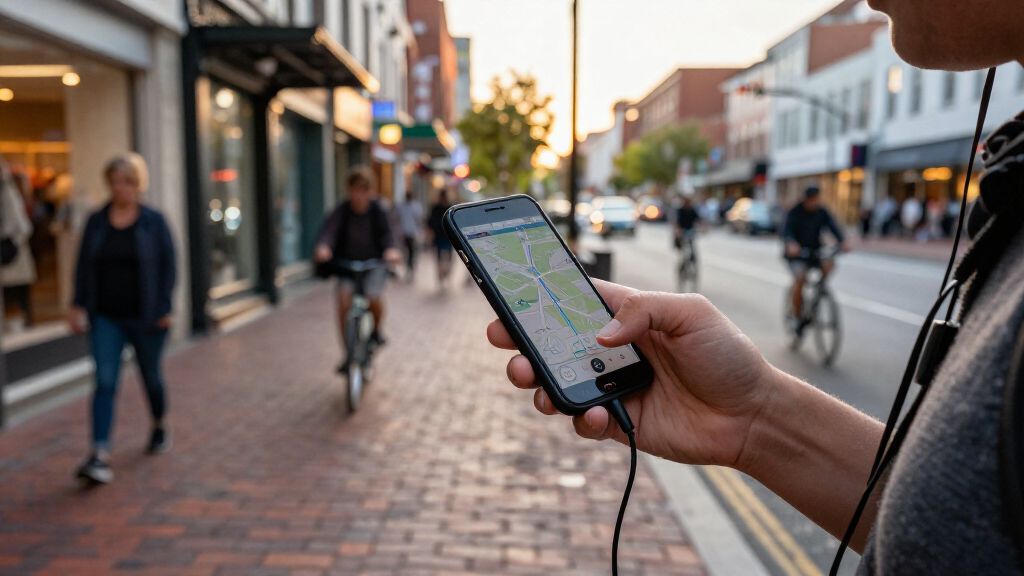
The proposed app would let a user start a walk and receive audio shaped by their live route, with narration triggered by corners and landmarks. Suggested content includes historical notes, architectural details and unusual facts about nearby places. The concept also proposes selectable themes such as history, architecture and nature, alongside a way to save favorite routes.
IdeaNavigator AI identifies the initial audience as walkers who want their neighborhoods or travel routes narrated. It argues that existing audio formats do not consistently address that use: podcasts are not generally tied to a listener’s location, while many tour apps focus on established landmark districts. The proposal presents streets beyond those tourist areas as a potential gap, but offers no user research or market measurements to establish its size.
The business model suggested is a consumer subscription, with a separate licensing tier for tourism boards. The proposed validation plan is to launch in two cities, track walks per week and retention at week four, and audit a sample of generated routes for accuracy. No cities, pricing, development team, release date or pilot findings are identified.
Product concept / Audio discovery / Early stage
Stories for the streets you walk
A proposed audio app would shape neighborhood narration around a walker’s live route, turning local history, architecture and place details into an on-the-go listening experience.
Let the route decide what story comes next.
The product premiseA walk becomes the playlist
Start walking and receive audio prompted by corners, landmarks and nearby places. The idea centers everyday streets as well as established sights.
Listen as you move
Audio is proposed to respond to a user’s live route, with narration triggered along the way.
Look closer nearby
Potential topics include historical notes, architectural details and unusual facts about local places.
Choose a lens
Selectable themes such as history, architecture and nature, with an option to save favorite routes.
Intended first audience: walkers who want neighborhoods or travel routes narrated, including streets outside the usual tourist circuit.
USE CASE → WALKMove beyond the landmark loop
Conventional audio tours are often produced for a specific destination and route. The proposal argues that on-demand narration from open information could broaden coverage, but the ability to tell accurate stories on any street remains unproven.
Live position
A walker moves through a neighborhood or city.
Open information
Local history, building and place records are proposed as source material.
Relevant narration
Audio would be shaped to location, with themes chosen by the listener.
Discover on foot
Residents and visitors could hear stories beyond prepared tours.
Test return visits and truth
A two-city pilot is suggested to test whether the experience earns repeat use and whether generated descriptions hold up to review.
What the test would track
Bars show proposed areas of measurement, not performance or achieved targets.
Questions the pilot must answer
Is it accurate?
Review generated routes for factual errors and misplaced details.
Do people return?
Measure walking frequency and continued use at week four.
Does it fit a real walk?
Test timing, location precision and safe listening in motion.
Two paths to potential revenue
The proposal names possible buyers and a market gap, but provides no demand research, pricing or customer commitments.
Subscription
A paid service for walkers seeking narrated neighborhood or travel discovery. Price and willingness to pay are unknown.
Tourism licensing
A separate tier could let tourism boards present local stories. Buyer interest and content review are untested.
Beyond the sights
Podcasts are not usually location-tied, while many tour apps focus on landmark districts. The size of the gap is unknown.
Important details remain untested
No launch, funded pilot or findings are reported. Several product and operating choices still need answers.
Sources & accuracy
Which records would inform each route, and how would the app prevent invented or misplaced facts?
Safe listening
How often would audio interrupt? What safeguards would reduce screen or headphone distraction near traffic?
Location & access
Privacy practices, accessibility features, language support and location precision are not described.
Demand & delivery
Cities, pricing, team, schedule and customer commitments are absent. Lower production cost remains a hypothesis.
What is known so far?
A quick read on the proposal’s status, intended audience and recommended next step.
Has it launched?
No launch is reported. IdeaNavigator AI describes a product concept and recommends a two-city test; there is no release date.
How would narration work?
The concept proposes route-based audio using open information about history, architecture and places. Its system and fact-checking method are unspecified.
Who is it for?
Walkers who want neighborhoods or travel routes narrated, including places beyond established tourist landmarks.
How might it earn revenue?
A consumer subscription and tourism-board licensing are suggested. Pricing and buyer interest have not been reported.
Testing Audio Beyond Tourist Routes
The concept targets a practical limitation of location-based audio: useful narration must fit the listener’s position and pace, rather than require them to choose a prepared tour of a major attraction. If an app can produce relevant material across ordinary streets, it could make local discovery available to residents as well as visitors, including in places with no professionally recorded tour.
That potential depends on more than generating fluent audio. The experience would need to be accurate, timely and relevant as a person walks, and it should avoid distracting users from traffic or their surroundings. For tourism boards, a licensing option could offer another way to present local stories, but the proposal does not establish whether public agencies would pay for it or how the content would be reviewed.
The suggested two-city pilot is meaningful because it would test both repeat use and factual reliability, rather than relying only on a polished demonstration. Week-four retention could indicate whether people return after trying the novelty, while route audits could reveal errors in generated descriptions. Those measures are proposed, not results already achieved.
Products Worth Considering

Jackery Explorer 500 v2 Portable Power Station, 512Wh, 500W

Bose QuietComfort Ultra Wireless Noise-Cancelling Headphones with Spatial Audio, Black

Bose SoundLink Flex (2nd Gen) Portable Bluetooth Speaker, Black
As an affiliate, we earn on qualifying purchases.
From Prepared Tours to Live Routes
Conventional audio tours are typically produced for particular destinations and routes. Recording and editing each tour takes work, which can limit coverage to locations considered worth that investment. The IdeaNavigator AI proposal says that newer large language models may make it possible to generate narration on demand from open information, including historical, architectural and place records, reducing the need to produce every route in advance.
That is the proposal’s rationale for timing, not proof that an app can reliably narrate any street. Open records vary in detail and quality, and a system would need to connect them to a user’s location without inventing or misplacing information. The concept gives no technical design, data sources, testing results or explanation of how it would handle gaps in records.
The recommendation is to focus on one initial workflow: a walker who wants a narrated neighborhood or travel walk. Starting with a narrow audience and a limited pilot would make it easier to see whether people use the service repeatedly and whether route-based narration meets a basic accuracy standard before expanding its coverage.
Accuracy, Safety and Demand Tests
No product launch or pilot is confirmed in the proposal, and there are no reported user numbers, retention figures, accuracy results or customer commitments. It is also unclear which cities would take part, how the app would select and verify information, or what sources it would use for each route.
Other open questions include how narration would respond when location data is imprecise, how often audio would interrupt a walk, and what safeguards would discourage people from focusing on a screen or headphones near traffic. The proposal does not describe privacy practices for location data, accessibility features, language support, pricing or a process for correcting errors. Its claims about an underserved market and lower production costs remain hypotheses until tested.
A Pilot Would Test Repeat Use
The next step proposed by IdeaNavigator AI is a two-city pilot centered on a single use case: narrated walks through neighborhoods and travel destinations. The suggested measures are how many walks users take per week, whether they remain active at week four, and whether a review of sample routes finds the narration accurate.
There is no stated schedule or indication that the pilot has been funded or organized. Until a test is announced and results are available, the app remains a product concept. Evidence about retention, factual quality and user safety would help establish whether the idea can move beyond prepared landmark tours and support a viable subscription or tourism-board service.
Source: IdeaNavigator AI
Key Questions
Has the audio walking app launched?
No launch is reported. IdeaNavigator AI has outlined a product concept and recommended a two-city test; it does not identify a released app or launch date.
How would the app create its narration?
The concept proposes generating audio from a user’s live route using open information about history, architecture and places. It does not specify the system, data sources or method for checking facts.
Who is the proposed app for?
The initial audience is walkers who want their neighborhoods or travel walks narrated, including people exploring places beyond established tourist landmarks.
How would the idea be tested?
The proposed pilot would operate in two cities, track walks per week and week-four retention, and audit narration accuracy on a sample of routes. No test results are available.
How might the app make money?
IdeaNavigator AI suggests a consumer subscription and a licensing tier for tourism boards. Pricing and buyer interest have not been reported.
Source: IdeaNavigator AI