

🔍 Read the full analysis: Which Work Tasks Suit Claude Fable 5.2 Or Gemini 4? on ThorstenMeyerAI.com

Get the latest gadgets delivered free with Prime
- Fast, free delivery on millions of items
- Prime Video, Amazon Music and more included
- Member-only deals all year
TL;DR
Artificial Analysis testing accessed Nov. 17, 2026, puts Claude Fable 5.2 ahead on its overall Intelligence Index, while Gemini 4 Carbon leads several tests for terminal work, professional documents and business workflows. Fable costs more per tested task and scores higher on answer accuracy, but has a much higher measured hallucination rate when it does not know an answer. Results vary by task, and some comparisons use temporary Google prices.
Independent benchmark results available on Nov. 17, 2026 show no single winner for workplace use: Anthropic’s Claude Fable 5.2 leads the Artificial Analysis Intelligence Index, while Google’s Gemini 4 Carbon tops several tests for terminal work, professional documents and business workflows. The comparison matters to teams choosing tools because the models also differ in measured error rates and cost per benchmark task.
On the Artificial Analysis Intelligence Index, Fable 5.2 scored 65 at Max effort and 62 at High. Gemini 4 Carbon scored 60 at High, while Gemini 4 Hydrogen scored 54 at its highest setting and Argon scored 50 at High. These are results from the named index, not a guarantee that one model will perform best on every job.
In individual tests comparing Fable 5.2 and Carbon at High, Fable led on coding in open-source repositories, with 49.1% against 40.6%, and long-context reasoning, with 83.3% against 79.3%. Carbon led on terminal tasks, 65.2% against 59.6%; professional-document reasoning, 28.4% against 21.8%; and business workflow automation, 77.8% against 71.4%. Both models scored below 30% on the cited professional-documents test.
Artificial Analysis estimated the cost of one Intelligence Index task at $26.54 for Fable at Max and $9.08 at High, compared with $5.48 for Carbon, $4.97 for Argon and $3.16 for Hydrogen. Google’s Carbon and Argon estimates use introductory prices through Nov. 30; the source says those prices double on Dec. 1. The per-task estimates account for token use during the test, unlike headline input and output prices alone.
Choosing by Task and Cost
For organizations, the results point toward matching a model to a defined workload rather than selecting by a single overall rank. Teams doing repository coding or long-document analysis may want to test Fable 5.2; those prioritizing terminal operations or business-software workflows may find Carbon’s benchmark results more relevant. These scores are useful screening evidence, not proof of performance in a company’s own systems.
Price can change that decision at scale. Artificial Analysis’s cost-per-task estimates put Hydrogen lowest among the listed models, while Fable at Max is substantially higher. But a cheaper benchmark run does not establish lower total operating cost: organizations also need to account for retries, human review, latency, integration and the cost of mistakes. Google’s announced price increase for Carbon and Argon also makes the comparison time-sensitive.
The reliability figures add another trade-off. Artificial Analysis reported 77.2% answer accuracy for Fable and 58.3% for Carbon, but measured hallucination rates of 58.0% and 11.4%, respectively, in the cited evaluation. The source frames the latter as how often a model guesses incorrectly when it does not know. The two measures describe different aspects of performance; they do not establish that either model is safer or more dependable in every workplace setting.
Products Worth Considering

DJI Osmo 360 Road Cycling First-Person Combo Action Camera

Bose Smart Dolby Atmos Soundbar with Alexa, A.I. Dialogue Mode, and Bluetooth, Black
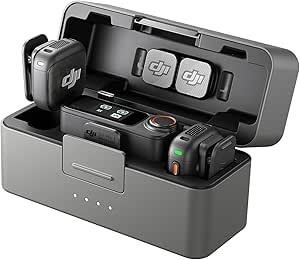
DJI Mic 3 (2 TX + 1 RX + Charging Case), Wireless Microphone
As an affiliate, we earn on qualifying purchases.
Three Gemini Models, One Claude
Anthropic released Claude Fable 5.2 on Nov. 9. Google opened Gemini 4 Carbon to paying users on Nov. 10 and released Gemini 4 Hydrogen to all users, including through Google Search, on Nov. 12. Gemini 4 is a family: Google describes Carbon as its most capable reasoning model and Argon as its efficient option for most work; Hydrogen is positioned for rapid execution in agentic workflows.
The source reports a one-million-token context window for Fable 5.2 and all three Gemini 4 models. It says Fable and Argon accept text and images, while Carbon and Hydrogen also accept speech and video, according to Artificial Analysis. Anthropic describes Fable as intended for ambitious, open-ended technical work. Those are vendor descriptions, not independent proof of suitability for a particular task.
In the comparison source, Anthropic recommends starting with Claude Opus 5.5 for most work, while Google calls Argon “the ideal choice for the majority of software engineering and knowledge work.” The article reports an additional comparison from Epoch AI: Fable scored 173.44 on its Capabilities Index and Carbon 169.76, but their reported uncertainty ranges overlap. The source also discloses that it was drafted with AI assistance, including an Anthropic model, and says neither Anthropic, Google nor Artificial Analysis reviewed or sponsored it.
“the ideal choice for the majority of software engineering and knowledge work”
— Google, describing Gemini 4 Argon
Limits of the Benchmark Evidence
The reported scores do not establish how the models will perform on a specific company’s documents, codebase, software or policies. The source provides benchmark results, but not a controlled workplace deployment study or a universal ranking across all tasks. It also notes that vendor-reported comparisons, including figures in Anthropic’s and Google’s launch materials, are vendor runs that outsiders cannot repeat.
The reported accuracy and hallucination rates depend on the evaluation used; the source excerpt does not provide enough methodological detail to judge how closely those conditions match real office work. It is also unclear how the results compare across different effort settings except where settings are specified. Google’s Carbon and Argon prices are scheduled to change on Dec. 1, so the cited cost comparison will not remain current unchanged.
Retest After the Price Change
The immediate pricing milestone is Dec. 1, 2026, when the source says introductory Carbon and Argon prices double. Buyers comparing costs should recalculate estimates using the rates that apply when they plan to use the models, and should distinguish per-token prices from costs measured on a complete task.
For teams making a selection now, the practical next step is a pilot using representative work: the same coding tickets, documents or workflow steps on each candidate, with review of accuracy, unsupported answers, completion time and total spend. Further independent evaluations may clarify how these models perform as tests and prices change. The comparison source does not report a scheduled next benchmark release or a confirmed date for additional model updates.
Key Questions
Which model ranks highest overall in the cited comparison?
Claude Fable 5.2 at Max scored 65 on the Artificial Analysis Intelligence Index accessed Nov. 17, 2026. That result does not make it the leader on every individual test.
Which model did better on business workflows?
Gemini 4 Carbon scored 77.8% on Artificial Analysis’s AutomationBench-AA, compared with 71.4% for Fable 5.2 at High. The benchmark result does not guarantee the same outcome in a particular company’s software.
Which model had the lowest reported cost per index task?
Gemini 4 Hydrogen had the lowest cited estimate, at $3.16 per Artificial Analysis Intelligence Index task. This is a benchmark-specific estimate, not a general price for every task or deployment.
When do Gemini 4 Carbon and Argon prices change?
The source says their introductory API prices apply through Nov. 30, 2026, then double on Dec. 1. The cited cost estimates for those models use the introductory rates.
Do the benchmarks prove which model is best for a company?
No. They show results on specified tests. A company would need to evaluate models on its own representative tasks, including accuracy, review requirements and total cost.
Source: ThorstenMeyerAI.com