The best network attached storage devices balance usable capacity, straightforward setup, reliable file access, and room to grow. I’d make the Synology DS225+ my best overall pick for a two-bay home or small-office setup, while the UGREEN DXP4800 GT stands out for buyers who need four bays and stronger expansion potential. For simpler personal cloud storage, the Synology BeeStation avoids much of the setup and maintenance of a traditional NAS. The main tradeoffs are bay count, included versus separately purchased drives, software flexibility, and how much administration you’re willing to handle. Read on for the full comparison and guidance on matching a device to your storage needs.

Get the latest gadgets delivered free with Prime
- Fast, free delivery on millions of items
- Prime Video, Amazon Music and more included
- Member-only deals all year
Complete the kit



Key Takeaways
The DS225+ is the strongest general-purpose fit in this lineup for buyers who want a conventional two-bay NAS without moving to rackmount or multi-bay hardware.
For more room to expand, the UGREEN DXP4800 GT and eight-bay DXP8800 Ultra serve very different capacity needs; the larger model makes sense when a studio or business can actually use its extra bays.
Bundled-drive models such as the Synology DS223 with two 12TB drives and DS220+ with a 4TB HDD simplify the initial drive decision, while diskless enclosures leave buyers more control over drive choice and cost.
BeeStation, WD My Cloud, and Buffalo LinkStation 210 lean toward straightforward personal storage, but their simpler approach is less suited to buyers seeking broad server features or flexible expansion.
The lineup spans a single-bay entry point, compact two-bay units, four-bay systems, and rackmount or eight-bay hardware. Choosing by actual capacity and management needs matters more than buying the largest device available.
| UGREEN DH2300 2-Bay NAS for Personal Storage and Device Backup |  | Best for Photo Libraries | Drive bays: 2 | Maximum capacity: 64 TB | Memory: 4 GB | VIEW LATEST PRICE | See Our Full Breakdown |
| Synology DiskStation DS124 1-Bay NAS Server with 4TB HDD |  | Best Compact Starter NAS | Processor: RTD1619B 4-core, 1.7 GHz | Memory: 1 GB DDR4 non-ECC | Storage: 1 x 4 TB 3.5-inch HDD, 6 Gb/s | VIEW LATEST PRICE | See Our Full Breakdown |
| Synology DiskStation DS220+ NAS Server, Celeron J4025, 6GB RAM, 4TB HDD |  | Best Overall | Processor: Intel Celeron J4025, dual-core 2.0GHz, up to 2.9GHz burst | Memory: 6GB DDR4 non-ECC | Storage: 4TB (2 x 2TB) SATA 3.5-inch HDDs | VIEW LATEST PRICE | See Our Full Breakdown |
| UGREEN NAS DXP4800 GT 4-Bay Network Attached Storage |  | Best for Power Users and Creators | Drive bays: 4 | Processor: AMD Ryzen Embedded R2514, 4 cores, 8 threads, up to 3.70 GHz | Memory: 8GB DDR4, expandable to 64GB | VIEW LATEST PRICE | See Our Full Breakdown |
| Synology BeeStation 4TB Personal Cloud Storage Device (BST151-4T) |  | Best for Effortless Backup | Storage capacity: 4TB | Model number: BST151-4T | Dimensions: 7.73 x 2.46 x 5.83 in | VIEW LATEST PRICE | See Our Full Breakdown |
| WD My Cloud 2TB Personal Network Attached Storage |  | Best for Simple Personal Storage | Storage capacity: 2TB | Connectivity: Ethernet, USB 3.0 | Compatible systems: Windows, Mac | VIEW LATEST PRICE | See Our Full Breakdown |
| ASUSTOR Drivestor 2 Gen 2 AS1202T 2-Bay NAS Enclosure |  | Best for Faster Home Networking | Drive bays: 2 | Drive configuration: Diskless | Processor: Realtek RTD1619B quad-core, 1.7 GHz | VIEW LATEST PRICE | See Our Full Breakdown |
| Synology DiskStation DS223j 2-Bay NAS Enclosure (Diskless) |  | Best for Quiet, Compact Home Backups | Drive bays: 2 | Included drives: None (diskless) | Dimensions: 6.5 × 3.94 × 8.9 in (D × W × H) | VIEW LATEST PRICE | See Our Full Breakdown |
| Synology DS223 2-Bay NAS with 2 × 12TB Seagate IronWolf Drives | 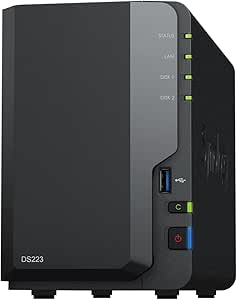 | Best Ready-to-Use High-Capacity NAS | Drive bays: 2 | Included drives: 2 × 12TB Seagate IronWolf SATA | Total capacity: 24TB | VIEW LATEST PRICE | See Our Full Breakdown |
| Synology RackStation RS826+ 4-Bay 1U Rackmount NAS Server, Diskless |  | Best for Expandable Business Storage | Drive bays: 4, expandable to 8 with one RX426 Expansion Unit | Drive configuration: Diskless | Form factor: 1U rackmount | VIEW LATEST PRICE | See Our Full Breakdown |
| BUFFALO LinkStation 210 6TB 1-Bay NAS with Included Hard Drive |  | Best Ready-to-Use NAS for Home Backups | Storage capacity: 6TB | Drive bays: 1 | Hard drive: Included | VIEW LATEST PRICE | See Our Full Breakdown |
| UGREEN NAS DXP2800 2-Bay Diskless Network Attached Storage |  | Best Flexible NAS for Power Users | Drive bays: 2 HDD bays | M.2 slots: 2 NVMe SSD slots | Maximum listed capacity: Up to 80TB | VIEW LATEST PRICE | See Our Full Breakdown |
| UGREEN NAS DXP8800 Ultra 8-Bay NAS for Businesses and Creative Studios |  | Best High-Capacity NAS for Studios | Drive bays: 8 SATA bays | M.2 slots: 2 NVMe slots | Maximum listed capacity: 272TB | VIEW LATEST PRICE | See Our Full Breakdown |
| Ubiquiti UniFi UNAS 2 Network Attached Storage, 2-Bay, Black |  | Best Compact Pick for UniFi Setups | Drive bays: 2 × 3.5-inch HDD | Processor: ARM Cortex-A55, quad-core, 1.7GHz | Memory: 4GB RAM | VIEW LATEST PRICE | See Our Full Breakdown |
| Synology DS225+ 2-Bay Diskless NAS | 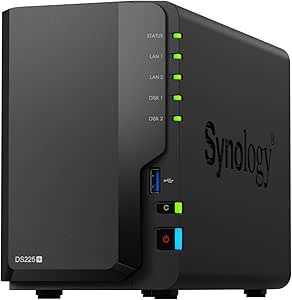 | Best for Synology Backup and Media Tools | Bay count: 2 | Drive configuration: Diskless | Processor: Intel CPU | VIEW LATEST PRICE | See Our Full Breakdown |
| network attached storage device | Drive bays | Memory | Processor |
|---|---|---|---|
| UGREEN DH2300 2-Bay NAS for Pe | 2 | 4 GB | — |
| Synology DiskStation DS124 1-B | — | 1 GB DDR4 non-ECC | RTD1619B 4-core, 1.7 GHz |
| Synology DiskStation DS220+ NA | — | 6GB DDR4 non-ECC | Intel Celeron J4025, dual-core 2.0GHz, up to 2.9GHz burst |
| UGREEN NAS DXP4800 GT 4-Bay Ne | 4 | 8GB DDR4, expandable to 64GB | AMD Ryzen Embedded R2514, 4 cores, 8 threads, up to 3.70 GHz |
| Synology BeeStation 4TB Person | — | — | — |
| WD My Cloud 2TB Personal Netwo | — | — | — |
| ASUSTOR Drivestor 2 Gen 2 AS12 | 2 | 1GB DDR4, maximum 1GB | Realtek RTD1619B quad-core, 1.7 GHz |
| Synology DiskStation DS223j 2- | 2 | — | — |
| Synology DS223 2-Bay NAS with | 2 | 2GB DDR4 non-ECC | Realtek RTD1619B quad-core, 1.7 GHz |
| Synology RackStation RS826+ 4- | 4, expandable to 8 with one RX426 Expansion Unit | 4GB DDR4 ECC | AMD Ryzen quad-core |
| BUFFALO LinkStation 210 6TB 1- | 1 | — | — |
| UGREEN NAS DXP2800 2-Bay Diskl | 2 HDD bays | 8GB DDR5 RAM | Intel N100 quad-core |
| UGREEN NAS DXP8800 Ultra 8-Bay | 8 SATA bays | 8GB DDR5, expandable up to 96GB | Intel 150U, up to 5.4GHz |
| Ubiquiti UniFi UNAS 2 Network | 2 × 3.5-inch HDD | 4GB RAM | ARM Cortex-A55, quad-core, 1.7GHz |
| Synology DS225+ 2-Bay Diskless | — | — | Intel CPU |
More Details on Our Top Picks
UGREEN DH2300 2-Bay NAS for Personal Storage and Device Backup
If your photo collection is a chaotic mess of duplicates and untagged shots, the UGREEN DH2300 earns its place on this list for one standout reason: its AI photo tagging and duplicate detection actually save you hours of manual sorting. Compared with the Synology BeeStation, which also does local AI recognition, the DH2300 gives you a true two-bay RAID setup—so you can protect your library against a single drive failure, something the BeeStation simply can’t do. That said, it’s a deliberately simple box: no Docker, no VMs, and no Wi-Fi. You’ll need to run an Ethernet cable to it, and the drives are sold separately, which adds to the upfront cost. For a family that wants automatic backups from phones and computers plus a tidy, searchable photo archive, this is a focused, affordable pick. But if you ever plan to run Plex or containerized apps, you’ll outgrow it quickly—the Synology DS220+ is the better long-term investment.
Pros:- AI photo tagging and duplicate detection streamline photo organization
- Two drive bays support RAID 1 for automatic data redundancy
- Automatic backups across phones, computers, and tablets with a simple setup
- Two-factor authentication and encrypted transfers add security without complexity
Cons:- Requires a wired Ethernet connection; Wi-Fi needs an external USB adapter
- No Docker, virtual machine, or server application support limits expandability
- Storage drives are not included, so you must budget for separate hard drives
Best for: Families and casual users with large, disorganized photo libraries who want automatic device backups and RAID protection without learning a complex NAS interface.
Not ideal for: Hobbyists or professionals who need Docker, virtual machines, or media server apps—the DH2300 intentionally omits all of those, so you’d hit a wall within weeks.
- Drive bays:2
- Maximum capacity:64 TB
- Memory:4 GB
- Ethernet:1GbE
- Maximum transfer speed:Up to 125 MB/s
- Hard disk form factor:3.5 inches
- Connectivity:Ethernet, HDMI, SATA, USB
- Wireless:Wi-Fi not supported; external USB adapter required
Our verdict“Buy the UGREEN DH2300 if your primary NAS need is effortless photo backup and organization, not advanced app hosting.”
Synology DiskStation DS124 1-Bay NAS Server with 4TB HDD
For someone who wants a real NAS—with the full Synology DSM operating system—but doesn’t want to assemble parts, the DS124 is a refreshingly complete package because it ships with a 4TB hard drive already installed. That puts it ahead of the UGREEN DH2300, which forces you to buy drives separately, and it’s more capable than the Synology BeeStation, which lacks DSM’s app ecosystem. The single-bay design means no RAID, so you’ll want your own backup strategy, but for a simple file server and Time Machine target, it’s plenty. The 1GB of non-ECC memory is modest—fine for basic file sharing and snapshots, but it will struggle if you try to run multiple apps or heavy indexing. Compared with the DS220+ in this lineup, the DS124 is the right choice only if you’re certain your storage needs won’t grow beyond one drive and you value a compact, quiet unit that works out of the box.
Pros:- Includes a 4TB hard drive, so it’s ready to use immediately
- Runs full Synology DSM with Btrfs snapshots and self-healing file system
- Two USB 3.2 ports and a 1GbE LAN port with link aggregation support
- Very low power draw at 10.7W during operation
Cons:- Only 1GB of non-ECC memory limits multitasking and app performance
- Single drive bay means no RAID protection; a drive failure loses all data
- Hard drive and memory upgrades require manual installation if you ever want more capacity
Best for: Individuals or small home offices that need a dependable, low-power Synology NAS with a drive included and no desire to tinker with hardware.
Not ideal for: Users who need redundancy or plan to expand storage later—a single bay offers no RAID and no easy upgrade path beyond replacing the drive.
- Processor:RTD1619B 4-core, 1.7 GHz
- Memory:1 GB DDR4 non-ECC
- Storage:1 x 4 TB 3.5-inch HDD, 6 Gb/s
- Network ports:1 x RJ-45 1GbE LAN
- USB ports:2 x USB 3.2
- Operating system:Synology DSM
- Power consumption:10.7 W during operation
- Dimensions:10 x 4 x 10 in (D x W x H)
Our verdict“Pick the DS124 if you want a genuine Synology NAS with a drive included and accept that you’ll never expand beyond a single disk.”
Synology DiskStation DS220+ NAS Server, Celeron J4025, 6GB RAM, 4TB HDD
The DS220+ is the benchmark against which every other NAS on this list should be measured, and it earns the Best Overall slot because it balances performance, expandability, and software polish in a way nothing else here quite matches. It ships with two 2TB drives (4TB total) and 6GB of RAM—double the memory of the DS124 and enough to run Docker containers, Plex Media Server, and multiple backup tasks without choking. Compared with the UGREEN DXP4800 GT, the DS220+ is less powerful on paper—no 10GbE, fewer bays—but it’s far more approachable for a typical home or small office user, and Synology DSM remains the most mature NAS operating system available. The dual 1GbE ports with link aggregation give you a modest speed boost if your network supports it, though you won’t get the multi-gig throughput of the DXP. The real tradeoff is that the included drives are modest, and you’ll eventually want to swap them for larger ones, but the two bays make that upgrade straightforward. For most people, this is the sweet spot.
Pros:- Includes 4TB of storage across two drives and 6GB RAM out of the box
- Dual 1GbE ports support link aggregation and failover for better reliability
- Full Synology DSM with Btrfs, snapshots, encryption, and two-factor authentication
- Runs Docker, Plex, and other packages without performance issues
Cons:- Hard drives and memory upgrades are supplied separately and require installation
- Limited to 1GbE networking, so large file transfers will be slower than on 10GbE models
- Two bays cap your maximum raw capacity compared to four-bay alternatives
Best for: Home users and small teams who want a reliable, feature-rich NAS for file sharing, backups, and media streaming without stepping into enterprise territory.
Not ideal for: Creative professionals or heavy multitaskers who need 10GbE networking or more than two drive bays—the DXP4800 GT is a better fit for that workload.
- Processor:Intel Celeron J4025, dual-core 2.0GHz, up to 2.9GHz burst
- Memory:6GB DDR4 non-ECC
- Storage:4TB (2 x 2TB) SATA 3.5-inch HDDs
- Network:2 x RJ-45 1GbE LAN with link aggregation
- Ports:2 x USB 3.2
- Operating system:Synology DSM
- File systems:EXT4, Btrfs
- Form factor:NAS tower
Our verdict“Choose the DS220+ if you want the best all-around NAS for a home or small office—it does everything well and leaves room to grow.”
UGREEN NAS DXP4800 GT 4-Bay Network Attached Storage
When you need serious throughput and room to grow, the UGREEN DXP4800 GT is the performance pick that leaves the Synology DS220+ in the dust. Its dual 10GbE ports alone justify the upgrade for anyone moving large video files or running a small studio—you’ll see transfer speeds that the DS220+’s 1GbE simply cannot approach. The AMD Ryzen Embedded R2514 processor and 8GB of expandable RAM (up to 64GB) handle Docker containers, VMs, and even IP camera surveillance without breaking a sweat. The four drive bays support SATA and U.2 NVMe, plus two M.2 slots for caching, giving you flexibility the two-bay DS220+ can’t match. But this power comes with real tradeoffs: the unit is diskless, so you’ll invest heavily in drives, and the included 8GB RAM is non-ECC—you’ll need to buy a separate ECC module if that matters to you. Also, Plex requires Docker and manual setup, which is a hurdle for less technical users. This is a tool for people who know exactly what they want.
Pros:- Dual 10GbE ports deliver up to 20Gbps aggregate bandwidth with compatible switches
- Four drive bays plus two M.2 slots and U.2 NVMe support offer exceptional storage flexibility
- 8GB RAM expandable to 64GB, with ECC available via upgrade
- UGOS Pro includes Docker, virtual machines, and ONVIF surveillance support
Cons:- Drives are not included, so the total cost of ownership is significantly higher
- Included RAM is non-ECC; ECC requires a separate purchase
- Plex requires Docker and manual configuration, which is not beginner-friendly
Best for: Video editors, photographers, and IT hobbyists who need 10GbE speeds, multiple drive bays, and the ability to run containers and VMs without compromise.
Not ideal for: Casual users who just want plug-and-play backup—the DXP4800 GT’s setup complexity and diskless configuration will frustrate anyone looking for simplicity.
- Drive bays:4
- Processor:AMD Ryzen Embedded R2514, 4 cores, 8 threads, up to 3.70 GHz
- Memory:8GB DDR4, expandable to 64GB
- Networking:2 × 10GbE
- Maximum stated capacity:Up to 144TB
- M.2 slots:2
- Ports:USB-A 10Gbps, USB-C 10Gbps, USB 2.0, 4K HDMI, SD card slot
- Drive inclusion:Diskless; drives sold separately
Our verdict“Get the DXP4800 GT if you’re a creator or power user who demands 10GbE speed and maximum storage flexibility, and you’re comfortable with a more hands-on setup.”
Synology BeeStation 4TB Personal Cloud Storage Device (BST151-4T)
If you’ve ever set up a traditional NAS and felt overwhelmed by RAID arrays and permission settings, the Synology BeeStation is the anti-NAS—and that’s exactly why it’s on this list. It’s designed for people who just want automatic photo and video backup from their phone without thinking about it. Compared with the UGREEN DH2300, which also targets beginners but requires Ethernet and drive installation, the BeeStation is truly plug-and-play: you connect it to your router, install the app, and it backs up your phone’s camera roll in the background. It even includes a 3-year Acronis True Image license for computer backups and supports Mac Time Machine, though note that Time Machine storage is capped at 2TB on this 4TB model. The tradeoff is that it’s not a real NAS—no RAID, no Docker, no DSM app ecosystem. You get a fixed 4TB of storage and a simplified interface. For a non-technical family member or a small business owner who wants offsite peace of mind without a learning curve, this is the clear winner.
Pros:- Truly plug-and-play setup with automatic photo and video backup from mobile devices
- Local AI photo recognition runs entirely on-device, keeping your data private
- Automated snapshots let you recover previous file versions
- Includes a 3-year Acronis True Image Essentials license for computer backups
Cons:- Not a traditional NAS—no RAID, no Docker, and no expandable storage
- Mac Time Machine storage is limited to 2TB even though the drive is 4TB
- Remote access relies on Synology’s cloud relay, which may feel less direct than a VPN
Best for: Non-technical users, seniors, or families who want automatic phone backups and remote file access with zero setup complexity and no subscription fees.
Not ideal for: Power users or anyone who needs RAID, multiple drive bays, or the ability to run apps like Plex—the BeeStation’s fixed 4TB and lack of expansion will frustrate them.
- Storage capacity:4TB
- Model number:BST151-4T
- Dimensions:7.73 x 2.46 x 5.83 in
- Weight:1.8 pounds
- Enclosure material:Metal
- Compatible devices:Laptop, smartphone, tablet
- Warranty:3 years
- Included backup software:3-year license of Acronis True Image Essentials
Our verdict“Buy the BeeStation if you want the simplest possible way to back up your phone and files automatically, and you’re willing to trade advanced NAS features for that ease.”
WD My Cloud 2TB Personal Network Attached Storage
The WD My Cloud 2TB is the straightforward pick for someone who wants a shared home folder and automatic computer backups without assembling a multi-bay system. It supports Windows and Mac backups, mobile photo and video uploads, and remote access through WD apps. Compared with the diskless Synology DS223j, this model comes with 2TB already installed, so there is less hardware to source before getting started. The tradeoff is less room to grow: its USB 3.0 port can add compatible storage, but it does not offer the two internal bays or broader system flexibility of the Synology. Remote access depends on a router with an internet connection, and media streaming relies on DLNA/UPnP-compatible devices. I’d choose it for simple file centralization, not a growing media library or a configurable NAS setup.
Pros:- Includes 2TB of storage, so buyers do not need to select internal drives first.
- Supports automatic backups from Windows and Mac computers.
- WD apps provide remote access and mobile photo and video uploads.
- USB 3.0 allows expansion with a compatible external drive.
Cons:- A single 2TB device offers less internal capacity and flexibility than the two-bay Synology DS223j.
- Remote access requires a router with an internet connection.
- Streaming requires DLNA/UPnP-compatible devices.
Best for: Households wanting one preconfigured place for computer backups, shared files, and phone photo uploads.
Not ideal for: NAS users who want multiple internal drives, a more expandable system, or media streaming without DLNA/UPnP-compatible devices.
- Storage capacity:2TB
- Connectivity:Ethernet, USB 3.0
- Compatible systems:Windows, Mac
- Compatible devices:Desktop, smartphone, tablet
- Drive speed:5400 rpm
- Form factor:2.5 inches
- Enclosure material:Plastic
Our verdict“Choose the WD My Cloud for simple, ready-to-use home backups and shared storage; choose a two-bay NAS if you need more room to grow.”
ASUSTOR Drivestor 2 Gen 2 AS1202T 2-Bay NAS Enclosure
The ASUSTOR Drivestor 2 Gen 2 gives a two-bay home NAS a useful networking advantage: its 2.5GbE port can move files faster than the 1GbE connection on the included-drive Synology DS223, provided the rest of the network supports those speeds. Tool-free drive installation also lowers the hassle of fitting storage, while ADM supports backups, private-cloud access, and multi-user file sharing. This is a diskless enclosure, so buyers must choose and install their own drives; by comparison, the DS223 arrives with two 12TB drives ready to use. The AS1202T’s 1GB of non-expandable memory is another constraint for workloads that may grow. I’d favor it for a household that values faster local transfers and wants to choose its own drives, rather than a turnkey setup or memory headroom.
Pros:- 2.5GbE Ethernet can support faster local transfers than standard 1GbE NAS connections.
- Tool-free installation makes fitting drives simpler.
- Supports private-cloud access, backups, and multi-user file sharing.
- Three USB ports provide connections for peripherals.
Cons:- Ships without drives, which must be purchased and installed separately.
- 1GB of memory is fixed and cannot be expanded.
- The 2.5GbE advantage depends on compatible networking equipment.
Best for: Home users with a 2.5GbE-capable network who want a two-bay NAS and prefer to select their own drives.
Not ideal for: Buyers seeking a ready-to-use NAS with drives included, or users who need expandable memory for heavier workloads.
- Drive bays:2
- Drive configuration:Diskless
- Processor:Realtek RTD1619B quad-core, 1.7 GHz
- Memory:1GB DDR4, maximum 1GB
- Network:2.5GbE Ethernet
- USB ports:3
- Operating system:ASUSTOR Data Master (ADM)
- Warranty:3 years
Our verdict“Pick the ASUSTOR if faster network transfers and drive choice matter more than included storage or memory expansion.”
Synology DiskStation DS223j 2-Bay NAS Enclosure (Diskless)
The Synology DS223j suits buyers who want a small, quiet base for a private cloud, automatic backups, and shared files without moving up to a business-focused NAS. Its two bays offer more internal-drive flexibility than the single-drive WD My Cloud 2TB, and Synology supports access across phones and computers as well as compatible IP-camera monitoring. The enclosure is compact and energy-efficient, which makes it easier to place in a home than the rackmount Synology RS826+. The main catch is that this is a diskless, two-bay model: drives are a separate purchase, and capacity is limited to what those bays can support. I’d choose it for quiet household backups and file sharing, but not for buyers who want included high-capacity storage or room to scale beyond two drives.
Pros:- Supports private-cloud storage and file access across multiple platforms.
- Automated backups are available for Macs, PCs, and mobile devices.
- Compatible IP cameras can use it for remote monitoring.
- Compact, quiet, energy-efficient tabletop design.
Cons:- Diskless configuration means drives must be sourced separately.
- Two bays limit internal capacity and future drive expansion.
- Less suited to business-scale throughput and expansion than the rackmount RS826+.
Best for: Households seeking a compact, quiet two-bay NAS for automated backups, shared files, and private-cloud access.
Not ideal for: Buyers who want drives included, need more than two internal drives, or require rackmount business capacity.
- Drive bays:2
- Included drives:None (diskless)
- Dimensions:6.5 × 3.94 × 8.9 in (D × W × H)
- Weight:0.87kg
- Mounting type:Tabletop
- Compatible devices:Android, desktop, laptop, iPhone
- Warranty:2 years
Our verdict“Choose the DS223j for quiet, compact home backups and sharing if you are comfortable choosing and installing the drives yourself.”
Synology DS223 2-Bay NAS with 2 × 12TB Seagate IronWolf Drives
The Synology DS223 bundle is the most convenient high-capacity choice here: it includes two 12TB Seagate IronWolf drives, giving buyers 24TB of listed total capacity without having to source disks separately. Synology DSM adds file syncing, remote access, Btrfs, and snapshot features that can help protect data and roll back unwanted changes. Compared with the diskless DS223j, this package is closer to ready for setup; compared with the business-focused RS826+, it is a simpler tabletop system with just two bays. That smaller footprint comes with limits: there is only one 1GbE network port, and the two-bay chassis leaves less room for growth than a four-bay NAS. I’d pick it for a home or small office that wants included storage and Synology’s data tools, not high-speed networking or broad expansion.
Pros:- Includes two 12TB Seagate IronWolf drives for 24TB total capacity.
- DSM supports syncing and access from computers, mobile devices, and browsers.
- Btrfs and snapshot features can help protect files and roll back changes.
- Metal enclosure provides a solid tabletop form.
Cons:- Two drive bays limit internal expansion compared with the four-bay RS826+.
- Single 1GbE port is a network-speed constraint for larger transfers.
- 2GB of memory is non-ECC and may limit heavier workloads.
Best for: Home offices and households that want a large, included-drive storage pool with Synology file syncing and snapshot features.
Not ideal for: Teams needing multi-gigabit networking, more than two internal drives, or expandable non-ECC memory.
- Drive bays:2
- Included drives:2 × 12TB Seagate IronWolf SATA
- Total capacity:24TB
- Processor:Realtek RTD1619B quad-core, 1.7 GHz
- Memory:2GB DDR4 non-ECC
- Network:1 × RJ-45 1GbE LAN
- USB ports:3 × USB 3.2 Gen 1
- Operating system:Synology DSM
Our verdict“Choose this DS223 bundle if included high-capacity drives and Synology’s backup tools matter more than multi-gigabit networking or extra bays.”
Synology RackStation RS826+ 4-Bay 1U Rackmount NAS Server, Diskless
The Synology RackStation RS826+ is the business-oriented choice in this group, built for rack installations and larger shared-storage workloads rather than a typical home network. Its four bays, 4GB ECC memory, and stated sequential throughput above 2,000MB/s read and 1,300MB/s write give it a much higher ceiling than two-bay models such as the Synology DS223. A PCIe slot supports optional networking or NVMe adapters, and an RX426 expansion unit can extend the system to eight bays. Those upgrades are not included, and the NAS ships diskless, so the setup requires rack space, drives, and potentially additional hardware. Its four 1GbE ports also do not provide 10GbE or 25GbE without an optional adapter. I’d choose it for a small or medium-sized business planning for expansion, not for a home that needs simple backups.
Pros:- Four drive bays with an expansion path to eight using an RX426 unit.
- 4GB DDR4 ECC memory is suited to business storage workloads.
- Specified sequential throughput exceeds 2,000MB/s read and 1,300MB/s write.
- PCIe slot supports optional faster-networking or M.2 NVMe adapter cards.
Cons:- Ships without drives, which adds hardware selection and setup work.
- 10GbE/25GbE networking and M.2 NVMe support require optional adapters.
- Rackmount form and expansion options are more than most household users need.
Best for: Small and medium-sized businesses needing rackmount shared storage, ECC memory, and a path from four to eight drive bays.
Not ideal for: Home users or small teams who want an all-in-one tabletop NAS without separate drives, rack space, or optional upgrade hardware.
- Drive bays:4, expandable to 8 with one RX426 Expansion Unit
- Drive configuration:Diskless
- Form factor:1U rackmount
- Processor:AMD Ryzen quad-core
- Memory:4GB DDR4 ECC
- Sequential throughput:Over 2,000MB/s read; over 1,300MB/s write
- Network ports:4 × 1GbE RJ-45
- Expansion:PCIe 3.0 slot for optional 10GbE/25GbE NICs or M.2 NVMe SSD adapter cards
Our verdict“Choose the RS826+ for rack-based business storage with a clear expansion path, but skip it if you need a simple home NAS with drives included.”
BUFFALO LinkStation 210 6TB 1-Bay NAS with Included Hard Drive
The LinkStation 210’s included 6TB drive makes it a straightforward choice for households that want shared storage without selecting and installing drives first. It can centralize files and automate backups for multiple Windows and compatible macOS computers, while folder permissions and SSL-encrypted transfers add useful controls for shared access. Unlike the diskless UGREEN DXP2800, this Buffalo is ready to configure with storage in place, and it avoids a subscription for personal cloud storage. The tradeoff is its single drive bay: there is no room to add a second drive for a mirrored copy or expand capacity internally. Its stated macOS support stops at version 15, so buyers on newer releases should check compatibility before choosing it.
Pros:- Includes a 6TB hard drive, so there is no need to source a compatible drive separately.
- Automated backups can gather files from multiple computers in one location.
- Folder access restrictions and SSL-encrypted transfers provide useful sharing controls.
- Personal cloud storage does not require a subscription.
Cons:- One drive bay leaves no internal option for mirrored drive redundancy or capacity expansion.
- Listed macOS compatibility is limited to version 15 and earlier.
Best for: Households wanting a simple shared 6TB backup destination for Windows PCs and macOS versions 15 or earlier, with a drive included.
Not ideal for: Buyers who need drive redundancy, room to expand inside the NAS, or confirmed compatibility with macOS versions newer than 15.
- Storage capacity:6TB
- Drive bays:1
- Hard drive:Included
- Compatibility:Windows and macOS 15 and earlier
- Security:SSL-encrypted file transfers; folder access restrictions
- Warranty:2 years, including hard drive
- Support:24/7 US-based support
Our verdict“Choose the LinkStation 210 if you want a drive-included home backup NAS and do not need multi-drive redundancy or expansion.”
UGREEN NAS DXP2800 2-Bay Diskless Network Attached Storage
The DXP2800 pairs two HDD bays with two NVMe slots, giving buyers more ways to balance bulk storage and fast SSD-backed workloads than the two-bay Synology DS225+. Its Intel N100, 8GB DDR5 RAM, and 2.5GbE suit large file transfers and add headroom for Docker, virtual machines, and compatible media-server apps. The listed capacity reaches 80TB across HDD bays and NVMe slots, though actual drive choices and configuration affect usable space. This is a diskless system, so the initial setup means buying and installing drives separately; the included 6TB in the BUFFALO LinkStation 210 is a simpler route for basic household backups. Buyers should also check that their intended camera or application works with the DXP2800 before relying on its surveillance or media features.
Pros:- Two HDD bays and two NVMe slots support a flexible mix of capacity and SSD storage.
- Intel N100 processor and 8GB DDR5 RAM suit more demanding home-NAS tasks.
- 2.5GbE can speed up transfers on a compatible wired network.
- Supports Docker, virtual machines, and compatible media-server apps.
Cons:- Diskless configuration requires separate purchases of HDDs and NVMe drives.
- Some surveillance and app features depend on compatible cameras or software.
Best for: Tech-savvy home users who want to choose their own drives and run backups alongside containers, virtual machines, or media-server apps.
Not ideal for: Buyers who want a ready-to-use NAS with storage included, or who do not plan to use its extra NVMe and software capabilities.
- Drive bays:2 HDD bays
- M.2 slots:2 NVMe SSD slots
- Maximum listed capacity:Up to 80TB
- Processor:Intel N100 quad-core
- Memory:8GB DDR5 RAM
- Networking:2.5GbE
- Included drives:None; HDDs and SSDs sold separately
- Warranty:2 years
Our verdict“Pick the DXP2800 if you want a configurable, faster-networked home NAS with room for apps, and are comfortable supplying the drives.”
UGREEN NAS DXP8800 Ultra 8-Bay NAS for Businesses and Creative Studios
For teams working with large media libraries or shared project files, the DXP8800 Ultra’s eight SATA bays offer much more room to build out storage than the two-bay DXP2800 or DS225+. Dual 10GbE and two Thunderbolt 4 ports give compatible workstations several high-speed connection options, while two NVMe slots can add SSD storage. Its expandable memory, RAID choices, virtual-machine and container support make it suited to more involved workflows than a basic household backup NAS. The scale comes with real costs in setup complexity and separate drive purchases: it ships diskless, and memory upgrades also require separately sourced components. Its listed transfer figures do not remove the need for compatible drives, networking, and client devices to realize fast transfers.
Pros:- Eight SATA bays and two NVMe slots provide substantial capacity and storage configuration flexibility.
- Dual 10GbE and two Thunderbolt 4 ports support fast transfers with compatible equipment.
- DDR5 memory can be expanded from 8GB up to 96GB.
- RAID options, virtual machines, and containers support varied business and studio workflows.
Cons:- Diskless configuration means all storage drives must be purchased separately.
- Memory expansion and other upgrades add separate component and setup requirements.
- Its high-capacity, high-speed feature set is excessive for basic home backups.
Best for: Creative studios and small businesses that need a configurable, high-capacity shared storage system with fast wired workstation connections.
Not ideal for: Home users seeking a compact, simple backup appliance or anyone unwilling to buy and configure drives and possible memory upgrades separately.
- Drive bays:8 SATA bays
- M.2 slots:2 NVMe slots
- Maximum listed capacity:272TB
- Processor:Intel 150U, up to 5.4GHz
- Memory:8GB DDR5, expandable up to 96GB
- Networking:Dual 10GbE
- Ports:2 Thunderbolt 4; USB 3.2 Gen 2
- Supported RAID:JBOD, Basic, RAID 0, RAID 1, RAID 5, RAID 6, RAID 10
Our verdict“Choose the DXP8800 Ultra when a studio or business needs many drive bays and fast workstation links, not when simplicity or a small footprint matters most.”
Ubiquiti UniFi UNAS 2 Network Attached Storage, 2-Bay, Black
The UNAS 2 is a small, tabletop two-drive NAS for buyers who want a compact enclosure rather than a large multi-bay system like the UGREEN DXP8800 Ultra. Its quad-core ARM processor, 4GB of RAM, and listed 2.5GbE networking provide a modest hardware foundation for shared storage, while support for two 3.5-inch drives gives it more internal capacity potential than the single-bay BUFFALO LinkStation 210. But the supplied information does not specify included drives or a capacity figure, so buyers must plan around a diskless setup and verify drive support before purchase. Its listed weight also excludes the hard drives. The product details do not describe backup software or other advanced NAS features, making this a less-defined choice than the Synology DS225+.
Pros:- Two 3.5-inch drive bays allow more storage configuration flexibility than a one-bay NAS.
- Compact tabletop dimensions suit setups with limited shelf or desk space.
- Quad-core ARM Cortex-A55 processor and 4GB RAM are specified.
- Listed networking includes 2.5GbE.
Cons:- No included drives or drive capacity are specified, so storage must be planned separately.
- Two bays limit internal capacity and expansion compared with the eight-bay DXP8800 Ultra.
- The listed 1.3kg weight excludes the hard drives.
Best for: Buyers assembling a compact two-drive NAS for a tabletop setup who already use or plan to use Ubiquiti equipment.
Not ideal for: People who need confirmed storage capacity, included drives, clearly specified backup tools, or room for more than two drives.
- Drive bays:2 × 3.5-inch HDD
- Processor:ARM Cortex-A55, quad-core, 1.7GHz
- Memory:4GB RAM
- Networking:10Mb LAN, 100Mb LAN, 1GbE, 2.5GbE
- Wireless:Bluetooth 4.1
- Dimensions:12.9 × 13.5 × 22.37cm
- Weight:1.3kg without HDD
- Enclosure material:Polycarbonate
Our verdict“Consider the UNAS 2 if you want a compact two-drive enclosure for a Ubiquiti-centered setup and are prepared to confirm drive and software requirements.”
Synology DS225+ 2-Bay Diskless NAS
The DS225+ centers its appeal on DiskStation Manager and a broad set of home and small-office tasks: automated backups, snapshot protection, remote sharing, media streaming, and surveillance for up to 30 IP cameras. Hardware transcoding can help when a compatible media setup needs video converted for playback, while the listed transfer speed reaches 282MB/s. Compared with the drive-included BUFFALO LinkStation 210, this Synology asks you to supply drives but offers two bays and snapshot protection rather than a single preloaded disk. Its two-bay layout remains far less expandable than the eight-bay DXP8800 Ultra, and its listed maximum volume is 40TB. Buyers should confirm camera and media-app compatibility before building a workflow around those features.
Pros:- DiskStation Manager supports automated backups, remote sharing, and snapshot protection.
- Hardware transcoding supports compatible media-streaming workflows.
- Supports up to 30 IP cameras, with AI detection and alerts listed.
- Three-year warranty is longer than the two-year warranty listed for the BUFFALO LinkStation 210.
Cons:- Diskless configuration requires separate drive purchases.
- Two bays limit capacity and expansion compared with larger enclosures such as the DXP8800 Ultra.
- Camera and media features depend on compatible hardware and applications.
Best for: Home users and small offices who want Synology’s backup and sharing tools, with room for two drives and optional media or surveillance use.
Not ideal for: Buyers who want storage included, need more than two drive bays, or require a higher listed capacity than 40TB.
- Bay count:2
- Drive configuration:Diskless
- Processor:Intel CPU
- Transfer speed:Up to 282MB/s
- Maximum storage volume:40TB
- Surveillance camera support:Up to 30 IP cameras
- Dimensions:9.14 × 4.25 × 6.5in (D × W × H)
- Warranty:3 years
Our verdict“Choose the DS225+ if Synology’s backup, snapshot, and media tools matter more to you than included drives or multi-bay expansion.”
How We Picked
I compared these 15 devices by the jobs buyers actually need a NAS to do: centralize backups, share files across devices, grow storage over time, and support heavier creative or business workloads. I weighed bay count and drive inclusion against setup effort, management flexibility, connectivity and the likely maintenance burden. A personal cloud device can be a better fit than a full NAS for someone who wants simple access rather than a configurable server; the reverse is true for users who need control and room to expand.
The ranking gives the most weight to versatility for a broad range of home and small-office buyers, then recognizes products with a clear strength for a narrower audience. That puts a balanced two-bay NAS ahead of specialized rackmount and high-capacity options for most readers, while preserving roles for beginner-friendly, bundled-drive, compact, and business-focused devices. I treat diskless and preconfigured models differently: the former offer drive choice but require a separate purchase and setup, while the latter can be easier to start using but may limit that flexibility. Buyers should confirm current drive compatibility, software support, and network requirements before purchasing.
Factors to Consider When Choosing Best Network Attached Storage Devices
The right NAS depends less on a long feature list than on how you plan to store, access, and protect files. I’d start with capacity and user needs, then check how much setup and ongoing management the device asks of you.
Choose Bay Count Around Your Growth Plan
Count how much storage you need now, then estimate how quickly photos, video, backups, and shared work files will accumulate. A one-bay unit can suit a basic personal library, but it offers less flexibility if you later want to change how storage is arranged or add another drive. Two bays are a practical middle ground for many households, though the usable capacity can be lower than the drives’ combined capacity when you configure redundancy. Four or more bays offer more expansion choices, but a larger enclosure only pays off if you’ll use the additional capacity. Avoid buying by maximum advertised capacity alone; think about how much space you want to reserve for protection, snapshots, or future growth.
Decide Whether Bundled Drives Are Worth the Convenience
A NAS that includes drives reduces the number of purchase and compatibility decisions before setup, which can be helpful for a first system. A diskless enclosure gives you more freedom to choose drive capacity and replace drives on your own schedule, but it also means budgeting for compatible disks and installing them. Compare the included drive capacity with your real workload rather than treating a large number as automatically better value. Check the manufacturer’s compatibility information before buying drives, especially for models intended for business use. Keep a separate backup either way: drive redundancy can help a NAS stay available after a disk failure, but it does not protect against accidental deletion, theft, or damage to the whole device.
Match Software Complexity to Your Comfort Level
Traditional NAS systems can offer users, shared folders, backup tasks, and additional services, but those choices bring setup and maintenance work. A personal cloud appliance can remove much of that administration, at the cost of fewer ways to customize how storage and services work. Before buying, ask whether you want only automatic phone and computer backups or also need multiple accounts, media services, remote access, and separate permissions. Remote access deserves particular attention: convenient access away from home can require careful account security and software updates. If you are new to network storage, favor a clear setup path and dependable support over features you do not plan to use.
Check Network Speed Against Your Real Work
Network specifications affect how quickly large files move, but a fast NAS cannot overcome a slow router, switch, cable, or client device. For routine document backups and photo libraries, a standard home network may be sufficient; editing large media files directly from shared storage puts more pressure on every link in the chain. Check the NAS ports and compare them with the equipment already installed in your home or office before paying for faster connectivity. If you plan to upgrade the network, include the cost and setup of compatible switches and adapters in the decision. Local network performance also differs from internet access, so a faster NAS connection does not automatically make remote transfers faster.
Plan for Backups, Redundancy, and Recovery
RAID or a similar storage arrangement can help a system continue operating after some drive failures, but it is not a complete backup strategy. Files can still be lost through user error, malware, device failure, or a problem affecting the whole location. Decide where an independent copy will live: an external drive, a second NAS, or a suitable cloud backup service. Test that you can restore files before trusting a new setup with your only copy. Also factor in the time and attention required to monitor drive health, install software updates, and replace a failed disk.
Pay for Capacity and Features You Will Use
Moving from two bays to four or eight can bring real benefits when storage needs grow, several people share large files, or a studio needs a central working library. It can be unnecessary for a household that mainly wants phone backups and document access. Rackmount equipment also assumes a suitable space, network setup, and a willingness to manage more specialized hardware. Before stepping up, list the services and users that justify the extra complexity, then check noise, physical dimensions, drive requirements, and ongoing maintenance expectations. A smaller, simpler NAS that meets the job can be a better choice than unused expansion headroom.
Frequently Asked Questions
Should I buy a NAS with drives included or a diskless model?
Choose a bundled-drive model if you want fewer setup decisions and its included capacity fits your needs. A diskless unit is a better match if you want to select drive sizes yourself, reuse compatible drives, or expand on your own schedule. Compare the total setup you need, including all drives, rather than judging the enclosure alone. Check drive compatibility and warranty terms before committing. Whichever route you choose, plan for a separate backup instead of relying on the NAS as the only copy.
Is a one-bay NAS enough for my home backups?
A one-bay NAS can work for a straightforward personal library or backup destination when simplicity matters more than expansion. Its main limitation is that it gives you fewer options for changing capacity and protecting data within the device. If you store irreplaceable files, keep another copy somewhere separate regardless of bay count. A two-bay model offers more flexibility, but its usable capacity may differ from the sum of its installed drives depending on configuration. Choose based on your backup plan and growth expectations, not just today’s file total.
Will a two-bay NAS protect my files if one drive fails?
A two-bay NAS can be configured to keep data available after a drive failure, but that depends on the storage arrangement and can reduce usable capacity. It does not protect against accidental deletion, malware, theft, fire, or failure of the NAS itself. Treat drive redundancy as an uptime aid, not a replacement for an independent backup. Keep at least one separate copy of important files and periodically check that files can be restored. Read the device’s setup guidance before choosing a storage arrangement, since changing it later may involve moving or erasing data.
Do I need a four-bay or eight-bay NAS for video and creative files?
Large creative libraries can benefit from extra bays when you need substantial capacity, room for growth, or several people accessing shared storage. Bay count alone does not determine editing performance: network speed, client hardware, drive configuration, and the file workload all matter. A two-bay system may be enough for a solo user with a modest project archive and a separate backup. Consider four or more bays when the storage plan clearly exceeds that scale or needs more flexible expansion. Check your network equipment and software workflow before buying a larger enclosure.
Is a personal cloud device a better choice than a full NAS for a beginner?
A personal cloud device can be a better fit if your main goal is simple access to files and automatic backups without managing many server settings. A full NAS makes more sense if you want multiple user accounts, more control over storage, broader services, or room to tailor the system. The simpler option may also limit expansion and customization, so compare its capabilities with needs you expect to add later. New buyers should check how setup, remote access, updates, and recovery work before choosing. If you only need a shared personal library, starting with fewer administrative demands can be sensible.
Conclusion
For most home and small-office buyers, I’d start with the Synology DS225+ as the best overall pick because it targets the versatile two-bay NAS role without the scale of rackmount or high-bay hardware. The UGREEN DXP2800 is my best value direction for buyers seeking a diskless two-bay setup, while the UGREEN DXP8800 Ultra is the best premium fit for businesses or creative studios that can make use of eight bays. Beginners who want personal backups with less system administration should look at the Synology BeeStation; those who want a conventional NAS with drives already included can compare the bundled Synology options. For a basic single-drive personal setup, the BUFFALO LinkStation 210 is a specific-use alternative, while rackmount buyers should focus on the Synology RackStation RS826+. Choose the smallest, simplest model that meets your capacity, backup, and access needs—and keep an independent copy of important files.