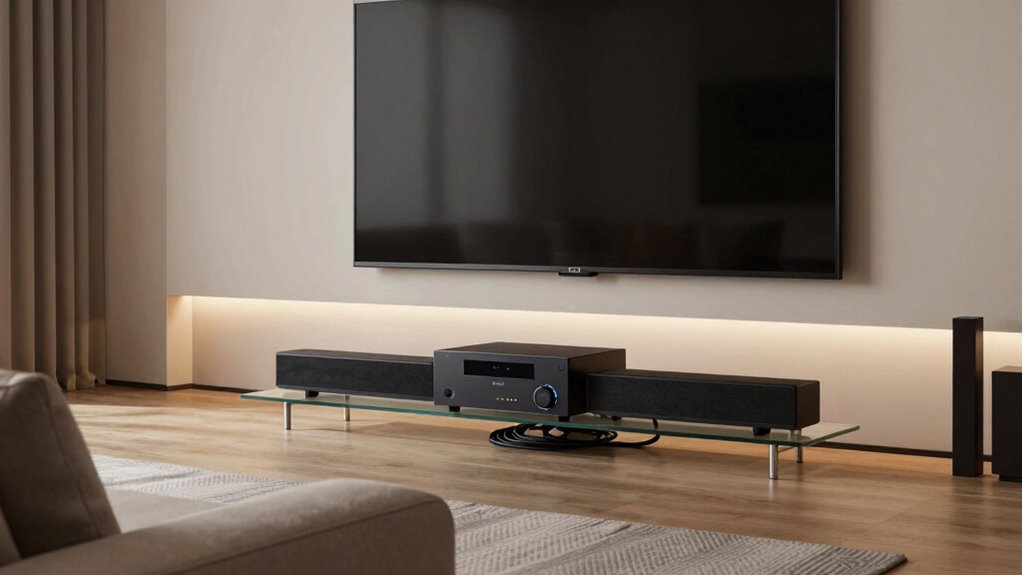

Dolby Atmos setup varies depending on your space and budget. A soundbar offers quick, easy installation with built-in height channels and wireless options, making it ideal for simpler setups. A receiver system provides more flexibility, allowing you to connect multiple speakers for a detailed soundstage and room calibration. To find the best fit for your home, you’ll want to weigh these options carefully. If you want to know more, you’ll discover useful tips for optimizing your setup.
Open a free Amazon Business account
Business pricing, bulk buying and tax-exempt orders.
As an affiliate, we earn on qualifying purchases.
Key Takeaways
- Soundbars are simpler to set up with built-in height speakers and wireless calibration, ideal for quick, clutter-free installation.
- Receivers offer more customization, multiple speaker connections, and precise calibration for a tailored Dolby Atmos experience.
- Proper placement of speakers and calibration are crucial for immersive sound, whether using a soundbar or receiver system.
- Soundbars typically connect via HDMI ARC/eARC, while receivers require multiple HDMI outputs for advanced configurations.
- Choose a soundbar for ease and space-saving setup; opt for a receiver for maximum flexibility and expanded sound options.
Dolby Atmos soundbar with upward firing speakers
As an affiliate, we earn on qualifying purchases.
As an affiliate, we earn on qualifying purchases.
What Is Dolby Atmos and Why Does It Matter for Your Home Theater?
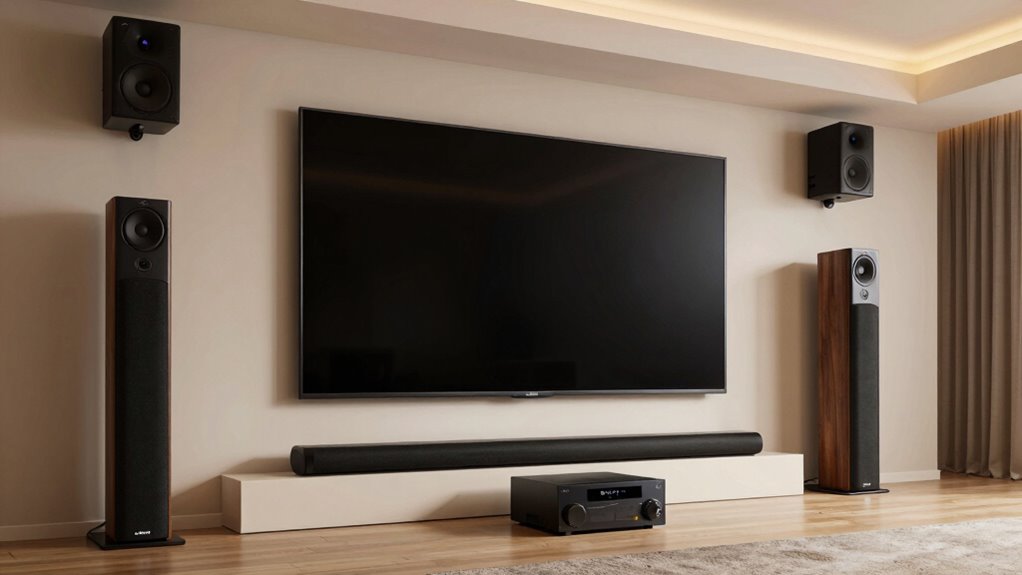
Ever wondered what sets Dolby Atmos apart from traditional surround sound? It’s all about creating a more immersive experience by adding height channels, which fill your room with sound from above. To achieve this, room acoustics and speaker placement are vital. Properly optimized room acoustics help sound move smoothly without echoes or dead spots, enhancing clarity. Speaker placement matters too — positioning speakers correctly ensures sound flows naturally and surrounds you evenly. Additionally, integrating sound absorption and diffusion techniques can significantly improve overall audio clarity. Dolby Atmos transforms your home theater by delivering multidimensional sound that feels like it’s happening all around you. When you understand how room acoustics and speaker placement influence the setup, you get a richer, more realistic audio experience that truly elevates your movie nights and music listening. Properly managing audio environment can further enhance your immersive experience by minimizing external noise interference. Additionally, choosing the right data storage and backup gear can help safeguard your media collection and settings for a seamless home theater experience. Proper room acoustics and speaker placement are crucial in making sure the immersive height channels work effectively, giving you a truly captivating sound environment. Optimizing room acoustics involves considering factors like sound absorption and diffusion, which are essential for enhanced audio clarity.
AV receiver for Dolby Atmos home theater
As an affiliate, we earn on qualifying purchases.
As an affiliate, we earn on qualifying purchases.
How Do Soundbars and Receivers Deliver Dolby Atmos Differently?
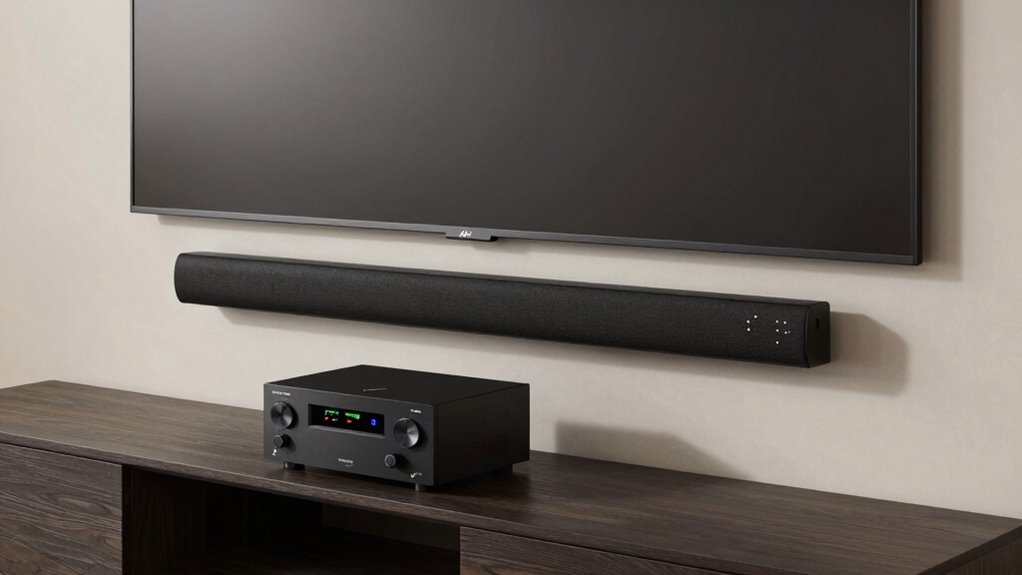
Soundbars and receivers deliver Dolby Atmos in different ways, each with its own advantages. Soundbars use built-in upward-firing or front-firing speakers to simulate height effects, simplifying speaker placement. Receivers, on the other hand, allow you to connect multiple speakers, enabling precise audio calibration and ideal speaker placement for immersive sound. Additionally, understanding metabolic health can improve your overall well-being, just as selecting the right audio setup enhances your listening experience. For optimal performance, consider how speaker placement impacts the overall immersive effect of Dolby Atmos. Proper speaker calibration ensures the best possible sound quality and spatial accuracy. Paying attention to design considerations such as room acoustics can also significantly enhance your audio experience.
room calibration microphone for surround sound
As an affiliate, we earn on qualifying purchases.
As an affiliate, we earn on qualifying purchases.
Step-by-Step: Setting Up a Dolby Atmos Soundbar
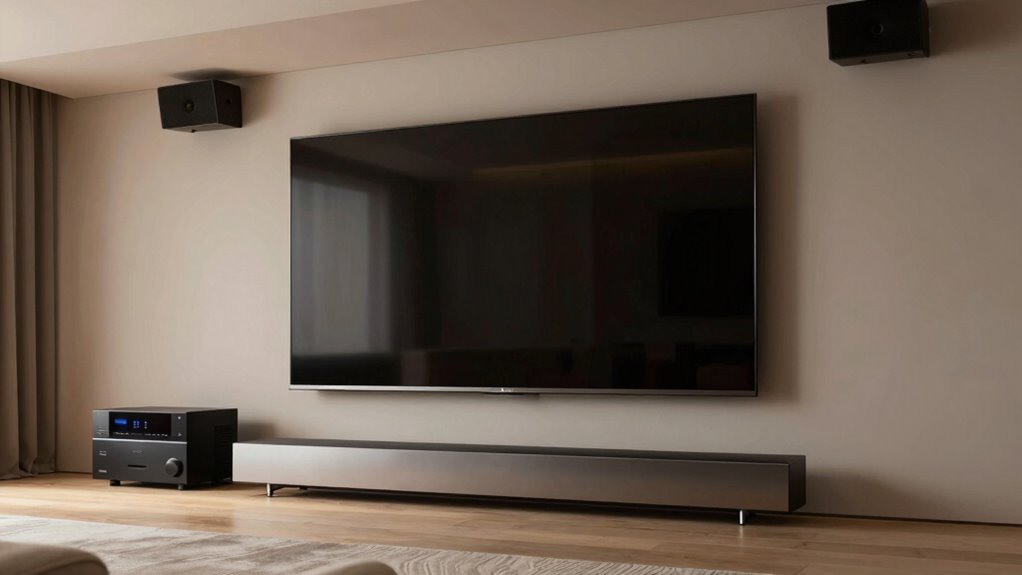
Setting up a Dolby Atmos soundbar is straightforward, but paying attention to placement and connections guarantees you get the best immersive experience. Start by positioning the soundbar close to your TV, ideally centered and at ear level for ideal sound. For speaker placement, make sure the soundbar is unobstructed and facing forward. Connect it to your TV using the appropriate HDMI ARC or eARC port for high-quality audio. Once connected, perform audio calibration, either manually or with your TV’s setup tool, to enhance sound settings. This calibration adjusts for room acoustics and speaker placement, boosting Atmos effects. Proper speaker placement and accurate audio calibration are key to achieving immersive, three-dimensional sound, making your Dolby Atmos experience truly engaging.
wireless Dolby Atmos compatible speakers
As an affiliate, we earn on qualifying purchases.
As an affiliate, we earn on qualifying purchases.
How to Set Up a Dolby Atmos Receiver System for Immersive Sound
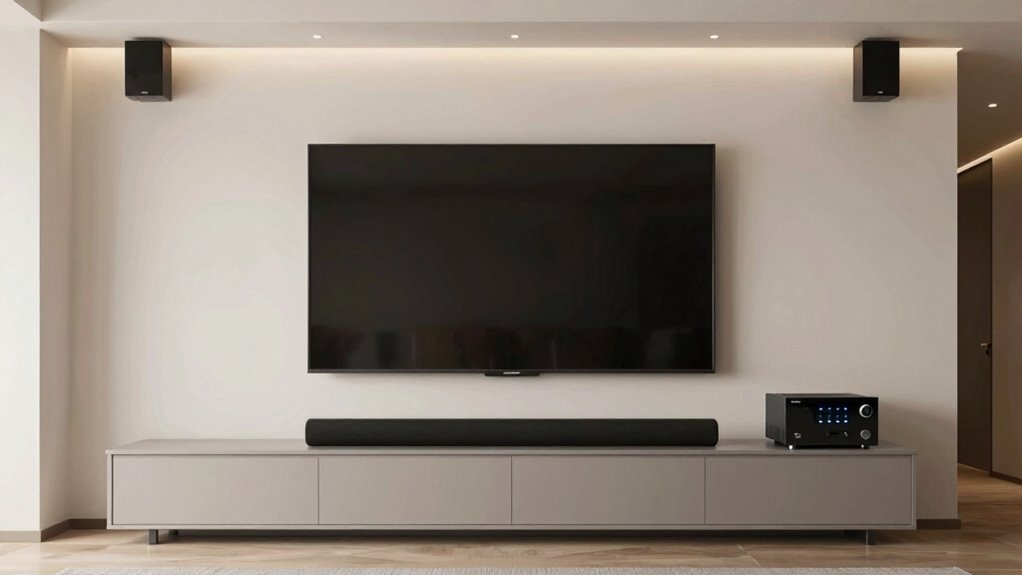
To create an immersive Dolby Atmos experience with a receiver system, start by choosing a compatible AV receiver that supports Dolby Atmos and has the necessary HDMI outputs. Proper speaker placement is essential; position speakers overhead or ceiling-mounted to deliver true height effects. Make sure your speakers are evenly spaced and aligned with your listening area for balanced sound. Acoustic treatment can greatly enhance the experience; add diffusers, absorbers, or bass traps to reduce reflections and improve sound clarity. Use a calibration tool or system setup microphone to fine-tune speaker levels and distances, ensuring peak performance. With careful speaker placement and effective acoustic treatment, your receiver system will deliver the rich, multidimensional sound Dolby Atmos promises.
Should You Choose a Soundbar or Receiver? Pros, Cons, and Which Is Right for You
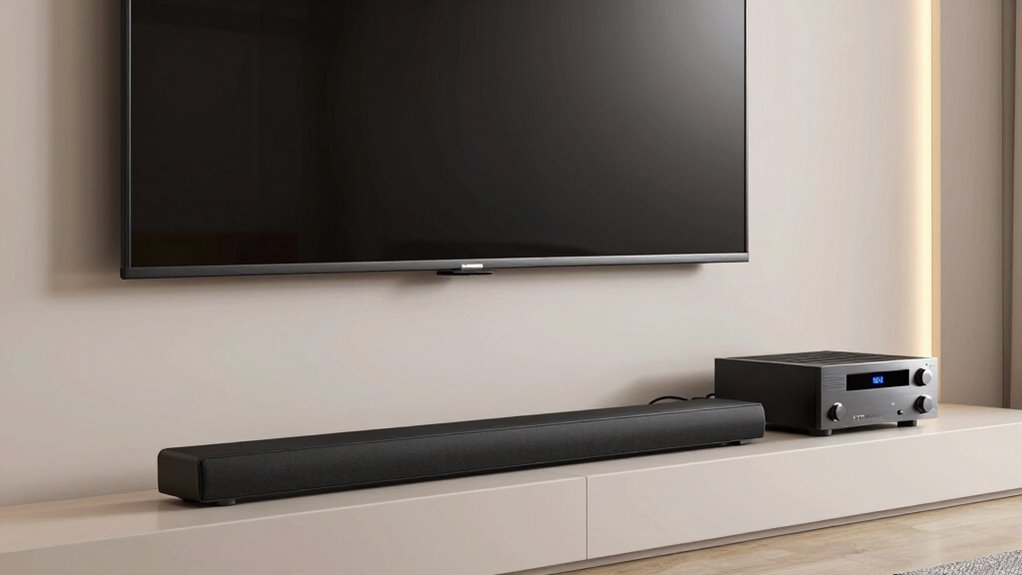
Choosing between a soundbar and a receiver depends on your space, budget, and audio goals. A soundbar offers a streamlined setup with wireless connectivity, making it ideal for smaller rooms or quick installation. It often includes built-in room calibration to optimize sound quality effortlessly. However, it may have limited expandability and less detailed soundstage compared to a receiver. On the other hand, a receiver provides more flexibility, allowing you to connect multiple components and speakers for a true immersive Dolby Atmos experience. Receivers excel at room calibration, customizing sound to your space’s acoustics. They’re better suited for dedicated home theaters but require more space and technical know-how. Consider your priorities: simplicity and convenience with a soundbar, or expandability and customization with a receiver. Additionally, understanding projector technology can help you create a more complete home cinema setup.
Frequently Asked Questions
Can I Upgrade My Existing Audio System to Dolby Atmos Later?
Yes, you can upgrade your existing audio system to Dolby Atmos later. To do so, make sure your setup supports speaker calibration for ideal sound and check content compatibility to enjoy Atmos features fully. If you have a soundbar, consider adding upward-firing speakers or upgrading to an Atmos-enabled model. For receiver-based systems, you might need a compatible receiver and additional speakers to achieve the full Atmos experience.
What Are the Ideal Room Conditions for Optimal Dolby Atmos Performance?
Your room’s acoustics and furniture placement are essential for Dolby Atmos to truly blow your mind. Keep your space well-treated with sound-absorbing panels and avoid echoing, which can ruin the experience. Place speakers strategically, especially overhead or upward-firing ones, and arrange furniture to prevent sound reflections. A balanced, clutter-free room creates the perfect environment, making Atmos sounds feel like they’re coming from every direction.
How Do I Troubleshoot Common Dolby Atmos Setup Issues?
To troubleshoot common Dolby Atmos setup issues, start by checking your speaker calibration to guarantee proper positioning and sound levels. Make sure your speakers are correctly connected and configured in your system settings. Additionally, use soundproofing techniques to minimize external noise interference. If problems persist, consult your device’s manual or firmware updates. Proper calibration and soundproofing often resolve most setup issues, delivering ideal Atmos performance.
Is Additional Wiring Required for Dolby Atmos in a Receiver System?
No, additional wiring isn’t always required for Dolby Atmos in a receiver system, but it depends on your setup. You may need extra wiring if you’re adding overhead or upward-firing speakers to guarantee proper placement and connection. Compatibility considerations are essential; make certain your receiver supports Dolby Atmos and the necessary speaker configurations. Review your receiver’s manual to determine if extra wiring or specific speaker wiring is needed for peak Atmos performance.
How Does Speaker Placement Impact Dolby Atmos Sound Quality?
Think of your room as a stage where speaker positioning and ceiling placement are like the director’s cues for a flawless performance. Proper placement guarantees immersive sound, with speakers ideally placed slightly above ear level or angled to direct sound downward. Ceiling speakers should be strategically positioned for even overhead audio coverage. When you optimize these, Dolby Atmos truly brings your content to life, creating a multi-dimensional auditory experience.
Conclusion
Ultimately, whether you choose a soundbar or a receiver, your goal is to create an immersive experience, to feel every moment, to hear every detail. Both options aim to elevate your home theater, to bring movies, music, and games to life. The choice depends on your space, your budget, and your desire for customization. Whichever path you take, focus on quality, on clarity, and on the magic of sound that surrounds you.
Flea & tick season Picks
flea and tick prevention
As an affiliate, we earn on qualifying purchases.