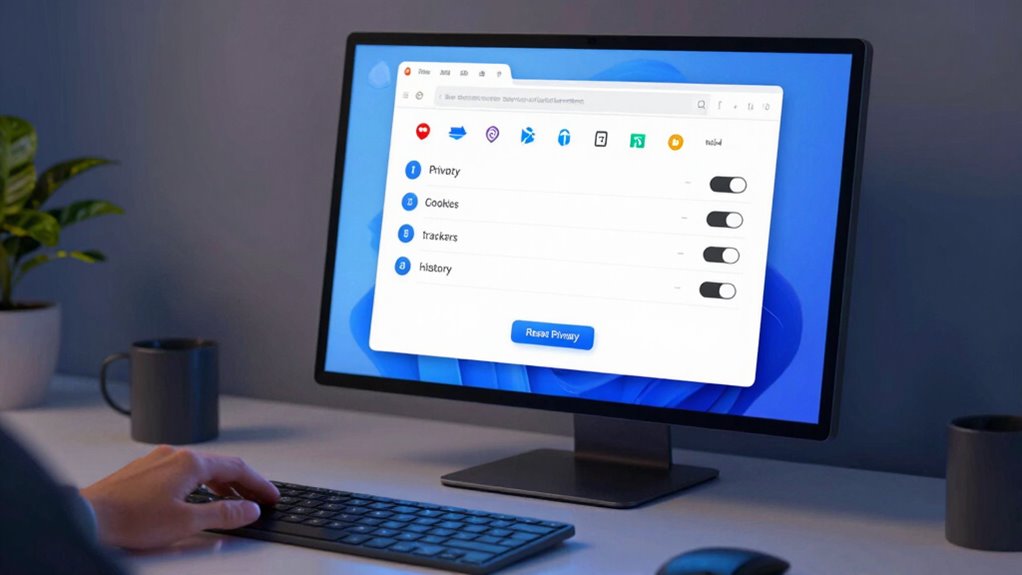

To fix your browser privacy settings today, start by accessing your browser’s privacy or security menu. Delete or block third-party cookies, and turn on tracking prevention features to stop unwanted monitoring. Review and remove any suspicious extensions or permissions granted to websites, then reset your settings to default if possible. Regularly update your browser and adjust privacy controls to stay protected. Keep going to discover more practical tips for maintaining your privacy over time.

Get the latest gadgets delivered free with Prime
- Fast, free delivery on millions of items
- Prime Video, Amazon Music and more included
- Member-only deals all year
Key Takeaways
- Access your browser’s privacy or security settings to reset or restore default privacy configurations.
- Delete stored cookies and block third-party cookies to prevent tracking.
- Remove or disable suspicious or unnecessary browser extensions and permissions.
- Enable tracking prevention features and strict privacy options for enhanced protection.
- Regularly review and update privacy settings to maintain security and privacy over time.
As an affiliate, we earn on qualifying purchases.
How to Spot Privacy Issues in Your Browser Settings
To effectively identify privacy issues in your browser settings, you need to understand what to look for. Start by examining your cookie management options; check if your browser allows you to delete cookies regularly and block third-party cookies, which can track your activity across sites. Look for tracking prevention features—these are designed to limit how websites monitor your browsing habits. If tracking prevention is turned off or not available, your privacy could be at risk. Also, review any permissions granted to websites, such as location or camera access, which can compromise your privacy. A thorough check of these settings helps you spot vulnerabilities that may expose your data to unwanted tracking or sharing. Being aware of your cookie categories and how they impact your privacy is essential for maintaining control over your personal information. Additionally, understanding how browser privacy settings function can help you better tailor your protections to suit your browsing habits. Knowing the privacy implications of your current configurations allows you to make informed adjustments to enhance your online security. Incorporating privacy management tools can further help you control and monitor your data sharing practices, and understanding data collection methods used by sites can give you a clearer picture of potential privacy risks.
As an affiliate, we earn on qualifying purchases.
Step-by-Step Guide to Reset Your Browser’s Privacy Settings
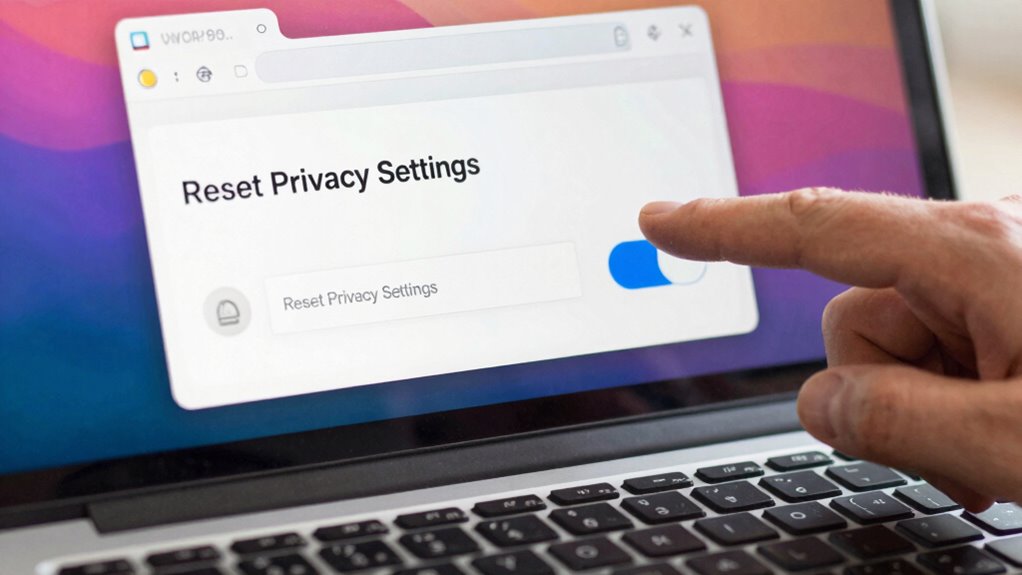
Resetting your browser’s privacy settings can be a straightforward way to enhance your online security and regain control over your data. Start by opening your browser’s settings menu. Look for sections labeled “Privacy” or “Security,” where you’ll find options for cookie management and extension permissions. Reset cookies by deleting stored data or setting them to block third-party cookies. Next, review your extension permissions and remove any that seem unnecessary or suspicious. Many browsers allow you to reset all privacy settings with a single click—use this feature if available. After resetting, customize your cookie management settings to block trackers and control data sharing. Understanding vetted – wave and wind and their fabrication challenges can also help you make more informed decisions about your online privacy and security. This process restores a more private browsing environment, especially as awareness of ethics in genetic testing influences how personal data is handled online. Recognizing the importance of security protocols can further strengthen your privacy measures during this process.
As an affiliate, we earn on qualifying purchases.
Key Privacy Features You Should Enable in Your Browser
Enabling key privacy features in your browser is essential for safeguarding your online activities and personal data. One of the most effective steps is blocking third-party cookies, which track your browsing across multiple sites and compromise your privacy. Turn on tracking prevention to limit how websites monitor your behavior, reducing targeted ads and data collection. Many browsers let you customize privacy settings to automatically block third-party cookies and enable strict tracking prevention. These features help prevent advertisers and malicious actors from building detailed profiles about you. Additionally, understanding how online privacy can be maintained with these tools allows you to take more informed control over your digital footprint. Implementing environmental impact considerations when choosing browser extensions or settings can further enhance your privacy choices. By activating these options, you take control of your online privacy, making it harder for third parties to follow your movements and gather sensitive information. Stay proactive and regularly review your browser’s privacy settings to stay protected.
As an affiliate, we earn on qualifying purchases.
How to Verify Your Privacy Settings Are Secure
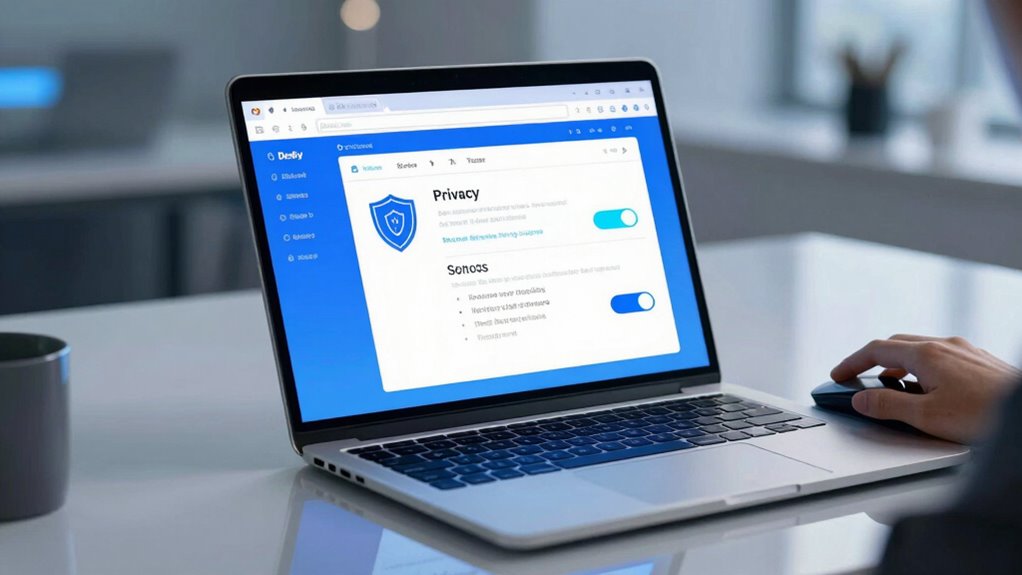
Wondering if your privacy settings are truly secure? To verify, start by reviewing your browser’s security options. Check that your privacy settings restrict third-party cookies and enable cookie management features to control data collection. Look into your browser extensions and remove any unfamiliar or unnecessary ones, as they can compromise privacy. Use built-in security tools or privacy-focused websites to test for leaks or tracking vulnerabilities. Confirm that your browser blocks pop-ups and malicious sites. Regularly update your browser to patch security flaws. Additionally, be aware that electric dirt bikes are gaining popularity, which highlights the importance of ensuring your online privacy is protected when researching or purchasing such products. It’s also wise to review your privacy policies for connected services to make certain they align with your privacy goals. Staying informed about browser security best practices can further bolster your defenses and help you stay confident your privacy settings protect your data effectively. For example, enabling secure browsing modes can add an extra layer of protection against potential threats. Moreover, understanding how watt-hours and capacity influence device performance can help you choose the right tools for your needs.
Tips for Maintaining Your Browser Privacy Over Time
Maintaining your browser privacy over time requires consistent effort and vigilance. Start by managing cookies regularly; delete or block unnecessary cookies to prevent tracking. Use cookie management tools or browser settings to control what data gets stored. Enable tracking prevention features offered by your browser to limit third-party trackers that monitor your online activity. Keep your browser updated to benefit from enhanced privacy protections. Be cautious when installing extensions—only choose trusted ones that prioritize privacy. Regularly review your privacy settings, and consider using privacy-focused extensions or VPNs for added security. Staying proactive guarantees your browsing remains private, minimizing data collection and tracking. Incorporating privacy-enhancing techniques can also help create a more secure browsing environment. Staying proactive guarantees your browsing remains private, minimizing data collection and tracking. Consistent attention to these tips helps uphold your privacy in an ever-changing digital landscape.
Frequently Asked Questions
Can Resetting My Browser Delete Saved Passwords or Autofill Data?
Yes, resetting your browser can delete saved passwords and autofill data. If you need password recovery later, it might be more difficult, as reset often clears stored credentials. While resetting improves autofill security by removing potentially vulnerable saved info, it also means you’ll need to re-enter passwords and autofill details afterward. To avoid losing important data, consider exporting passwords or using a dedicated password manager before resetting your browser.
Will Resetting Privacy Settings Affect My Browsing History?
Resetting privacy settings won’t wipe out your browsing history, but it might weaken your defenses against privacy breaches. You could lose some saved preferences, but your history usually stays intact unless you choose to clear it. Be aware that data recovery options could be limited if you accidentally delete important browsing data. To protect your privacy, reset settings carefully, and consider backing up essential information to prevent potential data loss.
How Often Should I Reset My Browser’s Privacy Settings?
You should reset your browser’s privacy settings every few months to keep your online security tight. Regular resets help with cookie management and extension permissions, preventing unauthorized access or tracking. If you notice unusual activity or sluggish browser performance, consider resetting sooner. This routine guarantees your privacy stays protected, and your browsing experience remains smooth. Staying proactive with these resets helps maintain control over your digital footprint.
Are There Any Risks Involved in Resetting Browser Privacy Settings?
Resetting your browser privacy settings risks losing saved passwords, cookies, and preferences, potentially exposing you to privacy pitfalls. However, it can also bolster your protection by resetting tracking prevention features and improving data encryption, making it harder for trackers to monitor you. Be cautious, as resets can cause temporary troubles, but with proper backups, you can balance the benefits of enhanced privacy with minimized risks, ensuring safer browsing.
Do All Browsers Have the Same Privacy Reset Options?
Not all browsers have the same privacy reset options. Some, like Chrome and Firefox, offer detailed cookie management and tracking prevention features you can restore easily. Others might have limited controls. When you reset privacy settings, you typically clear cookies and disable tracking prevention, helping protect your data. Always check your specific browser’s privacy options to ensure you’re managing cookies effectively and enabling tracking prevention for better online privacy.
Conclusion
By staying savvy and scrutinizing your settings, you protect your privacy and prevent potential pitfalls. Regular resets and vigilant verification keep your browser secure, so you can surf safely and smoothly. Remember, maintaining privacy isn’t a one-time task but a continuous commitment. Stay sharp, stay secure, and safeguard your space online. With these simple steps, you’ll stay one step ahead, ensuring your browsing remains private, protected, and peace-of-mind pristine.
Fall Picks
fall essentials
As an affiliate, we earn on qualifying purchases.