

To build a backup plan you’ll stick to, start by setting clear goals for your important data and choose reliable tools that support automation and strong encryption. Create a schedule that fits your habits, like daily or weekly backups, and test your backups regularly to verify they work. Stay flexible by updating your methods as needed and maintaining security across physical and digital layers. Keep these steps consistent, and you’ll protect your data with confidence—more helpful tips await if you continue.
Listen free for 30 days with Audible
Thousands of audiobooks and originals — cancel anytime.
As an affiliate, we earn on qualifying purchases.
Key Takeaways
- Set clear, realistic backup goals aligned with your data needs and schedule backups during low-activity periods for consistency.
- Use automated backup tools with strong encryption and cloud integration to minimize manual effort and ensure security.
- Regularly test your backups through restore procedures to confirm data integrity and recovery effectiveness.
- Diversify storage options, including multiple cloud providers and physical devices, to enhance security and flexibility.
- Stay informed about evolving security practices and update your backup strategies accordingly for continuous improvement.
As an affiliate, we earn on qualifying purchases.
Why You Need a Reliable Backup Plan

Have you ever lost important files unexpectedly? That’s why having a reliable backup plan is crucial. You want your data protected from hardware failures, theft, or accidents. Cloud storage makes it easy to access your files anywhere and guarantees you don’t lose everything if your device crashes. But, simply storing data isn’t enough—data encryption keeps your information safe from prying eyes during transfer and storage. A solid backup plan minimizes downtime and stress, giving you peace of mind. Without one, you risk losing priceless memories, essential work documents, or sensitive information. Investing in cloud storage combined with strong encryption creates a secure, dependable safety net. This way, you’re prepared for any unexpected data loss, making recovery quick and effortless.
As an affiliate, we earn on qualifying purchases.
How to Define Your Backup Goals and Priorities

Once you’ve recognized the importance of having a reliable backup plan, the next step is to clearly define your backup goals and priorities. Decide what data is most critical—personal files, work documents, or photos—and prioritize their backup. Determine how often you need backups, considering data change frequency. Incorporate data encryption to protect sensitive information during storage and transfer, especially if you’re using cloud synchronization. This guarantees your data stays private and secure. Understanding contrast ratio and how it affects image quality can help you optimize your home cinema setup, ensuring a more immersive viewing experience. Additionally, understanding data management strategies can help you organize and streamline your backup process, making it more efficient and less prone to errors. Clarifying these goals helps you stay focused and avoid unnecessary backups. Prioritize essential data, and set realistic, actionable objectives. By defining your goals and understanding your security needs, you’ll create a comprehensive backup plan that’s practical, effective, and tailored to your specific requirements.
As an affiliate, we earn on qualifying purchases.
Picking the Best Backup Tools and Platforms
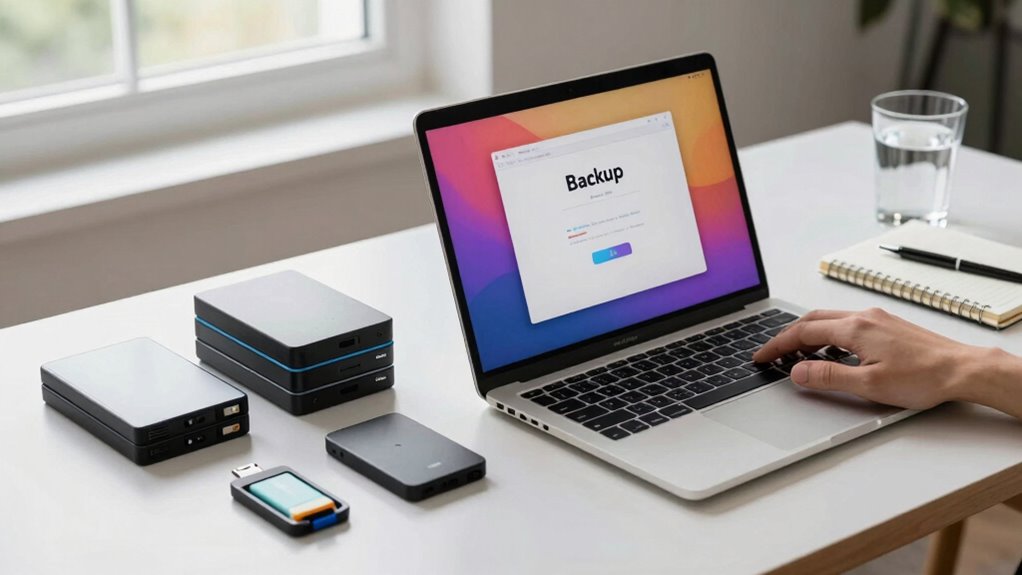
Choosing the right backup tools and platforms is vital to ensuring your data stays safe and accessible. Look for solutions that offer seamless cloud integration, making it easy to backup and restore data from anywhere. Prioritize platforms that support data encryption to protect your information from unauthorized access. Consider whether the tool allows automatic backups, so you don’t have to remember to do it manually. Compatibility with your devices and operating systems is also indispensable for smooth operation. A user-friendly interface helps you manage backups confidently. Check reviews and security certifications to verify reliability. Incorporating product roundups can also help you identify reliable options that suit your needs. Additionally, understanding sauna safety tips and signs of heat-related issues can inform your approach to protecting sensitive or important data in environments with fluctuating temperatures. Being aware of data storage standards can further ensure your chosen solutions meet industry benchmarks for security and performance. To enhance your backup strategy, consider integrating electric bike technology insights, which highlight the importance of reliable and high-performance systems, much like dependable data backup solutions. Moreover, selecting tools that adhere to industry security protocols can provide extra assurance of data integrity and safety.
As an affiliate, we earn on qualifying purchases.
How to Set a Backup Schedule That Works for You

How can you create a backup schedule that fits seamlessly into your routine? Start by considering your data usage patterns and set realistic intervals—daily, weekly, or monthly. Consistency is key, so choose a time when you’re least likely to forget, like after work or weekends. Focus on storage optimization by consolidating backups to avoid unnecessary clutter, which makes recovery faster and more efficient. Remember, data encryption is essential to protect sensitive information, so make certain your backups are secured with strong encryption methods. Automating backups reduces the risk of forgetting or neglecting updates, making your schedule more reliable. Keep it simple, and adjust your plan if your needs change, ensuring your backup routine remains manageable and effective over time. Additionally, exploring new digital concepts can help you stay informed about emerging backup technologies and best practices.
Streamlining Your Backup Process for Consistency
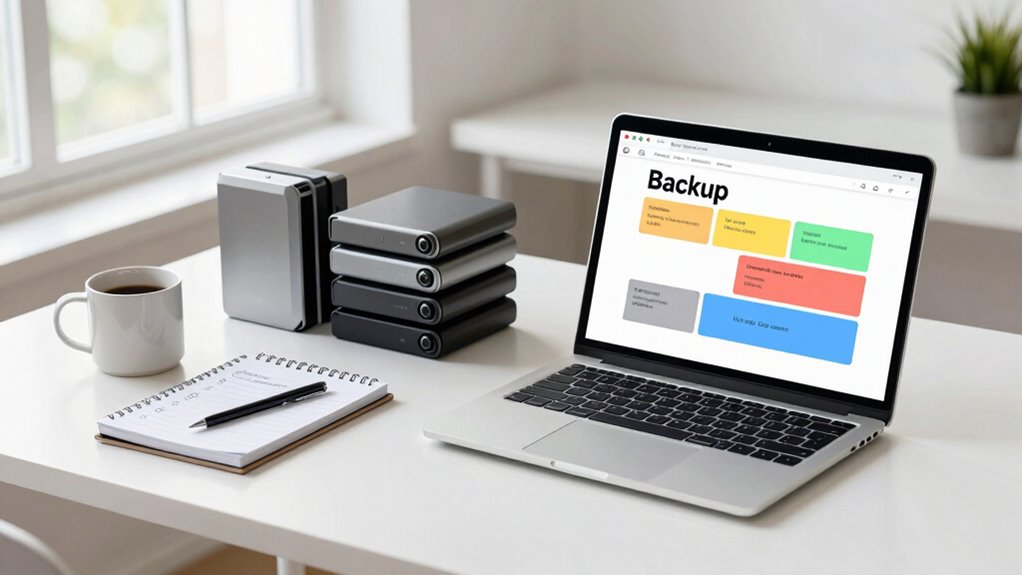
To maintain a consistent backup routine, streamlining your process is essential. Simplify steps by automating backups, so they occur without manual intervention. Next, integrate cloud services for seamless cloud integration, reducing manual transfers and ensuring off-site safety. Additionally, consider aligning your backup strategy with golf heritage principles such as precision and consistency to enhance reliability. Incorporating security measures like regular vulnerability assessments can further improve your backup security. Implementing backup scheduling tools can help you stay on track with your backup frequency. Furthermore, designing your backup plan to support natural pool concepts, such as sustainable and eco-friendly practices, can make your strategy more resilient. Finally, prioritize data encryption during backups to protect sensitive information from breaches. To make this easier, consider these steps:
- Use automatic backup tools that run on your schedule.
- Choose a reliable cloud provider that offers easy integration with your existing system.
- Enable end-to-end data encryption to secure your files during transit and storage.
- Incorporate cybersecurity best practices to further safeguard your backup data against potential threats.
Regularly Test and Verify Your Backup

Once you’ve set up a streamlined backup process, the next step is to guarantee it works reliably over time. Regularly testing and verifying your backups ensures data integrity and prevents surprises when you need to restore files. Use encryption protocols to protect your data during testing, confirming that your backups remain secure. If you rely on cloud integration, verify that your cloud backups are complete and accessible, especially after updates. Run test restorations periodically to confirm your backup files are not corrupted and that the restoration process is smooth. Document your test results and review procedures regularly. This proactive approach keeps your backups trustworthy, minimizes data loss risks, and ensures your backup plan stays effective long-term. Additionally, understanding the importance of regular maintenance helps reinforce your backup strategy’s reliability.
Keep Your Backup Strategy Secure and Adapt as Needed
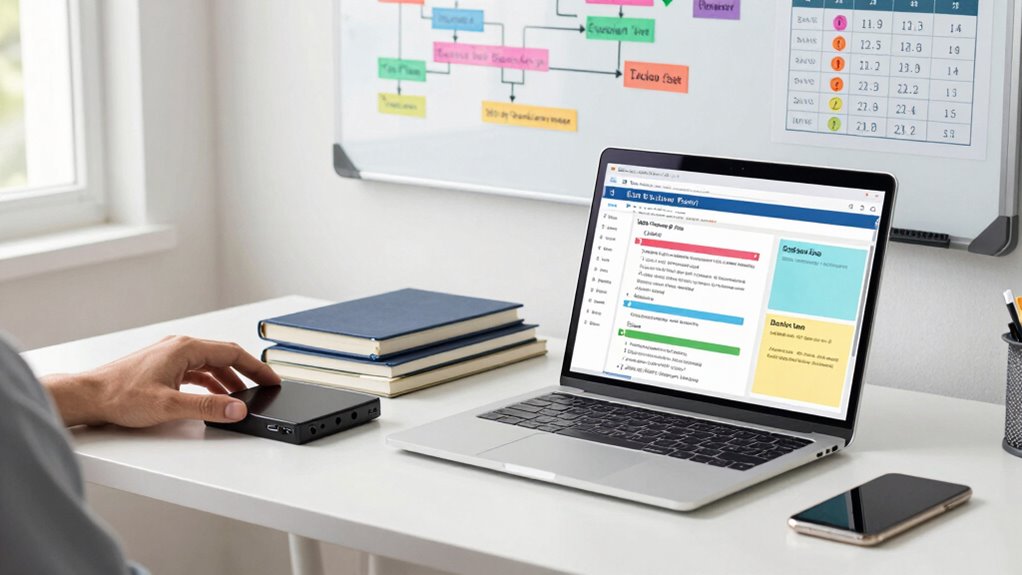
While having a solid backup plan is essential, ensuring its security and flexibility is equally important. Protect your backups with strong encryption techniques to prevent unauthorized access. Regularly update your encryption methods to stay ahead of threats. Use trusted cloud storage options that offer end-to-end encryption for added security. To keep your strategy adaptable, consider these steps:
- Review and update encryption techniques periodically.
- Switch between cloud storage providers if one becomes insecure or less reliable.
- Keep your backup procedures flexible enough to accommodate new technologies or changing needs.
- Incorporate wall surfaces and finishes into your overall safety measures to ensure physical and digital security are balanced. Additionally, staying informed about the latest digital security practices can help you identify emerging vulnerabilities and adapt your backup strategy accordingly. Regularly assessing your security protocols will help maintain a resilient backup system capable of evolving with new challenges, especially considering how microplastics in dust can impact both physical and digital environments.
A comprehensive understanding of encryption techniques can significantly strengthen your backup security and make your system more resilient against evolving threats.
Frequently Asked Questions
How Often Should I Review or Update My Backup Plan?
You should schedule reviews of your backup plan at least once every three to six months. This update frequency guarantees your plan stays current with any changes in your data or technology. Regularly reviewing allows you to identify gaps or outdated procedures, so you can make necessary adjustments. By staying proactive and committed to these scheduled reviews, you’ll ensure your backup plan remains reliable and effective whenever you need it.
What Are Common Mistakes to Avoid in Backing up Data?
Did you know 30% of data breaches happen due to poor backup practices? One common mistake to avoid is neglecting data encryption—without it, your backups are vulnerable. Also, relying solely on local storage can be risky; instead, use cloud storage for added security and redundancy. Always verify your backups regularly to guarantee data integrity. Avoid these mistakes, and your backup plan will be much more effective and secure.
Can I Automate My Entire Backup Process Easily?
Yes, you can automate your entire backup process, but be aware of automation challenges like configuring backup tools correctly and ensuring compatibility with your system. Use user-friendly backup tools that offer automation features, such as scheduled backups and real-time syncing. Regularly test your backups to confirm they work. While automation simplifies the process, stay vigilant to avoid missed backups or data corruption, keeping your plan reliable and efficient.
How Do I Handle Large Data Backups Efficiently?
Did you know that over 60% of data backups involve incremental backups? To handle large data efficiently, use data compression to reduce file sizes and speed up transfers. Combine this with incremental backups, which only save changes since the last backup, saving time and storage. Automate this process, scheduling regular backups during off-peak hours, ensuring your data stays protected without disrupting your workflow.
What Should I Do if My Backup Fails Unexpectedly?
If your backup fails unexpectedly, act quickly to prevent data loss by initiating your disaster recovery plan. Check for issues like network disruptions or storage errors, and verify data redundancy to guarantee copies exist elsewhere. Restart the backup process after resolving the problem, and document the failure to improve future reliability. Regular testing and updating your backup strategy help prevent similar issues and keep your data secure.
Conclusion
So, here’s the irony: you’ve now got a backup plan that’s reliable, tailored, and easy to stick to. Yet, the real challenge? Remembering to actually use it. Life’s busy enough without constantly worrying about losing data. But if you stay committed, test regularly, and keep your strategy secure, you’ll likely find that one day, your backup plan isn’t just a safety net—it’s your peace of mind. Ironically, that peace of mind is exactly why you’ll stick with it.
Flea & tick season Picks
flea and tick prevention
As an affiliate, we earn on qualifying purchases.