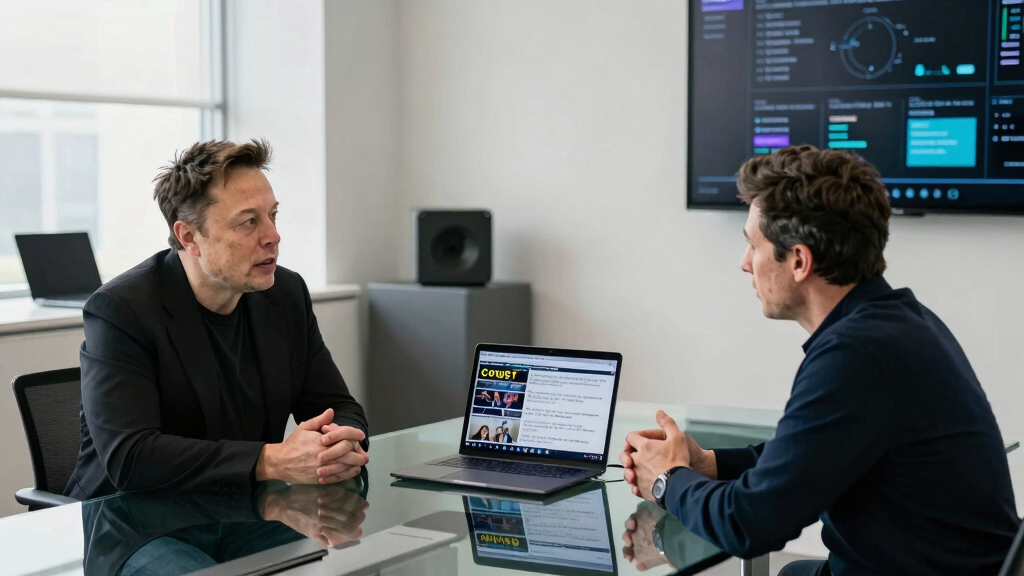

TL;DR
Elon Musk has filed a lawsuit against OpenAI, accusing its leadership of betraying the company’s founding mission. The trial features testimonies from Musk, Altman, and other key figures, with significant developments ongoing.
Elon Musk has sued OpenAI, alleging the company abandoned its original mission to develop AI for the benefit of humanity and shifted toward profit-driven objectives. The lawsuit, filed in 2024, is currently in court with high-profile testimonies from Musk, OpenAI CEO Sam Altman, and other key figures.
The trial has seen Musk accuse Altman and cofounder Greg Brockman of deceiving him to fund OpenAI, only for the company to pursue commercial interests. Musk is demanding the removal of Altman and Brockman and seeks up to $150 billion in damages if successful. Witness testimonies include Musk’s manager Jared Birchall, former OpenAI CTO Mura Murati, and Microsoft executives like Satya Nadella and Kevin Scott. Altman has defended his leadership, asserting that Musk’s claims are baseless and motivated by rivalry. The court has also reviewed internal safety protocols at OpenAI, with some teams delaying model releases for safety concerns.
Why It Matters
This lawsuit could reshape OpenAI’s governance and operational focus, potentially impacting the development and deployment of AI technologies like ChatGPT. The outcome may influence how AI companies balance profit motives with ethical commitments, and could set legal precedents for corporate governance in AI research.

Introduction to AI Safety, Ethics, and Society
As an affiliate, we earn on qualifying purchases.
As an affiliate, we earn on qualifying purchases.
Background
Elon Musk co-founded OpenAI in 2015 but stepped back from its leadership. In 2024, he filed a lawsuit alleging that the company abandoned its original mission of benefiting humanity, instead prioritizing profit. The case has garnered attention due to the involvement of major tech figures and the broader debate over AI ethics and corporate influence.
“This lawsuit has always been a baseless and jealous bid to derail a competitor.”
— Elon Musk
“We created, through a ton of hard work, this extremely large charity, and I agree you can’t steal it. Mr. Musk did try to kill it, I guess.”
— Sam Altman
“Our partnership with OpenAI aimed to build out Azure for AI research, and this trial is not something we wanted to be involved in.”
— Microsoft CTO Kevin Scott

Artificial Intelligence Safety and Security (Chapman & Hall/CRC Artificial Intelligence and Robotics Series)
As an affiliate, we earn on qualifying purchases.
As an affiliate, we earn on qualifying purchases.
What Remains Unclear
It remains unclear how the court will rule on Musk’s claims, including whether OpenAI’s shift toward profit will be deemed a breach of its mission. The potential impact on OpenAI’s leadership structure and future operations is also uncertain, as the trial is ongoing and more testimonies are expected.
Principles of Agentic AI Governance: A Playbook for Managing AI Risk, Fairness, and Compliance (Agentic Governance and Architecture)
As an affiliate, we earn on qualifying purchases.
As an affiliate, we earn on qualifying purchases.
What’s Next
The court will continue hearing testimonies from remaining witnesses, including further cross-examinations of Musk and Altman. A verdict could be issued in the coming months, potentially leading to significant changes in OpenAI’s governance or operational focus.

Embedded Software Testing: Developing reliable software from fundamentals to AI-based techniques (English Edition)
As an affiliate, we earn on qualifying purchases.
As an affiliate, we earn on qualifying purchases.
Key Questions
What are Elon Musk’s main allegations against OpenAI?
Musk alleges that OpenAI abandoned its mission to develop beneficial AI, shifted focus to profit, and that key leaders deceived him to secure funding, ultimately betraying the company’s original purpose.
What is Sam Altman’s defense in the trial?
Altman argues that the claims are baseless and motivated by rivalry, asserting that OpenAI remains committed to its mission and that Musk’s accusations are an attempt to undermine the company.
Could this lawsuit impact AI development?
Yes, a ruling could influence OpenAI’s governance, potentially affecting how AI models are developed, released, and aligned with ethical standards, with broader implications for the AI industry.
When will a verdict be expected?
The trial is ongoing, and a decision is not yet announced. It may take several months for the court to reach a verdict.