
TL;DR
Anthropic’s Frontier Red Team mapped 832 accounts banned for malicious cyber activity from March 2025 to March 2026 onto MITRE ATT&CK and found that technique count did not consistently correlate with attacker risk in the sample. The analysis says agentic AI systems that can chain attack steps with limited human input may be a more relevant risk indicator, but that behavior is not captured directly in the current taxonomy.
Anthropic’s Frontier Red Team has reported that 832 accounts banned for malicious cyber activity over a 12-month period show limitations in how security teams measure AI-enabled cyber threats, with the company finding that traditional counts of attacker techniques did not reliably separate lower-risk actors from higher-risk actors in the sample.
The analysis, summarized by Thorsten Meyer AI and attributed to Anthropic, mapped malicious activity from March 2025 through March 2026 onto MITRE ATT&CK, a widely used taxonomy for describing adversary behavior. Anthropic said the accounts examined were cases with enough detail to evaluate techniques thoroughly, making the dataset a window into observed misuse rather than a full census of all AI-enabled cyber activity.
According to the report summary, 67.3% of the banned accounts, or 560 accounts, used AI to help write malware. A smaller share, 6.5%, or 54 accounts, used AI in lateral movement, a post-compromise stage in which an attacker moves through a network after gaining access. Anthropic also found that the share of medium-or-higher-risk actors rose from 33% in the first six months of the period to 56% in the second half.
The analysis found that technique count, long used as a shorthand for attacker capability, was less predictive in this sample. The report said the least-skilled actors used 16 techniques while the most-skilled used 20, a narrow gap that complicates the use of technique counts as a measure of risk. The analysis also said the platform used, including Claude Code, API access, or chat, did not correlate with risk.
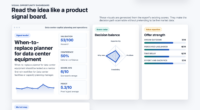
The frameworks can’t see the thing that matters
For decades, danger meant which techniques an attacker commands. A year of real AI-enabled attacks — 832 banned accounts mapped onto MITRE ATT&CK — shows that signal breaking, just as a new, harder-to-see one takes over.
A year of real misuse, mapped to the standard taxonomy
A window, not a census — these are the cases with enough detail to assess techniques thoroughly. Inside it, the risk level climbed fast.
WHAT WAS STUDIED
THE RISK CLIMB · MEDIUM-OR-HIGHER ACTORS
AI malware detection tools
As an affiliate, we earn on qualifying purchases.
As an affiliate, we earn on qualifying purchases.

Artificial Intelligence for Cybersecurity: How AI Detects Cyber Threats, Prevents Hacking, and Protects Your Data, Identity, and Smart Devices (AI Cybersecurity Mastery Series)
As an affiliate, we earn on qualifying purchases.
As an affiliate, we earn on qualifying purchases.
“More techniques” stopped meaning “more dangerous”
The old heuristic: count the techniques, judge the tooling. AI dissolved it — because the model supplies the techniques either way. Watch the old signal fail, then watch what it misses.
Risk score vs. technique count
Two ways to read the same attacker. One is going blind. Press play.
cyber threat intelligence software
As an affiliate, we earn on qualifying purchases.
As an affiliate, we earn on qualifying purchases.

Practical Malware Analysis: The Hands-On Guide to Dissecting Malicious Software
As an affiliate, we earn on qualifying purchases.
As an affiliate, we earn on qualifying purchases.
Deeper into the attack — and into less-skilled hands
Across the year, AI use drifted from getting in toward acting once already inside — the operationally demanding stages that used to require an expert.
The attack lifecycle · where AI is now applied
The center of gravity moved right — toward post-compromise work.
network security monitoring devices
As an affiliate, we earn on qualifying purchases.
As an affiliate, we earn on qualifying purchases.

Python Scripting for Cybersecurity: Linux Edition: Volume 1 – Beginner System Visibility Tools with Hands-On Python Projects
As an affiliate, we earn on qualifying purchases.
As an affiliate, we earn on qualifying purchases.
From “what they know” to “what they’ve built”
The report sorts the signals into three tiers — one dead, one fading, one durable.
Technique count & tooling
16 vs. 20 between novice and expert; platform doesn’t correlate. The model supplies the techniques either way.
Where in the lifecycle AI is applied
Concentrating on operationally demanding, post-compromise stages is a better signal — but it’s eroding as the whole population heads there.
The scaffolding around the model
Architectures that let the model chain stages and run with minimal human input. Not what they know — whether they’ve built a system that lets AI run the attack.
AI-powered intrusion detection system
As an affiliate, we earn on qualifying purchases.
As an affiliate, we earn on qualifying purchases.

TP-Link Deco 7 BE23 Dual-Band BE3600 WiFi 7 Mesh Wi-Fi System | 4-Stream 3.6 Gbps, 160 Mhz | Covers up to 6,500 Sq.Ft | 2× 2.5G Ports Wired Backhaul | VPN,MLO,AI-Roaming, HomeShield, 3-Pack
𝐍𝐞𝐱𝐭-𝐆𝐞𝐧 𝐖𝐢-𝐅𝐢 𝟕 𝐰𝐢𝐭𝐡 𝟒-𝐒𝐭𝐫𝐞𝐚𝐦 𝐃𝐮𝐚𝐥-𝐁𝐚𝐧𝐝 𝐮𝐩 𝐭𝐨 𝟑.𝟔 𝐆𝐛𝐩𝐬 – Designed with the latest Wi-Fi 7 technology,…
As an affiliate, we earn on qualifying purchases.
As an affiliate, we earn on qualifying purchases.
Fixing the map before the territory moves again
A taxonomy that can’t name the most dangerous behavior on the field will quietly mislead the people relying on it. The response runs in two directions.
Fed back into the models
The findings informed safeguards on the most capable models, built to detect & block some of what was observed:
- Blocking malware development
- Blocking mass data exfiltration
- Putting tools in defenders’ hands first (Project Glasswing)
Taking it to the source
Following the Verizon work, Anthropic says it’s in discussions with MITRE about how ATT&CK might evolve:
- A vocabulary for agentic orchestration
- Naming the scaffolding that makes a model an operator
- An interactive technique visualization on the Red blog
Reading it in proportion
- The 832 cases are a detailed subset, not the full population — the precise percentages are directional, not definitive.
- “More autonomous” is not “fully autonomous” — even the standout case needed human input at key moments, which is itself a place for defenders to intervene.
- This is one vendor’s window — the company with visibility into misuse of its own model, publishing what it found. The right thing to do with the data, and worth remembering as you read it.
Why It Matters
Security teams, vendors, and incident responders use taxonomies such as MITRE ATT&CK to classify attacker behavior, compare campaigns, and prioritize defenses. Anthropic’s analysis says a framework focused on visible attack steps may not fully account for how AI systems coordinate those steps.
The report highlighted a November 2025 espionage operation that involved 30 techniques across 13 tactics. The summary says that, under a technique-based view, the operation resembled many medium-risk actors, while Anthropic’s risk-scoring methodology rated it at the maximum score because the model operated as an autonomous agent.
That distinction places more emphasis on the systems built around the model. The report identifies surrounding architecture, or scaffolding, that lets a model chain stages and run with limited human input as an important indicator of risk.
Background
For years, many threat evaluations have treated breadth of technique, tooling sophistication, and attacker fluency as useful proxies for capability. That approach was developed in an environment where operationally demanding phases of an intrusion, such as account discovery, lateral movement, and privilege escalation, generally required higher human skill.
Anthropic’s analysis says that pattern is changing as AI is used deeper in the attack lifecycle. The summary says AI-assisted phishing fell by 8.6%, while AI use for account discovery rose by 8.9%, pointing toward more post-compromise use. The report frames that shift as a sign that less-skilled actors may now be able to attempt stages that once required more experience.
The report also says Anthropic fed the findings into safeguards for more capable models, including efforts to block malware development and mass data exfiltration. Anthropic is also described as being in discussions with MITRE about how ATT&CK might evolve to account for agentic orchestration and model scaffolding.
“More techniques stopped meaning more dangerous.”
— Thorsten Meyer AI summary of the Anthropic report
“There is no MITRE ATT&CK ID for agentic orchestration.”
— Thorsten Meyer AI summary
What Remains Unclear
The dataset does not represent all malicious AI-enabled cyber activity. The source material says the 832 accounts were cases with enough detail to map techniques thoroughly, so the findings should be read as evidence from a detailed subset rather than a full measure of the threat landscape.
It is also not yet clear how MITRE ATT&CK or related taxonomies may change, whether agentic orchestration will receive a formal vocabulary, or how quickly defenders can integrate that signal into daily threat scoring.
What’s Next
Anthropic says the findings are being used in model safeguards and defender-focused tooling, while discussions with MITRE may shape how future frameworks describe AI systems that coordinate attack steps. Security teams are likely to watch whether future reports confirm the same pattern across larger datasets and other model providers.
Key Questions
What did Anthropic study?
Anthropic studied 832 accounts banned for malicious cyber activity from March 2025 to March 2026 and mapped the observed behavior onto MITRE ATT&CK.
What is the main finding?
The report says counting attacker techniques no longer tracks danger well in AI-enabled activity because models can supply techniques to less-skilled users. The stronger signal is whether the attacker has built systems that let AI coordinate and chain attack stages.
Why does agentic orchestration matter?
Agentic orchestration refers to AI systems acting across multiple steps with limited human input. In the report’s highest-risk case, that autonomy drove the risk score even though technique count alone made the operation look less exceptional.
Does this mean MITRE ATT&CK is obsolete?
No. The report does not say the framework has no value. It says the framework may need new vocabulary for AI-specific behavior, especially model scaffolding and autonomous coordination.
What remains unknown?
It remains unclear how common these patterns are outside the examined accounts, how threat taxonomies will adapt, and how defenders will convert agentic behavior into repeatable detection and scoring practices.
Source: Thorsten Meyer AI