
📊 Full opportunity report: VigilSAR: The Object That Isn’t Transmitting on ThorstenMeyerAI.com — validation score, market gap, and execution plan.
TL;DR
VigilSAR is a radar-based platform that detects vessels not transmitting transponder signals, providing critical maritime situational awareness in any weather or lighting. Its foundation relies on publicly available satellite data, with ongoing development and integration efforts.
VigilSAR has achieved a significant capability by detecting objects in radar imagery that do not broadcast transponder signals, a development that enhances maritime domain awareness. The platform combines synthetic-aperture radar (SAR) detection with data fusion to identify vessels potentially engaged in illegal activities or in distress, regardless of weather or lighting conditions. This progress is confirmed through demonstrations using publicly available satellite data, though commercial deployment details remain under development.
The core technology of VigilSAR leverages SAR imagery from the European Space Agency’s Sentinel-1 satellites, which passively captures surface data regardless of weather or darkness. The system detects anomalous radar returns, primarily metal objects like ships, and then classifies them using neural networks. Its key innovation is the fusion of these detections with AIS and ADS-B signals, allowing operators to identify vessels that are present on radar but not broadcasting transponder signals.
While VigilSAR has demonstrated the detection of radar targets and the fusion process with publicly available data, its broader commercial capabilities—including integration across multiple satellite constellations and deployment in operational environments—are still under development. The product is positioned within the defense and intelligence sectors, with no public pricing available, and is offered through briefing requests rather than self-service sales.
VigilSAR — the object that isn’t transmitting
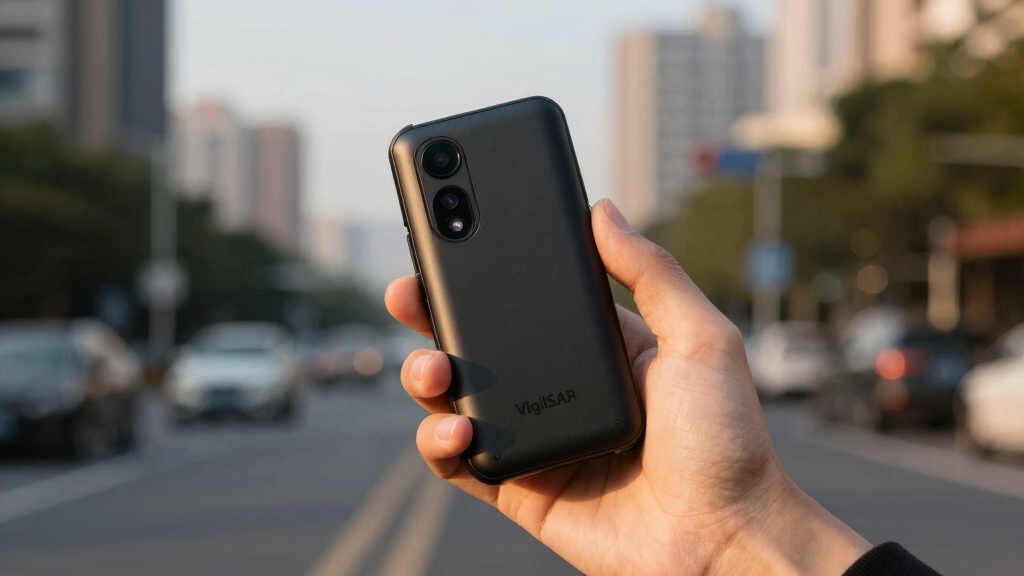
Radar sees through cloud and darkness, when cameras can’t. Fuse it with transponder data and the signal is the one detection no transponder explains.
Independent commentary on public positioning, produced with AI assistance under human editorial oversight. The views are the author’s own and may change. This does not verify or endorse VigilSAR’s capabilities, contracts, or performance. Capabilities on Sentinel-1 / Copernicus reflect a free, public data foundation; commercial-constellation and air-gapped-deployment references reflect stated positioning, not independently demonstrated fact. ISR and related technologies may be subject to export controls and dual-use regulations — lawful, ethical use is solely the operator’s responsibility. Nothing here is an offer, pricing, or operational/safety/legal advice. AI detection and classification can err and require human verification. Product and company names are trademarks of their respective owners; mention does not imply endorsement.
Maritime Security and Rule-of-Law Enhancement
This development matters because it addresses a longstanding challenge in maritime surveillance: identifying vessels that go dark to evade detection. Such vessels are often involved in illegal fishing, sanctions evasion, smuggling, or may be in distress. VigilSAR’s ability to detect these objects regardless of weather or darkness enhances the capacity of coast guards, fisheries regulators, and humanitarian responders to enforce laws, ensure safety, and combat illicit activities at sea.

Cobra RAD 480i Laser Radar Detector, Long Range Detection, Bluetooth, Black
- Front and Rear Detection: Detects signals from both vehicle ends
- Shared Alerts: Receive live alerts via Drive Smarter community
- Bluetooth Compatibility: Supports Apple CarPlay and Android Auto
As an affiliate, we earn on qualifying purchases.
As an affiliate, we earn on qualifying purchases.
SAR Technology and Maritime Surveillance Advances
Traditional optical satellite imagery is limited by weather and lighting conditions, making SAR an essential tool for all-weather, day-and-night surface monitoring. Sentinel-1’s publicly available data has been a foundation for research and development in this space. VigilSAR builds on established detection and classification techniques, adding a fusion layer that correlates radar detections with transponder signals to identify anomalies. The platform’s focus on the ‘dark-object’ problem aligns with ongoing efforts to improve maritime security, safety, and law enforcement.
“VigilSAR’s ability to identify radar targets without transponder signals represents a meaningful step forward in all-weather maritime awareness.”
— Thorsten Meyer, satellite remote sensing expert

The GEOINT Handbook: Analyzing Satellite Imagery with Python and AI for Security and Finance
As an affiliate, we earn on qualifying purchases.
As an affiliate, we earn on qualifying purchases.
Capabilities Beyond Demonstration and Commercial Deployment
While VigilSAR has demonstrated detection and fusion capabilities using Sentinel-1 data, it is not yet clear how fully operational or commercially available the system is at scale. Details about its deployment, pricing, and integration with existing maritime surveillance systems remain undisclosed. The extent of its use in real-world scenarios is still under development, and the platform’s performance in diverse operational environments is not fully confirmed.
MARITIME SECURITY: Vessel Tracking Systems Provide Key Information, but the Need for Duplicate Data Should Be Reviewed
As an affiliate, we earn on qualifying purchases.
As an affiliate, we earn on qualifying purchases.
Expected Milestones in Deployment and Market Positioning
Next steps include expanding the platform’s integration across commercial satellite constellations, conducting operational trials with maritime authorities, and clarifying its market offerings. The company is expected to release more detailed capabilities and potentially move toward commercial licensing or partnerships in the coming months. Ongoing demonstrations and user feedback will shape its final deployment scope and pricing models.

AirNav Radar ADS-B AIS Hybrid Receiver
- Dual AIS & ADS-B Receiver: Receives both AIS and ADS-B signals
- Frequency Coverage: Supports 1090 MHz and 162 MHz
- Easy Setup: Plug and play, no software needed
As an affiliate, we earn on qualifying purchases.
As an affiliate, we earn on qualifying purchases.
Key Questions
What makes VigilSAR different from traditional satellite imagery?
VigilSAR uses synthetic-aperture radar (SAR), which can see through clouds and operate at night, providing all-weather, day-and-night surface monitoring. Its key innovation is detecting objects without transponder signals and fusing these detections with other signals to identify vessels that are intentionally hidden or in distress.
Is VigilSAR currently available for operational use?
As of now, VigilSAR has demonstrated its core capabilities using publicly available SAR data, but its full commercial deployment, integration, and operational readiness are still under development. Details about pricing and broader deployment are not yet public.
Who benefits most from VigilSAR’s technology?
Maritime authorities, coast guards, fisheries regulators, and humanitarian agencies benefit most, as VigilSAR helps detect vessels that are attempting to evade detection, aiding law enforcement, safety, and environmental protection efforts.
What are the main limitations of SAR-based detection?
While SAR can operate in all weather and lighting conditions, interpreting radar signals requires advanced AI and fusion techniques. It may also face challenges distinguishing between different object types or false positives in complex environments, which ongoing development aims to address.
Source: ThorstenMeyerAI.com