
TL;DR
A July 1, 2026 ISR Briefing describes Ukraine’s Delta as a leading working case of software-defined warfare: a cloud-backed, browser-accessed battlefield-management system. Confirmed details point to broad data fusion and ordinary-device access; claims about target volumes and battlefield effect remain only partly verifiable.
Ukraine’s Delta battlefield-management system is being held up in a July 1, 2026 ISR Briefing as a leading working model of software-defined warfare, because it combines drone feeds, satellite imagery, sensor hits and vetted reports into a browser-based live map for military users. The development matters because Delta points to a shift in battlefield advantage from single weapons platforms to data fusion and fast software iteration.
Delta is a situational-awareness and battlefield-management platform built by Ukraine’s military ecosystem, including Aerorozvidka, the Defense Ministry’s innovation structures and the Ministry of Digital Transformation, according to the source material. Its function is to turn many battlefield inputs into one geolocated common operating picture that units can use for planning, coordination and secure sharing of enemy positions.
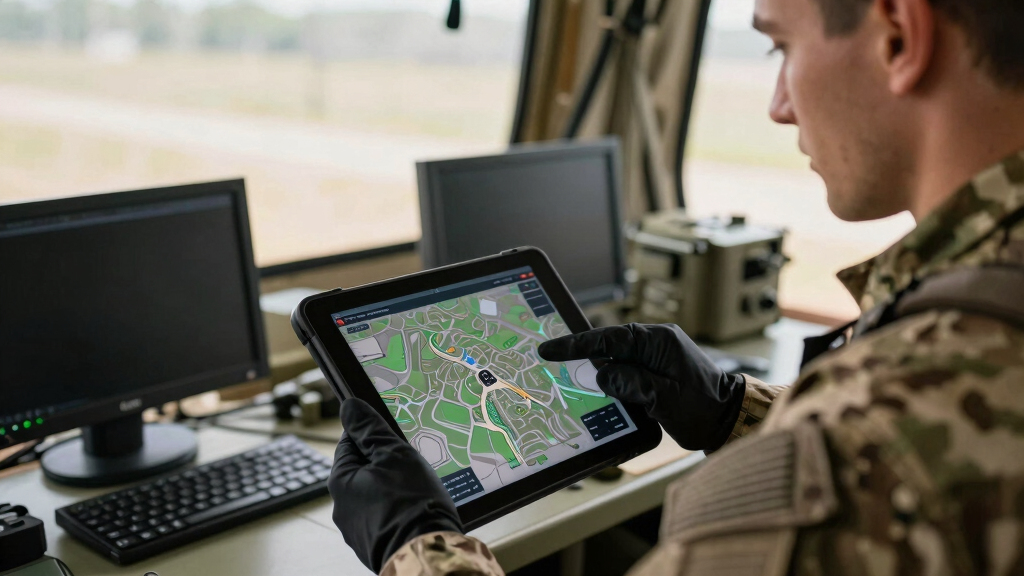
The system is described as drawing from commercial and military drones, satellite imagery, radar and sensor networks, allied intelligence and vetted field reports. The key confirmed design point is that Delta is not tied to a single proprietary terminal: the briefing says its client runs through ordinary browsers on phones, laptops and tablets, while its backend is cloud-native.
The briefing says the backend is deliberately hosted outside Ukraine so a missile strike or domestic infrastructure attack cannot take the whole system offline. That is a resilience claim tied to system architecture, not a public audit of uptime or combat performance. A separate Ukrainian Ministry of Defense claim that Delta helps process 1,500 targets per day remains not independently verified in the source material.
Software-defined warfare: how Ukraine’s Delta turned the battlefield into a shared, real-time map
A soldier opens a browser and sees the fused war — drones, satellites, sensors and vetted reports on one live map. The backend is a cloud deliberately hosted abroad so a missile can’t take it down. The clearest case yet of treating warfare as software.
Optical sensors go blind in cloud & dark; an all-weather SAR radar layer — the kind VigilSAR produces — slots into a picture like this as one resilient, sovereign input. vigilsar.com · And note the paradox: to survive missiles & cyberattack, Ukraine hosted its crown-jewel cloud outside its own borders — trading physical sovereignty for operational survivability. Resilience through distribution.
Delta’s lasting lesson isn’t a piece of software — it’s a model of how to build: commodity clients, cloud backend, open standards, relentless iteration, fusion over hardware, and resilience through distribution. It’s why a wartime NGO out-shipped procurement bureaucracies on a fraction of the budget. The platform mattered less than the picture — and the picture is software. Own the fusion layer, own the sovereign feeds into it, and get it to the edge.
Battlefield Software Becomes Infrastructure
Delta matters because it treats the fusion layer as a military asset. In the model described by the briefing and a 2024 CSIS analysis by Bondar, the scarce resource is not only the sensor, drone or satellite image; it is the software system that turns scattered inputs into a trusted shared picture fast enough to affect decisions near the front.
That has implications beyond Ukraine. If a force can push a reliable common operating picture to commodity devices, it can field capability faster than systems built around custom hardware and long procurement cycles. The briefing argues that Delta’s lesson is cloud backend, open standards, ordinary clients and rapid iteration, with the platform serving the picture rather than the other way around.
The design also exposes a sovereignty tradeoff. Hosting a wartime command system abroad may reduce risk from physical attack inside Ukraine, but it also places part of the system’s survival on foreign infrastructure, connectivity and trust arrangements. That choice shows how modern military resilience can depend on distributed digital architecture as much as hardened facilities.
browser-based drone control tablet
As an affiliate, we earn on qualifying purchases.
As an affiliate, we earn on qualifying purchases.
NATO Standards Met Wartime Iteration
Delta’s roots trace to efforts to break Soviet-style information silos and move toward NATO-compatible data sharing, according to the source material and CSIS framing. The platform grew from Ukraine’s wartime need to combine military, civilian and partner-country inputs while Russia’s invasion created a constant demand for faster targeting and coordination.
The source material describes Delta as an unusual product of government, military and volunteer technical capacity. That mix matters because Ukraine has relied heavily on civilian software talent, drone operators and defense-tech groups during the war, while the state has tried to formalize successful tools through military and digital ministry channels.
The briefing also links Delta to broader sensor debates. Optical drones and imagery can be limited by cloud cover, darkness and electronic warfare, while synthetic aperture radar and other all-weather systems can add another input. Vendor-side claims about specific radar products remain separate from verified evidence about Delta’s total battlefield effect.
“A soldier opens a browser and sees the fused war.”
— Thorsten Meyer AI ISR Briefing, July 1, 2026

Deep Learning for Satellite Imagery with Python: End-to-End Workflows for Image Analysis, Object Detection, and Change Monitoring
As an affiliate, we earn on qualifying purchases.
As an affiliate, we earn on qualifying purchases.
Target Claims Remain Unverified
Several key points remain unclear. The source material does not provide an independent audit of Delta’s uptime, the accuracy rate of its fused reports, or the real-world effect of its outputs on specific battlefield outcomes. The 1,500 targets per day figure is attributed to Ukraine’s Defense Ministry and should be treated as a claim.
There are also unresolved risks. The briefing identifies Delta as a large cyber target, and BleepingComputer is cited for reporting phishing and malware activity in December 2022. Connectivity loss, jamming, bad inputs and possible data-poisoning attempts could degrade any system that depends on rapid sharing of field data.
As an affiliate, we earn on qualifying purchases.
Cloud Battle Networks Face Tests
The next measure will be whether Ukraine and its partners can keep Delta useful under jamming, cyber pressure and fast battlefield change. Analysts will also watch whether allied militaries adopt similar browser-based command tools, and whether procurement systems can match the pace of wartime software development.
Future public evidence is likely to remain partial because many details are operationally sensitive. The clearest areas to watch are independent validation of performance claims, hardening against cyber threats, integration of sovereign sensor feeds and how NATO members apply lessons from Ukraine’s software-led battlefield management.
As an affiliate, we earn on qualifying purchases.
Key Questions
What is Ukraine’s Delta system?
Delta is a Ukrainian situational-awareness and battlefield-management system that fuses drones, satellite imagery, sensors and vetted reports into a shared live map for military users.
Is Delta a new weapon?
No. Delta is better understood as battlefield software. It does not replace weapons or sensors; it helps connect them through data fusion, mapping and command coordination.
What is confirmed about Delta’s design?
The source material describes Delta as cloud-native, accessible through ordinary browsers and built to combine many battlefield inputs. Claims about precise target volumes and battlefield effect are less firmly established.
Why is foreign cloud hosting part of the story?
The briefing says Delta’s backend is hosted outside Ukraine to reduce the risk that attacks on Ukrainian soil knock it offline. That improves distributed resilience, but it also creates reliance on outside infrastructure.
What are the main risks?
The main risks are cyber targeting, degraded connectivity, jamming, false or poisoned inputs and limited public evidence about how much Delta changes battlefield outcomes.
Source: Thorsten Meyer AI