
📊 Full opportunity report: DDR5 Now, DDR6 Soon: A Buyer’s Field Guide on ThorstenMeyerAI.com — validation score, market gap, and execution plan.

Get the latest gadgets delivered free with Prime
- Fast, free delivery on millions of items
- Prime Video, Amazon Music and more included
- Member-only deals all year
TL;DR
Despite rumors of DDR6 arriving soon, experts recommend purchasing DDR5 now for current needs. DDR6 will be expensive and delayed, making waiting unwise for most buyers.
Market analysts and industry sources confirm that consumers should purchase DDR5 memory now rather than wait for DDR6, which is still in development and not yet commercially available for mainstream desktops. This advice comes amid ongoing memory shortages and price inflation, with forecasts indicating no significant price relief until 2028 at the earliest. DDR6, while promising on paper, will arrive at a premium and only on new platforms, making waiting an unwise decision for most users.
Experts emphasize that DDR5-6000 with CL30 timings remains the best value for mainstream builds through 2028, as higher-speed kits like DDR5-8000 offer minimal real-world gains. The market has seen prices stabilize at high levels, and forecasts suggest that significant price drops are unlikely before 2028. Meanwhile, DDR6, which is expected to launch around 2026–27, will require entirely new hardware, including a new CPU, chipset, and memory modules, with initial prices projected to be 2–3 times higher than DDR5.
For capacity planning, the guidance remains to buy 32GB for general use and 64GB for content creators and heavy multitasking. The temptation to purchase 128GB modules now is discouraged, as current prices are inflated and the capacity may remain unused for years. Additionally, DDR4 is considered a dead-end for new builds, with manufacturers phasing it out and prices matching or exceeding DDR5 on incompatible platforms.
Regarding DDR6, it features a significant architectural leap—doubling bandwidth through four 24-bit sub-channels and higher transfer speeds, starting around 8,800 MT/s and scaling up to 17,600 MT/s. It also introduces a new physical form factor, CAMM2, which mounts against the motherboard like a CPU. However, DDR6 will be incompatible with existing systems, requiring new motherboards and CPUs, and will be staged over several years, with broad adoption not expected until around 2030.
DDR5 now, DDR6 soon
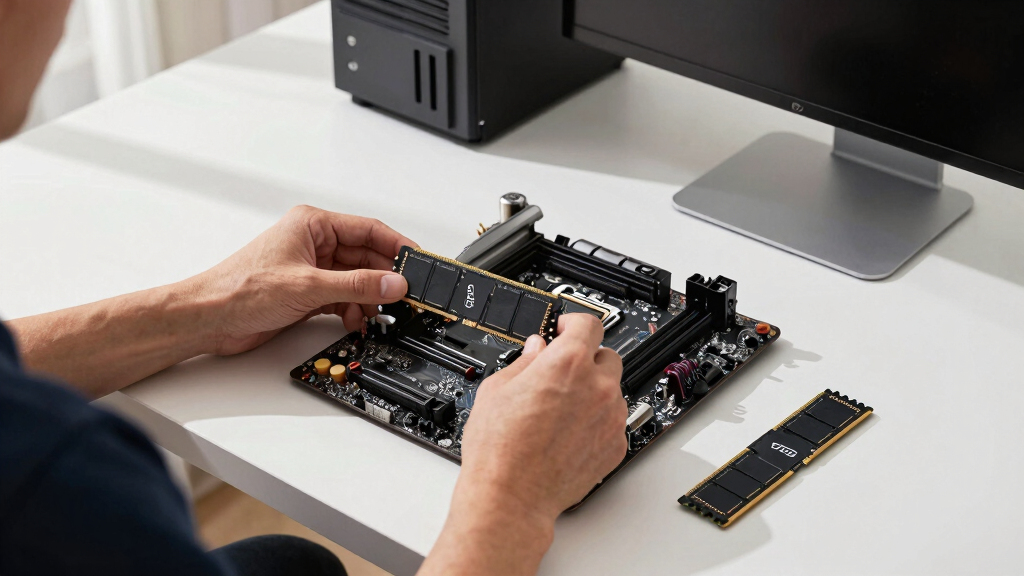
A buyer’s field guide. The 20-year instinct — wait for prices to drop, or wait for the next generation — is broken this cycle. Buy the DDR5 you actually need now; don’t wait for DDR6. Here’s the reasoning.
Driven to end-of-life, production slashed. Same money, dead-end socket. Leave a working DDR4 box alone — but never start a new build on DDR4 to “save.”
A framework, not a gamble. Buy the DDR5 you need now, at the sweet spot, in the capacity you’ll actually use — don’t buy DDR4, don’t wait for DDR6. The two costliest mistakes in this market are the ones that feel prudent: waiting for a price drop that isn’t coming, and waiting for a next-gen part that launches dearer than what’s on the shelf. Next: The SSD Squeeze.
Why Immediate DDR5 Purchase Is Recommended
This guidance is crucial because waiting for DDR6 could mean paying a premium for hardware that won’t be compatible with current systems, coupled with the risk of continued high prices and limited availability. Buying DDR5 now ensures users get a capable platform without overpaying for future technology that is still years away from mainstream adoption. For most users, this approach avoids delaying upgrades and missing out on performance improvements in CPUs and GPUs available today.
As an affiliate, we earn on qualifying purchases.
Current Market Trends and Future DDR Developments
The 2026 memory market is characterized by persistent shortages and high prices, driven by supply chain disruptions and increased demand. While rumors of DDR6’s imminent arrival circulate, industry sources confirm that DDR6 is still in the standardization phase, with initial products aimed at enterprise and AI workloads. The transition to DDR6 will be gradual, with early adoption limited to specialized markets before reaching mainstream desktops around 2027–28. Meanwhile, DDR5 has become the standard for new builds, with prices stabilizing at high levels, and the market moving away from DDR4 entirely.
“DDR5-6000 with CL30 remains the sweet spot for mainstream users through 2028, offering the best balance of performance and price.”
— Hardware manufacturing executive
As an affiliate, we earn on qualifying purchases.
Unconfirmed Aspects of DDR6 Adoption Timeline
While DDR6’s specifications and planned release stages are known, the exact timing of widespread adoption remains uncertain. The transition depends on the development of compatible CPUs, chipsets, and modules, which are still in the early stages. Additionally, the actual pricing, capacity options, and real-world performance benefits of early DDR6 modules have yet to be demonstrated, making precise predictions difficult.
As an affiliate, we earn on qualifying purchases.
Next Steps for Consumers and Industry Stakeholders
Consumers should focus on building or upgrading systems with DDR5 now, selecting configurations aligned with their workload needs. Industry watchers should monitor JEDEC standard approvals and motherboard compatibility lists for DDR6, alongside early product announcements and benchmarks. The next major milestone will be the appearance of validated DDR6 modules and compatible CPUs, expected around late 2026 or early 2027, which will clarify the actual performance and cost benefits of the new standard.
As an affiliate, we earn on qualifying purchases.
Key Questions
Should I buy DDR4 memory in 2026?
No. DDR4 is being phased out, and new builds should use DDR5 to ensure future compatibility and performance.
Is waiting for DDR6 a good idea?
For most users, waiting isn’t advisable. DDR6 will be expensive, delayed, and incompatible with current systems, with broad adoption not expected until 2027–28.
How much DDR5 memory should I buy now?
For typical use, 32GB remains sufficient; for content creation or multitasking, 64GB is recommended. Avoid overspending on higher capacities that may sit unused.
When will DDR6 be widely available?
Early products are expected around 2026–27, with mainstream adoption not likely until 2028 or later.
Source: ThorstenMeyerAI.com
Fall Picks
fall essentials
As an affiliate, we earn on qualifying purchases.