
TL;DR

Get the latest gadgets delivered free with Prime
- Fast, free delivery on millions of items
- Prime Video, Amazon Music and more included
- Member-only deals all year
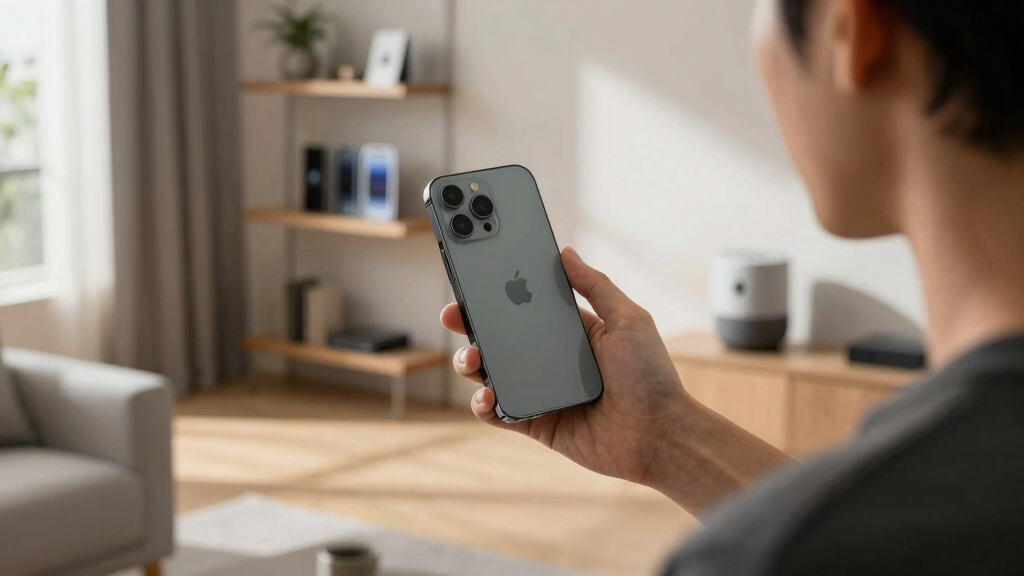
Apple is lobbying Washington for permission to buy memory chips from China’s CXMT, according to reports cited by Thorsten Meyer AI, after raising some Mac and iPad prices because of a global memory shortage. The development matters because Apple still has supplier and political options, while Europe has almost no domestic DRAM or HBM capacity and limited leverage over memory supply.
Apple is lobbying officials in Washington to allow purchases of memory chips from China’s CXMT, according to reports cited by Thorsten Meyer AI, a move that highlights how the global memory shortage is now pressuring even the world’s most valuable hardware company and exposing Europe’s much weaker position in the supply chain.
The reported push came two days after Apple raised prices on some Mac and iPad models, with the memory shortage cited as the reason in the source material. CXMT, formally ChangXin Memory Technologies, is listed under the Pentagon’s Section 1260H designation, which identifies Chinese companies the U.S. government says have military links.
The key confirmed development is Apple’s reported effort to secure a route to Chinese memory supply. The broader claim, made in the Thorsten Meyer AI analysis, is that the move shows how severe the shortage has become: Apple has U.S.-based supplier access through Micron, the ability to lobby Washington, and, if approved, a possible China option.
Europe’s position is different. The European Commission has said the EU produces less than 10 percent of global semiconductors by value and remains heavily dependent on suppliers in the United States and Asia. In memory, the source material says Europe has virtually no meaningful production of DRAM or HBM, the high-bandwidth memory used in AI accelerators.
Apple greift nach China-Speicher. Europa hat nicht einmal diese Option.
Der Speicher-Engpass legt Amerikas Abhängigkeit offen — und Europas weit brutaler. Apple hat einen heimischen Zulieferer, politisches Gewicht und die China-Option. Europa hat keinen eigenen Speicher, keinen Sitz am Tisch, keinen Hebel auf das, was zählt.
- EU fertigt < 10 % der Halbleiter weltweit
- Praktisch kein DRAM, kein HBM aus Europa
- 3–4 Speicherhersteller weltweit — keiner europäisch
- Reiner Preisnehmer: Speicher ~4× in 3 Quartalen
- ASML: EUV-Monopol — kein Spitzenchip ohne
- Zeiss: Präzisionsoptik, weltweit konkurrenzlos
- imec · CEA-Leti · Fraunhofer: Spitzenforschung
- Infineon, NXP, STMicro: Automotive · Leistung · SiC
Der Engpass ist ein Souveränitätstest — Europa fällt bei der Versorgung durch, hält die Hebelmacht aber in der Hand. Wenn sich selbst Apple nicht freikaufen kann, ist Europas Antwort nicht, sich einzukaufen, sondern zweigleisig: die einzigartigen Engstellen konsequent als Hebel nutzen — und die Abhängigkeit dort senken, wo es ohne Brüssel geht: lokal-first, offene Gewichte, Quantisierung, richtig dimensionierte Hardware. Den 20-%-Traum begraben, das Eigene verteidigen, weniger brauchen.
Europe Lacks Apple’s Options
The Apple-CXMT episode matters because it separates supply dependence from supply leverage. Apple is exposed to the memory squeeze, but it still has scale, U.S. political access and a domestic supplier ecosystem. Europe has demand, regulation and subsidies, but almost no direct control over the memory capacity that now shapes prices for servers, AI systems and consumer devices.
That leaves European buyers as price takers in a market dominated by a small group of suppliers, chiefly Samsung, SK Hynix and Micron. Counterpoint is cited in the source material as saying memory prices have risen roughly fourfold over three quarters, with some segments seeing even sharper year-on-year increases.
The risk for readers is practical, not abstract. Higher memory prices can feed into device prices, cloud costs, AI infrastructure budgets and public-sector technology spending. If supply tightens further, European companies and governments may have fewer ways to secure allocation than U.S. or Asian buyers with direct supplier relationships.
As an affiliate, we earn on qualifying purchases.
The 20 Percent Target Slips
The EU Chips Act set a goal of lifting Europe’s share of global semiconductor production to 20 percent by 2030, backed by about 43 billion euros in mobilized investment. But the source material cites the European Court of Auditors as saying in December 2025 that reaching that target is “very unlikely”.
The gap is especially stark in memory. The number of major DRAM producers has fallen from more than 20 in the mid-1990s to a handful today. None of the main players is European, and HBM production sits outside Europe at a time when AI demand is absorbing supply years in advance.
Europe is not without leverage. The bloc holds strong positions in ASML’s EUV lithography, Zeiss precision optics, advanced research through imec, CEA-Leti and Fraunhofer, and power and automotive semiconductors through companies such as Infineon, NXP and STMicroelectronics. But those strengths do not replace missing memory capacity.
High-bandwidth memory (HBM) modules
As an affiliate, we earn on qualifying purchases.
As an affiliate, we earn on qualifying purchases.
Approval And Supply Stay Open
It is not yet clear whether U.S. officials will approve Apple’s reported request, whether Apple would buy from CXMT at scale, or whether any purchases would be limited to certain products or markets. The source material also does not confirm the exact models affected by Apple’s reported price increases.
It also remains uncertain how long the memory shortage will last. Reported supply commitments by major AI buyers may keep pressure on DRAM and HBM, but pricing depends on new capacity, yields, demand from AI labs and hyperscalers, and U.S.-China policy decisions.
As an affiliate, we earn on qualifying purchases.
Washington And Brussels Move Next
The next marker is whether Washington grants Apple clearance to use CXMT memory, blocks the request, or permits a limited arrangement. Any decision could signal how far U.S. officials are willing to bend supply-chain restrictions during a hardware squeeze.
For Europe, the next test is whether policymakers shift from the broad 20 percent production target toward a narrower strategy built around ASML, advanced packaging, lower memory demand and selective support for future memory architectures. The shortage is forcing that choice now, not in 2030.
As an affiliate, we earn on qualifying purchases.
Key Questions
What did Apple reportedly ask Washington to approve?
Apple is reportedly seeking permission to buy memory chips from China’s CXMT, a company on the Pentagon’s Section 1260H list.
Why is this tied to higher Mac and iPad prices?
The source material says Apple raised some Mac and iPad prices two days before the report, citing the global memory shortage as the reason.
Why does Europe have less room to respond?
Europe has strong semiconductor tools and research assets, but it has almost no major DRAM or HBM producer. That means it has limited direct leverage over the memory supply that AI and consumer hardware need.
Does Europe still have semiconductor strengths?
Yes. Europe has major leverage through ASML, Zeiss, research centers and companies focused on automotive, power and industrial chips. The problem is that those strengths do not give Europe its own large-scale memory supply.
What remains unknown?
The main unknowns are whether U.S. approval will be granted, whether Apple will actually buy CXMT chips, how long memory prices will stay high and whether Europe will adjust its chip strategy in response.
Source: Thorsten Meyer AI
Halloween Picks
halloween
As an affiliate, we earn on qualifying purchases.