
If your iPhone storage is full, enabling the ‘Optimize iPhone Storage’ setting for photos can help free up space without losing your images. This feature keeps smaller versions of your photos on your device while storing the full-resolution originals securely in iCloud. It’s a smart way to save space, keep your photo library accessible, and maintain device performance. Keep going to discover more tips on managing your storage effectively.
Key Takeaways
- Enable “Optimize iPhone Storage” in Settings > Photos to automatically reduce local photo sizes while keeping originals in iCloud.
- Confirm iCloud Photos is turned on to securely store high-resolution images and free up device space.
- Regularly delete duplicate, blurry, or unneeded photos and clear cache to free storage.
- Transfer old photos to a computer or external storage for additional space management.
- Check storage settings to identify large files, delete messages with attachments, and clear app caches.

MFi Certified USB 3.0 Flash Drive 128GB for iPhone, 3in1 External Memory Photo Keeper Storage Stick for Picture/Video/Data Saver/Backup, High Speed Thumb/Jump/Hard Drives for iPhone/iPad/Android/PC
【MFi Certified Multi-function Flash Drive】This flash drive is MFi certified, high quality and excellent performance, allowing you to…
As an affiliate, we earn on qualifying purchases.
As an affiliate, we earn on qualifying purchases.
Struggling With “Storage Full” Alerts? Here’s How to Fix It
When you see the “Storage Full” alert on your iPhone, it’s easy to feel overwhelmed. To fix this, start by enabling Cloud Backup, which saves your photos and videos to the cloud, freeing up space on your device. Next, consider photo compression—reducing the file size of your images without losing quality. Many apps automatically compress photos when uploading to the cloud or backing up, helping you save storage. You can also manually delete duplicate or blurry shots, or transfer old photos to a computer. By leveraging Cloud Backup and photo compression, you minimize storage issues without sacrificing your memories. Additionally, understanding digital concepts can help you better manage your content and optimize storage. This approach keeps your iPhone running smoothly and ensures your photos are safe, without constantly battling “Storage Full” alerts.

MAKTAR Qubii Duo USB-C iPhone External Storage & Photo Saver for iPhone – Personal Cloud Storage Device, Picture Storage & Auto Backup (microSD Required)
IPHONE EXTERNAL STORAGE & AUTO BACKUP – Qubii Duo acts as external storage for iPhone, automatically backing up…
As an affiliate, we earn on qualifying purchases.
As an affiliate, we earn on qualifying purchases.
What Is the ‘Optimize iPhone Storage’ Setting and Why It Matters
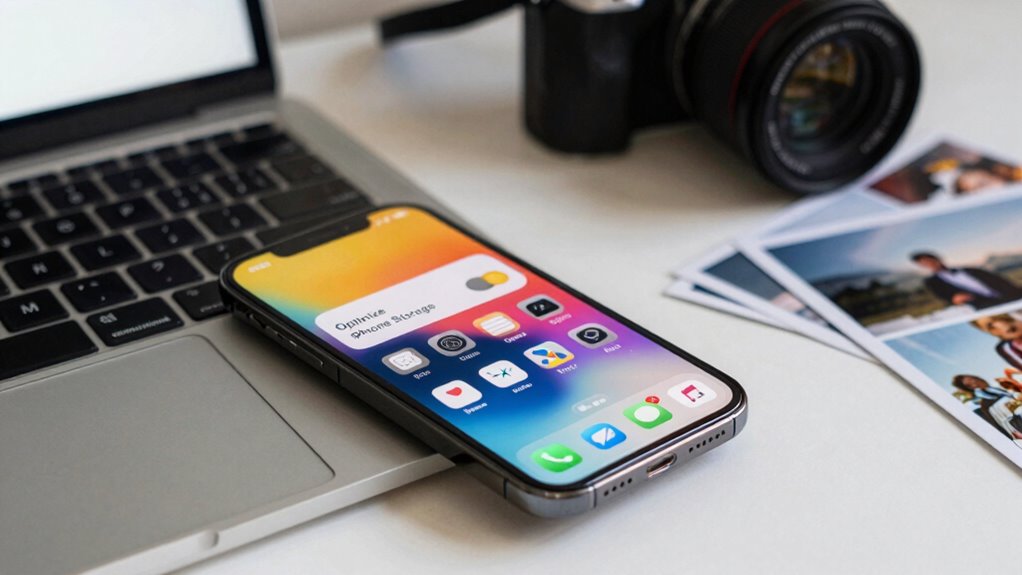
Ever wonder how your iPhone manages to keep your storage in check while still showing your full collection of photos? The ‘Optimize iPhone Storage‘ setting is a key part of this process. When enabled, it automatically manages your photo backup, keeping full-resolution images in iCloud while only storing lightweight versions on your device. This considerably reduces local storage use without losing access to your entire collection. It’s a smart way to handle storage management, especially if you take lots of photos. By using this feature, your iPhone frees up space and prevents storage full alerts. You get quick access to your photos, and your backup remains secure in iCloud. This setting is essential for maintaining a balance between photo access and available storage.

Create Great iPhone Photos: Apps, Tips, Tricks, and Effects
As an affiliate, we earn on qualifying purchases.
As an affiliate, we earn on qualifying purchases.
How to Turn On ‘Optimize iPhone Storage’ for Photos
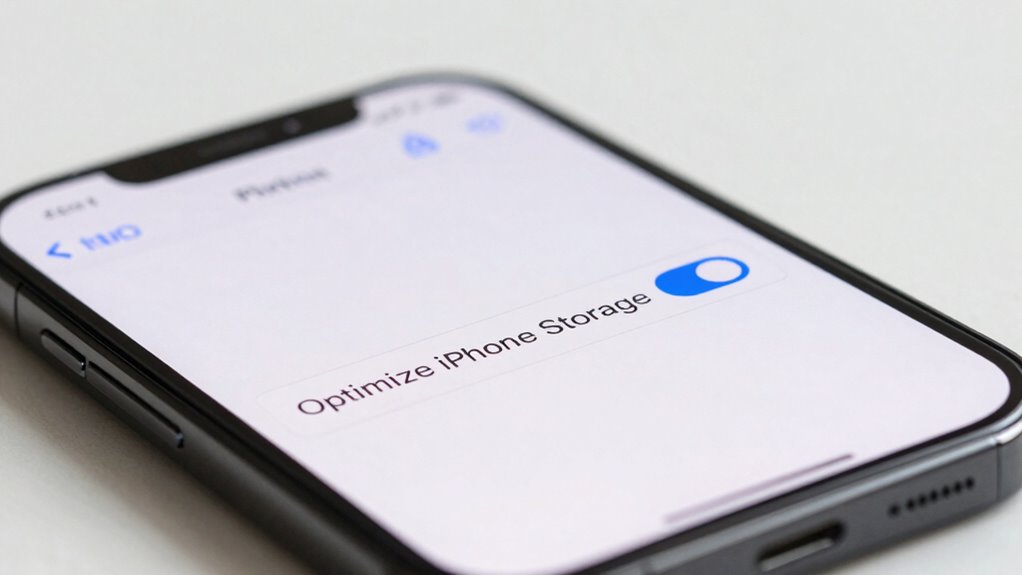
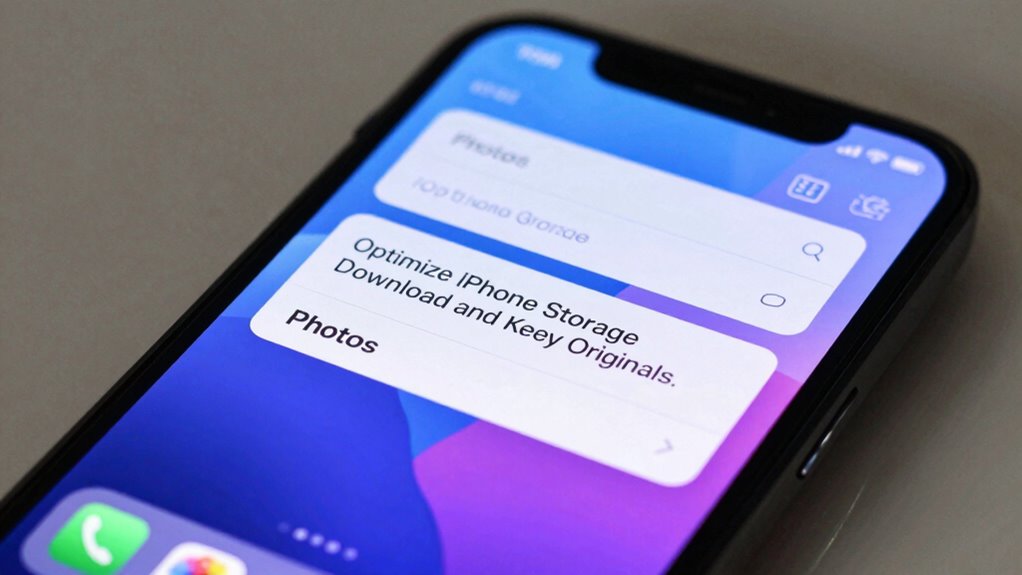
To turn on ‘Optimize iPhone Storage’ for your photos, start by opening the Settings app on your iPhone. Tap your Apple ID at the top, then select “Photos.” Next, toggle on the switch next to “Optimize iPhone Storage.” This setting automatically replaces full-resolution photos with smaller versions on your device, while the original, high-quality images are stored securely in iCloud. Turning this on helps with storage cleanup by freeing up space on your iPhone without losing access to your photos. It also ensures your photo backup remains complete and consistent, as your full-resolution images stay safely stored in iCloud. Enabling this feature is a simple way to manage your storage effectively while keeping your photo library accessible. Additionally, understanding color accuracy can help ensure your photos look their best when viewed on different devices. Knowing how photo quality settings affect your images can help you better optimize your storage and display preferences, especially when considering photo resolution and clarity. Maintaining awareness of photo storage management ensures you’re making the most of available space without sacrificing image quality.

Seagate Portable 2TB External Hard Drive HDD — USB 3.0 for PC, Mac, PlayStation, & Xbox -1-Year Rescue Service (STGX2000400)
Easily store and access 2TB to content on the go with the Seagate Portable Drive, a USB external…
As an affiliate, we earn on qualifying purchases.
As an affiliate, we earn on qualifying purchases.
Benefits of Automatically Optimizing Your iPhone Photo Storage
By automatically optimizing your iPhone photo storage, you free up valuable space on your device. This setting also keeps your photos looking crisp and clear, even if the original files are stored in iCloud. Additionally, it helps you enjoy more photos without sacrificing device performance, similar to how photo editing tools enhance images while maintaining storage efficiency. Implementing these settings ensures your device remains family-friendly and ready for adventure, much like preparing for a fun day at the waterpark. Incorporating digital organization strategies can further enhance your overall device management and prevent clutter. A well-structured approach to storage is essential for maintaining creative storytelling and engaging your audience effectively. Just as whole-home water systems are optimized for efficiency and performance, your device settings can be fine-tuned to maximize storage and user experience.
Saves Device Space
Automatically optimizing your iPhone photo storage helps you save valuable device space without sacrificing access to your images. When you enable this feature, your iPhone stores smaller, space-saving versions of your photos while keeping full-resolution originals safely backed up in iCloud. This process streamlines your storage cleanup, freeing up significant space on your device. By managing your photos this way, you reduce clutter and prevent your iPhone from filling up with duplicates or unnecessary files. It’s a smart way to guarantee your device remains responsive and efficient, especially if you take many photos. Plus, since your images are still accessible, you won’t lose any memories or important moments. This setting helps you stay organized and keeps your storage capacity optimized with minimal effort.
Ensures Photo Quality
While optimizing your photo storage saves space, it also assures that your images maintain high quality. When you enable automatic photo optimization, your iPhone manages storage without sacrificing photo resolution. This means you can still view detailed images, even if the original files are stored in iCloud. Here are four ways this benefits you:
- Preserves photo resolution for sharp, clear images.
- Prevents quality loss during storage management.
- Ensures quick access to high-quality photos when needed.
- Balances storage space with image clarity, avoiding compromise.
Check If Your Photos Are Being Optimized Properly
Make certain your iCloud Storage is set up correctly and has enough space, so your photos can sync properly. Check that the “Optimize Photos” option is enabled in your settings to save space while keeping your originals in iCloud. Also, verify that your Photo Library is syncing across devices to ensure your photos are being optimized as intended. Regularly monitor your device’s storage to prevent any issues with photo synchronization and filter maintenance to keep your device running smoothly. Additionally, understanding how cycling gear maintenance can improve your device’s performance helps in maintaining your equipment effectively, similar to how DIY tools and safety tips can enhance your project outcomes. Be mindful that ethical choices in digital storage can influence your overall data management practices and privacy considerations.
Verify iCloud Storage Settings
To guarantee your photos are being optimized correctly, start by checking your iCloud Storage settings. Ensuring your iCloud settings are properly configured helps with effective photo backup and storage management. Here’s what to do:
- Open Settings and tap your Apple ID at the top.
- Select iCloud, then Photos.
- Confirm “iCloud Photos” is toggled on.
- Check if “Optimize iPhone Storage” is enabled to save space.
These steps ensure your photos are securely backed up to iCloud, freeing up local storage. If your iCloud storage is nearly full, your photos may not back up correctly, causing storage issues. Regularly reviewing your iCloud settings keeps your photo backup seamless and prevents storage errors.
Enable Optimize Photos Option
Once you’ve confirmed that iCloud Photos is enabled and your storage settings are correct, it’s time to guarantee your iPhone is actually optimizing your photos. To do this, check that the “Optimize iPhone Storage” option is turned on. This setting reduces the photo quality stored locally on your device, replacing full-resolution images with smaller versions that save space. This is essential for effective storage management, especially if you’re running low on space. When optimized, your device keeps full-resolution photos in iCloud, downloading them only when needed. Make sure this feature is active to prevent your phone from filling up quickly. Properly optimizing your photos helps maintain your device’s performance while still keeping your entire photo library accessible. Additionally, understanding the cultural activities in your region can enrich your experience when exploring local landmarks and events.
Check Photo Library Sync
How can you be sure that your photos are being properly optimized and synced across your devices? To guarantee effective storage management and reliable photo backup, check your Photo Library sync settings. First, verify that iCloud Photos is enabled in Settings > [your name] > iCloud > Photos. Second, confirm that “Optimize iPhone Storage” is active to save space. Third, look for a status indicator showing photos are uploading or synced—this confirms proper backup. Fourth, open the Photos app and see if recent photos appear on all devices. If syncing isn’t working, you might need to troubleshoot your internet connection or sign out and back into iCloud. Properly syncing ensures your photos are optimized, backed up, and accessible, helping you keep storage free and organized. Additionally, understanding cabling solutions can help prevent issues with device connections that may hinder photo transfers or backups. Being aware of potential scams related to storage and backup services can also help you avoid unnecessary risks. Regularly reviewing your sync settings and staying informed about iCloud storage plans can further optimize your photo management.
Quick Tips to Free Up Space Without Deleting Photos
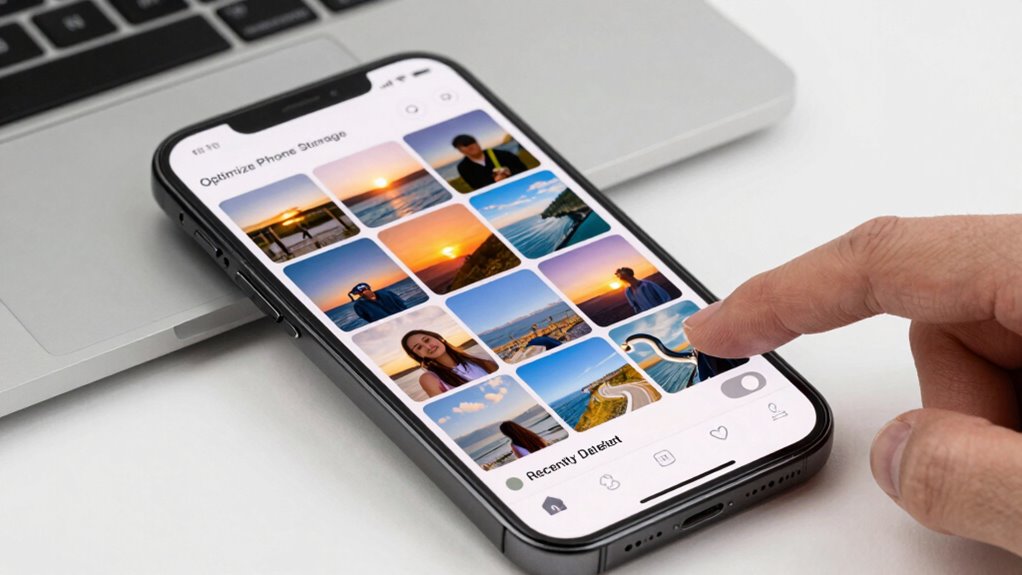
If your iPhone storage is nearly full, you can free up space quickly without deleting any photos. Start by ensuring your photos are safely backed up through a reliable photo backup service like iCloud or another cloud provider. This way, you can remove local copies without losing memories. Next, manage your apps by deleting unused ones or offloading apps you rarely use, which frees up significant space. Use your device’s storage settings to identify large apps and clear their cache if possible. Consider turning off photo syncing temporarily or optimizing photo storage settings to reduce local photo file sizes. Additionally, understanding how photo storage settings work can help you better manage your space in the future. Knowing the home organization techniques can also assist in decluttering your device and optimizing storage. Regularly reviewing your storage and removing duplicate files or unnecessary data can further enhance device performance. These simple steps help you regain storage without sacrificing your photos, keeping your device organized and functional. Exploring storage management tools can further streamline your device’s performance.
When Should You Manually Offload Photos or Use Cloud Storage?
Knowing when to manually offload photos or rely on cloud storage can make a big difference in managing your iPhone’s space. Consider these situations:
- Your storage is nearing full, and you want an immediate fix without deleting photos.
- You need to free up space quickly for new photos or apps.
- You want to keep a photo backup but don’t want local storage to fill up.
- You regularly sync photos across devices, making cloud storage more efficient.
- Using template compatibility features can help optimize your photo management process across devices and platforms. Additionally, understanding the Stoic principle of moderation can help you make more mindful decisions about storage and backups, avoiding unnecessary clutter.
Manual offloading helps with quick storage management, but cloud storage offers a safer, accessible photo backup. Use these options strategically to keep your iPhone running smoothly and ensure your photos are safely stored without occupying all your local space.
Troubleshooting: Why Is My Storage Still Full?
If your storage remains full despite deleting photos, hidden photo storage might be taking up space. Check your optimize photo settings to make certain your iPhone is managing your storage efficiently. Addressing these hidden areas can help free up space and improve your device’s performance.
Hidden Photo Storage
Ever wonder why your iPhone storage remains full even after deleting photos? Hidden photo storage could be the culprit. Photos saved in albums like “Recently Deleted” might still occupy space if not emptied. Additionally, iCloud Photo Library can keep copies in the cloud, but local storage may not reflect this. To free up space effectively, focus on:
- Checking and emptying the “Recently Deleted” album
- Reviewing iCloud Photo Library settings for backup strategies
- Managing duplicate or hidden photos through photo organization apps
- Deleting large videos or unneeded screenshots
Optimize Photo Settings
Sometimes, your photo settings can keep your iPhone storage full even after deleting photos. To free up space, optimize your photo settings by enabling photo backup and cloud synchronization. When you turn on iCloud Photos, your photos automatically upload to iCloud, keeping your device storage clear. This allows you to delete local copies without losing access to your pictures. Make sure to check that “Optimize iPhone Storage” is enabled in your Photos settings; this substitutes full-resolution photos with smaller versions on your device. Also, review your cloud sync status to ensure your photos are backed up properly. By adjusting these settings, you prevent your storage from filling up unnecessarily and keep your photos safely stored in the cloud.
How Optimized Storage Affects Photo Quality and Device Performance
Optimized storage on your iPhone can substantially impact both photo quality and device performance. When enabled, it replaces full-resolution photos with smaller versions, saving space but affecting photo quality. This process can also slow down your device’s responsiveness, especially when accessing or editing photos.
Consider these points:
- Reduced photo resolution may diminish detail.
- Faster storage management frees up space quickly.
- App performance may improve due to less data handling.
- Downloading full-resolution images requires extra steps.
While optimized storage helps manage space efficiently, it’s essential to balance it with your need for high-quality photos and smooth device performance.
Additional Ways to Manage iPhone Storage Effectively
To manage your iPhone storage effectively, regularly review and delete unnecessary apps, photos, and messages. A key step is setting up a reliable photo backup system, like iCloud or another cloud service, so you can safely delete local copies without losing memories. Use cloud synchronization to keep your photos accessible across devices while freeing up space on your iPhone. Consider enabling “Optimize iPhone Storage,” which replaces full-resolution photos with smaller versions, saving storage without sacrificing quality. Also, delete large files or old conversations from Messages, and clear app caches when possible. These practices, combined with regular backups, guarantee your device stays responsive, organized, and free of clutter, making the most of your available storage.
Frequently Asked Questions
Does Optimizing Photos Reduce Their Resolution or Quality?
Optimizing photos doesn’t reduce their photo quality or image resolution visibly. Instead, it compresses the images to save storage space while maintaining a good balance of quality. When you enable this setting, your original, high-resolution photos stay untouched, and the optimized versions are stored for viewing. This way, you can free up space without sacrificing the clarity or detail of your images, ensuring they look great when you share or print.
Can I Access Full-Resolution Photos Offline After Optimization?
Did you know that over 80% of iPhone users optimize their photos to save storage? Yes, you can access full-resolution photos offline after optimization, but only if they’ve been downloaded to your device. When you tap on a photo, it temporarily downloads the full-quality version, allowing you to view it offline. Keep in mind, ensuring the photo is fully downloaded is key to maintaining high photo quality offline.
How Much Storage Can I Save Using the ‘Optimize iPhone Storage’ Feature?
Using the ‘Optimize iPhone Storage’ feature can save you significant space—up to 70%—by storing full-resolution photos in your cloud storage and keeping smaller, optimized versions on your device. This way, you can still access your photos offline, and your photo backup remains secure in the cloud. The exact savings depend on your photo library size, but it’s an effective way to free up storage without losing access to your memories.
Is There a Way to See Which Photos Are Optimized?
You can see which photos are optimized by checking your Photos app and reviewing your library. Photos with lower resolution or a cloud icon indicate they’ve been optimized for storage management. To verify, tap on a photo, then select info or details—if the photo’s quality is reduced or the size is smaller, it’s optimized. This helps you monitor your photo quality and manage your storage effectively.
Does Enabling Optimization Affect Photo Sharing or Editing?
Enabling optimization doesn’t affect your ability to share or edit photos directly. However, it can introduce photo sharing limitations because the full-resolution images are stored in iCloud, not on your device. When you edit optimized photos, you might experience some editing restrictions, as the device works with lower-resolution versions. To guarantee seamless sharing and editing, consider downloading the original full-resolution photos before making major edits or sharing.
Conclusion
By enabling ‘Optimize iPhone Storage,’ you often find relief as your device quietly manages space, almost like a helpful friend. It’s surprising how a simple setting can prevent those frustrating “storage full” alerts and keep your photos accessible without sacrificing quality. When you think about it, it’s a small change that can make a big difference—freeing up room and giving you peace of mind, just when you need it most.