
TL;DR

Get the latest gadgets delivered free with Prime
- Fast, free delivery on millions of items
- Prime Video, Amazon Music and more included
- Member-only deals all year
Europe’s Mistral AI initiative, backed by €1.7 billion and valued at over $13 billion, aims to create a sovereign, open-weight AI model ecosystem. While it emphasizes data residency and infrastructure independence, it faces challenges in model performance and reliance on US hardware.
Europe’s Mistral AI initiative has secured a €1.7 billion Series C funding round, valuing the company at over $13.5 billion. This marks the continent’s most significant effort to develop a sovereign AI model that emphasizes data residency, open weights, and European infrastructure, aiming to reduce dependence on US and Chinese tech giants.
The €1.7 billion Series C was led by ASML, the Dutch lithography company, which holds about 11% of Mistral, signaling deep ties to Europe’s tech-industrial complex. Reports indicate a potential additional raise of around $3.5 billion at a valuation exceeding $20 billion, with negotiations ongoing. Mistral’s revenue has grown sharply, reaching an estimated $400 million annual recurring revenue (ARR) by early 2026, up from $20 million in 2025, with CEO Arthur Mensch targeting $1 billion by year’s end.
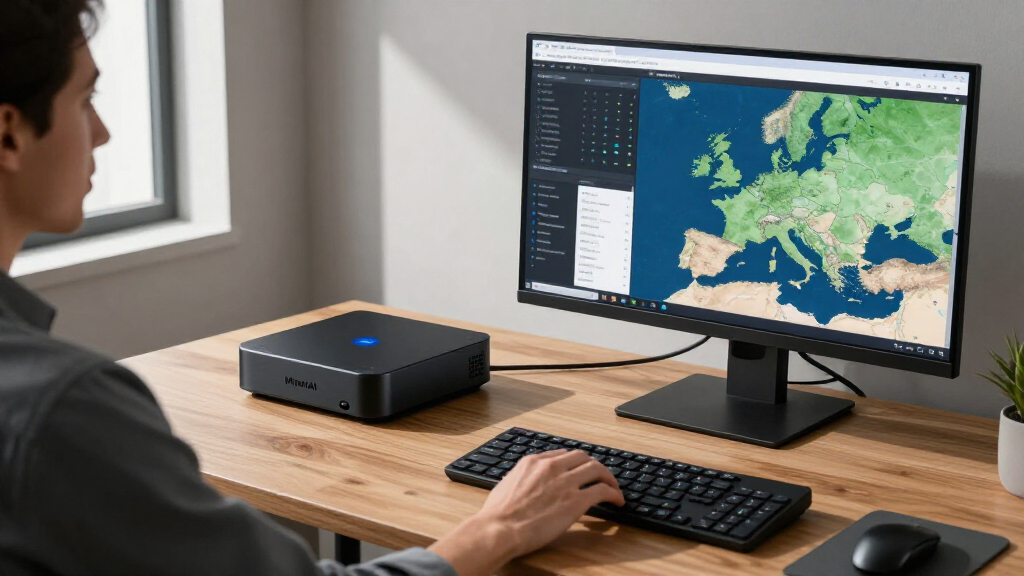
The company’s strategy hinges on building European AI infrastructure, including a GPU cloud backed by NVIDIA and Bpifrance, with plans for a €4 billion data-center expansion across France and Sweden. Mistral also ships open-weight models to foster developer adoption, funneling usage into paid APIs and enterprise contracts. See how SAP is investing in AI. Politically, France’s President Macron has publicly supported the initiative, framing it as part of a broader €100 billion+ AI investment plan for Europe.
Implications of Mistral’s Sovereignty Approach
The Mistral project represents a strategic effort by Europe to develop independent AI capabilities and reduce reliance on US cloud providers and hardware. Its focus on data residency and open weights aims to foster a sovereign AI ecosystem aligned with European political and industrial interests. However, the initiative faces challenges in model performance and hardware dependence, raising questions about its ability to compete globally and achieve genuine autonomy.
Successful execution could position Europe as a significant player in AI, especially in regulated sectors, but the project’s ability to overcome technical and infrastructural limitations remains uncertain. The initiative’s political backing and industrial ties give it strategic importance, but it must address the ongoing capability gap to sustain its ambitions.
European GPU cloud computing services
As an affiliate, we earn on qualifying purchases.
As an affiliate, we earn on qualifying purchases.
Background of Europe’s AI Sovereignty Push
Europe’s push for AI sovereignty intensified following concerns over dependence on US and Chinese tech giants. The Mistral initiative emerged as a key component of this strategy, aiming to develop European open-weight models and infrastructure. The company’s last valuation was €11.7 billion after a September 2025 funding round led by ASML, with ongoing discussions of further funding at higher valuations. The broader context includes France’s €100 billion+ AI investment plan and political support from President Macron, emphasizing a “third way” between US and Chinese AI development.
While Mistral’s models are competitive in some open benchmarks, they lag behind frontier US models in raw capability, raising questions about the effectiveness of sovereignty as a competitive advantage. The initiative also faces technical dependencies, notably on NVIDIA hardware and US cloud infrastructure, complicating claims of full independence.
“Our goal is to provide access to the best AI outside centralized control, building a European champion that’s independent and innovative.”
— Arthur Mensch, CEO of Mistral
open-weight AI models for developers
As an affiliate, we earn on qualifying purchases.
As an affiliate, we earn on qualifying purchases.
Challenges to Achieving Full AI Sovereignty
Major uncertainties remain regarding model performance, with Mistral’s models trailing behind US frontier models in speed and capability. There are also questions about hardware and infrastructure dependence, as the company relies heavily on NVIDIA chips and US cloud services, which complicates claims of full sovereignty. It is unclear whether Mistral can overcome these technical and infrastructural dependencies to deliver truly independent AI solutions.
As an affiliate, we earn on qualifying purchases.
Upcoming Funding, Development Milestones, and Market Positioning
Next steps include finalizing the reported $3.5 billion funding round, expanding infrastructure across Europe, and rolling out new models with improved capabilities. Mistral plans to pursue an IPO rather than an acquisition, aiming to secure long-term independence. Monitoring will focus on model performance benchmarks, infrastructure expansion, and political support, which will determine whether Mistral can realize its vision of a sovereign European AI ecosystem.
As an affiliate, we earn on qualifying purchases.
Key Questions
What is the main goal of the Mistral AI initiative?
The main goal is to develop sovereign, open-weight AI models within Europe, reducing dependence on US and Chinese technology, and building a European AI ecosystem based on data residency, infrastructure independence, and political backing.
How much funding has Mistral secured so far?
The company’s last confirmed valuation was based on a €1.7 billion Series C funding round led by ASML in September 2025, with reports of a potential additional raise of around $3.5 billion ongoing or in negotiations as of mid-2026.
What are the main challenges Mistral faces?
The key challenges include model performance gaps compared to US frontier models, dependence on NVIDIA hardware and US cloud infrastructure, and whether its sovereignty claims can be sustained in a competitive global AI landscape.
Why does this initiative matter for Europe?
It represents a strategic effort to establish technological independence in AI, support European industrial policy, and foster a homegrown AI ecosystem that aligns with national and EU political goals.
What happens next for Mistral?
The company will continue raising funds, expanding infrastructure, and improving models. Its success depends on overcoming technical limitations and achieving a sustainable competitive position to realize its vision of AI sovereignty.
Source: ThorstenMeyerAI.com
Halloween Picks
halloween
As an affiliate, we earn on qualifying purchases.