📊 Full opportunity report: How To Compare Youth Athlete Form With Professional Standards on IdeaNavigator AI — validation score, market gap, and execution plan.

Get the latest gadgets delivered free with Prime
- Fast, free delivery on millions of items
- Prime Video, Amazon Music and more included
- Member-only deals all year
TL;DR
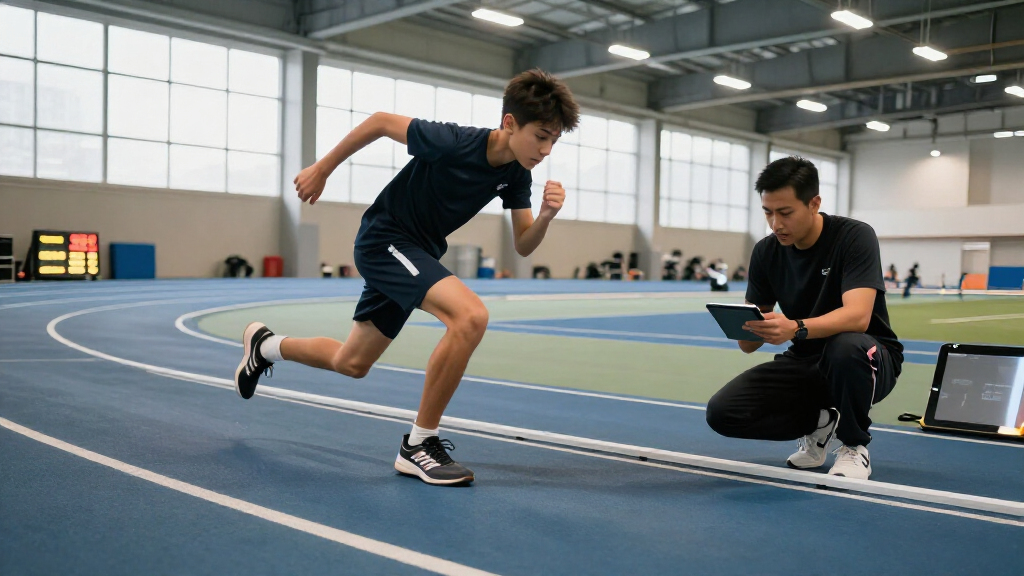
IdeaNavigator AI has outlined a proposed youth-sports training app that would compare a child’s recorded movements with professional reference mechanics and recommend one drill per session. The concept has not been reported as a launched or tested product; its proposed first validation is a baseball-hitting pilot in which certified coaches review grades for 100 children.
IdeaNavigator AI has proposed a phone-based training app that would compare young athletes’ movements with professional reference mechanics, targeting families whose children practice without a private coach. The concept remains a proposal: no app, accuracy results, or completed athlete trial are described, and the suggested first test is a baseball-hitting pilot involving 100 children.
The proposed workflow is to record a swing, throw, or stride, then overlay the athlete’s movement with a reference profile derived from professional mechanics. The app would grade selected checkpoints, with examples including hip rotation, release angle, and stride, and recommend one drill per session to address the largest identified gap. The plan does not specify which professional athletes or reference datasets would be used.
The proposal focuses on one initial buyer: a parent of a young athlete practicing without private coaching. It frames repeated practice without feedback as a risk that technique flaws could become habits. Its business model would offer a family subscription for each sport, with a separate coach tier for team use; prices and subscription terms are not provided.
For validation, IdeaNavigator AI suggests beginning with baseball hitting and asking certified coaches to audit the app’s grades against their own assessments across 100 children. That is a proposed test, not a reported result. No coach participants, study protocol, age range, measurement criteria, or findings are specified.
A Coach-Free Practice Tool
If developed and shown to work, the app could give families a way to receive structured feedback between coaching sessions—or where private coaching is not available. The proposal describes private sessions as costing $75 to $150 each, but provides no location, date, or pricing survey for that figure. The comparison signals the intended affordability case; it does not establish that an app subscription would be cheaper or that it could replace a coach.
The larger issue is whether a phone-based system can give young athletes feedback that is both accurate and useful. A movement score may help a parent notice a potential technique difference, but the proposal does not show that its benchmarks can account for age, body size, skill level, camera position, or variation between valid techniques. Nor does it provide evidence that following a recommended drill improves performance or reduces injury risk. Those are questions the proposed pilot would need to address before families rely on the feedback.
As an affiliate, we earn on qualifying purchases.
The Proposed Baseball Test
The concept is framed around recent availability of phone-based pose-estimation models, which can estimate body positions from video. IdeaNavigator AI says their accuracy is now sufficient for comparing a young athlete’s mechanics with reference motion profiles, but gives no model name, benchmark, or independent evaluation to support that assessment. It should be treated as a rationale for the proposal, not a verified result about a particular product.
Rather than launch across multiple sports, the plan recommends narrowing the first test to baseball hitting. Coaches would compare app grades with their own assessments for 100 children. The outline does not say whether the coaches would review video independently, how disagreements would be recorded, or what level of agreement would count as success. No prior trial or product release is identified.
sports motion analysis app for kids
As an affiliate, we earn on qualifying purchases.
As an affiliate, we earn on qualifying purchases.
Accuracy and Safety Questions
No evidence is provided that an app has been built or that its movement grades match certified coaches’ evaluations. The proposal does not identify the reference data, pose-estimation model, or scoring method, so the meaning and reliability of a grade cannot yet be assessed. It also does not explain how the system would handle poor lighting, obstructed views, different camera angles, or athletes whose movements differ from the reference profile.
The claimed potential to reduce injury risk is likewise untested in the information available. A coach audit of 100 children could examine whether app grades align with coaches, but the outline does not say that the pilot would measure injuries, long-term skill development, or whether children follow the drills. The timing, participating coaches, recruitment plan, and criteria for proceeding beyond the pilot remain unspecified.
As an affiliate, we earn on qualifying purchases.
Coach Review Before Expansion
The next step in the proposal is a limited baseball-hitting pilot, with certified coaches reviewing assessments for 100 children. That comparison could help determine whether the app’s grades are consistent with coach judgments. However, no dates, partners, or launch plans are given, and there is no confirmation that the test has begun.
Before families could assess the product’s usefulness, further details would be needed on how benchmarks are created, what a grade means, and how recommendations are tailored to young athletes. Any results would also need to clarify the test conditions and the extent of coach agreement. Until such evidence or a product release is reported, the app is best understood as a proposed workflow, not an available or validated training service.
As an affiliate, we earn on qualifying purchases.
Key Questions
Has the youth form-grading app launched?
No launch is reported. IdeaNavigator AI describes a proposed product and validation plan, not an available app.
What would the app assess?
The proposed system would compare recorded movements with professional reference mechanics and grade checkpoints such as hip rotation, release angle, and stride. The outline does not specify how those grades would be calculated.
How would the concept be tested?
The suggested first test is a baseball-hitting pilot in which certified coaches audit the app’s assessments across 100 children. No results or schedule have been provided.
Is the app proven to prevent injuries?
No injury-prevention evidence is reported. The proposal raises injury risk as a concern but does not describe a study measuring injuries or show that the suggested feedback reduces them.
Source: IdeaNavigator AI
Columbus Day / Indigenous Peoples' Day Picks
long weekend sales
As an affiliate, we earn on qualifying purchases.