
TL;DR

Get the latest gadgets delivered free with Prime
- Fast, free delivery on millions of items
- Prime Video, Amazon Music and more included
- Member-only deals all year
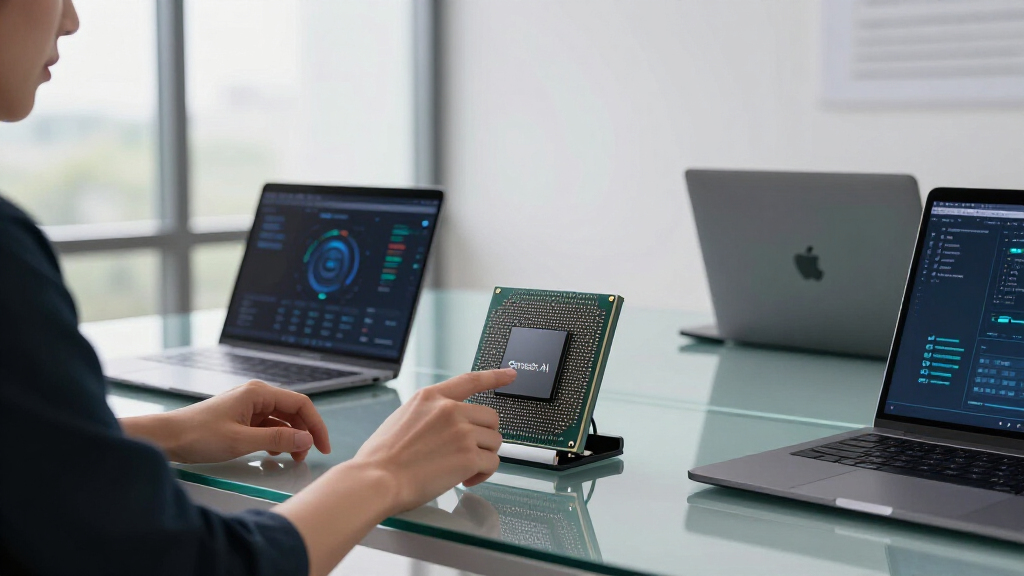
SenseTime’s Galaxy Project is focused on scaling up domestic AI chip production in China. While the initiative signals China’s push for local hardware, specific technical and commercial details are still unknown.
SenseTime’s Galaxy Project is targeting the large-scale development of domestic AI chips in China, according to a recent report. This initiative aligns with China’s broader efforts to increase local control over high-performance computing hardware, which is critical for AI hardware development and deployment. The project’s specific technological details and timeline remain undisclosed, but its focus on expanding domestic AI chip capacity makes it a significant development in China’s tech landscape.
The available information confirms that SenseTime’s Galaxy Project aims to scale up the production of AI chips within China. The report, attributed to the company, emphasizes the project’s objective but does not specify the chip architecture, manufacturing partners, or production volume. There is no public disclosure of whether the chips are intended for training, inference, or both, nor any details about the timeline for samples or commercial deployment.
SenseTime is primarily known as an AI software company, and the project’s scope—whether it involves chip design, manufacturing coordination, or both—remains unclear. No fabrication or packaging partners have been identified, and the project’s funding or potential customers have not been disclosed. The initiative appears to be a strategic target rather than a confirmed mass-production effort, with many technical and logistical milestones still to be achieved.
Implications for China’s AI Hardware Independence
If successful, the Galaxy Project could bolster China’s domestic AI infrastructure by reducing reliance on foreign chip suppliers, which face export restrictions and supply chain constraints. A scalable, domestically produced AI chip ecosystem could support AI developers like SenseTime and others, potentially accelerating innovation and deployment of AI applications across sectors. However, the project’s actual impact depends on whether it can deliver reliable, high-performance hardware at scale, which remains unconfirmed at this stage.
As an affiliate, we earn on qualifying purchases.
China’s Drive for Self-Reliant AI Hardware Ecosystem
China has been intensifying efforts to develop its semiconductor industry amid ongoing restrictions on access to advanced foreign chips, particularly from the US and allied nations. The government’s push includes initiatives like the National Integrated Circuit Industry Development Outline and investments in local fabrication plants. SenseTime’s Galaxy Project aligns with these policies by aiming to develop domestically controlled AI hardware, which is vital for national security and technological sovereignty. Historically, Chinese AI firms have depended heavily on imported chips, but recent restrictions have increased the urgency for local alternatives.
“We are committed to advancing domestic AI hardware to support our growth and national technological goals.”
— SenseTime spokesperson
Chinese AI hardware development tools
As an affiliate, we earn on qualifying purchases.
As an affiliate, we earn on qualifying purchases.
Unresolved Technical and Commercial Details
It remains unclear whether the Galaxy Project has moved beyond the planning phase or achieved any prototype or production milestones. Key unknowns include the chip architecture, manufacturing partners, production volume, and deployment timetable. The project’s scope—whether it covers design, fabrication, or both—is also not publicly clarified. Without these details, assessing its readiness and potential impact is difficult.
As an affiliate, we earn on qualifying purchases.
Key Indicators of Progress and Commercial Deployment
Future disclosures from SenseTime regarding specific hardware specifications, partnerships, and production milestones will be critical. Demonstrations of chips running real AI workloads, customer announcements, or deployment reports could signal progress. Monitoring government policies and funding allocations related to domestic semiconductor initiatives may also provide context for the project’s development. As of now, the next steps involve waiting for more detailed technical and commercial disclosures from SenseTime.
As an affiliate, we earn on qualifying purchases.
Key Questions
What exactly is the Galaxy Project?
The Galaxy Project is an initiative by SenseTime aiming to develop large-scale, domestically produced AI chips in China. Its specific technological details and timeline are not yet publicly available.
Why is this project important for China’s AI industry?
If successful, it could reduce dependence on foreign chip suppliers, bolster local AI development, and support China’s broader goal of technological self-reliance in critical sectors.
Has the Galaxy Project produced any chips yet?
No, there are no public reports of prototypes, samples, or commercial shipments. The project is currently at a strategic planning or development stage.
Who are the potential partners or customers for this project?
SenseTime has not disclosed any manufacturing partners, suppliers, or buyers. Details of the project’s commercial ecosystem remain unknown.
When can we expect to see tangible results from the Galaxy Project?
There are no announced timelines. Future updates from SenseTime regarding hardware specifications, production milestones, or deployments will be necessary to gauge progress.
Source: ThorstenMeyerAI.com
Halloween Picks
halloween
As an affiliate, we earn on qualifying purchases.