
TL;DR

Get the latest gadgets delivered free with Prime
- Fast, free delivery on millions of items
- Prime Video, Amazon Music and more included
- Member-only deals all year
Japanese oil wholesalers have increasingly used ship-to-ship transfers off Malaysia and India to receive Middle Eastern crude oil. This method is confirmed by recent investigations and reflects efforts to circumvent restrictions or regulations. The development impacts Japan’s oil supply chain and regional geopolitics.
Approximately half of Japan’s crude oil imports from the Middle East between March and May were received via ship-to-ship transfers off the coasts of Malaysia and India, according to a Nikkei investigation. This practice appears to be a strategic move by Japanese oil wholesalers to manage supply and regulatory challenges, though the full extent and implications are still being examined.
The investigation by Nikkei found that a significant portion of Middle Eastern crude oil imported into Japan was transferred between ships at sea, rather than directly from tankers docking at Japanese ports. This method allows for the transfer of oil without direct port entry, which may help bypass certain import restrictions or customs procedures.
Data from March to May indicates that roughly 50% of the tankers carrying Middle Eastern crude to Japan engaged in ship-to-ship transfers off the coasts of Malaysia and India. These transfers involve large tankers exchanging oil at sea, often in international waters, before the oil is delivered to Japanese vessels or ports.
Officials from Japan’s Ministry of Economy, Trade and Industry have not officially confirmed the practice but acknowledged that some import routes and methods are being scrutinized for regulatory compliance. Industry sources suggest that this approach could be motivated by efforts to mitigate geopolitical tensions or to optimize supply chains amid regional uncertainties.
Why It Matters
This development is significant because it highlights adaptive strategies by Japanese oil wholesalers amid regional geopolitical tensions and supply chain complexities. Using ship-to-ship transfers can complicate tracking and regulation of oil imports, potentially affecting transparency and compliance with international sanctions or trade laws. It also underscores ongoing efforts by Japan to secure stable energy supplies in a volatile regional environment, which has broader implications for regional security and energy markets.
As an affiliate, we earn on qualifying purchases.
Background
Japan relies heavily on imported crude oil, with a substantial portion coming from the Middle East. Historically, oil shipments from this region have entered Japan via direct port-to-port transfers. However, recent reports suggest that some operators are increasingly using ship-to-ship transfer methods, possibly to avoid certain import restrictions or to manage logistical challenges amid regional tensions involving Iran and other Middle Eastern nations. This practice has been observed in the context of broader geopolitical conflicts and sanctions, which have prompted industry adaptations.
“The use of ship-to-ship transfers allows importers to obscure the origin and route of crude oil, which can be used to navigate around sanctions or regulatory hurdles.”
— Industry analyst
“We are monitoring all import activities closely and will take necessary measures if any violations of regulations are identified.”
— Japanese government official
As an affiliate, we earn on qualifying purchases.
What Remains Unclear
It remains unclear how widespread these ship-to-ship transfers are beyond the reported period, or whether they will become a long-term practice. The full regulatory implications and potential legal or diplomatic responses are still developing. Additionally, the exact motives and the identities of the entities involved are not publicly confirmed.
As an affiliate, we earn on qualifying purchases.
What’s Next
Authorities are expected to increase monitoring of maritime transfer practices and possibly implement stricter regulations. Industry stakeholders may adjust their logistics strategies accordingly. Further investigations and data collection are likely to clarify the scope and impact of this practice in the coming months.
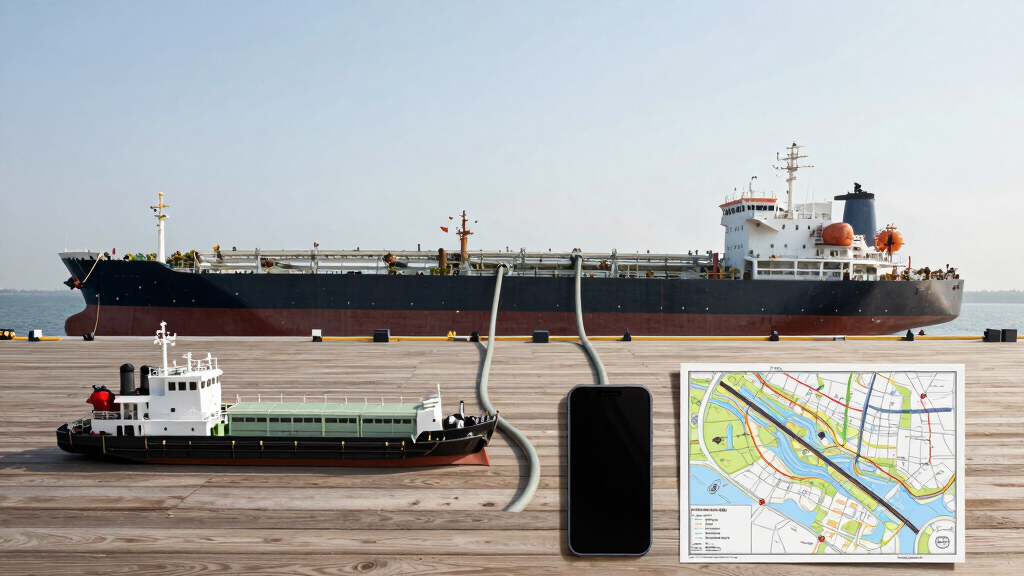
ship-to-ship transfer simulation
As an affiliate, we earn on qualifying purchases.
As an affiliate, we earn on qualifying purchases.
Key Questions
Why are Japanese oil wholesalers using ship-to-ship transfers?
They may be using this method to bypass import restrictions, manage geopolitical risks, or optimize supply chains amid regional tensions involving Iran and other Middle Eastern countries.
Is this practice illegal or against regulations?
It is not yet clear whether these transfers violate any laws. Authorities are monitoring the situation, and some industry practices may be subject to regulatory review.
How does ship-to-ship transfer work?
Ship-to-ship transfer involves moving oil from one vessel to another at sea, often in international waters, before the oil reaches its final destination or port.
What are the implications for Japan’s energy security?
This practice could help Japan maintain stable oil supplies but also raises concerns about transparency and compliance with international sanctions or trade laws.
Will this practice continue or expand?
It remains uncertain. Authorities are likely to scrutinize and regulate these transfers more closely, which could influence future logistics strategies.
Halloween Picks
halloween
As an affiliate, we earn on qualifying purchases.