
TL;DR

Get the latest gadgets delivered free with Prime
- Fast, free delivery on millions of items
- Prime Video, Amazon Music and more included
- Member-only deals all year
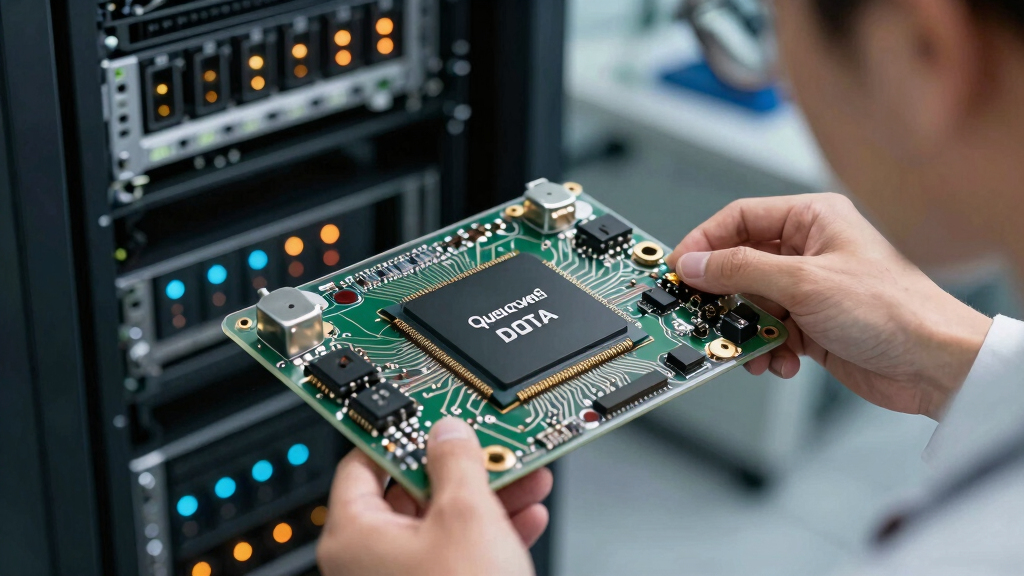
Qualcomm announced it is developing a China-specific data center chip to comply with US export controls. This move aims to support China’s AI industry while adhering to US restrictions, marking a strategic shift in global chip development.
Qualcomm has announced it is developing a China-specific data center chip to comply with US export restrictions, aiming to support China’s AI infrastructure while adhering to US regulations. This marks a significant shift in Qualcomm’s strategy amid ongoing geopolitical tensions and export controls.
On June 25, 2026, Qualcomm revealed plans to design a new data center chip tailored specifically for the Chinese market. The move comes as part of its effort to navigate US export restrictions that limit the sale of certain advanced chips to China. Qualcomm CEO Cristiano Amon stated that every AI foundational model company in China is a customer, highlighting the importance of the Chinese AI sector.
The company’s new chip aims to support Chinese data centers and AI development without violating US export laws. Qualcomm’s decision reflects broader industry trends of localizing chip design to circumvent export restrictions and maintain market presence in China. The development is still in progress, with no specific timeline for product launch.
Implications for US-China Tech Tensions
This development signals a strategic adaptation by Qualcomm in response to US export controls, which aim to restrict technology flow to China. By designing a China-specific chip, Qualcomm seeks to continue serving Chinese AI and data center markets without violating US laws. This move could influence how other US-based chipmakers approach the Chinese market amid ongoing geopolitical tensions, potentially leading to increased localization of chip design and manufacturing.
Products Worth Considering

Apple iPad Air (2025) 13‑inch Wi‑Fi 256 GB – Space Gray (M3 chip)

DJI Osmo Mobile 8 Standard Combo Phone Gimbal Stabilizer

Bose QuietComfort Ultra Earbuds (2nd Gen), Deep Plum
As an affiliate, we earn on qualifying purchases.
US Export Controls and Industry Responses
US export restrictions on advanced semiconductor technology have intensified over the past year, targeting Chinese AI and data center sectors. Qualcomm, along with other chipmakers like Nvidia and Marvell, has faced challenges in selling certain products to China. In response, several companies are exploring local design and manufacturing solutions to maintain their market share while complying with regulations. Qualcomm’s move to develop a China-specific chip aligns with broader industry efforts to adapt to these restrictions and ensure continued access to the Chinese AI market.
“We are committed to serving our Chinese customers and complying with all applicable laws, which is why we are developing tailored solutions for the Chinese market.”
— a Qualcomm spokesperson
Details of the China-Specific Chip Remain Unclear
It is not yet clear what specific technical features the China-specific chip will have, or when it will be ready for commercial deployment. Qualcomm has not disclosed detailed specifications or the timeline for product release, and it remains uncertain how the chip will navigate potential US regulatory scrutiny.
Next Steps in Qualcomm’s China Strategy
Qualcomm is expected to continue developing the China-specific chip over the coming months, with further announcements possibly outlining technical details and deployment plans. Industry analysts will monitor whether this move prompts similar actions from other US chipmakers and how US regulators respond to these localizations. The company may also seek regulatory approvals or face scrutiny as the project progresses.
Key Questions
Why is Qualcomm developing a China-specific data center chip?
Qualcomm is developing the chip to comply with US export restrictions while continuing to serve the Chinese AI and data center markets.
Does this mean Qualcomm is bypassing US export controls?
Not necessarily bypassing, but Qualcomm is designing a tailored product to meet legal requirements and support Chinese customers within the regulatory framework.
When will the China-specific chip be available?
There is no specific timeline announced yet; development is ongoing, and a product launch date has not been disclosed.
Could this impact US-China technology relations?
This move may influence industry dynamics and regulatory responses, potentially leading to increased localization efforts and diplomatic discussions.
Will other US chipmakers follow Qualcomm’s approach?
It is possible, as industry players seek ways to maintain market access while adhering to export restrictions, but specific strategies will vary by company.
Source: Nikkei Asia