TL;DR

Get the latest gadgets delivered free — and shop member deals
- Fast, free delivery on millions of items
- Access to Prime Big Deal Days deals on October 6–7
- Prime Video, Amazon Music and more included
In May 2026, China’s passenger car market experienced a sharp decline in internal combustion engine (ICE) sales, which fell 39% year-over-year, while electric vehicle (EV) sales, especially battery electric vehicles (BEVs), increased significantly. This shift resulted in a record EV market share of over 63%, marking a pivotal moment in China’s automotive industry transition.
China’s passenger car market in May 2026 experienced a dramatic decline in internal combustion engine (ICE) sales, which fell 39% year-over-year, while electric vehicle (EV) sales surged, leading to a record market share of over 63% for plug-in vehicles. This marks a significant industry shift, with EVs increasingly dominating the Chinese market and signaling a potential end for traditional ICE models.
The overall Chinese passenger car market contracted by 22% in May 2026, with total sales dropping to approximately 1.5 million vehicles. ICE-powered vehicle sales plummeted 39% compared to May 2025, while plug-in hybrid electric vehicles (PHEVs) declined by 25%. Despite this, pure electric vehicles (BEVs) saw a 4% increase, reaching 637,000 units sold and securing a 42% share of the market, a record high.
Including PHEVs, the combined plug-in vehicle share reached 63%, surpassing the halfway point for 2026. The EV share for the entire year is projected to exceed 60%, with BEVs alone expected to surpass 40%. The trend is reinforced by early June data indicating a 67% EV share in the first week, suggesting continued growth.
Market dynamics reveal a sharp decline in domestic ICE vehicle sales, with EVs among local brands capturing 81% of the market. The top-selling models in May were entirely electric, with seven of the top ten overall models being EVs. Notably, the Geely Geome Xingyuan led sales, followed by Tesla Model Y and Xiaomi SU7, reflecting shifting consumer preferences and competitive dynamics.
Implications of the Rapid EV Market Takeover
The record-breaking EV market share in China signifies a decisive shift away from internal combustion engines, potentially marking the beginning of the end for ICE vehicles in the country. As China is the world’s largest automotive market, this transition could accelerate global EV adoption, influence automaker strategies worldwide, and render investments in ICE R&D increasingly unviable.
Industry analysts suggest that the decline in ICE sales and the rise of BEVs demonstrate consumer preference shifts driven by high fuel prices, government policies, and expanding EV model offerings. The rapid market share growth also indicates that traditional automakers are losing ground to domestic EV manufacturers, which dominate the market with an 81% share among local brands.
This trend could reshape global automotive supply chains, investment priorities, and environmental policies, as China’s move toward full electrification by 2030 appears increasingly imminent.
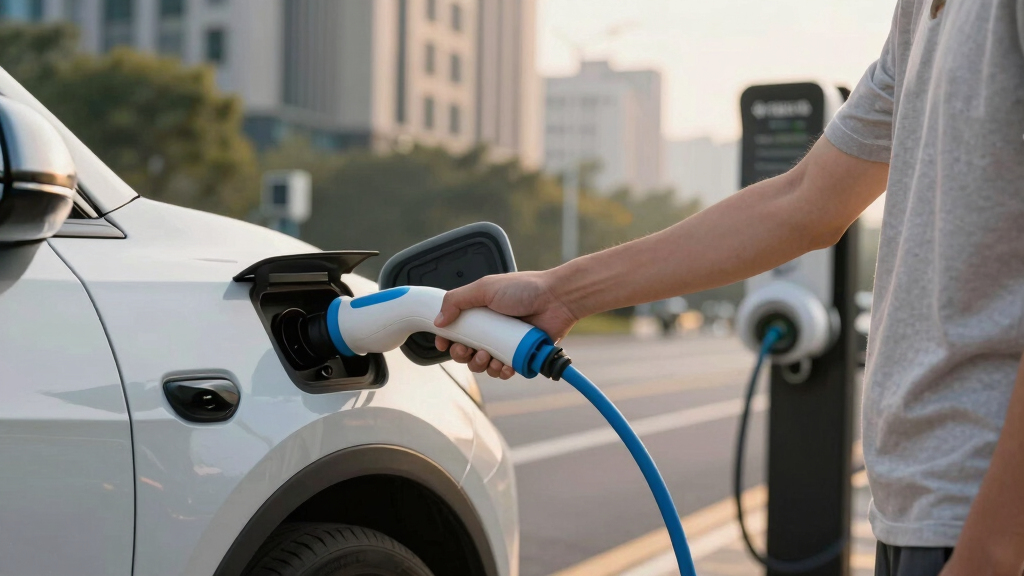
best electric vehicle charging station
As an affiliate, we earn on qualifying purchases.
As an affiliate, we earn on qualifying purchases.
Recent Trends and Industry Background in China
China’s automotive market has been undergoing a transformation over the past few years, with government incentives, stricter emissions regulations, and consumer demand fueling EV growth. In 2025, EVs already accounted for over half of new vehicle sales, but the May 2026 data shows a dramatic acceleration, largely driven by a collapse in ICE sales.
Historically, ICE vehicles dominated Chinese roads, but recent policy shifts and market dynamics have favored EVs. The first months of 2026 saw ICE models still holding top positions, but May marked the first time that all top 10 overall models were EVs, reflecting a fundamental industry shift.
Furthermore, the decline of city cars and the impact of subsidy cuts have been notable, with only a few models like the Wuling Mini EV maintaining decent sales. Meanwhile, domestic brands are increasingly focusing on EV offerings, with a significant share of their sales now electric.
“The record EV share in May is a wake-up call for global automakers to accelerate their EV strategies or face obsolescence.”
— Zhang Min, EV Market Expert
As an affiliate, we earn on qualifying purchases.
Uncertainties Surrounding Long-Term Market Trends
While the May 2026 data shows a clear trend of EV dominance and ICE decline, it remains uncertain how sustainable this growth is amid potential policy changes, economic fluctuations, and technological advancements. The exact pace of EV adoption beyond 2026 and whether the market can maintain such rapid growth are still developing questions.
Additionally, the impact of potential supply chain disruptions, global economic conditions, and consumer preferences remains unclear. The long-term viability of PHEVs versus pure BEVs in China’s evolving market is also still uncertain.
As an affiliate, we earn on qualifying purchases.
Upcoming Data and Industry Shifts to Watch
The next step involves monitoring June’s sales data, which already shows a 67% EV share in the first week. Analysts expect this trend to continue, potentially pushing the annual EV share well above 60%. Industry stakeholders will also watch for policy updates, technological innovations, and shifts in consumer demand that could influence the market trajectory.
Automakers are likely to accelerate EV development and marketing efforts, especially among domestic brands, to capitalize on the momentum. The global industry will also be watching China’s transition as a bellwether for worldwide EV adoption.
As an affiliate, we earn on qualifying purchases.
Key Questions
What caused the sharp decline in ICE sales in China in May 2026?
The decline is primarily due to high fuel prices, policy measures favoring EVs, and a surge in EV model availability, which has shifted consumer preferences away from traditional internal combustion engine vehicles.
Will the EV market share continue to grow at this pace?
While early June data suggests continued growth, the sustainability of this trend depends on policy stability, technological developments, and market conditions. Experts expect the share to remain high but acknowledge potential fluctuations.
Are foreign automakers losing ground in China’s EV market?
Yes, domestic brands now hold about 81% of the EV market share among local manufacturers, indicating a significant shift favoring Chinese EV companies over foreign brands.
What does this mean for the global automotive industry?
The rapid EV adoption in China could accelerate global shifts toward electrification, prompting automakers worldwide to prioritize EV development and phase out ICE models more quickly.
When will China likely achieve full EV market dominance?
Industry forecasts suggest China could reach full electrification of its passenger car market by 2030, making it the first major market to do so and setting a precedent for others.
Source: CleanTechnica
Halloween Picks
halloween
As an affiliate, we earn on qualifying purchases.