
TL;DR

Get the latest gadgets delivered free with Prime
- Fast, free delivery on millions of items
- Prime Video, Amazon Music and more included
- Member-only deals all year
AI form builders can now generate complete lead funnels from a short prompt in about 60 seconds. They produce questions, logic, landing pages, and follow-up workflows, drastically reducing setup time and effort. However, manual refinement remains essential for brand consistency and compliance.
Imagine describing your ideal lead funnel in a few words, hitting enter, and having a ready-to-launch system in seconds. No more staring at a blank page, guessing what questions to ask, or piecing together multiple tools. AI form builders have turned this dream into reality, slashing setup times from hours to mere seconds.
In this article, you’ll see what these tools actually do, how they turn a simple prompt into a full funnel, and what still requires your touch. Whether you’re a marketer, coach, or SaaS startup, understanding this new wave can dramatically speed up your lead generation game.
Key Takeaways
- AI form builders now generate complete, multi-step funnels—including questions, logic, landing pages, and follow-up—in under 60 seconds.
- A well-crafted prompt is key: specify your industry, audience, and goals clearly to get the best results.
- The first AI draft is a huge time-saver, but manual editing is still needed for branding, legal compliance, and nuance.
- Different industries, from SaaS to real estate, benefit from AI funnels by automating qualification, routing, and conversion processes.
- Choosing the right tool depends on speed, customization, industry fit, and integrated features like analytics and CRM.
As an affiliate, we earn on qualifying purchases.
What Exactly Is an AI Form Builder—and Why Should You Care?
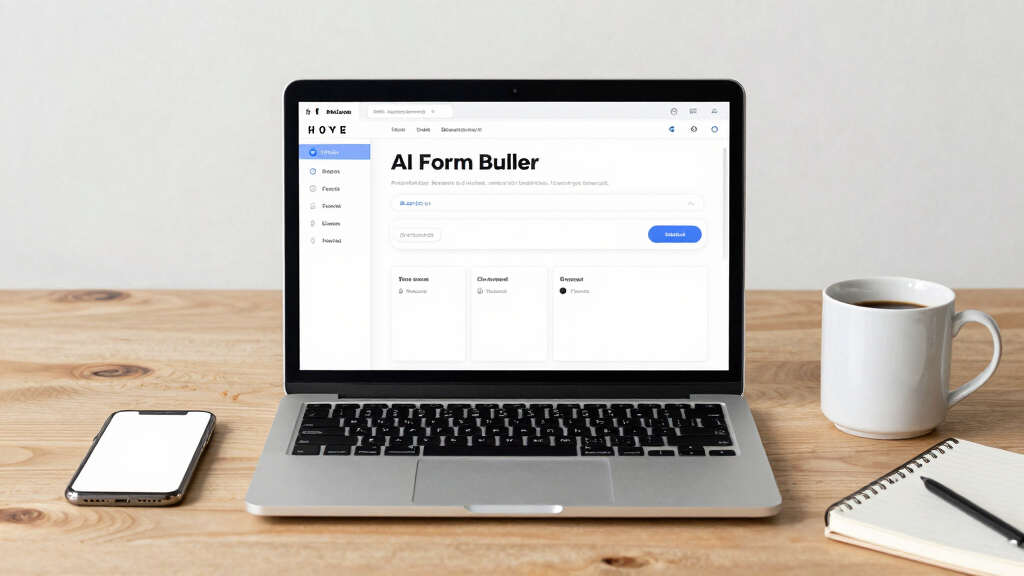
An AI form builder is a tool that uses artificial intelligence to create forms and entire funnels based on a short, natural language prompt. Instead of manually designing each question and page, you describe what you need, and the AI generates a structured, functional system.
For example, you could type: “Create a coaching intake form with qualification questions and a booking link,” and within seconds, you get a multi-step funnel ready to publish. It’s like having a virtual assistant that builds your lead system in a flash.
Understanding why this matters is crucial: the speed and ease of setup allow small teams and solo entrepreneurs to compete with larger players. It reduces the technical barrier, enabling rapid testing and iteration of different offers. However, it’s important to recognize that this speed often comes with tradeoffs—some level of manual refinement is still necessary to ensure the funnel aligns with your brand, legal requirements, and nuanced customer needs.
By automating repetitive tasks, AI form builders free up your time, but they also shift the skill set required—more emphasis on prompt crafting and strategic oversight rather than manual design. This evolution means marketers need to adapt, learning how to guide AI effectively and refine outputs for optimal results.
As an affiliate, we earn on qualifying purchases.
How to Turn a Simple Prompt into a Fully-Working Funnel – Step by Step
- Describe your goal: Clearly state what kind of funnel or form you want, e.g., “Lead qualification for SaaS startups.”
- Specify key details: Mention target audience, industry, or specific questions, like “Focus on pricing, features, and onboarding needs.”
- Input the prompt: Enter your description into the AI tool.
- Review the generated output: The AI produces a multi-step form, questions, logic, and landing pages.
- Refine and customize: Adjust questions, branding, or logic as needed. Most tools let you edit directly within their interface.
For example, a prompt like “Create a webinar registration funnel for digital marketers interested in SEO” results in a ready-to-go landing page, registration form, and follow-up email sequence—all within a minute.
Understanding this process reveals the importance of precision in your prompts. The AI’s output is only as good as the input; vague instructions lead to generic results that require significant editing. This step emphasizes the importance of clear communication—crafting prompts that specify industry context, target audience nuances, and desired outcomes ensures the AI’s design aligns with your strategic goals. Moreover, this process highlights the tradeoff: rapid generation is powerful, but it demands a thoughtful approach to prompt engineering to maximize quality and relevance.
As an affiliate, we earn on qualifying purchases.
Why ’60 Seconds’ Is a Marketing Promise, and What Still Needs Human Touch
Many AI funnel tools boast generating a complete system in under a minute. While impressive, the reality is that the first draft is just that—a draft. Questions may need rephrasing, branding may need tweaking, and logic may require fine-tuning.
For instance, a real estate agent might get a basic property inquiry funnel in 30 seconds, but customizing the questions to match their niche or adding compliance checks takes extra time. The AI reduces setup time but doesn’t eliminate the need for your expertise.
Understanding this tradeoff is vital: speed is a significant advantage, but it can lead to superficial results if not properly refined. The initial AI-generated funnel provides a solid foundation, but the strategic value lies in your ability to review, adapt, and enhance it to fit your specific context. This process ensures the final product is both effective and compliant, avoiding potential pitfalls like misaligned branding or legal issues. Therefore, the human touch remains essential for polishing AI drafts into fully operational, brand-aligned funnels that truly convert.
As an affiliate, we earn on qualifying purchases.
Top Industries That Crush It with AI Funnel Builders
| Industry | Why It Works Well | Example |
|---|---|---|
| SaaS & Tech | Custom onboarding, free trial qualification, product demos | AI generates a multi-step demo scheduler with questions on user needs and tech stack. |
| Consulting & Coaching | Client intake, assessment quizzes, appointment booking | A coaching funnel that qualifies leads based on goals and experience levels. |
| Real Estate | Property inquiries, mortgage pre-approval, client qualification | Instantly creates property form flows with location, budget, and financing questions. |
| Legal & Finance | Regulated forms, compliance checks, lead routing | Immigration or insurance lead forms with verification and legal disclaimers. |
These industries benefit most because their workflows are highly structured and rely heavily on qualifying and routing leads efficiently. However, it’s important to recognize that the effectiveness of AI tools in these sectors depends on the quality of prompts and ongoing human oversight to ensure compliance and accuracy. The automation accelerates routine processes but still requires strategic input to handle industry-specific nuances, legal language, and customer experience considerations. This means that while AI can dramatically improve efficiency, it doesn’t replace the need for domain expertise—rather, it amplifies it by handling repetitive tasks swiftly and reliably.
What AI Form Builders Are Not Yet Good At—And What That Means for You
Despite their speed, AI form builders aren’t perfect. They often produce generic questions that need tailoring, and branding may feel cookie-cutter. Complex logic, nuanced compliance, or industry-specific language still require manual input.
For example, a financial advisor using an AI to generate a compliant lead form might get a decent start, but adjusting for legal language and specific disclosures takes extra effort. The AI is a first draft, not a finished product.
Understanding these limitations is crucial because it clarifies that AI is a tool to accelerate initial creation, not a complete replacement for human expertise. The tradeoff is that while you save time upfront, you must allocate resources to review and customize the output thoroughly. This process ensures the final funnels are legally compliant, on-brand, and tailored to your audience’s needs—elements that AI cannot yet fully grasp without human guidance. Recognizing these gaps helps set realistic expectations and encourages a balanced approach, combining automation with strategic oversight for optimal results.
How to Write Better Prompts for Smarter, Faster Funnels
The secret to getting great results from AI form builders is in your prompt. Be specific, detailed, and industry-focused. Instead of “Create a lead form,” try “Create a lead qualification funnel for a fitness coaching business targeting busy professionals, with questions about fitness goals, schedule, and budget.”
Include key info: target audience, industry specifics, desired question types, and any logic or scoring needs. The clearer you are, the better the AI can tailor its output.
Recent data shows that prompts with industry details and clear objectives produce 30% more relevant questions and logical flows.[6] This highlights the importance of strategic prompt engineering—by carefully framing your instructions, you guide the AI to generate more accurate and useful results. The more context and specificity you provide, the less time you spend editing later. This approach ultimately saves time and enhances the quality of your funnels, making AI a true partner in your marketing toolkit rather than just a random generator.
Your Checklist for Choosing the Best AI Funnel Builder
- Speed: Can it generate a full funnel in under a minute?
- Customization: How much can you tweak questions, logic, and branding afterward?
- Industry fit: Does it specialize or perform well in your sector?
- Integrated features: Does it include follow-up, routing, and analytics?
- Ease of use: Is it user-friendly for non-technical users?
- Compliance: Does it support legal and industry-specific rules?
Matching these features to your needs will help you pick the right tool for rapid, effective lead funnel creation. Remember, the best tool isn’t just about speed but also about how well it integrates with your existing systems and adapts to your industry-specific requirements. A tool that offers good customization, compliance support, and analytics will provide ongoing value beyond initial generation, especially as your funnels evolve and scale.
Frequently Asked Questions
Can AI form builders really generate a full funnel in under a minute?
Yes. Many tools now boast generating complete funnels—including questions, logic, and landing pages—in about 30 to 60 seconds. The key is in a clear prompt and quick review for customization.[1][3][5]
What do I need to include in my prompt for the best results?
Be specific. Mention your industry, target audience, desired questions, and any logic or scoring needed. The more details you provide, the more tailored and relevant the AI’s output will be.[6]
Can AI generate the landing page and follow-up emails, too?
Absolutely. Many platforms now produce not just questions but entire landing pages, headlines, CTAs, and even email sequences, turning a prompt into a full marketing funnel in seconds.[1][3][7]
Are AI-generated funnels ready to publish immediately?
Almost. They usually need some human review—tweaking questions, branding, and legal language. Think of it as a strong first draft that needs your finishing touch for perfection.[4]
Which industries benefit most from AI funnel builders?
SaaS, coaching, real estate, legal, and financial services see the biggest gains, thanks to their structured workflows and qualification needs.[1][2][5]
Conclusion
AI funnel builders are no longer just a fancy tech gimmick—they’re a game-changer. They turn a simple description into a working lead system in seconds, freeing you from the grind of manual setup. But remember: they’re a starting point, not the finish line.
Focus on crafting precise prompts, refining the output, and integrating your branding and legal needs. In this new era, speed meets strategic customization—your shortcut to more leads and faster conversions.
Fall Picks
fall essentials
As an affiliate, we earn on qualifying purchases.