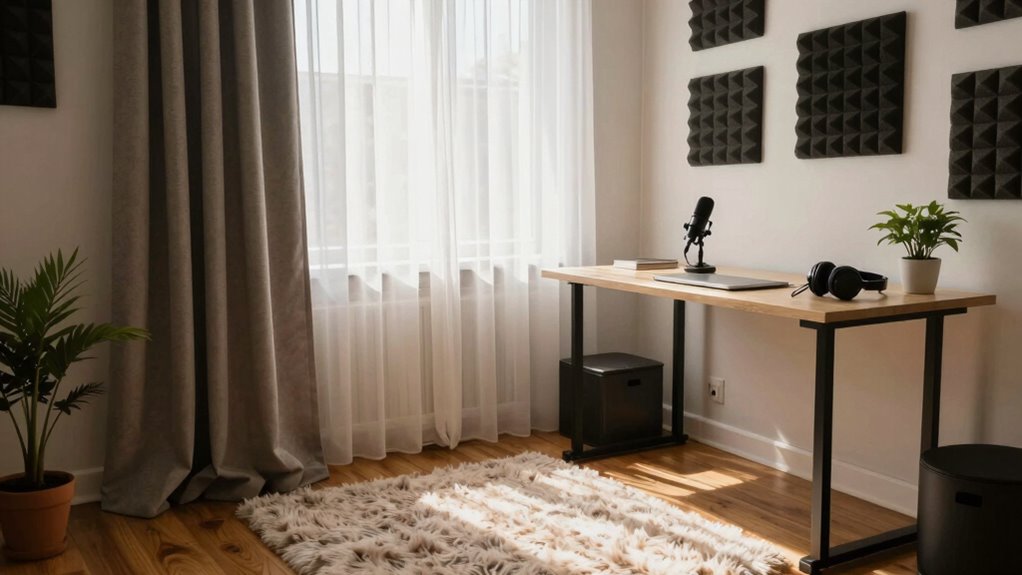

To stop sounding echoey on calls, focus on improving your room’s acoustics instead of just your mic. Reduce echoes by adding soft furnishings like curtains, rugs, or acoustic panels, which absorb sound reflections. Adjust your microphone to be closer to your mouth and away from hard surfaces. Blocking background noise and controlling your space’s sound helps create clearer conversations. Keep exploring more tips to make your calls sound professional and crisp every time.
Key Takeaways
- Add soft furnishings like rugs, curtains, or acoustic panels to absorb sound and reduce echo.
- Position your microphone closer to your mouth and away from reflective surfaces.
- Minimize background noise and echoes by closing windows and turning off noisy devices.
- Rearrange furniture with soft materials to break up sound reflections in the room.
- Consider professional acoustic treatments if echo persists despite adjustments.

Focusound 52 Pack Acoustic Foam Panels 1" x 12" x 12" Sound Proof Foam Panles Soundproofing Noise Cancelling Wedge Panels for Home Office Recoding Studio with 300PCS Double-Side Adhesive
Soundproofing – Acoustic foam panels triangular grooves structure for better noise absorption, helps to reduce and absorb unwanted…
As an affiliate, we earn on qualifying purchases.
As an affiliate, we earn on qualifying purchases.
Why Your Room’s Acoustics Affect Call Quality
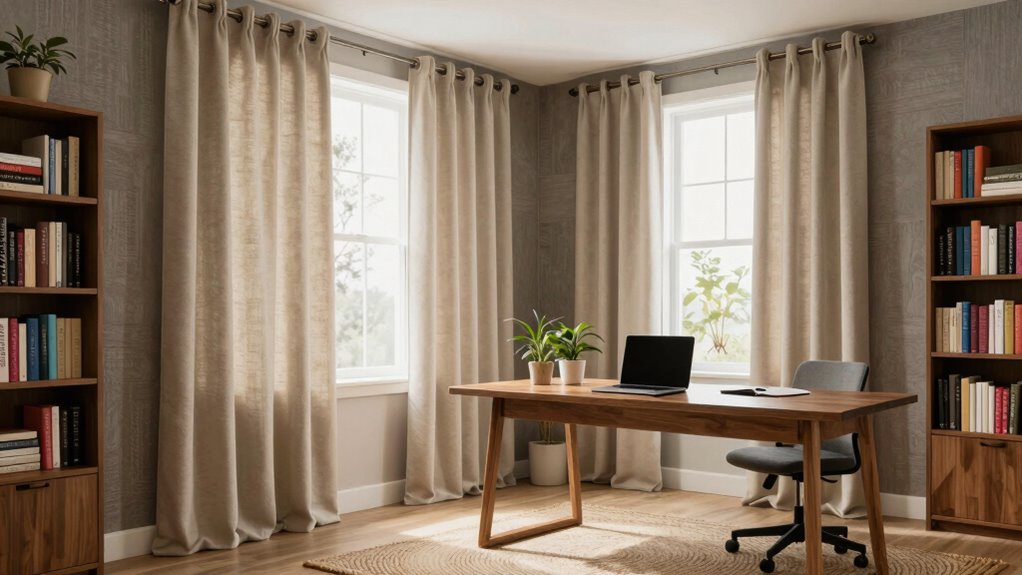
Your room’s acoustics play a significant role in call quality because sound waves bounce off hard surfaces, creating echoes that interfere with clear communication. The size of your room impacts how sound behaves; larger rooms tend to amplify echoes, while smaller spaces trap sound, causing muffling. Furniture placement also matters—placing soft furnishings like rugs, curtains, and cushions helps absorb sound and reduce bouncing. Avoid placing your desk or chair directly against bare walls or large reflective surfaces, which can worsen echo. Instead, position your furniture to break up sound paths, promoting better acoustics. Additionally, understanding your room’s acoustic environment can help you make more effective adjustments for improved call clarity. Incorporating sound absorption techniques such as acoustic panels or diffusers can further enhance your room’s sound profile. By understanding your room’s size and strategically arranging furniture, you can minimize echo and improve call clarity without expensive equipment. Small adjustments make a big difference in your overall call experience.

VEVOR 2 Pcs Sound Dampening Blankets, Soundproof Curtains with 96 x 80 in, Soundproof Blanket with Grommets, Studio Grommeted Blanket, for Window, Door, Light Blocker, Music Recording, Black
Sound Absorption & Noise Reduction: Made with a polyester woven surface and recycled cotton filling, this 3-layer physical…
As an affiliate, we earn on qualifying purchases.
As an affiliate, we earn on qualifying purchases.
How to Spot Echo and Reverberation Problems
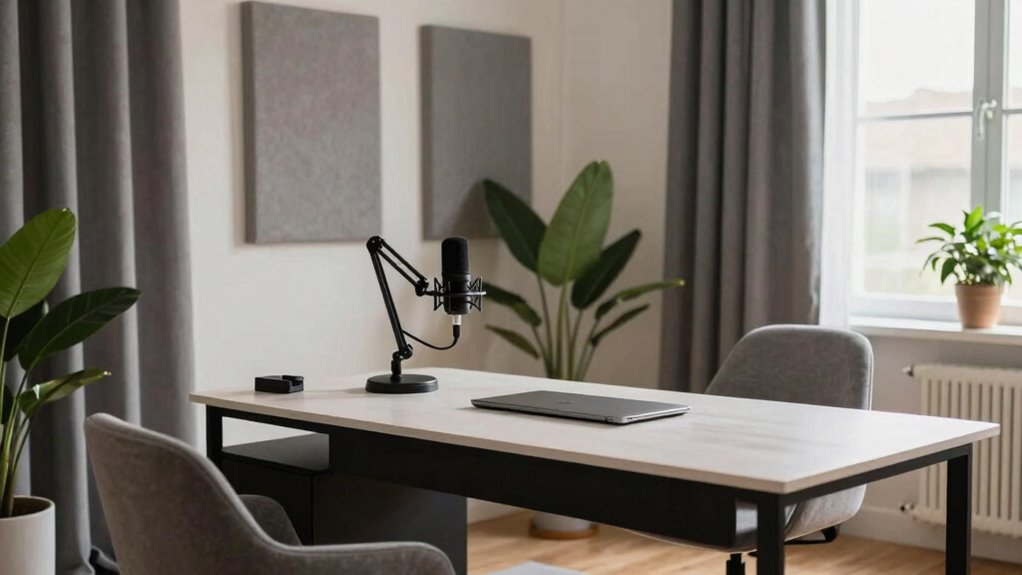
You’ll notice persistent echoes when your voice repeats or lingers on calls, making conversations hard to follow. Excess reverberation causes your voice to sound echoey and muffled, indicating room acoustics are off. Poor room soundproofing can contribute significantly to these issues, affecting audio clarity during calls. If you detect uneven sound quality or distorted voices, there’s likely a room sound issue affecting your calls. Improving your room acoustics by adding soft furnishings or acoustic panels can significantly reduce echoes and enhance call clarity. Understanding soundproofing techniques and how they relate to digital content can also help optimize your overall audio environment. Additionally, selecting the right garage door openers or other sound-absorbing devices designed for home environments can further improve your space’s acoustics and reduce unwanted echoes.
Recognize Persistent Echoes
Persistent echoes can be tricky to notice at first, but recognizing them is essential for troubleshooting call quality issues. To spot these echoes, pay attention to certain clues during your calls.
- Repeating sound patterns that delay your speech
- Echoes that persist even after adjusting your mic
- Voices sounding “hollow” or overly reverberant
- Conversations feeling disconnected or unnatural
- Sound reflections that seem to bounce around your room
A good understanding of room acoustics can help you identify if your environment is contributing to the echo problem. Effective echo detection helps you identify whether the issue stems from poor room acoustics or equipment. Room reflection and sound bounce are common causes of persistent echoes, especially in spaces with hard surfaces. Incorporating outdoor elements or soft furnishings can significantly reduce sound bounce and improve call clarity. Additionally, being aware of sound absorption techniques can further enhance your environment by minimizing reflections. Room optimization is key—look for hard surfaces that reflect sound and create echoes. Recognizing persistent echoes allows you to take targeted steps to improve your environment and achieve clearer calls.
Identify Excess Reverberation
How can you tell if excess reverberation is affecting your calls? Listen carefully—if your voice sounds echoey or distant, reverberation may be the culprit. Pay attention to how your voice bounces around the room, especially when you speak loudly or sharply. Check for signs like lingering sound or a muddy quality in your audio. Consider your room’s dimensions and furniture placement; larger rooms or those with hard surfaces amplify echoes. Use this quick reference:
| Room Features | Impact on Reverberation |
|---|---|
| Large, open spaces | Increase echo and sound bounce |
| Hard surfaces (glass, tile) | Reflect sound, worsen echo |
| Soft furnishings | Absorb sound, reduce reverberation |
| Clutter and furniture | Breaks sound paths, minimizes echo |
Understanding how room acoustics influence sound quality can help you make targeted improvements to reduce echo and improve call clarity. Recognizing the signs of reverberation ensures you address the right issues in your space. Additionally, awareness of sound reflection can help you identify the specific features contributing to problematic echo. Improving the room’s acoustic environment can significantly lower reverberation, making your calls clearer. Identifying these signs helps you target the room issues that cause reverberation.
Detect Room Sound Issues
Wondering if your room has sound issues? To detect echo and reverberation problems, start by evaluating your room’s dimensions and furniture placement. Larger rooms with high ceilings often cause more echo, while too much open space can increase reverberation. Notice if your voice sounds hollow or distant during calls—that’s a sign of sound issues. Pay attention to these indicators:
- Excessive echo or delayed repetition of your voice
- Room size that feels too spacious or empty
- Hard surfaces like bare walls or floors amplifying sound
- Furniture arrangement that leaves large open areas
- Unusual sound reflections when speaking or listening
- Room acoustics can significantly influence how sound behaves inside the space.
- The presence of sound-absorbing materials like curtains or rugs can help improve the acoustic quality of your room.
- Additionally, proper room setup techniques, such as positioning furniture and equipment thoughtfully, can greatly reduce unwanted echo and reverberation.
- You can also experiment with sound diffusion methods to break up sound waves and improve clarity. Using appropriate acoustic treatments like diffusers or panels can further enhance sound quality and reduce echo.
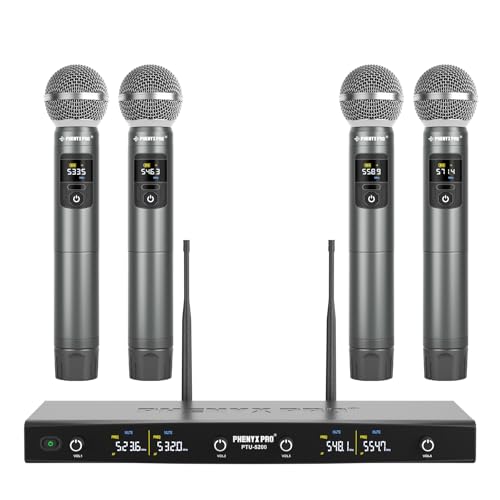
Phenyx Pro Wireless Microphone System, Metal Wireless Mic Set with 4 Cordless Mics, 4×25 UHF Adjustable Frequencies, 200ft Range, Dynamic Microphones for Singing, Karaoke, Church, DJ (PTU-5200-4H)
STURDY BUILD WITH DETAILS:Metal UHF cordless microphone receiver and UHF handheld microphones are designed to last, suitable for…
As an affiliate, we earn on qualifying purchases.
As an affiliate, we earn on qualifying purchases.
Quick Fixes to Improve Sound Immediately
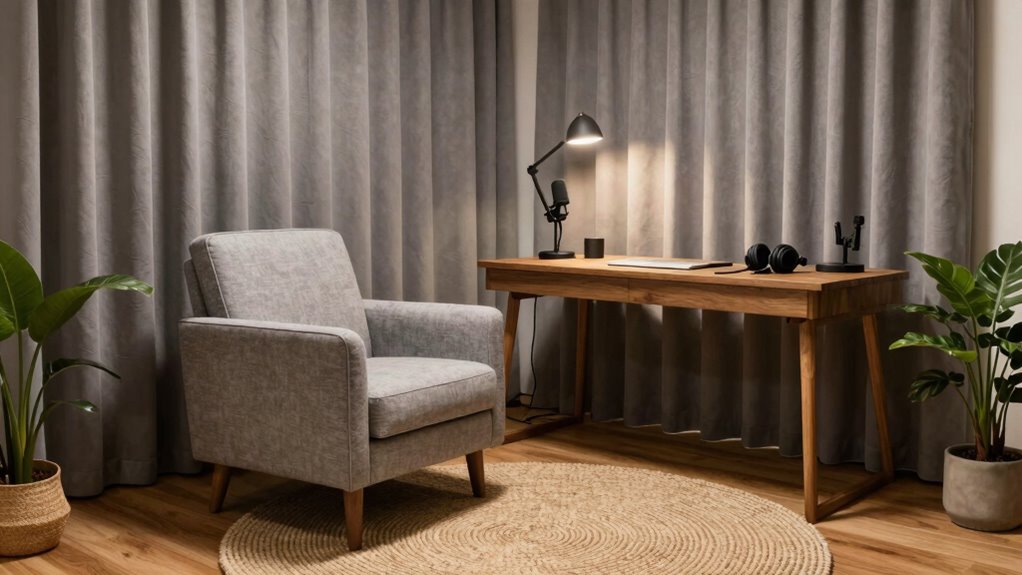
If you’re experiencing echo during calls, there are quick steps you can take to improve sound quality right away. Start by adding temporary solutions like decorative wall panels or acoustic foam tiles, which absorb sound and reduce echo. These can be easily placed around your workspace, especially on reflective surfaces like bare walls or windows. Adjust your microphone placement, moving it closer to your mouth and away from reflective surfaces, to minimize sound reflections. Reduce background noise by closing windows and turning off unnecessary devices. If possible, switch to a different room with softer furnishings or less hard surfaces. Incorporating sound-absorbing materials can further enhance your environment, making a noticeable difference, helping your voice come through clearer and echo-free during calls. Additionally, understanding the science of sound reflections can help you better plan your space for optimal acoustics. Using acoustic treatment techniques can also be highly effective in creating a more controlled sound environment. For example, placing rugs or curtains can add additional sound-dampening and improve overall sound quality. Moreover, implementing sound wave manipulation principles can optimize your space further by reducing unwanted echoes.

ATS Acoustics Home Office Residential Acoustic Treatment Room Kit Sound Absorbing Acoustic Panel 6 Pack for 50-100 Sq Ft (Platinum)
6 Piece Kit contains 4 wall panels and 2 ceiling panels, each panel is sized 24" x 48"…
As an affiliate, we earn on qualifying purchases.
As an affiliate, we earn on qualifying purchases.
Easy Acoustic Treatments for Better Calls
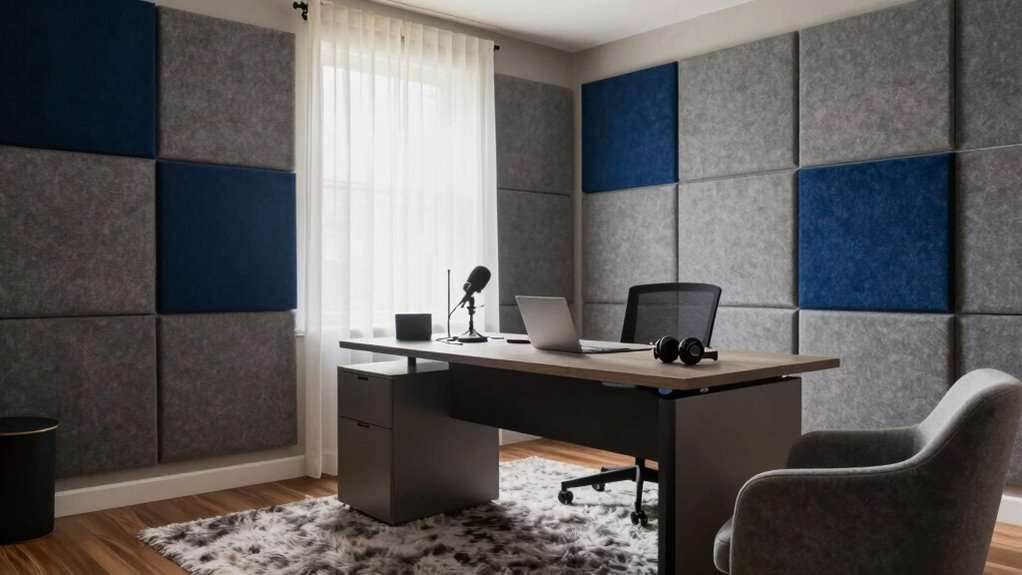
You can improve your call quality by adding soft wall coverings like curtains or foam panels, which absorb sound reflections. Placing area rugs on hard floors also minimizes echo and creates a warmer audio environment. These simple acoustic treatments make a noticeable difference without complicated setups.
Use Soft Wall Coverings
Soft wall coverings are a simple yet effective way to reduce echo during calls. They absorb sound waves, preventing them from bouncing around your room and creating that echoey effect. Installing acoustic panels or fabric-covered coverings can dramatically improve your call quality. You don’t need a full studio setup—just a few strategic additions.
Here are some ideas:
- Hang acoustic panels at reflection points
- Cover large wall surfaces with soft fabrics
- Use foam panels behind your monitor or desk
- Place fabric tapestries or quilts on walls
- Opt for wall-mounted soft coverings designed for sound absorption
These easy treatments can make your space sound more natural, clearer, and professional during calls—without costly renovations.
Add Area Rugs
Wondering how to improve sound quality during calls? Adding area rugs is a simple, effective step. Rugs absorb sound waves, reducing echo and making your voice clearer. Choose plush or thick rugs for better acoustics, especially in rooms with hard floors. Pair your rug with decorative wall art to enhance the room’s aesthetics while dampening sound. Don’t forget ceiling treatments—installing acoustic panels or tiles can further cut down reverberation. These combined efforts create a more controlled environment, so your voice sounds natural and professional. By focusing on soft furnishings like rugs and stylish decor, you avoid costly microphone upgrades or complex setups. It’s a quick, budget-friendly way to transform your space into a better calling environment.
DIY Tips to Soundproof Your Space on a Budget

Looking for an affordable way to reduce echo and improve your room’s acoustics? DIY soundproofing offers cost-effective solutions that make a difference. You can start with decorative wall panels to absorb sound and add style. Using thick blankets or curtains can also help dampen echoes. Consider creating DIY bass traps using household items like foam or packed fabric. Egg cartons or cardboard can be repurposed as makeshift sound diffusers. Adding bookshelves filled with books or soft furniture can further absorb sound waves. These simple tweaks are budget-friendly and easy to implement, making your space more call-friendly without breaking the bank. With a little effort, you can notably improve your room’s acoustics using DIY soundproofing tricks.
When to Consider Professional Acoustic Solutions
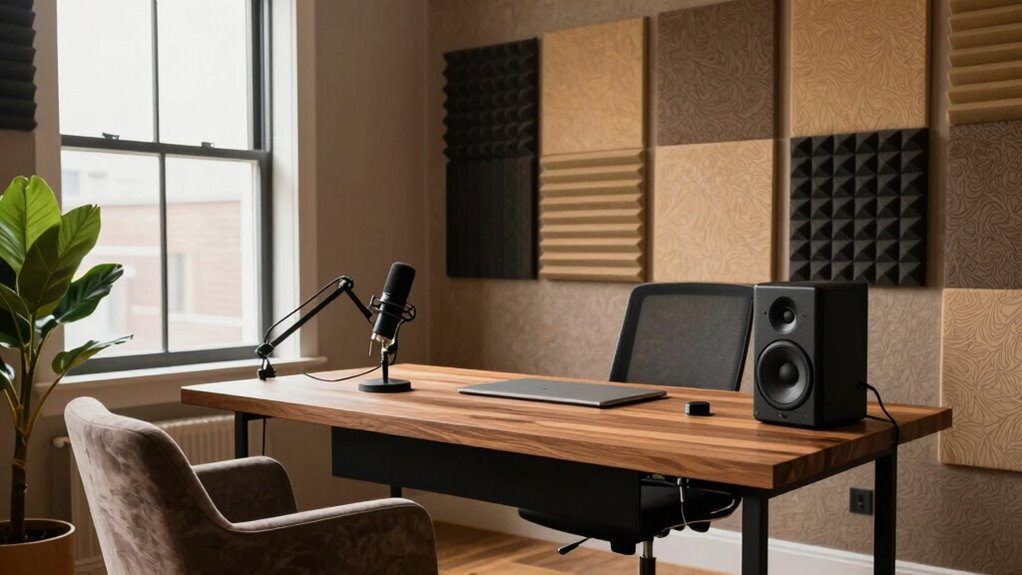
While DIY solutions can substantially improve room acoustics, there are times when professional acoustic treatment becomes necessary. If your room’s echo persists despite adjusting furniture arrangement or updating room decoration, it’s a sign you might need expert help. Professionals can assess your space’s unique sound issues and recommend specialized treatments like bass traps or diffusers. When your room’s size, shape, or construction materials create persistent echo or sound distortion, DIY efforts might fall short. You’ll want to contemplate professional solutions if furniture arrangement and decoration haven’t made a significant difference. These experts can optimize your space’s acoustic properties, ensuring your calls are clear without echoes. In complex spaces, professional intervention guarantees a lasting, effective fix.
Maintaining Good Room Acoustics Over Time
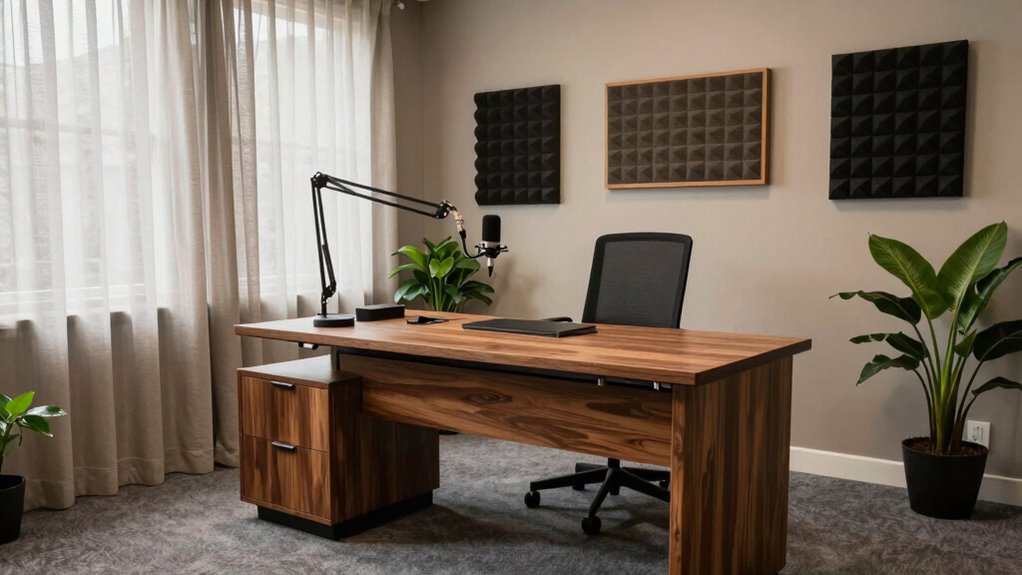
Maintaining good room acoustics over time requires ongoing attention, especially as furniture, decor, and room use change. Adjusting furniture arrangement can prevent sound reflections and reduce echo. Regularly update window treatments like heavy curtains or blinds to absorb excess sound and minimize reverberation. Check for new sources of noise or hard surfaces that might amplify echoes. Keep soft furnishings, such as rugs and cushions, in good condition to maintain sound absorption. Periodically review your room’s layout to guarantee ideal sound quality for calls. Consider adding or repositioning acoustic panels if needed. Small tweaks can considerably improve your room’s acoustics, making calls clearer and more natural. Consistent maintenance ensures your space remains sound-friendly over time.
Frequently Asked Questions
Can Room Acoustics Affect Video Call Quality as Well?
Yes, room acoustics can affect your video call quality. Poor acoustics cause background noise and echo, making it hard for others to hear you clearly. To improve sound, focus on microphone positioning and reduce reflective surfaces around you. Using soft materials like curtains or rugs helps absorb sound. These adjustments can markedly enhance your call clarity, ensuring your voice comes through crisp and free of distracting echoes.
Are There Specific Materials That Absorb Echo Better?
Imagine your voice dancing through the room, silenced by materials that absorb sound. Soundproof curtains and acoustic panels are your allies here, soaking up echoes like a sponge soaks up water. These materials have dense fibers and soft surfaces that trap sound waves, preventing reflections. You’ll notice clearer calls, as soundproof curtains block outside noise, and acoustic panels reduce reverberation, creating a calm, echo-free space perfect for crisp conversations.
How Often Should I Re-Evaluate My Room’s Acoustics?
You should re-evaluate your room’s acoustics every few months, especially if you notice increased echo or sound issues. Keep an eye on how soundproof curtains and acoustic panels are performing, and adjust or add more as needed. Changes in your room’s layout, furniture, or environment can impact acoustics, so regular checks help guarantee your space stays soundproof and echo-free. This way, your calls stay clear and professional.
Do Certain Room Shapes Worsen Echo Problems?
Certain room shapes, like long hallways or narrow corridors, act like echo chambers, amplifying sound waves and creating echo amplification. These shapes can turn your calls into a symphony of reverberations, making your voice bounce endlessly. To tame this, choose rooms with more balanced dimensions or add soft furnishings that absorb sound. Recognizing how room shape influences echo helps you design a space that keeps your voice clear and crisp.
Can Furniture Placement Reduce Echo During Calls?
Yes, furniture arrangement can reduce echo during calls. Positioning bookshelves, sofas, or other soft furnishings strategically absorbs sound waves, diminishing echo. Combining furniture placement with acoustic treatments like rugs, curtains, or foam panels enhances sound absorption further. Experiment with different arrangements to find what best minimizes echo in your space. This approach helps create a clearer, more professional sound during your calls without needing to upgrade your microphone.
Conclusion
Imagine your voice filling a cozy, inviting room rather than bouncing chaotically off bare walls. By tuning your space’s acoustics, you’ll find your calls clearer and more natural—like chatting in a friend’s warm living room. With simple tweaks and mindful treatments, you can turn your environment into a sound-friendly haven. So, take a moment, set the scene, and let your voice flow smoothly—making every call feel like a genuine, uninterrupted conversation.