
🔍 Read the full analysis: Hollow House: A One-Night Experiment In AI Horror-Comedy on ThorstenMeyerAI.com

Get the latest gadgets delivered free with Prime
- Fast, free delivery on millions of items
- Prime Video, Amazon Music and more included
- Member-only deals all year
TL;DR
Thorsten Meyer says Hollow House, a 97-second AI-generated horror-comedy, was made in three attempts between the evening of October 27 and about 1:30 a.m. on October 28, 2026. The account describes how the first, visually polished cut was judged boring, leading to a faster edit and a final version generated in three longer segments; the creator reports spending 2,220 Higgsfield credits across the attempts.
Thorsten Meyer says he made Hollow House, a 97-second horror-comedy with AI-generated characters, voices and sets, in three attempts overnight from October 27 to 28. In a behind-the-scenes account published October 28, Meyer describes abandoning a polished but slow first cut and changing the production approach; the project offers a specific account of how editing and human decisions shaped a short made with generative tools.
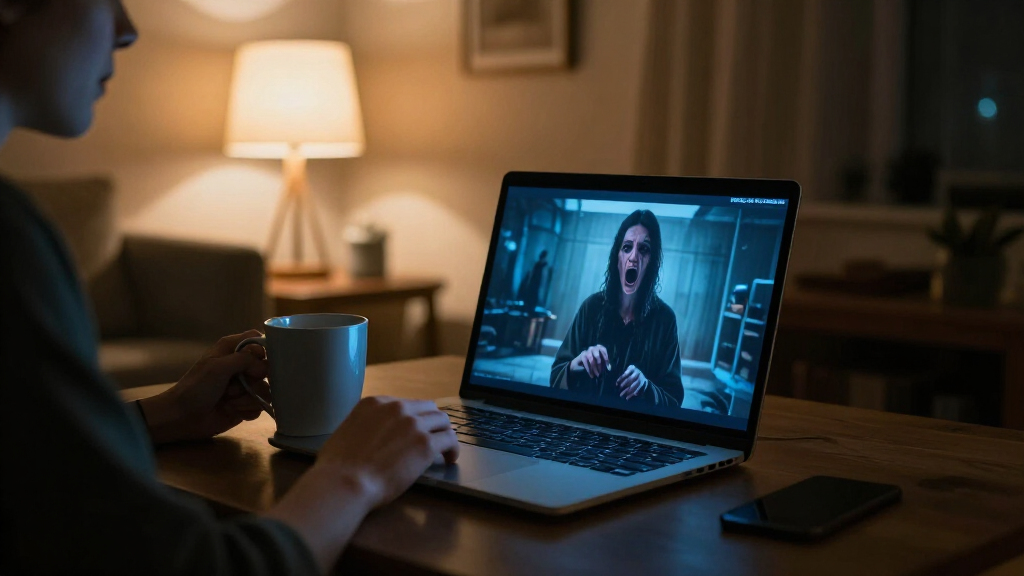
The film’s premise puts a ghost among the staff of an extreme haunted attraction, where the employees treat the supernatural visitor as a workplace problem. A guest’s safe word fails to stop the scare, and shift lead Ray responds by asking whether the ghost signed a waiver. Meyer’s account says the script, characters and jokes were his own, while the structure was inspired by an AI horror-comedy short shared on X.
Meyer says the first version consisted of 20 shots and ran 2 minutes 15 seconds. It looked good to him, but he found it “terribly boring and amateurish.” He counted an average of 5.6 seconds per cut, compared with about 1.8 seconds in the short that inspired the project, based on his count of roughly 74 cuts across 2 minutes 14 seconds. Those figures are the creator’s measurements, not an independently verified comparison.
For the final 1:37 cut, Meyer says he generated three 30-second segments using one model with references for the whole cast. Across all three versions, he reports using 2,220 Higgsfield credits, valued at roughly $95 at his plan price, and about 2,100 ElevenLabs characters for music and sound effects. Those costs and production details come from Meyer’s account.
Behind the scenes · October 28, 2026
Hollow House:
A One-Night Experiment in AI Horror-Comedy
A ghost joins the staff of an extreme haunted attraction—and becomes a workplace problem. Thorsten Meyer’s 97-second short took three attempts overnight, with a change in editing rhythm at its center.
01 / The creative premise
A haunting meets the night shift
The supernatural arrives at an extreme haunted attraction, where the crew responds with the practical concerns of any workplace: safety, paperwork and getting through the shift.
A ghost on staff
The premise puts a ghost among the attraction’s employees, turning a classic scare into an awkward workplace encounter.
The safe word fails
A guest’s safe word does not stop the scare. Shift lead Ray responds by asking whether the ghost signed a waiver.
Human-written jokes
Meyer says he wrote the script, characters and jokes. The short’s structure was inspired by an AI horror-comedy shared on X.
02 / Three attempts
One night, three different cuts
Meyer says work began on the evening of October 27 and continued until about 1:30 a.m. on October 28. The decisive change was to the edit’s pace.
Polished, but slow
The first version looked good to Meyer, but he judged it “terribly boring and amateurish.” He counted an average 5.6 seconds per cut.
More cuts, still not working
A faster second version still did not work for him. Increasing the number of cuts alone did not solve the comedy’s timing.
Three longer segments
The final approach used three roughly 30-second generated segments, with references for the full cast available to one model.
03 / What changed
The edit became the experiment
Meyer compared his first cut with the short that inspired the project. The figures below are his counts, not an independently verified comparison.
Average time between cuts
Meyer counted roughly 74 cuts across 2 minutes 14 seconds in the short that inspired his project.
How the approach evolved
Bars compare counts of shots, cuts and generated segments as reported; they are different production units.
“The pictures were never the problem. The rhythm was.” Meyer’s account describes a shift from polishing the images to reworking the edit around the jokes.
04 / Production workflow
References, generations, human review
The account presents AI as part of a hands-on process: consistency aids and generated footage still needed selection, correction and editorial judgment.
Eight character sheets
Before generating video, Meyer made one reference image per character with Nano Banana 2 through Higgsfield. He says the references helped keep hair and costumes stable.
Frames into clips
The first version paired 20 planned shots with generated start frames and clips using Google’s Veo 3.1 fast mode. Meyer says speech and sound were generated alongside video.
Correct, replace, grade
Meyer selected references, revised prompts, compared dialogue with the script using Whisper speech recognition, judged cuts and graded the final image.
“A locked picture per character is the closest thing AI film has to a casting call and a costume department in one.” Meyer describes character references as a continuity tool.
05 / Reported production inputs
A creator-reported cost snapshot
These figures come from Meyer’s account and describe the three attempts. They are not an independently audited full production budget.
2,220 credits
Meyer values the Higgsfield credits at roughly $95 under his plan price. The account does not break down credits by version.
~2,100 characters
Meyer reports using about 2,100 ElevenLabs characters. The account does not quantify labor time or every possible production cost.
06 / Evidence boundaries
What the account does—and doesn’t—show
The behind-the-scenes article documents one creator’s process. Its production claims and judgments are useful context, with clear limits.
- Cut counts, generation costs and assessments of what worked are reported by Meyer, without independent verification.
- The roughly $95 estimate reflects his stated plan price, not a complete budget including all labor or other costs.
- The exact model configuration for the final segments and a per-version credit breakdown are not specified.
- The account gives no audience figures, performance results or independent comparison with the inspiration short.
- It does not establish how reliably another creator could repeat the workflow or how much manual selection it required.
- The article includes reference sheets, start frames, failed generations and a final-cut contact sheet for readers to inspect.
07 / Key questions
The short, in brief
A compact guide to the film and the claims made in its production account.
What is Hollow House?
A 97-second horror-comedy about a ghost joining the staff of an extreme haunted attraction. Meyer says characters, voices and sets were AI-generated.
How long did it take?
Meyer says the work ran from the evening of October 27 until about 1:30 a.m. on October 28, 2026, producing three versions.
What changed in the final version?
After two cuts he found unsuccessful, Meyer says he made the final 1:37 version from three longer generated segments with cast references.
Was the film made automatically?
No. Meyer describes writing, reference selection, prompt revisions, dialogue checks, edit decisions and color grading as human work in the process.
Why the First Cut Failed
Meyer’s account points to a practical distinction in AI-assisted filmmaking: consistent-looking images did not guarantee a working comedy edit. He says the first version kept faces, costumes and the haunted-house lighting consistent, but its long shots and sparse cutting weakened the jokes. His response was to change the structure rather than simply improve the pictures.
The production also shows where the creator says human review remained central. Meyer selected the cast references, judged the pacing, revised prompts after failed shots, checked generated dialogue against the script and applied the final colour grade. The project is a single creator’s account, not a controlled test of tools or evidence that the same workflow will perform similarly for other productions.
Products Worth Considering

Bose QuietComfort Wireless Bluetooth Headphones with Active Noise Cancellation, Mic, USB‑C Charging, Deep Bass, 24‑Hour Battery – White Smok

Jackery Explorer 300 Portable Power Station with 40W Solar Panel

Logitech MX Master 4 for Mac, Ergonomic Bluetooth Mouse with Haptic Feedback, Ultra-Fast Scrolling, USB-C Charging, for MacOS, iPadOS, Windo
As an affiliate, we earn on qualifying purchases.
Three Attempts, One Overnight Shoot
Before generating video, Meyer made one reference image for each of eight characters using Nano Banana 2 through Higgsfield. He says the images helped keep details such as hair and costumes stable across scenes, where loosely described characters might otherwise change between clips. He compares these reference sheets to casting and costume records for an AI production.
The first workflow paired 20 planned shots with generated start frames and clips made using Google’s Veo 3.1 fast mode. Meyer says the model produced speech and sound alongside the video. The process surfaced specific problems: a shouted “HEY!” was spoken as separate letters, a requested head turn did not work as intended, and some staged movements had to be reworded or replaced. He says he used Whisper speech recognition to compare generated dialogue with the script and identify errors that needed retakes.
Meyer describes the second version as 66 fast cuts running 2 minutes 21 seconds, but says it still did not work. The final approach used three longer segments generated with the full cast available as references. His account says a difficult head turn was handled with a still image showing the pose and a sound effect, rather than relying on the video model to produce the movement. The published account includes character sheets, start frames, failed attempts and a contact sheet of the final cut.
““terribly boring and amateurish.””
— Thorsten Meyer, describing his first cut
What the Account Does Not Establish
The production details, cost estimates, cut counts and judgments about what worked are reported by Meyer; the source material does not provide independent verification or a separate assessment of the finished film. The roughly $95 figure reflects his stated Higgsfield plan price, and it is not presented as a full budget that includes every possible production or labour cost.
The account does not specify the exact model configuration used for the final segments, provide a full breakdown of the 2,220 credits by version, or say how the film performed with viewers. It also does not establish whether the workflow can be repeated reliably or how much manual selection and editing each generation required. The source gives no audience figures, distribution details beyond the film link, or independent comparison with the short that inspired the project.
The Published Film and Its Workflow
The film is available as a 1:37 YouTube short, and Meyer’s October 28 account documents the production through its reference sheets, initial frames, failed generations and final-cut contact sheet. The next available step for readers is to compare the finished short with the described attempts and evaluate the creator’s account against the material shown.
Meyer’s source does not announce a follow-up film, a broader release plan or additional production milestones. Any further information about audience response, revisions or reuse of the workflow remains unreported.
Key Questions
What is Hollow House?
Hollow House is a 97-second horror-comedy short about a ghost joining the staff of an extreme haunted attraction. Meyer says its characters, voices and sets were AI-generated.
How long did it take to make?
Meyer says production began in the early evening of October 27, 2026, and continued until about 1:30 a.m. on October 28. He describes making three versions during that period.
What changed between the first and final versions?
The first version had 20 shots and ran 2 minutes 15 seconds. Meyer says he found its pacing too slow; the final 1:37 version was assembled from three 30-second generated segments using one model with references for the cast.
How much did the AI generation cost?
Meyer reports spending 2,220 Higgsfield credits, which he values at roughly $95 under his plan, plus about 2,100 ElevenLabs characters for music and sound effects. This is his stated estimate, not an independently audited total budget.
Was the whole film made automatically?
No. Meyer says AI generated the characters, voices and sets, but describes human choices in writing, selecting references, judging cuts, revising prompts, checking dialogue and grading the final image. The account does not quantify how much time each task took.
Source: ThorstenMeyerAI.com