
TL;DR

Get the latest gadgets delivered free with Prime
- Fast, free delivery on millions of items
- Prime Video, Amazon Music and more included
- Member-only deals all year
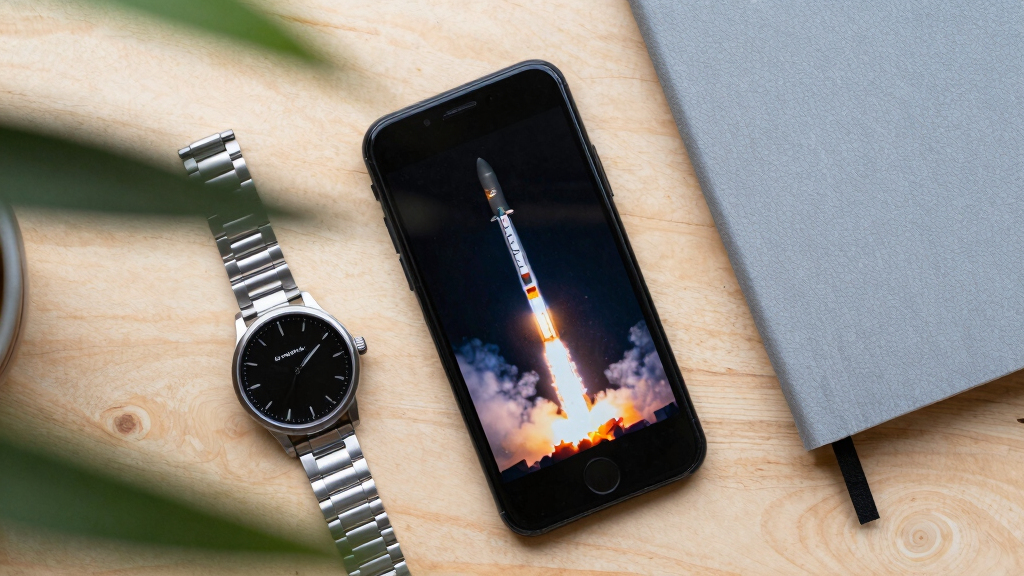
SpaceX successfully launched a Falcon 9 rocket from Vandenberg on July 1, deploying 24 Starlink satellites. The mission included the booster’s seventh flight, with a successful landing on a droneship.
SpaceX successfully launched a Falcon 9 rocket from Vandenberg Space Force Base at 7:58 p.m. on July 1, deploying 24 Starlink satellites into low-Earth orbit. The launch was part of SpaceX’s ongoing expansion of its Starlink broadband constellation, which aims to provide high-speed internet globally. The mission’s success confirms the operational status of the Falcon 9 vehicle and the company’s continued deployment schedule.
The Falcon 9 rocket lifted off from Vandenberg Space Force Base, with liftoff occurring at 7:58 p.m. local time. The launch window was scheduled from 7 p.m. to 11 p.m., with the mission proceeding within this timeframe. The rocket carried a payload of 24 Starlink satellites, intended to expand SpaceX’s satellite network providing internet access in underserved regions. The first-stage booster, making its seventh flight, separated after stage ignition and successfully returned to Earth, landing on the droneship ‘Of Course I Still Love You’ in the Pacific Ocean. This marks the continuation of SpaceX’s routine reuse of boosters to reduce launch costs. The mission was webcast live, beginning approximately 10 minutes before liftoff, allowing viewers to watch the launch process in real time.
Implications for SpaceX’s Starlink Expansion
This launch underscores SpaceX’s ongoing efforts to expand its Starlink satellite constellation, which is central to its strategy to deliver global high-speed internet. The successful deployment of 24 satellites enhances coverage in targeted regions and demonstrates the company’s ability to maintain a rapid launch cadence. Additionally, the booster’s seventh flight reaffirms SpaceX’s focus on reusability, which significantly reduces launch costs and increases launch frequency, key factors in the company’s competitive advantage and market expansion.
Starlink satellite internet receiver
As an affiliate, we earn on qualifying purchases.
As an affiliate, we earn on qualifying purchases.
Recent SpaceX Launch Schedule and Satellite Deployments
SpaceX has conducted multiple launches from Vandenberg over the past year, deploying Starlink satellites and supporting government and commercial missions. The company’s focus on reusing boosters has become a hallmark of its operations, with the Falcon 9’s first stage supporting numerous missions including previous Starlink deployments and national security payloads. The current launch continues this trend, part of SpaceX’s broader plan to deploy thousands of satellites to achieve global broadband coverage. The launch also follows recent successful missions, maintaining SpaceX’s reputation for reliable, frequent launches from both the East and West coasts of the United States.
“This mission demonstrates the reliability of our Falcon 9 and our commitment to expanding the Starlink network to serve more users worldwide.”
— an anonymous SpaceX representative
As an affiliate, we earn on qualifying purchases.
Remaining Questions About Mission Details
While the launch was successful, it is not yet clear how the deployed satellites will perform in orbit or how quickly they will become operational. Additionally, the long-term durability of the booster booster’s seventh flight and its future reuse plans remain under observation. No issues have been publicly reported, but further analysis will be needed to confirm satellite health and booster performance over time.
As an affiliate, we earn on qualifying purchases.
Next Steps in SpaceX’s Satellite Deployment Schedule
Following this launch, SpaceX is expected to continue its regular deployment schedule, with upcoming launches targeting both Starlink expansion and other commercial missions. The company may also announce further milestones related to satellite performance and network coverage. Monitoring will focus on satellite activation, operational status, and booster reuse metrics, which are critical to SpaceX’s cost reduction and service expansion plans.
As an affiliate, we earn on qualifying purchases.
Key Questions
How many Starlink satellites has SpaceX launched so far?
As of this launch, SpaceX has deployed thousands of Starlink satellites, with ongoing launches increasing the constellation to improve global coverage and capacity.
Will the booster be reused on future missions?
The booster’s seventh flight was successful, demonstrating its reusability. SpaceX plans to continue reusing boosters where feasible to reduce costs and increase launch frequency.
When will the new satellites become operational?
It typically takes several weeks for deployed satellites to reach their designated orbit and undergo testing before becoming fully operational in the network.
Are there any issues reported with the launch?
No issues have been reported; the launch was successful, and all mission objectives appear to have been met.
What is the significance of the launch location?
Vandenberg Space Force Base is a key launch site for SpaceX’s missions to polar and sun-synchronous orbits, enabling efficient deployment of satellites like Starlink.
Source: Google Trends
Halloween Picks
halloween
As an affiliate, we earn on qualifying purchases.