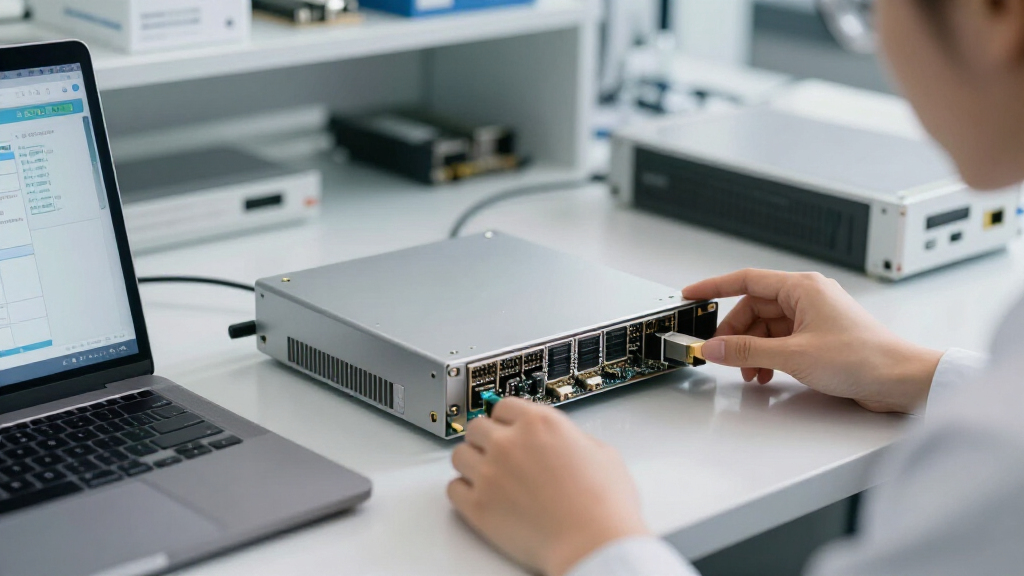

📊 Full opportunity report: What You Missed About China's AI Restrictions In Optical-Transceiver Tech on ThorstenMeyerAI.com — validation score, market gap, and execution plan.

Get the latest gadgets delivered free with Prime
- Fast, free delivery on millions of items
- Prime Video, Amazon Music and more included
- Member-only deals all year
TL;DR
The US is drafting a measure to restrict Chinese imports of optical transceivers used in datacenters, aiming to protect AI infrastructure. The measure is still in proposal stage, with significant market and strategic implications, but existing hardware remains unaffected.
On August 4, 2023, Reuters reported that the US Federal Communications Commission (FCC) is drafting a measure to restrict the import of new Chinese optical transceivers used in datacenters, citing concerns over data security and infrastructure integrity. This proposal, still in the draft stage, signals an escalation in US efforts to control Chinese technology in critical network components, with potential implications for AI infrastructure security.
The proposed measure aims to prevent new Chinese optical transceivers from entering the US market, but it is not yet finalized or in effect. Market reactions showed significant gains for US optical component firms, such as Applied Optoelectronics and Lumentum, while Chinese supplier Zhongji Innolight faces increased scrutiny. Importantly, this is a draft, and the FCC could modify or shelve it before implementation.
This regulation targets the import authorization process through the FCC’s equipment-authorization and Covered List system, differing from export controls that restrict technology sales abroad. It focuses on the hardware that connects data within datacenters, not on the chips or processors themselves.
Crucially, existing Chinese optical transceivers already installed in US datacenters—accounting for approximately 70% of global shipments—are unaffected. This means the measure addresses future imports but leaves current hardware, which constitutes a significant portion of the infrastructure, unchanged. The security concerns related to existing hardware remain unaddressed by this import ban.
A drafted FCC measure would bar imports of new Chinese optical transceivers — the small parts that turn signals into light inside a datacenter. The headline says “US bans Chinese datacenter tech.” It’s wrong in three specific ways.
▲ A draft, not a rule · could be modified or shelved“US bans Chinese datacenter tech” is wrong in three ways that change what the story actually means.
The transceiver is the interconnect — the layer that sets the real bottleneck of modern inference. The US isn’t moving on the compute here. It’s moving on the nervous system that wires the compute together.
- Restricts what US tech is sold to China
- Targets the compute
- The fight everyone has been watching
- Restricts what Chinese gear is imported into the US
- Targets the interconnect / network fabric
- Confirms the wire is now as contested as the chip
Read one way it has a hole you can see through. Read the other way it’s coherent.
Production is the product, and capacity doesn’t teleport. Four frictions stand between the draft and reality.
as strategically contested as the compute. But it’s a draft, and the base is already installed.
Implications for US-China Tech Competition and Infrastructure Security
This development highlights the strategic importance of interconnect components in AI and data infrastructure, as the US shifts focus from chips to network hardware. The proposed restrictions reflect a broader effort to control critical supply chains and safeguard sensitive data, but they also reveal limitations—existing hardware remains in place, and the measure is still in draft form. The move could accelerate reshoring efforts and influence global supply dynamics, but its actual impact depends on final implementation and industry response.
optical transceiver for data center
As an affiliate, we earn on qualifying purchases.
As an affiliate, we earn on qualifying purchases.
Background on US-China Technology Restrictions and Optical Transceiver Market
Over the past year, US authorities have targeted Chinese technology through various measures, including export controls on chips and restrictions on network equipment imports. The recent focus on optical transceivers marks a shift toward controlling the physical infrastructure that underpins AI and data processing. Chinese vendors, such as Zhongji Innolight, currently hold about 70% of the global transceiver market, with significant sales to US cloud and AI companies. The measure follows the addition of Innolight to the Pentagon's list of Chinese military-linked firms, signaling heightened regulatory scrutiny.
Market reactions to the draft proposal have been swift, with US optical component firms experiencing stock gains, reflecting investor optimism about domestic industry gains. However, the actual regulatory move remains uncertain, and history shows that draft measures often undergo substantial revision or abandonment before becoming law.
"The draft FCC measure is a proposal, not a finalized rule, and could still be modified or shelved, meaning the immediate market reactions may overstate the actual impact."
— Thorsten Meyer
high-speed optical transceiver module
As an affiliate, we earn on qualifying purchases.
As an affiliate, we earn on qualifying purchases.
Uncertain Finalization and Practical Impact of the Draft
The measure remains in draft form, and it is unclear whether it will be finalized or substantially altered. The timeline for potential implementation is also uncertain, and industry responses could influence its adoption. Additionally, the impact on existing infrastructure, which already contains Chinese hardware, is limited, raising questions about the measure’s actual security benefits versus its industrial policy implications.
fiber optic transceiver for enterprise
As an affiliate, we earn on qualifying purchases.
As an affiliate, we earn on qualifying purchases.
Next Steps in Regulatory Development and Industry Response
The FCC is expected to review public comments and further refine the draft measure over the coming months. Industry stakeholders will likely lobby for modifications, and analysts will watch for final decisions. If approved, the regulation could reshape supply chains for optical transceivers, potentially accelerating reshoring efforts and influencing global market shares. Monitoring how existing hardware is managed and how the measure is enforced will be key to understanding its ultimate impact.
As an affiliate, we earn on qualifying purchases.
Key Questions
What exactly is the proposed US restriction on Chinese optical transceivers?
The US FCC is drafting a measure to prevent the import of new Chinese optical transceivers used in datacenters, aiming to control infrastructure hardware for security reasons. It is still in the proposal stage and not yet enacted.
Will existing Chinese transceivers in US datacenters be affected?
No, the current hardware already installed remains unaffected by the proposed import restrictions. The measure targets future imports, not hardware already in place.
How does this differ from US export controls on chips?
The proposed measure is an import restriction managed through the FCC’s equipment-authorization system, focusing on hardware entering the US, rather than export controls on US technology sold abroad, which are managed by the Commerce Department.
What are the strategic implications of this measure?
If finalized, it could shift supply chains toward US-based manufacturers, potentially reshoring critical infrastructure components and altering global market dynamics in optical transceivers.
When will we know if the measure will be enforced?
The FCC is expected to review public feedback and decide in the coming months. Final implementation depends on this review process and political considerations.
Source: ThorstenMeyerAI.com
Halloween Picks
halloween
As an affiliate, we earn on qualifying purchases.