📊 Full opportunity report: Using Computer Vision To Modernize Gauge Reading Processes on IdeaNavigator AI — validation score, market gap, and execution plan.

Get the latest gadgets delivered free with Prime
- Fast, free delivery on millions of items
- Prime Video, Amazon Music and more included
- Member-only deals all year
TL;DR
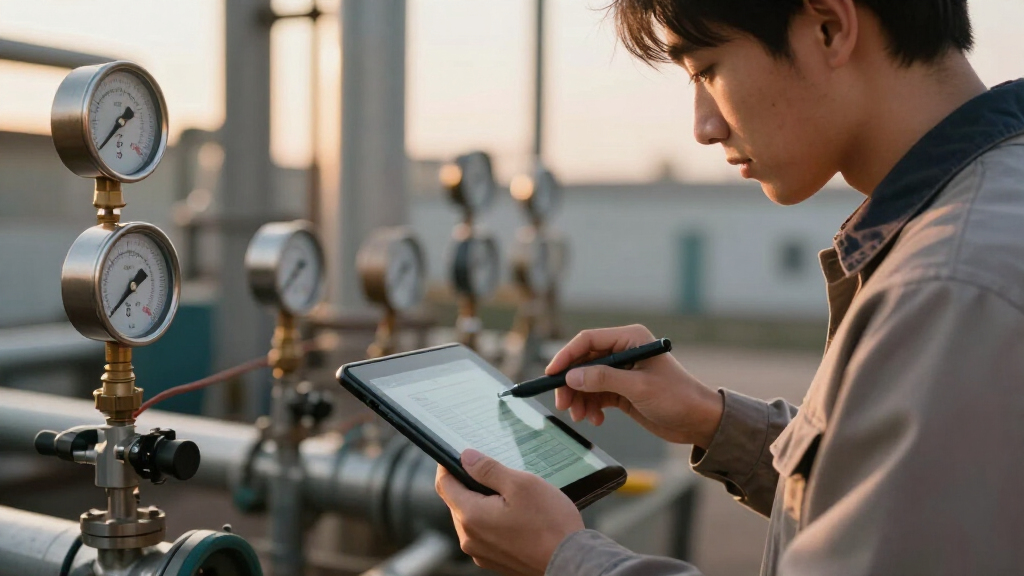
Facilities are piloting a computer vision-based system that uses phone photos to read analog gauges, aiming to replace manual transcription and improve failure detection. The approach is being tested at three sites and shows promise for legacy equipment.
Industrial facilities are pilot testing a new approach that uses computer vision to read analog gauges from phone photos, replacing traditional manual transcription. This development could significantly improve accuracy, enable early failure detection, and reduce costs associated with retrofitting legacy equipment with sensors. Learn how computer vision technology enhances safety and maintenance. The initiative is being trialed at three facilities, with initial results promising for broader adoption.
The new system involves technicians photographing each gauge during their routine rounds using a smartphone app. The app employs machine learning models to automatically read the gauge’s value, compare it against expected ranges, and log the data with timestamps and location tags. It also flags anomalies immediately, allowing maintenance teams to act before failures occur.
According to an anonymous source involved in the pilot, the technology can reliably read various types of analog indicators, including sight glasses and counters, from ordinary phone photos. The goal is to replace the manual process of transcribing readings onto paper, which is prone to errors and often not used for trend analysis. The pilot aims to validate the system’s accuracy by running parallel photo and clipboard rounds, comparing error rates and early anomaly detection.
Facility managers see potential in this approach as a low-cost, scalable solution that leverages existing equipment and infrastructure. The software provider plans to offer a tiered subscription model based on the number of gauges monitored, making it accessible for facilities of different sizes. For more insights, see how computer vision empowers aftermarket driver safety tech.
Implications for Industrial Maintenance Efficiency
This innovation could transform maintenance workflows by providing real-time, accurate data from legacy equipment without costly retrofitting. Early detection of anomalies can prevent costly failures, reduce downtime, and improve safety. Additionally, digitized gauge data can be integrated into broader asset management systems, enabling predictive maintenance and better operational insights.
For industries reliant on aging infrastructure, this approach offers a practical way to modernize data collection and analysis without significant capital expenditure. If successful at scale, it could set a new standard for maintenance practices across sectors such as manufacturing, energy, and utilities.
industrial gauge photo reading app
As an affiliate, we earn on qualifying purchases.
As an affiliate, we earn on qualifying purchases.
Legacy Equipment and the Need for Better Data Collection
Many industrial facilities operate with aging equipment featuring analog gauges that have historically been read manually and recorded on paper. This process is labor-intensive, error-prone, and often results in data that is rarely used for trend analysis or early failure detection.
Retrofitting these systems with IoT sensors is an option but is often prohibitively expensive, especially for smaller or older assets. As a result, facilities continue to rely on manual rounds, which lack the real-time insights needed for proactive maintenance.
Recent advances in computer vision and AI have demonstrated the ability to accurately interpret analog dials from photographs, opening the door to a low-cost, scalable solution that leverages existing hardware—smartphones—and software to modernize data collection.
This pilot builds on these technological advances, aiming to prove that phone-photo gauge reading can reliably replace manual transcription, enhance failure detection, and enable trend analysis without costly upgrades.
As an affiliate, we earn on qualifying purchases.
Unconfirmed Aspects of System Performance and Scalability
While initial results are promising, it is not yet clear how well the system will perform across different types of gauges, lighting conditions, and environments. The pilot involves only three facilities, and broader testing is needed to confirm accuracy, reliability, and integration with existing maintenance workflows. It remains uncertain how quickly the system can be scaled and adopted industry-wide, or how it will handle edge cases such as damaged or obscured gauges.
As an affiliate, we earn on qualifying purchases.
Next Steps for Validation and Broader Deployment
The pilot program will continue for several months, with ongoing data collection comparing photo-based readings against manual logs. Success metrics include accuracy, early anomaly detection rate, and user acceptance. Following validation, the software provider plans to refine the AI models and expand testing to additional facilities. A broader rollout could occur within the next year if results remain positive, with potential integration into existing asset management systems and further development of features like automated trend analysis and predictive alerts.
As an affiliate, we earn on qualifying purchases.
Key Questions
How accurate is the phone-photo gauge reading system?
Initial tests suggest high reliability in reading various types of analog gauges from phone photos, but full validation across different conditions is ongoing.
What types of gauges can this system read?
The system is designed to interpret analog dials, sight glasses, counters, and similar indicators from a standard photograph.
Will this replace manual rounds entirely?
Initially, the system is intended as a supplement to manual rounds to improve accuracy and early failure detection. Full replacement depends on further validation and industry acceptance.
How much does the software cost?
The provider plans a tiered subscription model based on the number of gauges monitored, making it adaptable for different facility sizes.
What are the main challenges to scaling this solution?
Challenges include ensuring accuracy across diverse environments, integrating with existing maintenance systems, and gaining industry-wide trust in the technology.
Source: IdeaNavigator AI
Evergreen bestsellers Picks
bestsellers
As an affiliate, we earn on qualifying purchases.