
🔍 Read the full analysis: How AI And Google Are Transforming Fashion’s Future Landscape on ThorstenMeyerAI.com

Get the latest gadgets delivered free with Prime
- Fast, free delivery on millions of items
- Prime Video, Amazon Music and more included
- Member-only deals all year
TL;DR
Google, in collaboration with designers, unveiled two AI tools at New York Fashion Week aimed at improving fashion production workflows. These tools focus on virtual styling and set staging within budget, highlighting AI’s operational role rather than creative automation. Independent results and broader adoption remain unverified.
Google announced on September 18, 2026, that its Envisioning Studio, in partnership with Google Labs, developed two custom AI tools with fashion designers Jane Wade and Sergio Hudson for use at New York Fashion Week, as detailed in the original analysis. These tools aim to streamline key production workflows—virtual styling and runway staging—by enabling designers to simulate and refine their ideas digitally before physical execution. Google claims the tools’ results appeared on the runway, but independent verification is not yet available.
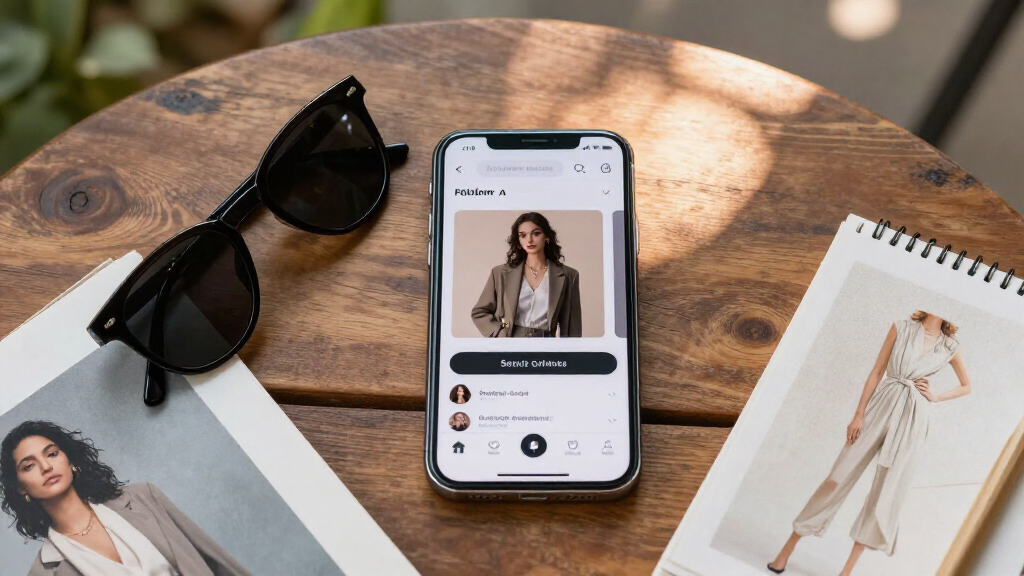
The first tool, Styling Suite, allows Wade to digitally assemble and adjust head-to-toe looks, including hair, makeup, accessories, and garments, reducing the need for physical fittings and fittings that typically consume up to three days. The second tool, Runway Visualization, enables Hudson to simulate his runway set, swap lighting and props, and plan model paths within budget constraints, reducing costs associated with multiple 3D renderings. Both tools were built within Google Flow, Google’s AI creative platform, with engineers working directly alongside the designers.
Google states that these collaborations demonstrate how AI can support operational tasks—such as styling, set design, and logistics—rather than replace the creative process itself, as explored in this analysis. The company emphasizes that these tools target workflow efficiency and cost reduction, particularly for small and mid-sized studios with limited budgets. The results of these pilot projects were reportedly visible on the NYFW runways, though no independent verification or detailed metrics are provided, as discussed in the original source.
Implications of AI-Driven Workflow Improvements in Fashion
This development signals a shift toward integrating AI into the operational aspects of fashion production, emphasizing collaboration with designers rather than automation of creative design. If these tools prove effective and scalable, they could significantly reduce time and costs for designers, especially smaller studios, making fashion production more efficient and accessible. However, the lack of independent validation means their real-world impact remains unconfirmed, and broader adoption depends on demonstrated results beyond these initial collaborations.
virtual styling software for fashion designers
As an affiliate, we earn on qualifying purchases.
As an affiliate, we earn on qualifying purchases.
Background on AI Use in Fashion Industry
Prior to these developments, AI in fashion has largely been focused on generative design, trend prediction, and customer personalization. Pilot projects and limited applications have explored virtual fittings and digital showrooms, but widespread operational tools remain scarce. Google’s move to co-develop tailored AI solutions with designers marks a shift toward practical, workflow-oriented AI applications. The focus on reducing production costs and time aligns with ongoing industry challenges, especially during high-pressure events like NYFW, where tight schedules and budgets dominate.
Google’s Flow platform aims to democratize the creation of custom AI tools through natural language descriptions, potentially enabling more designers to adopt AI-driven workflows without coding expertise. The success of these pilot projects could influence future industry standards, though their scalability and long-term adoption are still uncertain.
“Using the AI tools allowed me to experiment virtually and catch styling issues early, saving time before physical fittings.”
— Jane Wade, Fashion Designer
As an affiliate, we earn on qualifying purchases.
Unverified Aspects of AI Tools’ Effectiveness
There is no independent verification of the tools’ actual impact on time or cost savings. The claim that results appeared on the runway is based solely on Google’s account, with no published metrics or peer-reviewed data. It remains unclear how widely these tools can be adopted, whether they will be commercialized beyond pilot projects, or if they will be integrated into Google Flow as standard features. The long-term performance and scalability of these solutions are still unknown.
fashion design digital fitting tools
As an affiliate, we earn on qualifying purchases.
As an affiliate, we earn on qualifying purchases.
Next Steps for AI Adoption in Fashion Production
Future fashion cycles will reveal whether other designers adopt similar AI-driven workflows and whether Google publishes measurable outcomes from these pilots. The company has indicated that users can build their own bespoke tools via natural language, which could democratize access further. Monitoring the broader industry response and independent evaluations will be key to assessing the true impact of these innovations on fashion production practices.
AI-powered fashion production software
As an affiliate, we earn on qualifying purchases.
As an affiliate, we earn on qualifying purchases.
Key Questions
Are these AI tools available for all designers now?
Currently, the tools were developed as pilot projects for specific designers and are not yet broadly available. Google has not announced plans for general release or commercialization beyond these collaborations.
How much time or money do these tools actually save?
Google has not provided specific metrics or independent studies quantifying the savings. The claims are based on the designers’ feedback and Google’s internal assessments.
Can these tools replace traditional styling and set design methods?
Google states the tools support operational tasks and do not replace the creative decision-making process. They aim to streamline pre-production workflows rather than automate design creativity.
Will other fashion brands adopt similar AI workflows?
It remains to be seen whether these pilot projects will influence broader industry practices. Future NYFW cycles and independent evaluations will provide more clarity.
Primary source: Google AI · via ThorstenMeyerAI.com
Halloween Picks
halloween
As an affiliate, we earn on qualifying purchases.