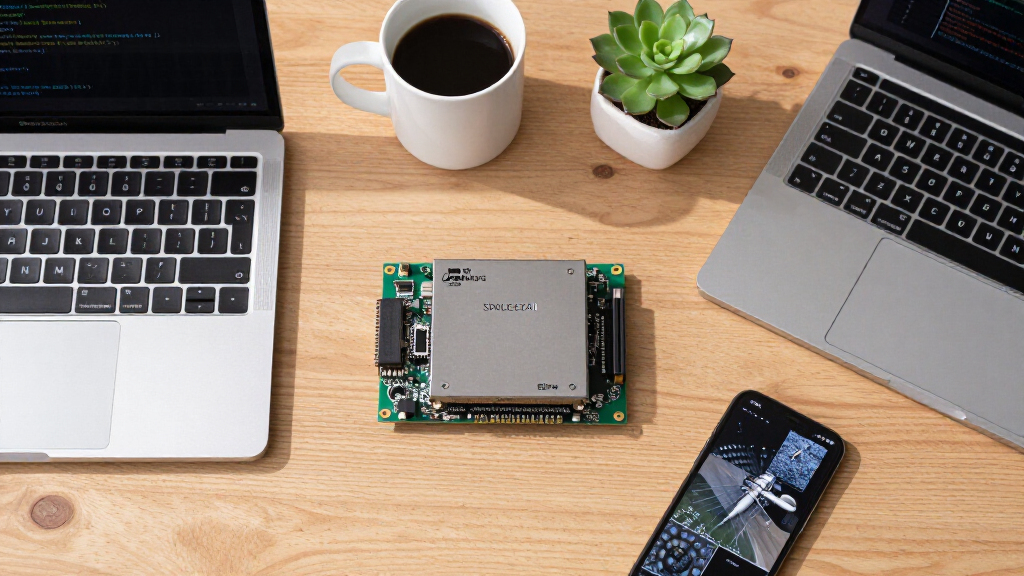

🔍 Read the full analysis: NVIDIA And SpaceXAI’s Orbital Computing: A New Era For AI Applications on ThorstenMeyerAI.com

Get the latest gadgets delivered free with Prime
- Fast, free delivery on millions of items
- Prime Video, Amazon Music and more included
- Member-only deals all year
TL;DR
NVIDIA, SpaceX, and xAI are being analyzed for their potential role in developing orbital data centers, driven by rising AI compute demands. No formal projects have been announced yet, but the convergence of their trajectories suggests a possible future shift in AI infrastructure.
Recent strategic analysis suggests that NVIDIA, SpaceX, and xAI are converging toward a potential future where AI compute infrastructure could be hosted in orbit. While no formal plans or contracts have been publicly disclosed, the analysis highlights their combined capabilities as a foundation for possible orbital data centers, driven by increasing AI hardware demands and launch capacity.
The Futurum Group’s analysis posits that NVIDIA’s dominance in AI accelerators, SpaceX’s reusable rocket technology, and xAI’s aggressive expansion of its Grok large language models form a strategic triangle with the potential to reshape AI infrastructure. The core idea is that orbital computing could address current ground-based limitations, such as power availability, cooling capacity, and construction timelines, by leveraging space-based data centers.
As of now, there are no official contracts, launch plans, or regulatory filings indicating a concrete project involving these three companies for orbital data centers. The analysis is based on their respective trajectories and capabilities, rather than on any confirmed joint initiative. The concept remains speculative but has garnered attention due to the scale of the involved players and the technological implications.
Implications of Orbital Data Centers for AI Infrastructure
This potential shift to orbital computing could alter the economics and logistics of large-scale AI training and inference. Moving compute operations into space might mitigate issues like power constraints, cooling challenges, and the time-consuming process of ground-based data center construction. If realized, it could enable increased scalability and speed for AI development, though significant technical and economic hurdles remain.
For industry stakeholders, the analysis indicates that orbital computing is a concept under consideration, with ongoing technological and logistical challenges. It underscores the importance of launch capacity, hardware resilience in space, and the evolving landscape of AI infrastructure investments. However, the feasibility, cost-effectiveness, and timeline are still uncertain and depend on future technological developments.
As an affiliate, we earn on qualifying purchases.
Ground-Based AI Infrastructure Expansion and Limitations
Currently, companies like xAI are rapidly expanding their ground-based AI training facilities, notably their large compute site in Memphis, Tennessee, which relies heavily on NVIDIA GPUs. This expansion has driven significant power and water demands, raising concerns about sustainability and scalability. Meanwhile, SpaceX continues to develop its Starship program with the goal of reducing launch costs and increasing payload capacity, which could make large-scale orbital infrastructure more feasible in the future.
NVIDIA has publicly discussed the possibility of gigawatt-scale data centers, emphasizing the increasing hardware demands of AI models like Grok. The convergence of these trajectories—rising compute needs, launch capacity, and infrastructure constraints—has prompted analysts to consider whether the next phase of AI expansion might involve off-planet solutions.
“The analysis suggests that NVIDIA, SpaceX, and xAI form a strategic triangle with the potential to redefine AI infrastructure through orbital computing.”
— Thorsten Meyer, The Futurum Group
As an affiliate, we earn on qualifying purchases.
Unconfirmed Status of Orbital Computing Initiatives
There are no publicly available contracts, launch plans, or official statements from NVIDIA, SpaceX, or xAI indicating an active orbital data center project. The analysis remains speculative, based on the companies’ capabilities and trajectories rather than confirmed commitments. It is unclear whether any of the companies are actively developing or funding such initiatives at this time.
large language model training servers
As an affiliate, we earn on qualifying purchases.
As an affiliate, we earn on qualifying purchases.
Indicators of Progress Toward Orbital AI Infrastructure
Future developments to watch include official disclosures from xAI about non-terrestrial compute sites, NVIDIA’s potential announcements regarding space-qualified hardware, and SpaceX’s upcoming launch contracts that could hint at payloads suitable for modular data centers. Industry experts will also monitor any regulatory filings or strategic statements that could signal movement toward orbital computing.
As the concept remains in the analysis stage, concrete milestones are unlikely in the immediate future, but increased technical research or partnerships could accelerate progress or clarify the viability of orbital data centers for AI.
As an affiliate, we earn on qualifying purchases.
Key Questions
Are NVIDIA, SpaceX, and xAI officially collaborating on orbital data centers?
There is no public evidence of an official collaboration or joint project involving these companies for orbital data centers. The analysis by The Futurum Group is speculative and based on their capabilities and trajectories.
What technical challenges would orbital computing face?
Major challenges include developing radiation-hardened hardware, ensuring reliable power generation and thermal management in space, and establishing cost-effective launch and maintenance protocols. These issues remain largely unresolved at the scale needed for data centers.
Could orbital data centers significantly reduce AI training costs?
While theoretically they could address some ground-based limitations, the high costs of space hardware, launch, and maintenance currently outweigh potential savings. The economic viability of orbital data centers is still uncertain and under analysis.
When might we see the first orbital AI data center?
There are no confirmed timelines or plans. The concept remains speculative, and any real deployment would likely be years away, contingent on technological breakthroughs and commercial interest.
What role could SpaceX play in orbital AI infrastructure?
SpaceX’s reusable rockets and increasing launch capacity could enable the deployment of large-scale hardware in orbit, making orbital data centers more feasible if technical and economic challenges are addressed.
Primary source: xAI · via ThorstenMeyerAI.com
Halloween Picks
halloween
As an affiliate, we earn on qualifying purchases.