

Gewerkton has entered beta with a voice-first platform designed to turn activity on construction sites into structured evidence, reports and coordinated project data. The product is aimed at global markets but was born in the German market, where it offers deep commercial integration with GAEB, REB, XRechnung and DATEV.

Get the latest gadgets delivered free with Prime
- Fast, free delivery on millions of items
- Prime Video, Amazon Music and more included
- Member-only deals all year
Tech News · Gewerkton beta
The construction record starts with a voice.
Gewerkton enters beta with one operating chain for spoken site capture, structured evidence, browser-based models and coordinated project data.
In beta now · Public beta planned for fall 2026
The proposition
“On site, what counts is what’s proven.”
Voice is the starting point for documentation and defect management—not an add-on. Dictation becomes evidence, defects, daywork reports and takt information.
Three products · one operating chain
Voice-first site app for evidence, defects, reports and coordination close to the crews.
Browser workspace to use existing plans and models—or create a model where none exists.
Operations and model or data coordination across Field, Studio and third parties.
Global operating range
Provider regions span the EU, the US and Asia, including mainland China.
Two independent choices
The build story behind the beta
software packages shipped in one night by a fleet of coding agents directed by one solo founder.Built using Codex and Claude; verified with negative controls and mutation tests.
The platform combines voice capture, plans, models and operational coordination under one brand. It is organised into three product lines: Gewerkton Field, Gewerkton Studio and Gewerkton Cloud. Together, they cover work from the first spoken record on site through to browser-based planning and the exchange of models and data with third parties.
The status needs to be clear: Gewerkton is in beta now, and a public beta is planned for fall 2026. Its current feature set is therefore available as beta software rather than as a finished public release.
Products Worth Considering

DJI Osmo Mobile 7P with Mic Mini TX (Infinity Black) Gimbal Stabilizer

Amazon Kindle Paperwhite Signature Edition (12th Generation, 2024), 32 GB, Metallic Black

Sonos Era 100 Wireless Smart Speaker, Black
As an affiliate, we earn on qualifying purchases.
Voice is the starting point
Gewerkton is built around a direct proposition for construction work: recording what happened should begin where the work happens. Its marketing line, “On site, what counts is what’s proven,” summarises that focus. Instead of treating voice as an add-on, the platform uses it as the starting point for construction documentation and defect management.
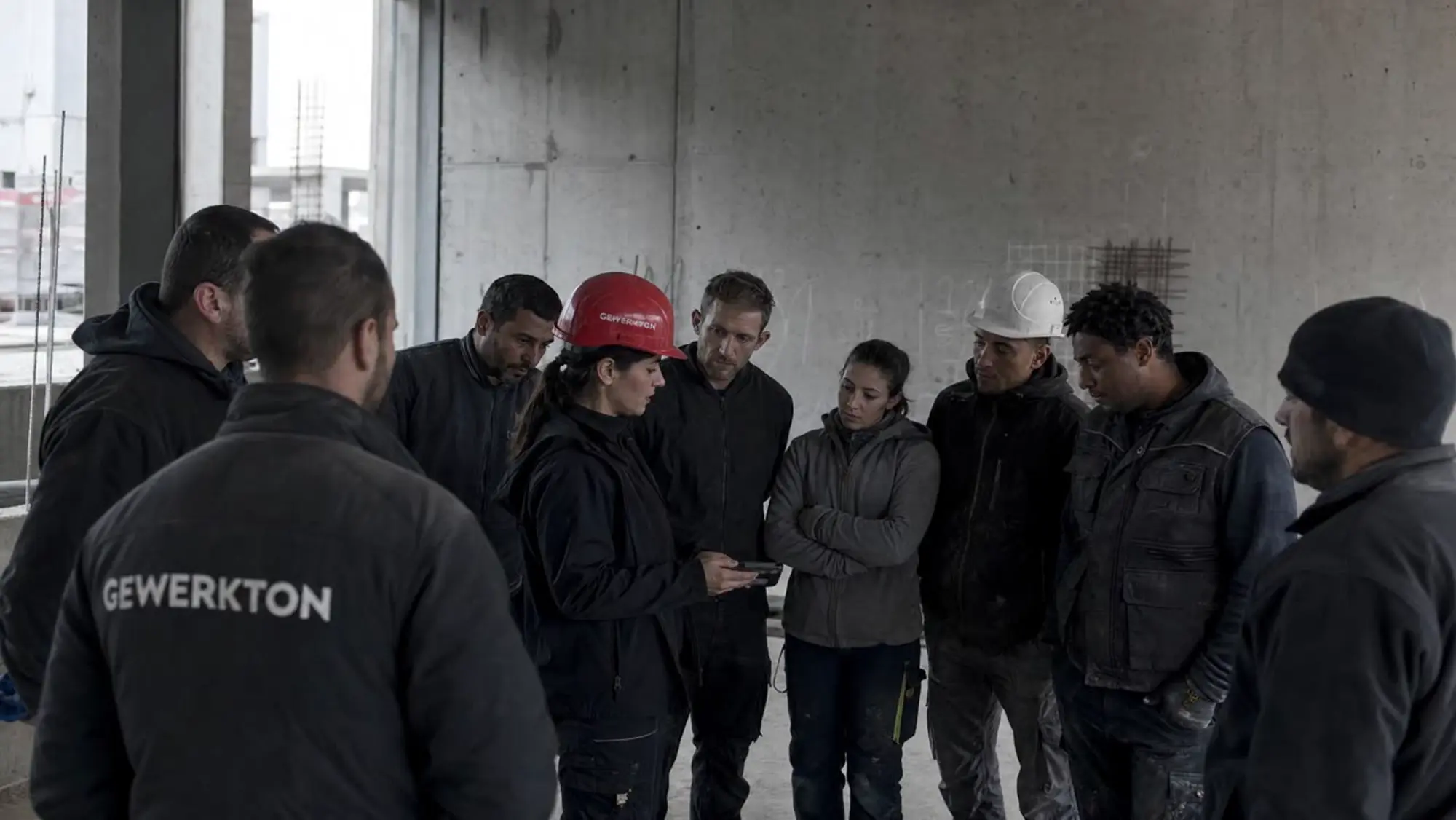
Field is the construction-site application in the product family. It turns dictation into evidence, defects, daywork reports and takt information, with a portal included in its scope. That makes it the part of the platform closest to crews documenting progress, decisions and problems while moving through an active site.
The practical contexts vary considerably. On a housing project, a defect can be recorded with a photo and deadline, while daywork reports can be dictated and handovers signed on the device. On an infrastructure or tunnel project, instructions and change orders can be associated with the original audio. At wind farms and renewable-energy sites, the relevant conditions include distributed locations, rotating crews, field acceptance and offline capture in dead zones.
These are not interchangeable environments. A housing handover, a tunnel instruction and field acceptance at a wind farm create different records and place different demands on the people capturing them. Gewerkton’s common thread is voice-first input connected to evidence, rather than a single generic form imposed on every project type.
Three products, one operating chain
Field carries the main site story, but it is only one part of the platform. Gewerkton Studio is the browser workspace for plans and models. Where a model already exists, teams can work with it in the browser. Where no model exists, the site team can create one there.
That detail matters for projects where model availability cannot be assumed. Studio does not limit its browser workspace to sites that arrive with a completed model. It also gives the team on site a route to create one, keeping plans and model work inside the same branded platform as field documentation.
Gewerkton Cloud handles operations and model or data coordination between Field, Studio and third parties. In that arrangement, Field captures activity on site, Studio provides the browser environment for plans and models, and Cloud coordinates the operational and data connections around them.
The three product lines are separate in purpose without being presented as separate brands. Field is the voice-first site app, Studio is the browser workspace, and Cloud is the coordination layer. The result is a chain stretching from spoken capture to evidence, plans, models and outside systems.

German commercial depth, global language coverage
Gewerkton’s German origins show most clearly in its support for GAEB, REB, XRechnung and DATEV. At the same time, the platform is designed for work beyond a single national market. It supports 27 content languages and offers a choice of regional AI providers across the EU, the US and Asia, including mainland China.
That combination addresses two different parts of construction software. Commercial integrations reflect the processes surrounding project data, quantities, invoices and accounting in the German market. Language coverage and regional provider choice address how multinational teams capture and process information across different locations.
Cross-border projects are an explicit deployment field. Teams in the EU, the US and APAC can work on the same project in their own languages while the evidence original remains unambiguous. For projects in Asia, the stated crew languages include Chinese, Korean and Vietnamese, with multilingual handling from capture through to the report and data residency selected by the customer.
The language support is relevant wherever a project brings several trades and regions together. Data centres and industrial plants are one example: many trades can be active in parallel under tight deadlines, and decisions made in meetings can become task lists sorted by trade. The platform’s multilingual approach extends from the initial record to the resulting project material rather than stopping at the interface.
Bring your own AI provider
Gewerkton calls its provider model BYO-AI. It supports 13 AI providers, allows customers to bring their own keys and makes the region selectable. The available provider regions cover the EU, the US and Asia, including mainland China. The stated aim is to avoid vendor lock-in.
Regional choice is paired with a separate data-residency decision. Project data can run in an EU cloud or on the customer’s own infrastructure. These are distinct choices within the platform: teams can select the infrastructure location and choose among supported AI providers rather than being assigned one fixed combination.
This setup is particularly relevant to the global scope Gewerkton is pursuing. A project involving crews across Europe, the US and Asia may have several language and residency requirements at once. Gewerkton’s beta brings those controls together with its voice-first construction workflow, while leaving the provider keys and region selectable.
Built by one founder and a fleet of agents
The development model behind the beta is unusual. Gewerkton is built by a solo founder directing a fleet of coding agents using Codex and Claude. In one night, that fleet shipped 21 software packages. The packages were verified with negative controls and mutation tests.
That production method is part of the launch story because it sits behind a platform spanning three connected products, 27 content languages and 13 AI providers. It also reflects a clear separation between the person directing development and the coding agents carrying out software work across the package fleet.
The public-facing operation has its own technical constraints. The Gewerkton marketing site is available in 27 languages and runs with zero trackers. It has no cookie banner and uses a fully egress-free architecture. A media bank provides more than 51 self-produced clips and posters.
Where the beta is intended to work
Gewerkton identifies several deployment fields, each with a different mix of documentation, coordination and language needs:
- Wind farms and renewables, including distributed sites, rotating crews, field acceptance and offline capture in dead zones.
- Data centres and industrial plants, where many trades work in parallel, deadlines are tight and meeting decisions become task lists sorted by trade.
- Housing and building construction, with defects recorded alongside a photo and deadline, dictated daywork reports and signatures on the device during handover.
- Infrastructure and tunnels, where projects run for long periods, change orders are numerous and instructions can be backed by original audio.
- Cross-border teams spanning the EU, the US and APAC, with each participant working in their own language while the evidence original remains unambiguous.
- Projects in Asia involving Chinese, Korean and Vietnamese crews, multilingual handling from capture to report and data residency by choice.
The breadth of that list explains why the platform links site capture with browser models, operational coordination and third-party data. A distributed renewable-energy project does not have the same working pattern as a data centre or tunnel, but all require records to move from the site into a form that other project participants can use.
Available now, but still beta
What Gewerkton is presenting now is the beta of its complete three-part platform: Field for voice-first site work, Studio for browser-based plans and models, and Cloud for operations and model or data coordination. The beta also includes its multilingual approach, provider choice, German commercial integrations and deployment options.
None of that changes the release status. Gewerkton remains in beta, with the public beta planned for fall 2026. For now, the launch establishes the product’s shape: a voice-first construction documentation and defect management platform that begins with spoken records on site and connects them to evidence, tasks, reports, plans, models and coordinated project data.