
Portable external SSD drives have replaced clunky hard drives as the fastest way to carry files, back up laptops, and edit video on the go. The Samsung T9 stands out as my best overall pick thanks to its USB 3.2 Gen 2×2 speeds of up to 2,000 MB/s, which roughly doubles what standard 10 Gbps drives like the SanDisk Extreme or Samsung T7 can deliver. The Samsung T7 Shield is the better choice for rugged everyday use, while the SSK 500GB offers the strongest budget entry point without dropping to slow 800 MB/s territory. The main tradeoff in this category is simple: pay more for Gen 2×2 speed (if your computer supports it), or spend less on a Gen 2 drive that performs nearly identically on older ports. Capacity pricing also swings widely between 500GB and 2TB models, sometimes making the larger drive the better value per gigabyte. Keep reading for the full breakdown of all 11 drives and which one fits your setup.

Get the latest gadgets delivered free with Prime
- Fast, free delivery on millions of items
- Prime Video, Amazon Music and more included
- Member-only deals all year
Complete the kit



Key Takeaways
- Only one drive in this lineup — the Samsung T9 — uses USB 3.2 Gen 2×2, delivering speeds up to 2,000 MB/s, but buyers need a matching port to benefit; on standard 10 Gbps ports it performs the same as the cheaper T7.
- Ruggedness is the biggest differentiator among the ~1,050 MB/s drives: the Samsung T7 Shield and SanDisk Extreme offer drop protection and water resistance, while the standard T7 and Lexar ES3 trade that durability for a slimmer body.
- The 800 MB/s SanDisk 1TB Portable SSD lags noticeably behind the 1,050 MB/s cluster for large file transfers, and its price needs to reflect that gap to be worth buying.
- 512GB and 500GB models (Verbatim Pocket, SSK 500GB, Lexar D70E) fill a niche for portable working files, but their cost per gigabyte is consistently higher than 1TB and 2TB alternatives.
- The Lexar D70E’s dual USB-C/USB-A connector makes it the only truly cable-free option here, a genuine advantage for older laptops and consoles despite middling capacity.
| SanDisk 1TB Portable SSD – Up to 800MB/s Read Speeds, Rugged Design |  | Best for Console Gamers | Capacity: 1TB | Interface: USB 3.2 Gen 2 (USB-C) | Read Speed: Up to 800MB/s | VIEW LATEST PRICE | See Our Full Breakdown |
| SanDisk 2TB Extreme Portable SSD |  | Best Overall | Capacity: 2TB | Read Speed: Up to 1050MB/s | Write Speed: Up to 1000MB/s | VIEW LATEST PRICE | See Our Full Breakdown |
| Verbatim Pocket 512GB External SSD USB 3.2 Gen 2 |  | Best Budget Pick | Capacity: 512GB | Interface: USB 3.2 Gen 2 | Read Speed: Up to 1000MB/s | VIEW LATEST PRICE | See Our Full Breakdown |
| SSK Portable SSD 500GB External Solid State Drive USB-C Up to 1050MB/s |  | Best for Mobile Creators | Capacity: 500GB (~465GB visible on Windows) | Max Read Speed: 1050MB/s | Max Write Speed: 1000MB/s | VIEW LATEST PRICE | See Our Full Breakdown |
| Lexar D70E 512GB Dual Drive External SSD |  | Fastest Transfer Speeds | Capacity: 512GB (up to 2TB available) | Read Speed: Up to 2000MB/s | Write Speed: Up to 1800MB/s | VIEW LATEST PRICE | See Our Full Breakdown |
| SanDisk 1TB Extreme Portable SSD |  | Best Rugged All-Rounder | Capacity: 1TB | Transfer Speed: Up to 2,000MB/s | Water Resistance: IP65 | VIEW LATEST PRICE | See Our Full Breakdown |
| Samsung T7 Shield Portable SSD 1TB, USB 3.2 Gen 2, Up to 1,050 MB/s |  | Best Durability Value | Capacity: 1TB | Transfer Speed: Up to 1,050MB/s read, 1,000MB/s write | Interface: USB 3.2 Gen 2 | VIEW LATEST PRICE | See Our Full Breakdown |
| Samsung T7 Portable SSD 1TB Titan Gray, USB 3.2 Gen 2, Up to 1,050MB/s |  | Best Everyday Workhorse | Capacity: 1TB | Interface: USB 3.2 Gen 2 | Max Speed: 1,050MB/s | VIEW LATEST PRICE | See Our Full Breakdown |
| SSK Portable SSD 1TB External Solid State Drive USB-C Up to 1050MB/s |  | Best Budget Pick | Capacity: 1TB | Speed: Up to 1,050MB/s | Interface: USB-C and USB-A | VIEW LATEST PRICE | See Our Full Breakdown |
| Samsung T9 Portable SSD 1TB USB 3.2 Gen 2×2 External SSD | 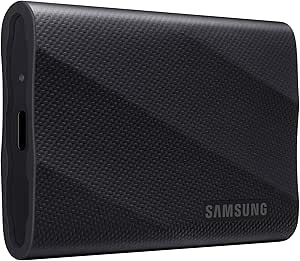 | Best Premium Performance | Capacity: 1TB | Transfer Speeds: Up to 2,000MB/s | Interface: USB 3.2 Gen 2×2 | VIEW LATEST PRICE | See Our Full Breakdown |
| Lexar ES3 1TB Portable SSD Silver |  | Best Budget-Friendly 1TB Speed Pick | Capacity: 1TB | Interface: USB 3.2 Gen 2 | Max Read Speed: 1050MB/s | VIEW LATEST PRICE | See Our Full Breakdown |
| portable external SSD drife | Capacity | Interface | Compatibility |
|---|---|---|---|
| SanDisk 1TB Portable SSD | 1TB | USB 3.2 Gen 2 (USB-C) | Laptops, PS5, Xbox Series S/X |
| SanDisk 2TB Extreme Portable S | 2TB | — | — |
| Verbatim Pocket 512GB External | 512GB | USB 3.2 Gen 2 | PC, Mac, PS5, Xbox, iPhone |
| SSK Portable SSD 500GB Externa | 500GB (~465GB visible on Windows) | — | — |
| Lexar D70E 512GB Dual Drive Ex | 512GB (up to 2TB available) | USB 3.2 Gen 2×2 | — |
| SanDisk 1TB Extreme Portable S | 1TB | — | — |
| Samsung T7 Shield Portable SSD | 1TB | USB 3.2 Gen 2 | PC, Mac, Android, gaming consoles, iPhone |
| Samsung T7 Portable SSD 1TB Ti | 1TB | USB 3.2 Gen 2 | PC, mobile phones, iPhone 15 Pro |
| SSK Portable SSD 1TB External | 1TB | USB-C and USB-A | Windows, macOS, smartphones, tablets, iPhone |
| Samsung T9 Portable SSD 1TB US | 1TB | USB 3.2 Gen 2×2 | Desktop, camera, gaming console, iPhone 15 Pro |
| Lexar ES3 1TB Portable SSD Sil | 1TB | USB 3.2 Gen 2 | — |
More Details on Our Top Picks
SanDisk 1TB Portable SSD – Up to 800MB/s Read Speeds, Rugged Design
This SanDrive sits in an awkward middle ground speed-wise — its 800MB/s read ceiling is well below the 1050MB/s you get from the SanDisk 2TB Extreme Portable SSD, and its write speeds trail even further behind. So why does it earn a spot? Because for extending Xbox Series S/X or PS5 storage and shuttling game libraries between machines, 800MB/s is plenty fast, and the drop protection plus rubber attachment hook makes it friendlier for a backpack-and-dorm lifestyle than a bare drive like the Verbatim Pocket. The tradeoff is honest: if you edit video or move huge project files daily, the slower writes will test your patience compared with the Extreme or the SSK 500GB. This pick makes the most sense for buyers who value durability and console compatibility over raw throughput.
Pros:- Drop-protected rugged build with a rubber hook for securing to bags or cases
- Full compatibility with PS5 and Xbox Series S/X alongside laptops
- Compact form that travels easily
- 800MB/s reads are fast enough for game loading and everyday transfers
Cons:- Write speeds lag well behind read speeds, hurting large file uploads
- At 800MB/s it’s slower than similarly priced 1050MB/s drives like the SanDisk Extreme
Best for: Console gamers who want extra storage for PS5 or Xbox libraries and need a drive that survives being tossed in a bag
Not ideal for: Video editors and creative professionals — the gap between read and write speeds makes large project transfers noticeably slower than NVMe-class rivals
- Capacity:1TB
- Interface:USB 3.2 Gen 2 (USB-C)
- Read Speed:Up to 800MB/s
- Form Factor:2.5-inch portable
- Compatibility:Laptops, PS5, Xbox Series S/X
- Durability:Drop protection, rugged design
Our verdict“A durability-first choice for gamers and casual users who don’t need flagship transfer speeds.”
SanDisk 2TB Extreme Portable SSD
This is the pick I’d point most buyers toward first. The 1050MB/s read and 1000MB/s write pairing means sustained performance in both directions — unlike the cheaper SanDisk 1TB Portable SSD, which slows considerably when writing. What separates it from the rest of this lineup, though, is the IP65 water and dust resistance plus 3-meter drop protection: nothing else here, not the Samsung T7 Shield-class contenders nor the Verbatim Pocket, combines that toughness with 256-bit AES hardware encryption. For photographers, videographers, and anyone working outdoors, that security-plus-durability combo is the deciding factor. The tradeoffs are real but manageable — you pay a premium per terabyte, and hitting maximum speeds requires a USB 3.2 Gen 2 port on the host machine. Older USB-A-only setups will bottleneck it.
Pros:- Balanced 1050MB/s read and 1000MB/s write speeds for fast transfers in both directions
- IP65 water and dust resistance with 3-meter drop protection
- Hardware 256-bit AES encryption with password protection
- Carabiner loop for attaching to bags during field work
Cons:- Premium pricing compared with slower or smaller rivals
- Needs a USB 3.2 Gen 2 host port to reach advertised speeds
Best for: Working photographers and videographers who need fast, encrypted storage that survives outdoor shoots and travel
Not ideal for: Budget-focused buyers with modest storage needs — the price per terabyte is higher than smaller drives like the SSK 500GB or Verbatim 512GB
- Capacity:2TB
- Read Speed:Up to 1050MB/s
- Write Speed:Up to 1000MB/s
- Durability:3-meter drop protection, IP65 water/dust resistance
- Encryption:256-bit AES hardware encryption
- Operating Temperature:-20°C to 85°C
Our verdict“The most complete package here — speed, security, and ruggedness in one drive — if you’re willing to pay for it.”
Verbatim Pocket 512GB External SSD USB 3.2 Gen 2
The Verbatim’s pitch is simple: 1000MB/s read and write at a 512GB price point, undercutting the larger SanDisk Extreme while matching its real-world speeds for everyday transfers. Compared with the SSK 500GB, it trades the aluminum heat-dissipating shell for a lighter plastic body with a handy keyring and cable holder — fine for desk-to-bag use, but there’s no drop rating or water resistance to speak of, so it’s not a field-work drive. Broad compatibility is a genuine strength here: it works across PC, Mac, PS5, Xbox, and even iPhone, which is rare at this price. The bundled Nero backup software is Windows-only, so Mac users should plan on Time Machine or another backup tool instead.
Pros:- 1000MB/s read and write speeds at an entry-level price
- Works with PC, Mac, PS5, Xbox, and iPhone
- Lightweight design with keyring and cable holder included
Cons:- No rugged or waterproof features unlike the SanDisk Extreme
- Backup software is Windows-only
- 512GB fills up quickly for video or large game libraries
Best for: Students and casual users who want fast 512GB expansion for a laptop, console, or iPhone without spending much
Not ideal for: Anyone working in rough environments — there’s no drop, water, or dust protection rating at all
- Capacity:512GB
- Interface:USB 3.2 Gen 2
- Read Speed:Up to 1000MB/s
- Write Speed:Up to 1000MB/s
- Compatibility:PC, Mac, PS5, Xbox, iPhone
- Included Software:Nero Backup (Windows only)
Our verdict“The value leader for speed-per-dollar, provided your storage needs are modest and your environment is gentle.”
SSK Portable SSD 500GB External Solid State Drive USB-C Up to 1050MB/s
Where the SSK 500GB earns its place is mobile video capture — it’s specifically suited to recording 4K ProRes HDR directly from a phone, a use case the Verbatim Pocket can technically handle but wasn’t designed around. The aluminum alloy shell gives it better heat dissipation than plastic-bodied rivals, which matters during long recording sessions where thermal throttling degrades footage. At 36.6 grams and roughly credit-card sized, it’s the lightest serious performer in this batch. SSK includes both USB-C and USB-A cables in the box, a small courtesy that saves a dongle hunt. The drawbacks: no encryption of any kind, so this isn’t a drive for sensitive client files, and Windows users will see roughly 465GB of usable space, which surprises plenty of first-time buyers.
Pros:- 1050MB/s read and 1000MB/s write speeds in a 36.6g package
- Aluminum case dissipates heat during sustained video recording
- Both USB-C and USB-A cables included for cross-platform use
- Small enough to stay attached to a phone rig unnoticed
Cons:- No encryption or security features whatsoever
- Usable capacity shows as ~465GB on Windows, less than advertised
- 500GB limits how much 4K footage you can keep on hand
Best for: Mobile filmmakers and iPhone videographers who need a cool-running, lightweight drive for direct-to-SSD 4K ProRes recording
Not ideal for: Anyone carrying confidential or client data — there’s no password protection or encryption on this drive
- Capacity:500GB (~465GB visible on Windows)
- Max Read Speed:1050MB/s
- Max Write Speed:1000MB/s
- Connection:USB 3.2 Gen 2 (USB-C and USB-A)
- Material:Aluminum alloy
- Dimensions:2.6 x 1.5 x 0.5 inches
- Weight:36.6g
Our verdict“A purpose-built companion for phone-based video work, best paired with a separate encrypted drive for sensitive files.”
Lexar D70E 512GB Dual Drive External SSD
On paper, the D70E embarrasses everything else here: 2000MB/s read and 1800MB/s write via USB 3.2 Gen 2×2, roughly double the throughput of the SanDisk Extreme or the SSK. But that headline number comes with a catch the spec sheet won’t tell you — Gen 2×2 speeds only materialize on host devices with a matching 20Gbps port. Plug it into a standard USB 3.2 Gen 2 laptop and it falls back to speeds indistinguishable from a Samsung T7. The cable-free dual USB-C and USB-A connectors are its smartest feature, sliding out like an oversized flash drive with no cable to lose — a genuine convenience over every other drive in this roundup. There’s no encryption, and usable capacity runs below the advertised figure, so treat it as a speed tool rather than a secure archive.
Pros:- Up to 2000MB/s read and 1800MB/s write with Gen 2×2 hosts
- Built-in dual USB-C and USB-A connectors eliminate cables entirely
- Metal housing in a compact 55g body
- Available in capacities up to 2TB
Cons:- Top speeds require a USB 3.2 Gen 2×2 port that most laptops and consoles lack
- No encryption or password protection
- Usable capacity is lower than the advertised figure
Best for: Owners of modern PCs with USB 3.2 Gen 2×2 ports who regularly move massive files and want zero-cable convenience
Not ideal for: Laptop and console users with standard 10Gbps ports — they’ll pay for speed they can never access and get no encryption in return
- Capacity:512GB (up to 2TB available)
- Read Speed:Up to 2000MB/s
- Write Speed:Up to 1800MB/s
- Interface:USB 3.2 Gen 2×2
- Connectors:Dual USB-C and USB-A, cable-free
- Weight:55g
- Housing:Metal
Our verdict“The fastest drive in this lineup, but only if your computer can actually feed it — otherwise buy the SanDisk Extreme instead.”
SanDisk 1TB Extreme Portable SSD
This SanDisk Extreme Portable SSD stands out for combining 2,000MB/s transfer speeds with genuinely serious protection — IP65 water and dust resistance plus a 3-meter drop rating. Compared with the Samsung T7 Shield, which tops out around 1,050MB/s, this model roughly doubles throughput when paired with a fast host, making it the stronger pick for photographers moving large RAW batches in the field. The 256-bit AES encryption adds a layer of security the SSK Portable SSD simply doesn’t offer. The tradeoff: hitting that headline speed demands a USB 3.2 Gen 2×2 port, and the encryption tools require a separate software download rather than working out of the box.
Pros:- Transfer speeds up to 2,000MB/s for large project backups
- IP65 water and dust resistance with 3-meter drop protection
- 256-bit AES hardware-level encryption
- Pocket-sized design that travels easily
Cons:- Real-world speeds fall well below the maximum on most host devices
- Encryption requires downloading separate software
Best for: Outdoor photographers and content creators who need fast transfers in wet, dusty, or rough conditions
Not ideal for: Buyers with older USB-A-only laptops — they’ll pay a speed premium they can’t use
- Capacity:1TB
- Transfer Speed:Up to 2,000MB/s
- Water Resistance:IP65
- Drop Protection:Up to 3 meters
- Encryption:256-bit AES
- Connectivity:USB-C
Our verdict“The pick for anyone whose drive will face the elements as often as it faces a desk.”
Samsung T7 Shield Portable SSD 1TB, USB 3.2 Gen 2, Up to 1,050 MB/s
The T7 Shield earns its place by wrapping 1,050MB/s performance in one of the toughest shells at this price — water, dust, and drop resistance up to 9.8 feet. While the SanDisk Extreme Portable SSD is faster on paper, the T7 Shield typically costs less and delivers speeds most laptops can realistically sustain. Its broad device compatibility, from gaming consoles to direct iPhone 15 Pro 4K video recording, is a genuine advantage over the plainer Samsung T7, which lacks the rugged rubberized body. Be aware that real-world water resistance depends on keeping the port cover sealed properly, and Samsung recommends its included cable for best results.
Pros:- Reliable 1,050MB/s read and 1,000MB/s write speeds
- Rugged IP65 water and dust resistance with 9.8-foot drop rating
- Works across PC, Mac, Android, consoles, and iPhone
- Supports direct 4K ProRes recording to iPhone 15 Pro
Cons:- Performance depends heavily on using the included cable
- Water and dust resistance can degrade if the port isn’t properly sealed
Best for: Students and travelers who want a rugged, do-everything drive without paying Gen 2×2 prices
Not ideal for: Video professionals moving multi-hundred-GB projects who need the 2,000MB/s speeds of the SanDisk Extreme or Samsung T9
- Capacity:1TB
- Transfer Speed:Up to 1,050MB/s read, 1,000MB/s write
- Interface:USB 3.2 Gen 2
- Resistance:IP65 water/dust, drop resistant up to 9.8 feet
- Compatibility:PC, Mac, Android, gaming consoles, iPhone
- Dimensions:Palm-sized
Our verdict“The smart middle ground between price, toughness, and speed for everyday rugged use.”
Samsung T7 Portable SSD 1TB Titan Gray, USB 3.2 Gen 2, Up to 1,050MB/s
The original T7 in Titan Gray remains the default choice for desk-and-backpack use. It shares the same 1,050MB/s speeds as the T7 Shield but trades the rugged rubber armor for a slimmer, lighter body that slides into a laptop sleeve unnoticed. For buyers who rarely expose their gear to rain or job-site drops, paying extra for the Shield’s toughness is wasted money. Its shock resistance up to 6 feet still covers the accidents that actually happen — knocked off a table, dropped in a parking lot. The catch compared with the SSK Portable SSD is that the T7 demands a USB 3.2 Gen 2 port to reach full speed, and this listing offers limited capacity flexibility.
Pros:- Fast 1,050MB/s read and write speeds
- Slim, pocket-friendly design with 6-foot shock resistance
- Broad compatibility with PC, phones, and iPhone 15 Pro
Cons:- No water or dust resistance rating
- Requires a USB 3.2 Gen 2 port for maximum speed
Best for: Office workers and students who want a dependable, compact SSD for daily backups and file shuttling
Not ideal for: Adventure photographers and field workers who need genuine water resistance — step up to the T7 Shield
- Capacity:1TB
- Interface:USB 3.2 Gen 2
- Max Speed:1,050MB/s
- Color:Titan Gray
- Shock Resistance:Up to 6 feet fall protection
- Compatibility:PC, mobile phones, iPhone 15 Pro
Our verdict“A no-drama daily driver that gets speed and portability right for typical indoor use.”
SSK Portable SSD 1TB External Solid State Drive USB-C Up to 1050MB/s
SSK’s 1TB drive matches the 1,050MB/s speeds of the Samsung T7 and T7 Shield at a noticeably lower price, which alone justifies a spot here. Its aluminum alloy shell doubles as a heat spreader, helping it sustain transfers where plastic-bodied drives throttle. A real differentiator is the USB-C and USB-A connectivity — unlike the Samsung drives, it connects to older laptops without hunting for an adapter. At just 36.6 grams, it’s also the lightest full-speed option in this lineup. The compromises are clear: no bundled encryption or backup software, no water resistance, and Windows will report roughly 931GB of usable capacity, which surprises some buyers.
Pros:- Full 1,050MB/s performance at a lower price than Samsung equivalents
- Includes both USB-C and USB-A support for older machines
- Aluminum case dissipates heat during long transfers
- Ultra-light at 36.6g and truly pocket-sized
Cons:- No encryption or bundled software of any kind
- No water or drop resistance ratings
Best for: Budget-conscious buyers who want full 1,050MB/s speed and both USB-C and USB-A connectivity without brand-name pricing
Not ideal for: Anyone storing sensitive files — there’s no built-in encryption or security software
- Capacity:1TB
- Speed:Up to 1,050MB/s
- Interface:USB-C and USB-A
- Data Transfer Rate:10Gbps
- Power Consumption:Under 2.4 Watts
- Weight:36.6g
- Dimensions:2.6 x 1.5 x 0.5 inches
- Material:Aluminum alloy
- Compatibility:Windows, macOS, smartphones, tablets, iPhone
Our verdict“The value play for speed-first buyers who don’t need security features or rugged armor.”
Samsung T9 Portable SSD 1TB USB 3.2 Gen 2×2 External SSD
The T9 sits at the top of this lineup for pure speed, delivering up to 2,000MB/s — nearly double the Samsung T7 Shield and SSK drives. For creators editing 4K footage directly off the drive or shuttling massive project files, that headroom translates directly into saved minutes every day. Its Dynamic Thermal Guard keeps performance steady during sustained writes, something the SSK’s passive aluminum cooling can’t match under load. Firmware updates and encryption support round out a genuinely professional package. The honest tradeoff: those peak speeds require a USB 3.2 Gen 2×2 host port, which most current laptops still lack — plug into a standard Gen 2 port and you’re back to T7-level performance while paying a premium price.
Pros:- Up to 2,000MB/s transfers on Gen 2×2 hosts
- Dynamic Thermal Guard sustains speed during heavy workloads
- Broad compatibility from cameras and consoles to iPhone 15 Pro
- Encryption and ongoing firmware update support
Cons:- Full speed requires a rare USB 3.2 Gen 2×2 port and matching cables
- Premium price per terabyte compared with 1,050MB/s rivals
Best for: Professional video editors and creators with Gen 2×2-equipped workstations who move huge files daily
Not ideal for: Owners of standard USB-C laptops — the speed premium goes untapped and a T7 is smarter money
- Capacity:1TB
- Transfer Speeds:Up to 2,000MB/s
- Interface:USB 3.2 Gen 2×2
- Compatibility:Desktop, camera, gaming console, iPhone 15 Pro
- Thermal Management:Dynamic Thermal Guard
- Supported OS:Windows, Mac, iPhone
Our verdict“The fastest drive here — but only worth it if your computer can actually feed it Gen 2×2 speeds.”
Lexar ES3 1TB Portable SSD Silver
The Lexar ES3 carves out its niche by pairing 1TB of capacity with the same 1050MB/s ceiling as pricier rivals like the Samsung T7 Shield, usually at a lower street price. That makes it a smart value play for anyone who wants fast photo and video offloads without paying the premium the T7 commands for its rubberized armor. Compared with the SanDisk 1TB Portable SSD at 800MB/s, the ES3 moves large 4K video files noticeably quicker, and its 256-bit AES encryption gives it a security edge over the budget SSK options. The tradeoff is durability: without a ruggedized shell, this model is better suited to laptop bags than toolboxes, and real-world speeds depend heavily on whether your host device supports USB 3.2 Gen 2. It’s not the toughest or fastest drive here, but it balances price, capacity, and speed well.
Pros:- 1050MB/s read speeds match pricier rivals like the Samsung T7 Shield at a typically lower price
- 256-bit AES encryption protects sensitive files, which many budget SSDs omit
- At 42g and 10.5mm thick, it slips easily into a pocket or laptop sleeve
- Broad compatibility across PCs, smartphones, and gaming consoles
Cons:- No ruggedized or water-resistant housing, unlike the SanDisk Extreme or T7 Shield
- Real-world speeds fall well short of 1050MB/s on older USB ports and unsupported systems
- MagSafe mounting is not supported in this version, limiting convenience for iPhone users
Best for: Students and content creators who need a full terabyte of fast, encrypted portable storage without paying Samsung or SanDisk prices
Not ideal for: Field photographers and adventurers — this version lacks a ruggedized body and MagSafe support, so rough handling is a risk compared with the T7 Shield or SanDisk Extreme
- Capacity:1TB
- Interface:USB 3.2 Gen 2
- Max Read Speed:1050MB/s
- Max Write Speed:1000MB/s
- Encryption:256-bit AES
- Weight:42g
- Thickness:10.5mm
- Color:Silver
Our verdict“If you want terabyte-class speed and encryption at the lowest sensible price and your drive mostly lives indoors, the ES3 is the value pick; rugged-use buyers should spend more on the T7 Shield.”

How We Picked
I ranked these 11 portable external SSD drives by weighing real-world transfer performance, build durability, value per gigabyte, and connectivity flexibility. Speed claims were compared against interface type: a 1,050 MB/s Gen 2 drive and a 2,000 MB/s Gen 2×2 drive only differ when the host computer supports the faster standard, so I factored in whether each drive’s premium is justified for typical buyers. Drives with drop ratings, IP ratings, or reinforced housings scored higher for portability-focused users.
The ranking also reflects capacity positioning. Duplicate or near-duplicate models — such as the two SanDisk Extreme variants — were separated by whether their pricing and capacity made sense in context. Budget picks had to justify themselves against larger-capacity alternatives: a 500GB drive that costs nearly as much as a 1TB drive loses points fast. Finally, I penalized drives whose specs fall behind the current 1,050 MB/s baseline without a compensating price cut.
| portable external SSD drife | Interface | Compatibility |
|---|---|---|
| SanDisk 1TB Portable SSD | USB 3.2 Gen 2 (USB-C) | Laptops, PS5, Xbox Series S/X |
| SanDisk 2TB Extreme Portable S | — | — |
| Verbatim Pocket 512GB External | USB 3.2 Gen 2 | PC, Mac, PS5, Xbox, iPhone |
| SSK Portable SSD 500GB Externa | — | — |
| Lexar D70E 512GB Dual Drive Ex | USB 3.2 Gen 2×2 | — |
| SanDisk 1TB Extreme Portable S | — | — |
| Samsung T7 Shield Portable SSD | USB 3.2 Gen 2 | PC, Mac, Android, gaming consoles, iPhone |
| Samsung T7 Portable SSD 1TB Ti | USB 3.2 Gen 2 | PC, mobile phones, iPhone 15 Pro |
| SSK Portable SSD 1TB External | USB-C and USB-A | Windows, macOS, smartphones, tablets, iPhone |
| Samsung T9 Portable SSD 1TB US | USB 3.2 Gen 2×2 | Desktop, camera, gaming console, iPhone 15 Pro |
| Lexar ES3 1TB Portable SSD Sil | USB 3.2 Gen 2 | — |
Factors to Consider When Choosing Portable External SSD Drives
Before settling on a specific model, it helps to understand what actually separates these drives in practice — and where buyers commonly overspend or underbuy.Match the Interface to Your Computer First
The single most common mistake is buying a USB 3.2 Gen 2×2 drive like the Samsung T9 for a computer that cannot use it. Gen 2×2 requires a 20 Gbps port, found mainly on recent high-end desktops, some Thunderbolt 4 machines, and the PlayStation 5. Plug that same drive into a standard 10 Gbps USB-C port and it runs at the same ~1,050 MB/s as a cheaper Samsung T7 or SSK drive — meaning you paid a premium for headroom you cannot access. Check your device specs for “USB 20Gbps” or “USB 3.2 Gen 2×2” before spending extra. If your hardware tops out at 10 Gbps, a Gen 2 drive is the smarter buy, and the savings can fund a capacity bump instead.
Calculate Cost per Gigabyte, Not Sticker Price
Across this lineup, 500GB and 512GB drives carry the worst cost per gigabyte, often 40–60% higher than their 1TB siblings. That matters because SSD capacities are not upgradeable later — whatever you buy is what you live with. A useful rule: if the 1TB version of a drive costs less than 1.4 times the 500GB version, the larger drive is almost always the better purchase. The 2TB SanDisk Extreme becomes attractive precisely when its per-gigabyte price drops below the 1TB tier. Small-capacity drives still make sense for specific uses — bootable rescue drives, camera offload on short trips — but as general-purpose storage they rarely justify the premium.
Ruggedness Matters More Than You Expect
Portable drives get dropped, pocketed with keys, and left in hot cars. The performance difference between a rugged drive like the T7 Shield or SanDisk Extreme and a bare aluminum drive like the standard T7 is zero — but the survival rate after a drop onto pavement is very different. Rugged models typically add IP65 or IP68 water/dust resistance plus shock ratings around 3 meters. If the drive lives in a laptop bag, that protection is cheap insurance. If it sits on a desk and travels occasionally, the slimmer unprotected drives are fine and often lighter. Decide honestly how the drive will be treated before paying for — or skipping — the rugged shell.
Sustained Speed vs. Peak Speed
Manufacturer speeds are peak sequential read figures, measured in short bursts. What matters for video editors and anyone moving 100GB+ files is sustained write performance: how fast the drive stays after its cache fills. Drives with larger dynamic caches and better thermal design — the T9 and T7 Shield excel here — maintain speed longer before throttling. Cheap drives often halve their write speed during long transfers. If your workload involves big video files or full system backups, look for reviews showing sustained write curves, not just the box number. For document and photo transfers, this distinction barely matters.
Connector Type and Cable Convenience
Most drives here use USB-C with a bundled cable, but older laptops, many Windows machines, and consoles still rely on USB-A. The Lexar D70E solves this elegantly with dual built-in connectors and no cable to lose — a small thing that becomes a big one when you travel. Also check whether the included cable supports the drive’s full speed; a cheap USB 2.0 cable can throttle even the fastest SSD to 400 MB/s. Short captive-cable designs are tidy but limit placement, while standard C-to-C cables offer flexibility at the cost of something else to forget at home. Match the connector strategy to the devices you actually own.
Encryption and Warranty as Hidden Value
If the drive will hold client work, financial documents, or anything sensitive, hardware encryption support separates the serious options from the rest. Samsung’s portable SSD software and SanDisk’s SecureAccess provide password protection that does not depend on the host computer’s software. Warranty length also varies: most drives here carry three to five years, but some budget brands offer less, which signals expected lifespan. Encryption adds no speed penalty when implemented in hardware, so there is little reason to skip it for professional use. Casual users can safely ignore this factor and save their attention for speed and capacity.
Frequently Asked Questions
Is the Samsung T9 worth the extra cost over the T7 if I have a regular USB-C port?
Generally, no. On a standard 10 Gbps USB-C port, the T9 performs essentially the same as the T7 because the bottleneck is the port, not the drive. The T9’s advantage only appears with a USB 3.2 Gen 2×2 port (20 Gbps), where it can hit around 2,000 MB/s versus the T7’s 1,050 MB/s ceiling. If you plan to upgrade your computer soon or already own a PS5 or a modern high-end desktop, the T9 is future-proof. Otherwise, put the price difference toward a larger capacity T7 or a rugged T7 Shield.
What capacity should I choose: 500GB, 1TB, or 2TB?
For most buyers, 1TB is the sweet spot — it holds roughly 250,000 photos or 20+ large games, and its cost per gigabyte is consistently the best in this lineup. Choose 500GB/512GB only if the drive serves a narrow purpose like a bootable repair disk, occasional camera offload, or a working drive for one active project. Go 2TB if you edit video, archive raw photo libraries, or simply dislike managing storage, but check that the per-gigabyte price actually drops — usually the 2TB SanDisk Extreme does. Remember that SSDs perform best with 10–20% free space, so buy slightly more than your raw data requires.
Do I really need a rugged drive like the T7 Shield or SanDisk Extreme?
It depends on how the drive travels. Rugged models add IP-rated water and dust resistance plus drop protection of roughly 3 meters, which matters if the drive rides in a bag, goes on shoots, or gets handled by kids. If it mostly sits beside a desk computer and occasionally moves between rooms, the slimmer standard T7 or Lexar ES3 will serve you identically for less money and less bulk. One honest note: no portable SSD survives being run over or submerged for long, so treat the rugged rating as insurance against accidents, not a license for carelessness. Professionals carrying client data should lean rugged; home users can skip it.
Will these SSDs work with my phone, tablet, or game console?
Most modern Android phones with USB-C OTG support these drives directly, and they work well for offloading photos and video — though the phone’s port may cap speeds well below the drive’s maximum. The iPhone 15 and later also support USB-C external drives for file transfers and even ProRes video recording directly to the SSD. On consoles, the PlayStation 5 accepts these drives for storing and playing PS4 games, but PS5 games must be moved to internal storage to play; the Xbox Series consoles allow external play of optimized last-gen titles only. Formatting requirements vary (exFAT works nearly everywhere), so check the target device before you buy if cross-platform use is the plan.
Why is the 800 MB/s SanDisk 1TB Portable SSD cheaper — is it a trap?
It is not a trap, just an older generation. At 800 MB/s, it still transfers a 50GB file in about a minute, which is perfectly fine for documents, photos, and casual backups. The 1,050 MB/s drives in this roundup move the same file roughly 25–30% faster, a gap you will notice with video projects and full-drive clones. The cheaper SanDisk makes sense when its price sits meaningfully below the 1,050 MB/s cluster — as a second drive or a backup target, the speed difference stops mattering. If the price gap to a Samsung T7 or SSK 1TB shrinks to under 15%, skip it and take the faster drive.
Conclusion
After comparing all 11 drives, the right choice comes down to how you work and what ports you have. Best overall goes to the Samsung T9 for buyers with 20 Gbps ports who want the fastest transfers in this lineup. Best value is a tight race between the Samsung T7 1TB and the SSK 1TB, both hitting 1,050 MB/s at prices that undercut the premium tier. Best premium pick is the SanDisk 2TB Extreme, combining top-tier speed with serious capacity and a rugged shell for professionals. For beginners, the Samsung T7 Shield is the safest first SSD — fast, durable, and forgiving of rough handling. For specific needs: the Lexar D70E for its cable-free dual connectors with older devices, the SSK 500GB for a tight budget, the Lexar ES3 as a slim style-focused carry drive, the Verbatim Pocket for a basic no-frills workhorse, and the 800 MB/s SanDisk 1TB only when its discount is deep enough to forgive its older spec. Whatever you pick, matching the drive to your computer’s port speed and your realistic capacity needs will save more money than any single product choice.
Columbus Day / Indigenous Peoples' Day Picks
long weekend sales
As an affiliate, we earn on qualifying purchases.