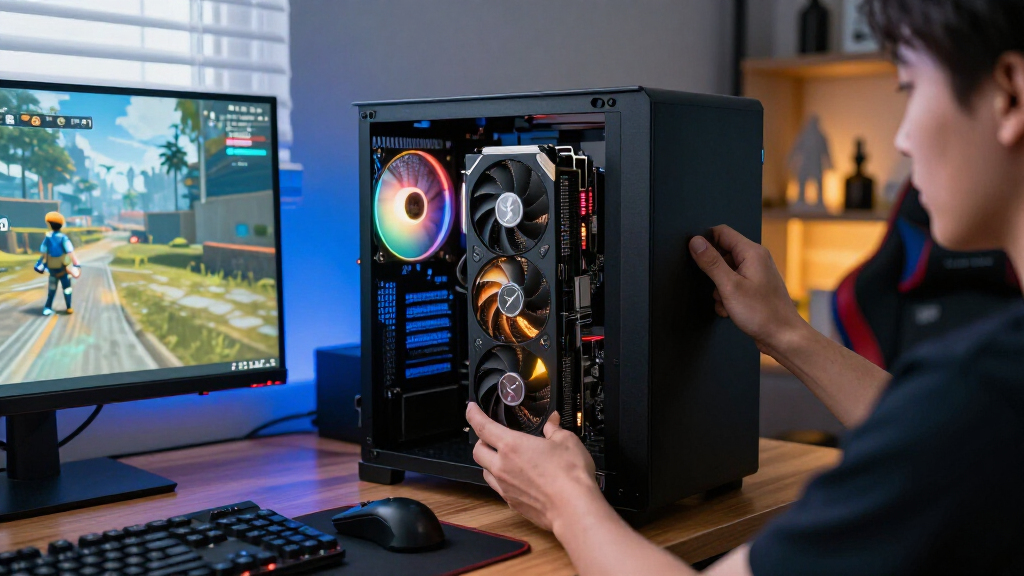

The best RTX 5090 graphics card overall in this lineup is the MSI GeForce RTX 5090 32G Vanguard SOC Launch Edition, a strong fit for buyers who want a premium air-cooled card without stepping straight to an elaborate liquid setup. The ASUS ROG Astral OC offers a quad-fan design for buyers prioritizing cooling, while the AORUS RTX 5090 AI Box is a distinctive external option for compatible systems. The main tradeoffs are cooling approach, physical fit, noise and complexity—not the shared RTX 5090 class of performance. I compare all 12 picks by their intended use, design, and practical system demands. Read on for the full breakdown and guidance on which card best fits your build.

Get the latest gadgets delivered free with Prime
- Fast, free delivery on millions of items
- Prime Video, Amazon Music and more included
- Member-only deals all year
Complete the kit



Key Takeaways
- MSI Vanguard SOC is the roundup’s best overall fit for buyers seeking a high-end conventional card, while the liquid-cooled Astral LC and Matrix Platinum are more specialized choices.
- Cooling design separates many of these cards more than their shared GPU tier. Quad-fan and liquid-cooled options prioritize heat management but ask more of the case and installation.
- The AORUS RTX 5090 AI Box serves a different buyer from the internal cards: it targets compatible setups that need external graphics rather than a standard desktop GPU upgrade.
- ASUS ROG Astral models span several distinct roles—white styling, quad-fan air cooling, liquid cooling, and a separate Edition 20 model—so check the exact configuration rather than relying on the Astral name alone.
- CyberGeek’s two triple-fan cards offer straightforward air-cooled alternatives, while the premium MSI, ZOTAC, Gigabyte, and ASUS designs place more emphasis on specialized styling or cooling.


| RTX 5090 graphics card | Memory | Cooling | GPU | GPU clock speed |
|---|---|---|---|---|
| MSI GeForce RTX 5090 32G Vangu | 32GB GDDR7 | — | — | — |
| GIGABYTE AORUS RTX 5090 AI Box | 32GB GDDR7 | WATERFORCE all-in-one cooling system | NVIDIA GeForce RTX 5090 | — |
| CyberGeek GeForce RTX 5090 Tri | 32GB GDDR7 | Triple fan | — | 2407 MHz |
| ASUS ROG Astral GeForce RTX 50 | 32GB GDDR7 | Four fans, vapor chamber, phase-change thermal pad | NVIDIA GeForce RTX 5090 | 2580 MHz |
| ZOTAC Gaming GeForce RTX 5090 | — | 3 fans | — | 2467 MHz |
| CyberGeek GeForce RTX 5090 Ove | 32GB GDDR7 | Overclocked triple-fan | NVIDIA GeForce RTX 5090 | 2,410 MHz |
| ASUS ROG Astral GeForce RTX 50 | 32GB GDDR7 | Quad fans with vapor chamber | NVIDIA GeForce RTX 5090 | 2,610 MHz |
| ASUS ROG Astral GeForce RTX 50 | 32GB GDDR7, 512-bit | Quad fans, vapor chamber, liquid metal thermal compound | NVIDIA GeForce RTX 5090 | — |
| ASUS ROG Astral LC GeForce RTX | 32GB GDDR7 | Cooling plate with 360mm radiator | NVIDIA GeForce RTX 5090 | 2,437 MHz |
| MSI GeForce RTX 5090 32G SUPRI | 32GB GDDR7, 512-bit | Hyper Frozr with vapor chamber | NVIDIA GeForce RTX 5090 | — |
| ASUS ROG Matrix Platinum GeFor | 32GB GDDR7 | Quad-fan liquid-metal cooling with vapor chamber | NVIDIA GeForce RTX 5090 | — |
| Gigabyte AORUS GeForce RTX 509 | 32GB GDDR7 | — | NVIDIA GeForce RTX 5090 | — |
More Details on Our Top Picks
MSI GeForce RTX 5090 32G Vanguard SOC Launch Edition Graphics Card
I’d choose the MSI Vanguard SOC Launch Edition for a high-power desktop where cooling design matters as much as the RTX 5090’s headline capability. Its 32GB of GDDR7 and 21,760 CUDA cores suit demanding games and creative workloads, while the vapor chamber and layered Hyper Frozr features are designed to move heat away during sustained use. Compared with the ZOTAC Gaming RTX 5090 AMP Extreme Infinity, MSI emphasizes a more elaborate cooling stack rather than listing a specific core clock in the supplied specs. That makes it a sensible fit for buyers prioritizing thermal management, but the listing provides no dimensions or power requirements to confirm case and PSU fit. Its large-card footprint and likely premium positioning also make it a poor match for compact or budget-conscious builds.
Pros:- 32GB GDDR7 memory and 21,760 CUDA cores for demanding graphics workloads
- Vapor chamber and Hyper Frozr cooling components target heat control under load
- Supports resolutions up to 7680 x 4320
- Cooling design is a clear differentiator from the ZOTAC AMP Extreme Infinity’s listed triple-fan setup
Cons:- Large size may rule it out for cases with limited GPU clearance
- The supplied specs do not state dimensions or power requirements
- High-end RTX 5090 hardware may call for a costly, well-equipped system
Best for: Enthusiast desktop builders who plan sustained gaming or creative workloads and have a spacious case with suitable power delivery.
Not ideal for: Compact-PC builders or buyers who need confirmed card dimensions and power requirements before checking fit.
- Model:VD8998
- Memory:32GB GDDR7
- CUDA cores:21,760
- Maximum supported resolution:7680 x 4320
- Cooling technology:Hyper Frozr, vapor chamber, wave curved 4.0, Air Antegrade Fin 2.0
Our verdict“Choose the MSI Vanguard SOC if cooling-focused design is a priority and your case and power supply can accommodate a large RTX 5090.”
GIGABYTE AORUS RTX 5090 AI Box External Graphics Card, 32GB GDDR7
The GIGABYTE AORUS RTX 5090 AI Box takes a different route from the internal cards here: it puts RTX 5090 graphics in an external enclosure and connects over Thunderbolt 5. That can suit a compatible laptop or desk setup where a conventional desktop card is not practical, and the added USB, Ethernet, and display connections make the box a useful hub. Its WATERFORCE all-in-one cooling is another distinction from the air-cooled MSI Vanguard SOC. The tradeoff is a substantial 5,400 g unit, plus the need for compatible high-speed connectivity; it is not a simple replacement for an internal PCIe card. The listed maximum resolution is 3840 x 2160, so buyers focused on the 8K specification listed for the ASUS ROG Astral White OC should compare that limitation carefully.
Pros:- External RTX 5090 design offers a graphics upgrade path for compatible systems
- Thunderbolt 5 and USB4 connectivity, with USB, Ethernet, and display ports
- WATERFORCE all-in-one cooling system
- Three-year warranty is specified
Cons:- At 5,400 g, the enclosure is heavy and takes considerable desk space
- Requires a compatible host connection and is less direct than an internal PCIe card
- Listed maximum resolution is 3840 x 2160, below the 8K support stated for the ASUS ROG Astral White OC
Best for: Laptop or small-form-factor system owners with Thunderbolt 5 compatibility who want external RTX 5090 graphics and extra desk connectivity.
Not ideal for: Desktop builders seeking a conventional internal card, or users whose host system lacks compatible Thunderbolt 5 connectivity.
- GPU:NVIDIA GeForce RTX 5090
- Memory:32GB GDDR7
- Memory bus:512-bit
- Core clock:2407 MHz
- Connectivity:Thunderbolt 5, USB4, 3 x USB 3.2 Gen 2, Ethernet
- Display outputs:3 x DisplayPort 2.1, 1 x HDMI 2.1
- Cooling:WATERFORCE all-in-one cooling system
- Maximum resolution:3840 x 2160
- Weight:5400 g
Our verdict“Pick the AORUS AI Box when external RTX 5090 graphics and built-in connectivity matter more than a lightweight, internally installed card.”
CyberGeek GeForce RTX 5090 Triple Fan Graphics Card, 32GB GDDR7, DLSS 4, AI Content Creation, Local LLM Inference, GPU Holder
The CyberGeek RTX 5090 Triple Fan is the most clearly workflow-oriented pick here: its listing calls out AI content creation and local LLM inference alongside gaming. The 32GB of GDDR7 and stated 1792 GB/s bandwidth make memory capacity and throughput central selling points for buyers running demanding local tasks. It also includes a GPU holder, a practical extra for a large card that can help support the installed hardware. Compared with the external GIGABYTE AORUS AI Box, this is a conventional PCI-Express x16 card, so it suits a desktop build rather than a laptop-based setup. The tradeoffs are the usual space and power demands of an enthusiast GPU, and the supplied specs do not give dimensions or a power requirement. Buyers wanting clearer fit information should check those details before committing.
Pros:- 32GB GDDR7 memory is suited to demanding graphics and local AI workloads
- Listed memory bandwidth of 1792 GB/s
- Triple-fan cooling design
- GPU holder is included to support the card
Cons:- Large size may not fit cases with limited GPU clearance
- High power consumption may require a suitable PSU and system build
- Supplied product data does not list dimensions or a power requirement
Best for: AI developers and creators who want a desktop RTX 5090 for local model inference, content creation, and high-resolution gaming.
Not ideal for: Casual gamers, compact-PC builders, or buyers who need published card dimensions and power requirements to confirm compatibility.
- Graphics coprocessor:NVIDIA GeForce RTX 5090
- Memory:32GB GDDR7
- GPU clock speed:2407 MHz
- Memory clock speed:2017 MHz
- Memory bandwidth:1792 GB/s
- Interface:PCI-Express x16
- Cooling:Triple fan
- Maximum resolution:8K at 165Hz
- Included support:GPU holder
Our verdict“Choose the CyberGeek card if local AI work is a central use and you are building a roomy desktop rather than seeking an external graphics solution.”
ASUS ROG Astral GeForce RTX 5090 White OC Edition 32GB GDDR7 Graphics Card
For a white-themed flagship PC, the ASUS ROG Astral White OC pairs its colorway with an unusually substantial cooling setup: four fans, a vapor chamber, and a phase-change thermal pad. Its 3.8-slot profile and 3.01 kg weight signal the main buying constraint as clearly as the cooling pitch: this card needs a spacious, well-supported build. Compared with the MSI Vanguard SOC, which also stresses advanced thermal hardware, ASUS lists a four-fan arrangement and concrete dimensions, helping buyers judge clearance before purchase. It also specifies three DisplayPort 2.1b and two HDMI 2.1b outputs. The premium, oversized design makes more sense for a deliberate showcase build than for a compact system, and the supplied data does not state the power requirement. The white finish is a design choice, not a reason to overlook fit.
Pros:- Four-fan cooling with a vapor chamber and phase-change thermal pad
- White design suits coordinated showcase builds
- Three DisplayPort 2.1b and two HDMI 2.1b outputs
- Dimensions and weight are provided for case and support planning
Cons:- 3.8-slot width demands substantial expansion-slot clearance
- At 3.01 kg, the card needs a sturdy mount and case support
- Power requirements are not included in the supplied specs
Best for: Builders creating a white-themed, full-size enthusiast PC who want a four-fan RTX 5090 and can support a heavy card.
Not ideal for: Small-case builders or anyone who cannot accommodate a 3.8-slot, 3.01 kg graphics card.
- GPU:NVIDIA GeForce RTX 5090
- Memory:32GB GDDR7
- GPU clock speed:2580 MHz
- Cooling:Four fans, vapor chamber, phase-change thermal pad
- Slot design:3.8-slot
- Interface:PCIe 5.0, PCI-Express x16
- Video outputs:3 x DisplayPort 2.1b, 2 x HDMI 2.1b
- Dimensions:14.06 x 5.87 in
- Weight:3.01 kg
Our verdict“The ASUS ROG Astral White OC suits a spacious white showcase build, but compact-case owners should choose a less demanding form factor.”
ZOTAC Gaming GeForce RTX 5090 AMP Extreme Infinity 32 GB GDDR7
The ZOTAC AMP Extreme Infinity is a practical choice for buyers comparing physical fit and core specifications across RTX 5090 cards. Its listing gives a 12.8-inch length, 5.51-inch width, and 2,090 g weight—useful details when checking a case, especially beside the much heavier ASUS ROG Astral White OC. ZOTAC uses a triple-fan cooler and lists a 2467 MHz GPU clock, giving buyers more concrete figures than the MSI Vanguard SOC listing provides. It is specified for 4K UHD rather than the 8K maximum resolution listed for MSI, so the published resolution ceiling may matter to display-focused buyers. The card remains large and power-hungry by nature of its class, and the supplied data does not include a PSU recommendation. Its seven-year warranty duration is listed, though buyers should check the warranty terms that apply to their purchase.
Pros:- Published dimensions and weight help with case-clearance planning
- Triple-fan cooling system
- 32GB GDDR7 memory and a listed 2467 MHz GPU clock
- Seven-year warranty duration is specified
Cons:- 12.8-inch length and 2,090 g weight still call for a roomy, sturdy build
- Listed maximum resolution is 4K UHD, unlike the 8K support listed for the MSI Vanguard SOC
- Supplied specs do not state a power requirement or PSU recommendation
Best for: Desktop builders who want an RTX 5090 with stated dimensions and weight to check case fit before choosing among large cards.
Not ideal for: Buyers prioritizing a listed 8K maximum resolution or those building in a compact case with little GPU clearance.
- Graphics coprocessor:NVIDIA GeForce RTX 5090
- Video memory:32GB GDDR7
- GPU clock speed:2467 MHz
- Memory clock speed:28 GHz
- Cooling:3 fans
- Interface:PCI-Express x16
- Maximum resolution:4K UHD (3840 x 2160)
- Dimensions:12.8 in L x 5.51 in W
- Weight:2090 g
Our verdict“Pick the ZOTAC AMP Extreme Infinity if you want concrete fit measurements and a triple-fan RTX 5090, and its listed 4K resolution ceiling suits your display plans.”
CyberGeek GeForce RTX 5090 Overclocked Triple-Fan Graphics Card, 32GB GDDR7
The CyberGeek stands out for pairing an overclocked RTX 5090 with a useful mix of three DisplayPort 2.1b outputs and HDMI 2.1b. That layout suits a workstation or gaming desk with several modern monitors, while the included GPU holder helps support the card once installed. Its 32GB of GDDR7 also gives creators and local AI users ample memory capacity. Compared with the ASUS ROG Astral OC Edition, this card has a simpler triple-fan cooling design rather than a quad-fan system, so it is the more straightforward choice on paper, not the more elaborate cooling option. The product details do not specify a warranty duration, and display resolution or refresh performance still depends on the monitor, cable, and DSC support. Choose it for its practical outputs and memory, not for extras that are not listed.
Pros:- 32GB GDDR7 with a 512-bit memory interface and up to 1,792 GB/s bandwidth
- Three DisplayPort 2.1b outputs plus HDMI 2.1b support varied monitor setups
- Triple-fan cooling and an included GPU holder
- Supports DLSS 4, Reflex 2, and ray tracing
Cons:- Warranty duration is not specified in the product details
- Triple-fan design is less elaborate than the quad-fan cooling listed for the ASUS ROG Astral OC Edition
- High-resolution and high-refresh-rate output depends on display, cable, and DSC compatibility
Best for: PC builders who need three DisplayPort connections, 32GB of VRAM, and a supplied support bracket for a multi-monitor gaming or creator system.
Not ideal for: Buyers who want a clearly stated warranty or a documented advanced cooling system; the listing does not give those details.
- GPU:NVIDIA GeForce RTX 5090
- Memory:32GB GDDR7
- Memory interface:512-bit
- Memory bandwidth:Up to 1,792 GB/s
- GPU clock speed:2,410 MHz
- Cooling:Overclocked triple-fan
- Outputs:3 × DisplayPort 2.1b (UHBR20), 1 × HDMI 2.1b
- Maximum displays:4
- Included accessory:GPU holder
Our verdict“Choose the CyberGeek if a useful three-DisplayPort layout and included GPU support matter more than elaborate cooling or clearly documented warranty terms.”
ASUS ROG Astral GeForce RTX 5090 OC Edition Quad Fan Graphics Card, 32GB GDDR7, DLSS 4, AI Content Creation, Local LLM Inference, with GPU Holder
The ROG Astral OC Edition is the air-cooled pick for buyers who want a substantial cooling system alongside the RTX 5090’s 32GB of GDDR7. Its quad-fan arrangement and vapor chamber are aimed at moving heat away during sustained gaming, rendering, or AI work, while the listed 2,610 MHz GPU clock sets it apart from the CyberGeek overclocked triple-fan card’s 2,410 MHz figure. That higher listed clock and more elaborate cooler make the ASUS the stronger fit for a performance-focused build, though they do not erase the shared demands of a flagship GPU. The card is described as large, and power consumption is likely high, but the listing gives no specific power requirement or dimensions. Compared with the liquid-cooled ASUS ROG Astral LC, this model avoids a separate 360mm radiator, at the cost of relying on its own bulky air-cooling assembly.
Pros:- 32GB GDDR7 memory suits large creative projects and local AI workloads
- Quad fans and a vapor chamber provide an advanced air-cooling arrangement
- Listed 2,610 MHz GPU clock is higher than the CyberGeek triple-fan model’s listed 2,410 MHz
- Supports up to four displays at resolutions up to 7680 × 4320
Cons:- Large card may be difficult to fit in smaller desktop cases
- High power consumption is flagged, but no specific requirement is provided
- More elaborate cooling does not avoid the case-space demands of a large air-cooled card
Best for: Enthusiasts building a spacious desktop for sustained gaming, AI work, or content creation who prefer an integrated air-cooled card over a separate radiator.
Not ideal for: Compact-case builders or buyers who need a confirmed power-supply requirement and exact card dimensions before planning a build.
- GPU:NVIDIA GeForce RTX 5090
- Memory:32GB GDDR7
- GPU clock speed:2,610 MHz
- Memory clock speed:3,500 MHz
- Cooling:Quad fans with vapor chamber
- Interface:PCI-Express x16
- Video outputs:DisplayPort 2.1b and HDMI 2.1b
- Maximum resolution:7680 × 4320
- Compatible devices:Desktop
Our verdict“Pick the ROG Astral OC Edition if you have a spacious case and want a higher listed clock with quad-fan air cooling rather than a separate radiator.”
ASUS ROG Astral GeForce RTX 5090 Edition 20 OC Graphics Card, 32GB GDDR7
This limited-edition Astral is aimed at builders who want the graphics card itself to be a visible part of the system. Its detachable curved AMOLED display adds a distinctive way to show information or animations, while the 32GB RTX 5090 and 2,730 MHz boost clock keep the core hardware firmly in flagship territory. The cooling package combines four fans, a vapor chamber, and liquid metal thermal compound; unlike the ASUS ROG Astral OC Edition, this version also lists up to 800W power input and a recommended 1,200W supply. That makes the build demands unusually important: it occupies five slots and measures over 14 inches long. The five HDMI outputs listed alongside two DisplayPort outputs also differ from the more conventional layouts on the CyberGeek and MSI SUPRIM. This is a specialized centerpiece, not a sensible match for a space-constrained or power-limited PC.
Pros:- Detachable curved AMOLED display can show system information and animations
- 32GB GDDR7 with a 512-bit interface and up to 1.79 TB/s bandwidth
- Quad-fan cooling combines a vapor chamber with liquid metal thermal compound
- Listed 2,730 MHz boost clock
Cons:- Five-slot, 360.93 mm-long design demands substantial case space
- Recommended 1,200W power supply and support for up to 800W input raise build requirements
- Its unusual display-output mix may not suit buyers seeking a conventional port layout
Best for: Enthusiast builders creating a spacious, high-power showpiece PC who want an on-card AMOLED display and distinctive cooling hardware.
Not ideal for: Compact-case owners or builders with a 1,000W-class power supply; this model lists a five-slot footprint and recommends a 1,200W supply.
- GPU:NVIDIA GeForce RTX 5090
- CUDA cores:21,760
- Memory:32GB GDDR7, 512-bit
- Memory bandwidth:1.79 TB/s
- Boost clock:2,730 MHz
- Cooling:Quad fans, vapor chamber, liquid metal thermal compound
- Display:Detachable curved AMOLED
- Power:Up to 800W input; 1,200W recommended PSU
- Dimensions and slot width:360.93 × 139.30 × 93.98 mm; 5 slots
Our verdict“Choose this limited-edition Astral for a spacious, high-power showpiece build where its AMOLED display matters as much as the RTX 5090 performance.”
ASUS ROG Astral LC GeForce RTX 5090 Gaming Graphics Card (32GB GDDR7, PCIe 5.0, HDMI/DP 2.1, Cooling Plate, 360mm Radiator, Chain-Connectable Magnetic Fans)
The ROG Astral LC takes a different route from the air-cooled Astral OC Edition: it pairs the RTX 5090 with a 360mm radiator and chain-connectable magnetic fans. That setup is intended for builders who want radiator-based heat management and have a case with the right mounting space. The card still carries 32GB of GDDR7 and a PCIe 5.0 interface, making it suitable for demanding gaming and creative systems, but its listed 2,437 MHz clock is below the Astral OC Edition’s 2,610 MHz figure. The trade is cooling layout, not a clearly higher listed clock. A radiator also adds tubing and installation planning that the MSI SUPRIM’s integrated Hyper Frozr air cooler avoids. The listing provides limited detail on power requirements and output counts, so buyers should verify those against their build before choosing this over more fully specified alternatives.
Pros:- 360mm radiator provides a liquid-cooling approach distinct from the MSI SUPRIM’s integrated air cooler
- 32GB GDDR7 memory supports demanding gaming and creative workloads
- Chain-connectable magnetic fans allow a linked radiator-fan setup
- PCIe 5.0 interface
Cons:- Requires room for a 360mm radiator and its installation
- Listed 2,437 MHz clock is lower than the ASUS ROG Astral OC Edition’s listed 2,610 MHz
- Product details do not specify power requirements or the number of display outputs
Best for: Builders with a case that supports a 360mm radiator who specifically want a liquid-cooled RTX 5090 and chain-connectable fans.
Not ideal for: First-time builders or anyone without a suitable radiator mount; the liquid-cooling layout adds installation and case-compatibility requirements.
- GPU:NVIDIA GeForce RTX 5090
- Memory:32GB GDDR7
- GPU clock speed:2,437 MHz
- Interface:PCI Express 5.0
- Cooling:Cooling plate with 360mm radiator
- Fans:Chain-connectable magnetic fans
- Display resolution:3840 × 2160 (4K)
- Dimensions:11.36 × 6.05 inches
Our verdict“Choose the Astral LC if your case is ready for a 360mm radiator and liquid cooling is a higher priority than simpler installation or the higher listed clock of the air-cooled Astral OC.”
MSI GeForce RTX 5090 32G SUPRIM SOC Gaming Graphics Card
The MSI SUPRIM SOC is the most straightforward choice here for builders who want concrete system-planning details. Its listing specifies 600W power consumption, a recommended 1,000W PSU, a 16-pin connector, and dimensions of 14.2 × 5.9 × 3.0 inches. That makes case and power checks easier than with the ASUS ROG Astral OC Edition, whose product details flag high power use without giving a specific requirement. MSI pairs those demands with Hyper Frozr cooling and a vapor chamber, plus a 2,565 MHz boost clock. It does not have the Astral limited edition’s AMOLED display or liquid-metal cooling, but its more conventional three-DisplayPort, one-HDMI layout will suit many gaming and creator setups. At 2,840 g, it is also a substantial card, so the supplied information does not make weight a minor concern.
Pros:- Specific 600W consumption and 1,000W recommended PSU help with system planning
- Hyper Frozr cooling uses vapor chamber technology
- 32GB GDDR7 on a 512-bit interface with a 28 Gbps memory data rate
- Three DisplayPort 2.1b outputs and HDMI 2.1b support up to four displays
Cons:- Large 14.2 × 5.9 × 3.0-inch dimensions require careful case clearance checks
- 2,840 g weight makes the card physically substantial
- Requires a 16-pin auxiliary power connector
Best for: Experienced builders who want a high-end RTX 5090 with stated dimensions, power draw, PSU guidance, and a conventional display-output layout.
Not ideal for: Small-case builders or buyers who want a lighter, lower-power card; this model is large, weighs 2,840 g, and lists 600W power consumption.
- GPU:NVIDIA GeForce RTX 5090
- Memory:32GB GDDR7, 512-bit
- Boost clock:2,565 MHz
- Memory data rate:28 Gbps
- Cooling:Hyper Frozr with vapor chamber
- Power consumption:600W
- Recommended power supply:1,000W
- Video outputs:3 × DisplayPort 2.1b, 1 × HDMI 2.1b
- Dimensions and weight:14.2 × 5.9 × 3.0 inches; 2,840 g
Our verdict“Pick the MSI SUPRIM SOC if clear power and size specifications make build planning more valuable to you than the Astral limited edition’s display extras.”
ASUS ROG Matrix Platinum GeForce RTX 5090 OC 30th-Anniversary Edition Gaming Graphics Card
The ROG Matrix Platinum is the enthusiast choice here: its listed 2760MHz boost clock and liquid-metal cooling are aimed at buyers who want a highly specified RTX 5090 for sustained gaming and rendering workloads. Its 32GB of GDDR7 and 512-bit memory interface match the capacity and bus width of other RTX 5090 options, while the unusual quad-fan, vapor-chamber cooling design gives it a distinct approach from the ASUS ROG Astral LC RTX 5090, which uses a 360mm radiator. The Matrix avoids a separate radiator but is still a substantial quad-slot card measuring over 14.5 inches long. Its 1200W power requirement also narrows the field of suitable builds. I’d choose it for a roomy, high-wattage enthusiast system, not a compact or power-conscious PC.
Pros:- 32GB GDDR7 and a 512-bit memory interface suit demanding gaming and rendering workloads.
- Listed 2760MHz boost clock makes it a factory-overclocked option in this roundup.
- Quad-fan liquid-metal cooling with a vapor chamber is a distinctive cooling configuration.
- Five display outputs provide broad monitor connectivity.
Cons:- The 1200W power requirement calls for a robust system power supply.
- Its quad-slot size and 14.58-inch length rule out many smaller cases.
- The specialized enthusiast design may be more than buyers need for a standard RTX 5090 build.
Best for: Enthusiasts building a spacious, high-wattage gaming or rendering PC who want a factory-overclocked RTX 5090 with advanced onboard cooling.
Not ideal for: Small-case builders or anyone whose power supply and case cannot accommodate the listed 1200W requirement and full-height, quad-slot, 14.58-inch card.
- GPU:NVIDIA GeForce RTX 5090
- Memory:32GB GDDR7
- Memory interface:512-bit
- Memory bandwidth:1.79 TB/s
- Boost clock:2760MHz
- CUDA cores:21,760
- Cooling:Quad-fan liquid-metal cooling with vapor chamber
- Power requirement:1200W; 1 x 16-pin (12V-2×6)
- Dimensions and form factor:14.58 x 5.92 x 3.04 inches; full height, quad slot
Our verdict“Choose the ROG Matrix Platinum for an enthusiast system with ample space and power, especially if its factory overclock and liquid-metal cooling matter more than compact fit.”
Gigabyte AORUS GeForce RTX 5090 Infinity 32G Graphics Card
The AORUS RTX 5090 Infinity is a more straightforward pick than the specialized ROG Matrix Platinum: the provided specs list a three-fan cooler, a 2730MHz core clock, and a four-year warranty, but give less detail about its cooling architecture and power needs. That warranty is its clearest differentiator for buyers planning to keep a demanding GPU for years. It also has a die-cast metal backplate and three DisplayPort outputs, though its single HDMI port offers less display flexibility than the Matrix’s two HDMI ports. The core clock is lower than the Matrix’s listed 2760MHz boost, and the available information does not establish how much performance separates them in practice. I’d shortlist this AORUS for warranty-conscious builders, while skipping it if detailed fit or power specifications are a must-have before purchase.
Pros:- 32GB GDDR7 and a 512-bit memory interface provide substantial memory capacity and bandwidth width.
- Three-fan cooling offers an air-cooled design without a separate radiator listed in the supplied specs.
- The stated four-year warranty is a useful differentiator for long-term ownership planning.
- Die-cast metal backplate adds a substantial structural feature.
Cons:- Only one HDMI 2.1b output is listed, compared with two on the ROG Matrix Platinum.
- The supplied product data does not state card dimensions or a power requirement, making fit and PSU planning less certain.
- Its listed 2730MHz core clock is below the Matrix’s 2760MHz boost clock.
Best for: Warranty-conscious gamers and creators seeking a three-fan RTX 5090 with 32GB of memory and a stated four-year warranty.
Not ideal for: Multi-monitor builders who specifically need two HDMI connections, or buyers who require confirmed card dimensions and power requirements before checking case and PSU compatibility.
- GPU:NVIDIA GeForce RTX 5090
- Memory:32GB GDDR7
- Memory interface:512-bit
- Core clock:2730MHz
- Cooling fans:3
- Interface:PCI Express 5.0 x16
- Video outputs:3 x DisplayPort 2.1b, 1 x HDMI 2.1b
- Warranty:4 years
- Backplate:Die-cast metal
Our verdict“Pick the AORUS Infinity if its four-year warranty and three-fan design suit your build, but verify clearance and power details before committing.”
How We Picked
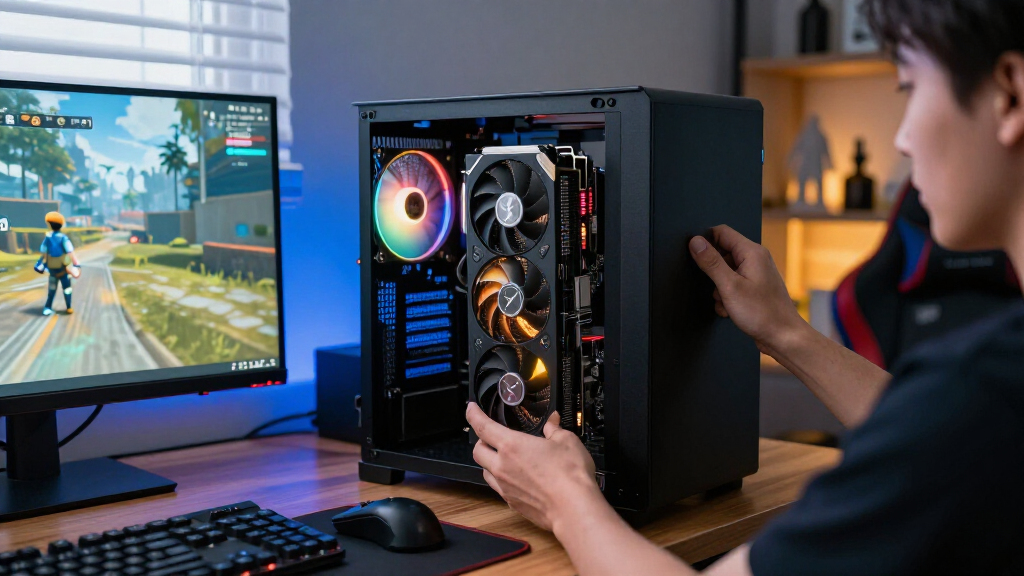
I compared these 12 cards by the buyer-facing differences that matter for a flagship GPU: cooling design, physical format, installation demands, stated factory-overclock positioning, and the purpose each model appears built to serve. I gave priority to options that make sense for a broad range of desktop builds, then ranked more specialized designs—such as liquid-cooled, anniversary, and external GPU options—by how clearly they serve their target buyer.
The ranking is about fit and tradeoffs, not a claim that every card delivers a measured performance lead. All 12 are RTX 5090-class products, and the supplied product information does not provide comparable benchmark, noise, or temperature results. I distinguish between conventional air-cooled cards, more elaborate cooling systems, and the external AORUS AI Box, while treating exact case clearance, radiator support, and compatibility as items buyers must verify for their own systems.
| RTX 5090 graphics card | Interface |
|---|---|
| MSI GeForce RTX 5090 32G Vangu | — |
| GIGABYTE AORUS RTX 5090 AI Box | — |
| CyberGeek GeForce RTX 5090 Tri | PCI-Express x16 |
| ASUS ROG Astral GeForce RTX 50 | PCIe 5.0, PCI-Express x16 |
| ZOTAC Gaming GeForce RTX 5090 | PCI-Express x16 |
| CyberGeek GeForce RTX 5090 Ove | — |
| ASUS ROG Astral GeForce RTX 50 | PCI-Express x16 |
| ASUS ROG Astral GeForce RTX 50 | — |
| ASUS ROG Astral LC GeForce RTX | PCI Express 5.0 |
| MSI GeForce RTX 5090 32G SUPRI | — |
| ASUS ROG Matrix Platinum GeFor | — |
| Gigabyte AORUS GeForce RTX 509 | PCI Express 5.0 x16 |
Factors to Consider When Choosing Best RTX 5090 Graphics Cards
Choosing among RTX 5090 cards is less about finding a different GPU class and more about matching the card’s design to your case, cooling plan, and appetite for installation complexity. These checks can help prevent an impressive-looking upgrade from becoming a poor fit for the rest of your system.
Match the cooling design to your case
A larger cooling assembly needs room to breathe, and the card itself may occupy multiple expansion slots. Before choosing a quad-fan card or a model with an attached radiator, check the case’s GPU length and thickness limits, fan positions, and radiator mounting support. Do not rely on the name or a product photo to estimate fit; verify the exact dimensions for the specific model. A conventional triple-fan card may be simpler to install, but it still needs adequate airflow around it. If your case is compact or crowded, a premium cooling design can create more hassle than benefit.
Treat liquid cooling as a system decision
A card such as the ROG Astral LC is not just a graphics card choice; its 360mm radiator changes how you plan the whole build. Check whether your case can mount the radiator in the position you prefer without interfering with the CPU cooler, memory, or other fans. Radiator placement also affects cable routing and airflow, so a nominally compatible case may still make for an awkward installation. Choose liquid cooling when you are prepared to plan around the radiator and want that cooling approach. If easy installation and fewer moving parts matter more, an air-cooled model is the simpler path.
Check power delivery and cable clearance before ordering
Flagship graphics cards can place demanding requirements on a system’s power supply and cabling. Confirm the selected card’s power connector and manufacturer guidance, then compare them with your PSU’s capacity, available connectors, and cable arrangement. Pay attention to the space between the card’s power socket and the case side panel; a cable that bends sharply because clearance is tight can complicate the build. Leave room to route cables cleanly rather than planning around a closed side panel at the last minute. This preparation matters for every model here, regardless of cooler style.
Decide whether an external GPU fits your setup
The AORUS RTX 5090 AI Box belongs to a different category from the internal cards in this roundup. Its appeal is an external graphics solution for a compatible computer, not a direct substitute for installing a desktop card in a PCIe slot. Check the host system’s supported connection, operating-system compatibility, and intended workload before choosing it. External enclosures also add desk space, cabling, and another device to manage. If you are building or upgrading a conventional desktop, compare internal cards first; if portability or an external setup is the goal, examine the AI Box’s compatibility details closely.
Pay for a feature you will actually use
Premium labels, anniversary styling, white finishes, and extra cooling hardware can make a card more distinctive, but those features do not automatically make it the better match. Consider whether the particular design solves a real need, such as a planned white build, a radiator-based cooling setup, or a preference for a specific board style. Also check whether the exact model name corresponds to the configuration you expect: the Astral entries include several visibly different variants. Avoid assuming that an OC or premium designation guarantees a meaningful improvement in your games or creative applications. Choose based on verified specifications and system fit, not branding alone.
Plan for the rest of the build, not only the GPU
An RTX 5090 upgrade can expose limits elsewhere in a system, including case airflow, power supply capacity, processor performance, and monitor resolution. Decide what you want the card to do—high-resolution gaming, creative work, or local AI workloads—and check that the rest of the build supports that plan. A faster graphics card cannot resolve every bottleneck if the display or workload is the limiting factor. Make a short compatibility checklist before ordering, including available space, power, cooling, and the intended software. That broader check is more useful than selecting a card based on a cooler name alone.
Frequently Asked Questions
Which RTX 5090 in this roundup is the safest fit for a conventional desktop build?
The MSI GeForce RTX 5090 32G Vanguard SOC Launch Edition is the roundup’s broad-use pick because it is positioned as a conventional premium card rather than a liquid-cooled or external setup. That does not make it a guaranteed fit for every case: check the exact card dimensions, slot space, PSU requirements, and connector clearance before buying. The CyberGeek triple-fan cards are also conventional air-cooled alternatives if you prefer a simpler design. Buyers with a white build or specific cooling plans may prefer one of the more specialized ASUS models instead. Fit should decide between them once you have confirmed compatibility.
Is the ROG Astral LC worth choosing over an air-cooled RTX 5090?
Choose the Astral LC if you want a liquid-cooled card and your case can accommodate its 360mm radiator. Its design may suit a build planned around radiator cooling, but it adds installation steps and competes for mounting space with other cooling hardware. An air-cooled card is generally the more straightforward choice when you want fewer system layout constraints. The supplied information does not establish a measured temperature, noise, or performance advantage over the air-cooled models. Compare the exact support requirements against your case before treating liquid cooling as an upgrade.
Can I use the AORUS RTX 5090 AI Box as a normal desktop graphics card?
No: it is presented as an external graphics box, not a standard internal PCIe card. Its usefulness depends on whether your host computer supports the required connection and software configuration, so check compatibility for your particular system before purchase. It may be a fit for someone who wants external graphics in a compatible setup, but it introduces desk space and cable requirements. For a conventional desktop build, compare internal cards such as the MSI Vanguard SOC or the ASUS ROG Astral OC. Do not assume the AI Box will work with every laptop or computer because it carries an RTX 5090 name.
Should I pay more for a factory-overclocked or special-edition RTX 5090?
Only if the specific model’s design or features matter to your build. The product names identify factory-overclocked positioning on several cards and special styling on models such as the ROG Matrix Platinum 30th-Anniversary Edition, but those labels alone do not establish a real-world performance gap. Look for comparable specifications and independent measurements before paying extra for a performance claim. A special finish, elaborate cooler, or collector-focused design may be worthwhile to a buyer who values that feature. For a practical upgrade, prioritize fit, cooling plan, and system compatibility.
How do I choose between the different ASUS ROG Astral RTX 5090 models?
Start with the differences stated in each model name: the White OC Edition emphasizes a white finish, the OC Edition lists a quad-fan design, and the Astral LC includes a 360mm radiator. The Edition 20 OC is a separate listed variant, so confirm its exact specifications rather than assuming it matches another Astral card. Choose by case clearance, radiator support, and the appearance you want, not by the shared Astral branding. Check the product page for dimensions and connector details before ordering. If those specialty features do not solve a need, compare the broader-use MSI or Gigabyte air-cooled options.
Conclusion
For most buyers building a conventional high-end desktop, I recommend the MSI GeForce RTX 5090 32G Vanguard SOC Launch Edition as the best overall choice in this lineup, subject to a careful fit and power check. The best value-oriented direction is one of the straightforward CyberGeek triple-fan models: choose between the standard and overclocked versions by confirming their exact specifications and system requirements, rather than assuming a large performance difference. For a best premium pick, the ROG Matrix Platinum suits buyers drawn to its anniversary positioning, while the Astral LC is the specialized choice for a build designed around a 360mm radiator. Beginners are better served by a conventional air-cooled card with verified case and PSU compatibility than by the liquid-cooled or external options. For specific needs, pick the AORUS AI Box only for a compatible external setup, and the white Astral for a coordinated white build; otherwise, the MSI Vanguard SOC offers the clearest starting point.