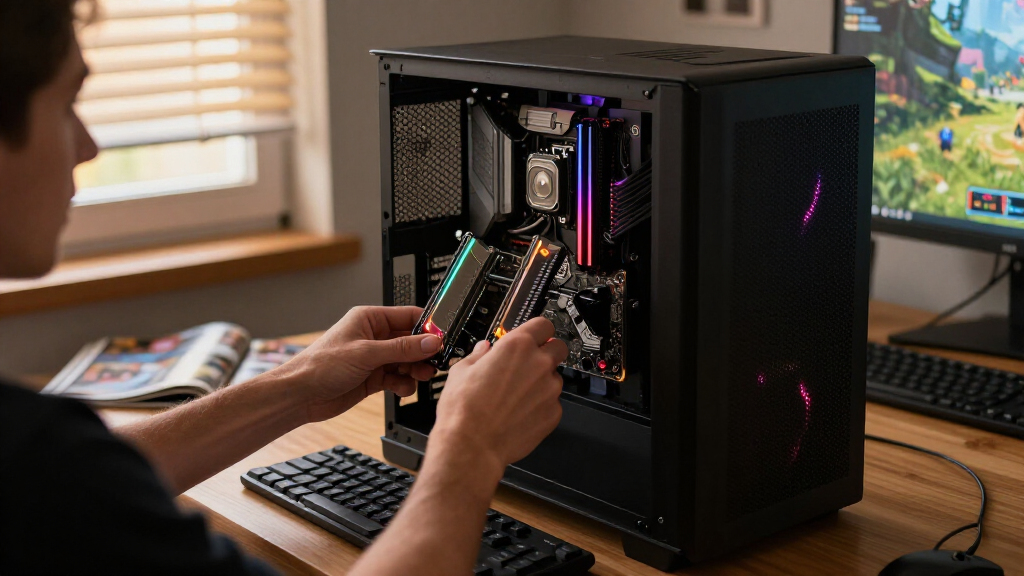

The best PC RAM kit for most modern builds in this roundup is the G.SKILL Flare X5 32GB DDR5-6000 kit, pairing a practical capacity with fast DDR5 and a low-profile design. For DDR4 systems, the Corsair Vengeance LPX 32GB offers a balanced 3200MHz, CL16 setup, while Crucial Pro 64GB suits workloads that need more memory. Your main tradeoffs are platform compatibility, capacity, speed, latency, and physical clearance—not every PC can use every kit. Older DDR3 systems have a separate option here, but it is not an upgrade choice for a DDR4 or DDR5 motherboard. Continue reading for the full breakdown and help matching a kit to your system.

Get the latest gadgets delivered free with Prime
- Fast, free delivery on millions of items
- Prime Video, Amazon Music and more included
- Member-only deals all year
Complete the kit



Key Takeaways
- DDR5-6000 is the standout modern-platform tier: G.SKILL Flare X5 and Lexar THOR Z RGB offer it at 32GB, with the Flare X5 distinguished by its low-profile, unlit design and CL36 rating.
- DDR4 32GB kits are the broadest fit in this lineup: Corsair Vengeance LPX and G.SKILL Ripjaws V both pair 3200MHz with CL16, making platform fit and cooler clearance bigger differentiators than headline speed.
- Capacity changes the recommendation: Crucial Pro’s 64GB kit is the clear choice for memory-heavy work, while 16GB kits are better treated as entry-level or upgrade-specific options.
- RGB is a visual choice, not a performance tier: The Trident Z RGB kits add lighting, but buyers should choose them for appearance and confirm clearance rather than assume the lights bring faster memory.
- Compatibility rules out several tempting upgrades: DDR3, DDR4, and DDR5 are not interchangeable, and a kit’s advertised profile may require enabling XMP or EXPO in firmware.


| PC RAM kit | Capacity | Form factor | Voltage | Memory type |
|---|---|---|---|---|
| Lexar THOR Z RGB DDR5 32GB Kit | 32GB (2 x 16GB) | 288-pin UDIMM | 1.35V | — |
| G.SKILL Trident Z RGB 16GB DDR | 16GB (2 x 8GB) | 288-pin UDIMM | 1.35V | DDR4 |
| PUSKILL 16GB | 16GB (2 x 8GB) | 288-pin UDIMM | 1.35V | Non-ECC unbuffered |
| Gigastone Game PRO 32GB | 32GB (2 x 16GB) | 288-pin unbuffered UDIMM | 1.35V | DDR4 |
| G.SKILL Flare X5 32GB | 32GB (2 x 16GB) | 288-pin DIMM / UDIMM | 1.35V | DDR5 |
| G.SKILL Ripjaws V 16GB | 16GB (2 x 8GB) | 288-pin UDIMM | 1.35V | DDR4 |
| G.SKILL Ripjaws V 32GB | 32GB (2 x 16GB) | 288-pin UDIMM | 1.35V | DDR4 |
| Timetec 16GB | 16GB (2 x 8GB) | 240-pin UDIMM | 1.35V / 1.5V | DDR3L / DDR3 |
| Corsair Vengeance LPX 32GB | 32GB (2 x 16GB) | 288-pin DIMM | 1.35V | DDR4 |
| Crucial Pro 64GB | 64GB (2 x 32GB) | UDIMM; product data also lists 288 pins | 1.2V | DDR4 |
| G.SKILL Trident Z RGB 32GB | 32GB (2 x 16GB) | 288-pin UDIMM | 1.35V | DDR4 |
| TEAMGROUP T-Force Vulcan Z 16G | 16GB (2 x 8GB) | 288-pin DIMM | 1.35V | DDR4 |
| PNY 32GB | 32GB (2 x 16GB) | 288-pin unbuffered DIMM | 1.2V | DDR4 |
More Details on Our Top Picks
Lexar THOR Z RGB DDR5 32GB Kit (2 x 16GB), 6000MHz CL38 Desktop Memory
The Lexar THOR Z RGB suits a new DDR5 desktop build that needs 32GB and visible lighting without giving up support for both major memory profiles. Its 6000 MT/s rating is a step up from the DDR4 Gigastone Game PRO, while the G.SKILL Flare X5 offers the same capacity and rated speed with tighter CL36 timings. Lexar’s CL38 specification is the tradeoff: the Flare X5 has the stronger latency claim, while this kit adds customizable RGB and an aluminum heatsink. On-die ECC and an onboard PMIC are part of its DDR5 design, but they do not make the kit compatible with every system. The rated speed depends on a compatible CPU and motherboard, with the profile enabled in BIOS; buyers should verify their platform supports DDR5 before choosing it.
Pros:- 32GB matched pair supports dual-channel desktop memory configurations
- Supports Intel XMP 3.0 and AMD EXPO profiles
- Customizable RGB lighting and aluminum heatsink
- Includes on-die ECC and an onboard PMIC
Cons:- 6000 MT/s rating requires compatible CPU, motherboard, and BIOS profile settings
- CL38 timings are looser than the G.SKILL Flare X5’s CL36 rating
- DDR5 UDIMM modules do not fit DDR4 systems or laptops
Best for: DDR5 desktop builders who want 32GB, customizable RGB, and the flexibility of Intel XMP 3.0 or AMD EXPO.
Not ideal for: DDR4 system owners, or buyers prioritizing tighter timings over RGB; the G.SKILL Flare X5 is rated CL36 rather than CL38.
- Capacity:32GB (2 x 16GB)
- Memory technology:DDR5
- CAS latency:CL38
- Form factor:288-pin UDIMM
- Profiles:Intel XMP 3.0 and AMD EXPO
- Voltage:1.35V
- Features:RGB lighting, on-die ECC, onboard PMIC
Our verdict“Choose the Lexar THOR Z if your DDR5 build calls for 32GB and RGB, but favor the G.SKILL Flare X5 if tighter rated timings matter more.”
G.SKILL Trident Z RGB 16GB DDR4 Desktop Memory Kit (2 x 8GB, 3200 MT/s, CL16)
The G.SKILL Trident Z RGB 16GB is a fit for DDR4 desktop owners who want a matched dual-channel kit with lighting, rather than a move to a newer memory platform. Its 3200 MT/s CL16 rating is comparable to the 16GB PUSKILL kit, but G.SKILL lists Intel XMP 2.0 support and a specific 16GB two-module configuration. The main compromise is capacity: the 32GB Gigastone Game PRO is a more suitable match for heavier multitasking or games that benefit from extra memory. Trident Z’s RGB styling gives it a distinct role, though lighting does not improve performance. Reaching the rated speed may require a BIOS adjustment, and mixing this kit with separate modules can cause instability, so buyers should plan around the included pair.
Pros:- Matched 2 x 8GB modules support dual-channel operation
- 3200 MT/s rated speed with CL16 timings
- Intel XMP 2.0 profile support
- RGB styling for builds where memory appearance matters
Cons:- 16GB capacity offers less headroom than 32GB kits such as the Gigastone Game PRO
- Rated speed may require BIOS profile adjustments and compatible hardware
- Mixing it with a separate memory kit can cause instability
Best for: DDR4 desktop owners who want RGB and a matched 2 x 8GB kit for everyday use or a modest gaming build.
Not ideal for: Users running memory-intensive games, creative applications, or many tasks at once; the 16GB capacity is lower than the Gigastone Game PRO’s 32GB.
- Capacity:16GB (2 x 8GB)
- Memory type:DDR4
- Timings:CL16-18-18-38
- Form factor:288-pin UDIMM
- Voltage:1.35V
- Overclock profile:Intel XMP 2.0
- Model:F4-3200C16D-16GTZR
Our verdict“Pick this kit for a 16GB DDR4 desktop build where RGB matters, but choose a 32GB option if you need more multitasking headroom.”
PUSKILL 16GB (2x8GB) DDR4 3200MHz CL16 Desktop RAM Kit
The PUSKILL 16GB kit covers the core needs of a compatible DDR4 desktop: two matched modules, dual-channel operation, and a 3200 MT/s CL16 rating. Compared with the RGB-equipped G.SKILL Trident Z RGB, it puts less emphasis on appearance and lists an aluminum heatsink; both kits have 16GB capacity and require profile settings to reach their rated speed. Its XMP 2.0 support and stated compatibility with Intel and AMD desktop motherboards make it a straightforward candidate for a basic upgrade, provided the board uses DDR4 UDIMMs. The notable limit is platform fit: these are desktop modules, not laptop memory. The rated speed also depends on enabling XMP or DOCP in BIOS, so buyers who want plug-in operation at the advertised rate should check their system settings first.
Pros:- Two matched 8GB modules support dual-channel operation
- 3200 MT/s rating with CL16-18-18-42 timings
- Aluminum heatsink included
- XMP 2.0 support for compatible Intel and AMD desktop systems
Cons:- Reaching the rated speed requires enabling XMP or DOCP in BIOS
- Not compatible with laptops
- 16GB total capacity provides less headroom than 32GB DDR4 kits
Best for: Desktop owners with a DDR4 motherboard who want a matched 16GB pair and a simple 3200 MT/s upgrade.
Not ideal for: Laptop owners or desktop users who need 32GB; this is a 16GB UDIMM kit and will not fit laptop memory slots.
- Capacity:16GB (2 x 8GB)
- Memory technology:DDR4
- Data transfer rate:PC4-25600
- Timings:CL16-18-18-42
- Voltage:1.35V
- Form factor:288-pin UDIMM
- Memory type:Non-ECC unbuffered
Our verdict“Choose PUSKILL for a basic 16GB DDR4 desktop upgrade, but skip it if you need laptop memory or more capacity.”
Gigastone Game PRO 32GB (2 x 16GB) DDR4 3200MHz Desktop Memory
For a DDR4 desktop that needs more capacity than a 16GB kit provides, the Gigastone Game PRO pairs 32GB with a 3200 MT/s rating and CL16 timings. That makes it a more capacity-focused choice than the G.SKILL Trident Z RGB 16GB, while avoiding the DDR5 platform requirement of the Lexar THOR Z RGB. Its 2 x 16GB configuration leaves the two-module format intact, and the listed Intel XMP 2.0 and AMD Ryzen support broadens its stated platform fit. The white finish may suit a light-colored build, but the product data limits compatibility to select desktop PCs, so checking the motherboard and processor memory support matters. This is DDR4, not a speed upgrade over newer DDR5 kits, and the 3200 MT/s profile may depend on system support.
Pros:- 32GB capacity in a matched 2 x 16GB kit
- 3200 MT/s rated speed with CL16-18-18-40 timings
- Supports Intel XMP 2.0 and AMD Ryzen systems
- White finish and a listed five-year warranty
Cons:- Compatibility is described for select desktop PCs, so system verification is needed
- DDR4 modules are not suitable for DDR5 motherboards
- Rated profile speed depends on compatible hardware and settings
Best for: DDR4 desktop builders who need 32GB in two modules for multitasking or gaming and want a white memory kit.
Not ideal for: Owners of DDR5-only systems or buyers who need a broadly specified compatibility list; the kit is described for select desktop PCs.
- Capacity:32GB (2 x 16GB)
- Memory type:DDR4
- Timings:CL16-18-18-40
- Voltage:1.35V
- Form factor:288-pin unbuffered UDIMM
- ECC:Non-ECC
- Warranty:5 years
Our verdict“Choose the Gigastone Game PRO for 32GB in a DDR4 desktop, especially if its white finish fits your build and your system is on the compatibility list.”
G.SKILL Flare X5 32GB (2x16GB) DDR5-6000 Desktop Memory Kit, CL36, Matte Black
The G.SKILL Flare X5 is the sharper-timed alternative among these 32GB DDR5 kits: it matches the Lexar THOR Z RGB’s 6000 MT/s rating but specifies CL36 rather than CL38. That makes it the better fit for buyers comparing rated latency, while its matte-black finish keeps the look understated beside Lexar’s customizable RGB. Both kits support AMD EXPO and Intel XMP 3.0, giving compatible systems profile options across platforms. Like the Lexar, the Flare X5 does not run at its maximum profile automatically in every system; the product data says default settings use JEDEC, and rated speed depends on compatible hardware and BIOS settings. Buyers should also avoid assuming a second kit will behave identically when mixed, since mixing memory can cause instability.
Pros:- 32GB matched 2 x 16GB kit
- 6000 MT/s rating with CL36 timings
- Supports AMD EXPO and Intel XMP 3.0
- Matte-black finish suits understated builds
Cons:- Rated speed depends on compatible hardware and BIOS profile settings
- Default settings use the JEDEC profile rather than the maximum rated speed
- Mixing with another memory kit can cause instability
Best for: DDR5 desktop builders seeking 32GB at 6000 MT/s with a tighter listed CL36 timing and both AMD EXPO and Intel XMP 3.0 support.
Not ideal for: Buyers who want RGB lighting or a kit that reaches its rated profile without checking BIOS and hardware compatibility.
- Capacity:32GB (2 x 16GB)
- Memory type:DDR5
- CAS latency:CL36
- Timings:36-36-36-96
- Voltage:1.35V
- Form factor:288-pin DIMM / UDIMM
- Profiles:AMD EXPO and Intel XMP 3.0
Our verdict“Choose the Flare X5 over the Lexar THOR Z RGB if you prefer tighter listed timings and a matte-black look to RGB lighting.”
G.SKILL Ripjaws V 16GB (2 x 8GB) DDR4-3600 CL16 Desktop Memory Kit
I’d choose the Ripjaws V 16GB DDR4-3600 CL16 for a compatible DDR4 desktop where speed matters more than extra capacity. Its two-module kit enables dual-channel operation, while the 3600 MT/s rating and CL16 timing give it a faster spec profile than the 3200 MT/s Ripjaws V 32GB kit. The tradeoff is capacity: 16GB leaves less room for demanding games and heavy multitasking than that 32GB alternative. The rated speed also depends on compatible hardware and enabling XMP in the BIOS; it defaults to JEDEC settings otherwise. I’d keep this kit as a matched pair rather than combine it with other RAM, since mixed kits can cause instability. It’s a focused speed pick, not the most flexible long-term choice.
Pros:- Matched 2 x 8GB kit supports dual-channel operation
- Rated up to 3600 MT/s with CL16 timing
- Intel XMP 2.0 profile simplifies setting the rated speed on compatible systems
- Limited lifetime manufacturer warranty
Cons:- Rated speed may require compatible hardware and BIOS adjustments
- 16GB provides less capacity headroom than the 32GB kits in this roundup
- Mixing with other memory kits can cause instability or system failure
Best for: DDR4 desktop owners who prioritize a 3600 MT/s CL16 kit for gaming or everyday use and are comfortable enabling XMP in BIOS.
Not ideal for: People who run memory-heavy games, creative workloads, or many applications at once; 16GB offers less headroom than the 32GB Ripjaws V kit.
- Capacity:16GB (2 x 8GB)
- Memory type:DDR4
- Form factor:288-pin UDIMM
- Speed:Up to 3600 MT/s
- CAS latency:CL16
- Timings:16-19-19-39
- Voltage:1.35V
- Profiles:JEDEC default and Intel XMP 2.0
Our verdict“Choose this kit for a compatible DDR4 build where 3600 MT/s CL16 matters more than the extra capacity of a 32GB kit.”
G.SKILL Ripjaws V 32GB (2 x 16GB) DDR4-3200 CL16 Desktop Memory Kit, Black (F4-3200C16D-32GVK)
The Ripjaws V 32GB DDR4-3200 CL16 is my balanced pick for a DDR4 desktop that needs room for current games, multitasking, and everyday creative work without moving to 64GB. Compared with the 16GB Ripjaws V kit, it doubles capacity, trading the other kit’s higher 3600 MT/s rating for more breathing room across applications. Its matched 2 x 16GB configuration also avoids the uncertainty of piecing together separate modules. The 3200 MT/s profile requires compatible hardware and an XMP setting in BIOS; at default JEDEC settings, it may not run at its rated speed. This is a practical middle ground, but buyers doing unusually memory-intensive work may prefer the 64GB Crucial Pro kit. I’d skip mixing it with other RAM kits, which can compromise stability.
Pros:- 32GB capacity in a matched 2 x 16GB kit
- 3200 MT/s rated speed with CL16 timing
- Intel XMP 2.0 support
- Listed for compatible Intel and AMD desktop systems
Cons:- Reaching the rated speed may require BIOS configuration and compatible hardware
- Mixing with other memory kits may cause instability or system failure
Best for: DDR4 desktop builders who want 32GB for gaming, multitasking, or moderate content creation in a matched two-module kit.
Not ideal for: Buyers with workloads that routinely need more than 32GB, or those seeking the higher 3600 MT/s rating of the 16GB Ripjaws V kit.
- Capacity:32GB (2 x 16GB)
- Memory type:DDR4
- Form factor:288-pin UDIMM
- Maximum speed:3200 MT/s
- Timing:CL16-18-18-38
- Voltage:1.35V
- Profile support:Intel XMP 2.0
- Color:Black
Our verdict“Pick this Ripjaws V kit for a versatile 32GB DDR4 setup; choose the 64GB Crucial Pro instead if your workloads need more capacity.”
Timetec 16GB (2 x 8GB) DDR3L/DDR3 1600MHz Desktop Memory Kit
This Timetec kit has a distinct purpose in the roundup: upgrading a compatible older desktop that uses DDR3 or DDR3L. Its two 8GB modules provide 16GB total, and support for 1.35V or 1.5V operation gives it flexibility across supported DDR3 systems. That makes it a different kind of choice from the newer DDR4 Ripjaws V kits, which cannot substitute for DDR3 memory because the generations use different slots and platforms. The 1600MHz speed and CL11 latency are modest by comparison, so I wouldn’t choose it for a new gaming PC or a DDR4 motherboard. It is also explicitly a desktop UDIMM kit, not laptop memory. For a compatible legacy machine, though, its matched modules and lifetime warranty make the upgrade straightforward.
Pros:- Two 8GB modules provide 16GB total capacity
- Supports both 1.35V and 1.5V operation on compatible systems
- DDR3L/DDR3 specification suits supported legacy desktop platforms
- Includes a lifetime warranty and free technical support
Cons:- Not compatible with laptops
- 1600MHz DDR3 is not a substitute for the faster DDR4 kits in this roundup
- PCB color may vary between black and green
Best for: Owners of compatible older desktop PCs with DDR3 or DDR3L UDIMM slots who need a matched 16GB upgrade.
Not ideal for: Builders using DDR4 motherboards, laptop owners, or anyone assembling a new system that needs current-generation memory.
- Capacity:16GB (2 x 8GB)
- Memory type:DDR3L / DDR3
- Speed:1600MHz
- Form factor:240-pin UDIMM
- Voltage:1.35V / 1.5V
- CAS latency:CL11
- Rank:Dual rank (2Rx8)
- ECC and buffering:Non-ECC, unbuffered
Our verdict“Choose this only to upgrade a compatible DDR3 desktop; it cannot replace the DDR4 kits for newer platforms.”
Corsair Vengeance LPX 32GB (2×16GB) DDR4 3200MHz CL16 Desktop Memory, Black (CMK32GX4M2E3200C16)
For a compact DDR4 desktop, I’d favor the Corsair Vengeance LPX 32GB over taller memory kits because its 34mm height can make clearance easier around CPU coolers and in small cases. It pairs that low profile with two 16GB modules, 3200MHz speed, and CL16 timing, putting its capacity and headline speed in the same general class as the 32GB Ripjaws V. The distinction is physical fit: Vengeance LPX is the clearer choice when space around the DIMM slots is tight, while the Ripjaws V does not list a height here. Its XMP 2.0 profile can help reach the rated speed, but BIOS and CPU or motherboard support still matter. The kit’s 16-20-20-38 timings are not identical to the Ripjaws V’s, and neither should be mixed casually with other modules.
Pros:- 34mm height helps with clearance in compact builds
- 32GB capacity from a matched 2 x 16GB kit
- Aluminum heatspreaders help dissipate heat
- Intel XMP 2.0 profile support
Cons:- Reaching 3200MHz may require BIOS adjustments or overclocking
- Actual compatibility and speed depend on the motherboard and CPU
- CL16 timings are 16-20-20-38, rather than the Ripjaws V kit’s listed 16-18-18-38
Best for: Small-form-factor PC builders and desktop owners whose CPU cooler or case layout makes DIMM height a concern.
Not ideal for: Buyers who do not need a low-profile design and would rather choose memory based on other priorities, or those whose platform cannot support the rated speed.
- Capacity:32GB (2 x 16GB)
- Memory type:DDR4
- Form factor:288-pin DIMM
- Speed:3200MHz
- CAS latency:CL16
- Timings:16-20-20-38
- Voltage:1.35V
- Height:34mm
Our verdict“Choose Vengeance LPX when 32GB DDR4 needs to fit beneath a tight cooler or inside a compact desktop.”
Crucial Pro 64GB (2×32GB) DDR4-3200 UDIMM Desktop Memory Kit
The Crucial Pro 64GB DDR4-3200 is the capacity-first pick here. Its two 32GB modules offer twice the memory of the 32GB Corsair Vengeance LPX and Ripjaws V kits, which is more useful for heavy multitasking or memory-hungry desktop work than a modest speed advantage. The tradeoff is CL22 latency, looser than the CL16 32GB alternatives, and the listed 3200MHz speed may vary with system configuration. It runs at 1.2V and supports Intel XMP 2.0, but buyers should check their motherboard and processor support before choosing a 64GB configuration. The product data also contains conflicting form-factor details, so I’d verify the exact module compatibility for the intended system before ordering. This is a capacity-led choice, not the kit I’d pick to prioritize tighter timings.
Pros:- 64GB total capacity in a two-module kit
- Supports speeds up to 3200MHz, subject to system configuration
- Intel XMP 2.0 support
- 1.2V operating voltage
Cons:- CL22 latency is looser than the CL16 timings on the 32GB Corsair and Ripjaws V kits
- Actual speed depends on system configuration
- Product data has conflicting form-factor details, so compatibility needs checking
Best for: DDR4 desktop users running memory-intensive multitasking or creative workloads who need 64GB in two modules.
Not ideal for: Gamers or general users who need only 16–32GB, or buyers prioritizing tighter CL16 timings over capacity.
- Capacity:64GB (2 x 32GB)
- Memory type:DDR4
- Form factor:UDIMM; product data also lists 288 pins
- Speed:Up to 3200MHz
- Voltage:1.2V
- Latency:CL22
- ECC:Non-ECC
- Profile support:Intel XMP 2.0
Our verdict“Choose this Crucial kit when 64GB capacity matters more than the tighter timings of the 32GB alternatives.”
G.SKILL Trident Z RGB 32GB (2x16GB) DDR4 3600MHz Desktop Memory
For a DDR4 build where both speed and lighting matter, this 32GB, 3600MT/s kit combines two 16GB DIMMs with customizable RGB effects. Its rated speed is higher than the TEAMGROUP T-Force Vulcan Z at 3200MHz, which can make this a better fit for buyers tuning a gaming system, though actual results depend on the CPU and motherboard. The CL18 timings and Intel XMP 2.0 support offer a straightforward route to the rated profile, but maximum performance requires enabling it in BIOS; the default JEDEC profile runs differently. Compared with the plainer PNY 32GB kit, this G.SKILL option prioritizes faster rated memory and visual customization over low-voltage simplicity. Check platform compatibility before buying, and avoid mixing it with a separate kit, since that can affect stability.
Pros:- 32GB capacity in a two-DIMM kit suits gaming and general multitasking.
- 3600MT/s rated speed is higher than the 3200MHz TEAMGROUP and PNY kits here.
- Customizable RGB lighting adds visual flair to a windowed build.
- Intel XMP 2.0 provides a convenient way to apply the rated profile on compatible systems.
Cons:- Rated performance requires a BIOS profile adjustment.
- Whether the kit reaches its rated speed depends on motherboard and CPU support.
- Combining it with another memory kit can create stability problems.
Best for: DDR4 gaming PC builders who want 32GB, a 3600MT/s XMP profile, and customizable RGB lighting.
Not ideal for: Builders who want a plug-and-play default speed, have a motherboard or CPU that cannot support the rated profile, or prefer memory without RGB.
- Capacity:32GB (2 x 16GB)
- Memory type:DDR4
- CAS latency:CL18
- Timings:18-22-22-42
- Voltage:1.35V
- Form factor:288-pin UDIMM
- Memory profile:Intel XMP 2.0
Our verdict“Choose this G.SKILL kit for a compatible DDR4 gaming build that needs 32GB, faster rated memory, and RGB, but skip it if you want to avoid BIOS tuning.”
TEAMGROUP T-Force Vulcan Z 16GB DDR4 3200MHz Desktop Memory Kit (2x8GB), CL16, Gray
This 16GB dual-channel kit is a sensible starting point for a DDR4 desktop when the goal is a matched pair of modules rather than a larger capacity upgrade. Its 3200MHz speed and CL16 latency give it a tighter listed latency than the 32GB G.SKILL Trident Z RGB’s CL18, while that G.SKILL kit offers twice the capacity and a higher rated speed. The Vulcan Z supports both Intel and AMD desktop motherboards and includes XMP 2.0, so compatible systems can apply its rated profile without manual timing entry. The tradeoff is its 16GB total: it leaves less room for demanding games, heavier multitasking, and creative projects than 32GB alternatives such as the PNY kit. I’d pick it for a basic or budget-conscious DDR4 build, not as the long-term choice for a workload that regularly fills memory.
Pros:- Two 8GB DIMMs provide a matched 16GB kit.
- CL16 timings are tighter than the CL18 G.SKILL Trident Z RGB kit.
- Supports Intel and AMD desktop motherboards.
- XMP 2.0 and a lifetime warranty are specified.
Cons:- 16GB total offers less capacity headroom than the G.SKILL and PNY 32GB options.
- Rated speed depends on a compatible system and using the supported memory profile.
Best for: First-time DDR4 desktop builders and everyday users who want two matched 8GB modules, CL16 timings, and XMP support.
Not ideal for: Gamers who keep many applications open or creators working with memory-heavy projects; 16GB provides less headroom than the 32GB kits in this roundup.
- Capacity:16GB (2 x 8GB)
- Memory type:DDR4
- CAS latency:CL16
- Voltage:1.35V
- Form factor:288-pin DIMM
- Compatibility:Intel and AMD desktop motherboards
- Memory profile:XMP 2.0
- Color:Gray
Our verdict“Choose the Vulcan Z for a straightforward 16GB DDR4 build with CL16 timings, but opt for a 32GB kit if your games or applications demand more memory.”
PNY 32GB (2 x 16GB) DDR4 3200MHz CL22 Desktop Memory Kit
The PNY kit’s appeal is its uncomplicated combination of 32GB capacity and 1.2V operation. Two 16GB modules give everyday desktop users and many creative workflows more breathing room than the 16GB TEAMGROUP Vulcan Z, while the standard 3200MHz rating avoids the higher speed target of the G.SKILL Trident Z RGB. The tradeoff is CL22 timing, which is looser than the CL16 Vulcan Z and CL18 G.SKILL kit; this is a capacity-and-low-voltage choice, not the lineup’s latency-focused option. The listed speed also depends on system compatibility and may fall back to a supported lower rate. Unlike those alternatives, the supplied data does not specify XMP support, so I would check the motherboard’s memory settings and compatibility before buying if a particular operating profile matters.
Pros:- 32GB capacity comes as two 16GB modules.
- 1.2V operating voltage is lower than the 1.35V G.SKILL and TEAMGROUP kits.
- 3200MHz rated speed suits compatible DDR4 desktop systems.
- Unbuffered DIMM design is specified for desktop use.
Cons:- CL22 timings are looser than the CL16 TEAMGROUP Vulcan Z and CL18 G.SKILL Trident Z RGB.
- Actual operating speed can be lower depending on system compatibility.
- The provided product details do not specify XMP support.
Best for: Desktop users and creators who want 32GB across two modules, prefer 1.2V operation, and value capacity over tighter timings.
Not ideal for: Latency-focused gamers or builders who need a clearly specified XMP profile and want assurance of running at 3200MHz on their particular platform.
- Capacity:32GB (2 x 16GB)
- Memory type:DDR4
- Timing:CL22
- Voltage:1.2V
- Form factor:288-pin unbuffered DIMM
- Data transfer rate:PC4-25600
- Compatible speeds:3000, 2933, 2800, 2666, 2400, 2133MHz
Our verdict“Pick the PNY kit when 32GB capacity and 1.2V operation matter more than tight timings or a specified XMP profile.”
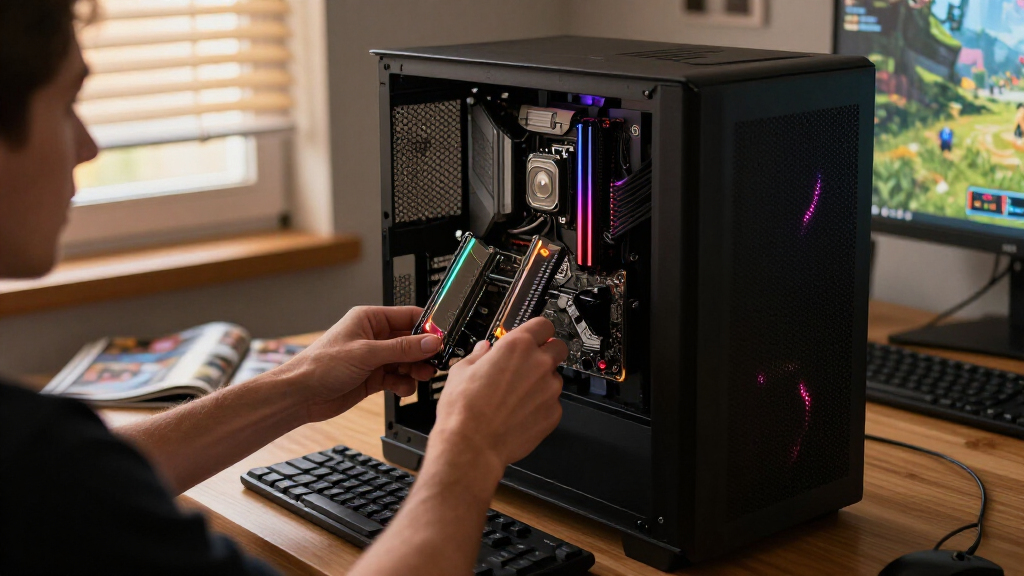
How We Picked
I ranked these kits by how well their capacity, memory generation, speed, and latency fit common desktop builds. I gave more weight to practical 32GB configurations for current gaming and general-purpose PCs, while reserving a distinct place for 64GB when heavier work benefits from added headroom. Low-profile designs, heat spreaders, lighting, and stated module configuration also shaped each kit’s role. I did not treat RGB, brand, or a higher frequency as an automatic performance win.
The order reflects usefulness within a compatible platform, not a claim that one generation replaces another. DDR5 kits appear ahead for new DDR5 builds, while strong DDR4 choices remain relevant for existing DDR4 motherboards. The 16GB and DDR3 options rank lower for broad use because they suit narrower upgrade needs. Before choosing, buyers should confirm their motherboard’s memory generation, supported capacity, and profile support; the same kit cannot serve every system.
| PC RAM kit | CAS latency | Memory type |
|---|---|---|
| Lexar THOR Z RGB DDR5 32GB Kit | CL38 | — |
| G.SKILL Trident Z RGB 16GB DDR | — | DDR4 |
| PUSKILL 16GB | — | Non-ECC unbuffered |
| Gigastone Game PRO 32GB | — | DDR4 |
| G.SKILL Flare X5 32GB | CL36 | DDR5 |
| G.SKILL Ripjaws V 16GB | CL16 | DDR4 |
| G.SKILL Ripjaws V 32GB | — | DDR4 |
| Timetec 16GB | CL11 | DDR3L / DDR3 |
| Corsair Vengeance LPX 32GB | CL16 | DDR4 |
| Crucial Pro 64GB | — | DDR4 |
| G.SKILL Trident Z RGB 32GB | CL18 | DDR4 |
| TEAMGROUP T-Force Vulcan Z 16G | CL16 | DDR4 |
| PNY 32GB | — | DDR4 |
Factors to Consider When Choosing Best PC RAM Kits
I’d start with the motherboard and workload, then compare the kits that remain compatible. A familiar speed number cannot compensate for the wrong memory generation, insufficient capacity, or a module that conflicts with a large CPU cooler.
Match the Memory Generation to the Motherboard
DDR3, DDR4, and DDR5 use different physical slots and electrical standards, so they are not interchangeable. Check the motherboard model or system documentation before buying; a processor’s support alone does not prove that a particular board accepts a kit. DDR3L modules add another compatibility detail, since low-voltage support may depend on the board and processor. Do not buy older DDR3 memory as a cheap stand-in for a DDR4 upgrade. If you are building from scratch, choose the platform first and shop only within its memory generation.
Choose Capacity for Your Actual Workload
Capacity affects how many applications and files can stay in memory at once, while speed affects data transfer. A 16GB kit can suit a basic or older PC, but it leaves less room for demanding games, extensive multitasking, and creative applications. For many general-purpose builds, 32GB is a useful middle ground; heavier editing, virtual machines, and large projects can make 64GB worthwhile. More memory does not automatically make every task faster if the system was not running out of RAM. Check your software’s needs and whether your board has open slots before deciding between a two-module kit and a later expansion.
Read Speed and Latency Together
Frequency and CAS latency describe different parts of memory performance, so comparing only the MHz or MT/s figure can mislead. A kit with a higher transfer rate may also have looser timings, and real-world gains depend on the processor, workload, and platform. The 3200MHz CL16 DDR4 kits in this roundup offer a consistent comparison point, while DDR5-6000 options target newer systems. Check that the motherboard and CPU support the rated profile; the default boot speed may be lower. For a routine gaming or office build, capacity and compatibility often matter more than chasing a small specification difference.
Check XMP or EXPO Support Before Expecting Rated Speeds
Many kits need a memory profile enabled in the motherboard’s firmware to run at their advertised speed and timings. Intel boards commonly use XMP, while many AMD DDR5 platforms support EXPO; board support varies, and some kits list only one profile type. If you leave the system on its default settings, it may run memory more slowly than the package specification. Review the motherboard’s supported memory list and update firmware when a new kit is not recognized correctly. Anyone who prefers not to adjust firmware should favor a stable supported configuration over the highest advertised speed.
Account for Cooler Clearance and Case Appearance
Tall heat spreaders and RGB lighting can interfere with large air coolers or sit awkwardly beneath a compact case panel. Compare the module height with the cooler’s clearance specifications before buying, especially if the first RAM slot sits close to the heatsink. Low-profile kits reduce the chance of a physical conflict and suit understated builds, though they may offer fewer lighting choices. RGB is worth selecting when coordinated lighting is part of the build, not as a substitute for capacity or compatibility. Also check how many DIMM slots the board has if a future capacity increase matters.
Decide When More Capacity or Premium Features Are Worth It
A larger kit makes sense when your current workload regularly uses most of the installed memory or when adding modules later would be inconvenient. Paying extra for lighting, a particular finish, or a more decorative heat spreader mostly changes the build’s appearance and physical fit. Faster memory can be useful on a platform that benefits from it, but gains are workload-dependent and may require firmware setup. For a basic desktop, a compatible 32GB kit can be a better-balanced choice than paying for features that will go unused. Treat 64GB as a workload decision, not a default upgrade for every PC.
Frequently Asked Questions
Can I put one of these DDR5 kits in a DDR4 motherboard?
No. DDR4 and DDR5 modules use different slot layouts and electrical standards, so they cannot be installed interchangeably. Check the exact motherboard model and its supported memory generation before ordering. A processor may support more than one memory type across different boards, but the motherboard determines which type fits your build. In this roundup, the Flare X5 and Lexar THOR Z RGB are DDR5; the listed DDR4 kits will not work in a DDR5-only board either.
Is 16GB enough, or should I choose a 32GB kit?
Sixteen gigabytes can suit basic computing and older systems, but it leaves less headroom for current games, many open applications, and content work. A 32GB kit is the more flexible choice for a new general-purpose or gaming desktop when the motherboard supports it. The 64GB Crucial Pro kit is aimed at heavier tasks such as large projects or virtual machines, not every everyday PC. Match capacity to the programs you run and check whether your motherboard has room for a later upgrade.
Will these kits run at their advertised speed automatically?
Not always. Some systems start memory at a lower default speed and need an XMP or EXPO profile enabled in firmware to use the kit’s rated settings. Support depends on the motherboard, processor, and kit, so verify the board’s specifications before purchase. If a profile is unavailable or unstable, the system may run at a lower supported setting. Buyers who want minimal setup should prioritize a well-supported configuration over the highest listed speed.
Should I choose DDR5-6000 or a DDR4-3200 kit?
Choose based on your motherboard, not on the speed numbers alone: a DDR4 board cannot use DDR5, and a DDR5 board cannot use DDR4. For a new compatible build, the DDR5-6000 kits here suit buyers seeking current-generation memory, while DDR4-3200 options make sense for an existing DDR4 system or compatible upgrade. Differences in performance depend on the full platform and workload, not memory speed in isolation. Switching generations may also mean replacing the motherboard and, depending on the platform, other components.
Can I add one of these kits to the RAM already in my PC?
It may work, but mixing kits can cause compatibility or stability problems even when capacity and speed appear to match. Different modules can use different chips or timings, and the system may run all installed memory at a lower common setting. Check the board’s slot layout, supported capacity, and existing module specifications before adding RAM. For the most predictable result, use a matched kit in the recommended slots; if you mix modules, be ready to test stability and adjust settings.
Conclusion
For a modern DDR5 build, my best overall pick is the G.SKILL Flare X5 32GB DDR5-6000 kit: it combines useful capacity and speed with a low-profile, no-lighting design. For a compatible DDR4 system, the best value-style choice is Corsair Vengeance LPX 32GB, while Crucial Pro 64GB is my premium-capacity pick for memory-heavy work. Beginners building a DDR4 desktop can start with a matched 32GB kit such as the G.SKILL Ripjaws V and confirm motherboard support before enabling a profile. For a specific need, choose the Timetec kit only for compatible DDR3 systems, or an RGB Trident Z kit when lighting matters and case clearance allows. The right choice is the one that matches your platform and workload; no kit in this list fits every PC.
Halloween Picks
halloween
As an affiliate, we earn on qualifying purchases.