Among these wireless mechanical keyboards, I’d put the AULA F75 Pro first for its compact 75% layout, tri-mode connection, hot-swappable switches, and control knob. The Logitech MX Mechanical is a standout for buyers who want a more work-focused board, while the AULA F99 suits anyone who prefers a fuller layout with a number pad. Your main tradeoffs are desk space versus dedicated keys, customization versus simplicity, and wireless flexibility versus a board’s size and feature set. Read on for how all 13 options compare and which one fits your setup.

Get the latest gadgets delivered free with Prime
- Fast, free delivery on millions of items
- Prime Video, Amazon Music and more included
- Member-only deals all year
Complete the kit



Key Takeaways
- The AULA F75 Pro is the strongest all-round fit: it combines a space-saving 75% layout with Bluetooth, 2.4GHz, USB-C, hot-swap support, and a knob.
- Layout separates these picks more than wireless capability. The F75 models and K673 PRO save space, while the F99, K556 PRO, K745 PRO, and K768 PRO retain more keys for number-heavy tasks.
- Hot-swap support is valuable only if you expect to change switches. Several AULA, Redragon, and Hexgears options offer it; the Logitech MX Mechanical prioritizes a ready-to-use work setup instead.
- “Mechanical feel” is not the same as a mechanical switch board. The Redragon K521KS is the budget-conscious outlier in this group and deserves a closer spec check from buyers seeking a true mechanical switch design.
- Big-battery and gasket-style boards trade compactness for a different feature mix. The K768 PRO highlights battery capacity, while the K745 PRO and K673 PRO call out gasket construction; buyers should match those priorities to their desk and typing habits.
| AULA F75 Pro Wireless Mechanical Keyboard |  | Best Overall | Layout: 75%, 81 keys | Connectivity: Bluetooth 5.0, 2.4GHz wireless, USB-C | Switches: Pre-lubed linear LEOBOG Reaper switches | VIEW LATEST PRICE | See Our Full Breakdown |
| Redragon K671KS Wireless Mechanical Gaming Keyboard |  | Best for a Durable Metal Build | Layout: 81 keys | Connectivity: Bluetooth, 2.4GHz wireless, USB-C | Switches: Linear Cherry MX Red | VIEW LATEST PRICE | See Our Full Breakdown |
| Redragon Wireless Typewriter Style Mechanical Gaming Keyboard, Black | 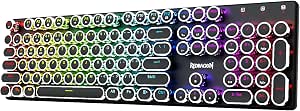 | Best Retro Design | Layout: Full-size, 104 keys | Connectivity: Bluetooth 3.0/5.0, 2.4GHz wireless, USB | Switch type: Clicky blue mechanical switches | VIEW LATEST PRICE | See Our Full Breakdown |
| Hexgears Wireless Mechanical Keyboard with Wrist Rest |  | Best for Wrist Support | Layout: 99 keys | Connectivity: Bluetooth 5.0, 2.4GHz wireless, USB-C | Switches: Pre-lubricated linear | VIEW LATEST PRICE | See Our Full Breakdown |
| Kisnt KN85 Wireless Mechanical Keyboard |  | Best Compact Value | Layout: 75%, 85 keys | Dimensions: 13.68 × 5.51 × 1.77 inches | Connectivity: Bluetooth 5.0, 2.4GHz wireless, USB-C | VIEW LATEST PRICE | See Our Full Breakdown |
| Redragon K556 PRO Wireless RGB Mechanical Gaming Keyboard, 104-Key Aluminum |  | Best for Switch Customization | Layout: QWERTY, 104 keys | Connectivity: Bluetooth, 2.4 GHz, USB-C | Switch type: Redragon Red linear | VIEW LATEST PRICE | See Our Full Breakdown |
| Logitech MX Mechanical Wireless Illuminated Keyboard Tactile – Graphite | 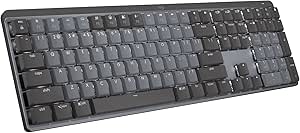 | Best for Quiet Office Typing | Layout: QWERTY, 104 keys | Connectivity: Bluetooth Low Energy, Logi Bolt USB receiver | Switch type: Tactile Quiet mechanical | VIEW LATEST PRICE | See Our Full Breakdown |
| Redragon K745 PRO Wireless 108-Key Gasket RGB Gaming Keyboard |  | Best Full-Size Gasket Pick | Layout: Full-size QWERTY, 108 keys | Connectivity: USB-C, Bluetooth, 2.4 GHz | Switch type: Redragon custom linear | VIEW LATEST PRICE | See Our Full Breakdown |
| Redragon K673 PRO Wireless 81-Key RGB Gasket Gaming Keyboard with Scroll Knob |  | Best Compact Pick | Layout: QWERTY, 81 keys | Connectivity: 2.4 GHz, Bluetooth, USB-C | Switch type: Redragon Red linear | VIEW LATEST PRICE | See Our Full Breakdown |
| Redragon K768 PRO Wireless 100-Key Gasket Gaming Keyboard with Knob and 8000mAh Battery |  | Best for Long Wireless Sessions | Layout: QWERTY, 100 keys, 95% size | Connectivity: USB-C, Bluetooth, 2.4 GHz | Battery capacity: 8000 mAh | VIEW LATEST PRICE | See Our Full Breakdown |
| AULA F99 Wireless Mechanical Keyboard, Tri-Mode BT5.0/2.4GHz/USB-C Hot Swappable Custom Keyboard, Pre-lubed Linear Switches, RGB Backlit Computer Gaming Keyboards for PC/Tablet/PS/Xbox | 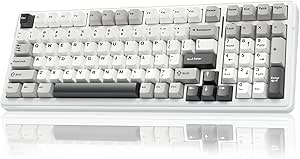 | Best for a Full Work-and-Play Layout | Layout: 96%, 99 keys | Connectivity: Bluetooth 5.0, 2.4GHz wireless, USB-C | Multi-device support: Up to five devices | VIEW LATEST PRICE | See Our Full Breakdown |
| AULA F75 75% Wireless Mechanical Keyboard – Hot-Swappable, Pre-lubed Linear Switches, 2.4 GHz / Type-C / BT5.0, RGB Backlit (White & Brown) |  | Best Compact Pick | Layout: 75%, 81 keys | Connectivity: Bluetooth 5.0, 2.4GHz wireless, USB-C | Multi-device support: Up to five devices | VIEW LATEST PRICE | See Our Full Breakdown |
| Redragon K521KS Wireless Gaming Keyboard with RGB Backlight and Mechanical Feel |  | Best for Mechanical-Feel Gaming on Multiple Connections | Layout: QWERTY; key count not specified | Connectivity: Bluetooth, 2.4GHz wireless, USB-C | Switch type: Mechanical-feeling | VIEW LATEST PRICE | See Our Full Breakdown |
| wireless mechanical keyboard | Layout | Connectivity | Switch type | Battery |
|---|---|---|---|---|
| AULA F75 Pro Wireless Mechanic | 75%, 81 keys | Bluetooth 5.0, 2.4GHz wireless, USB-C | — | 4000mAh rechargeable |
| Redragon K671KS Wireless Mecha | 81 keys | Bluetooth, 2.4GHz wireless, USB-C | — | — |
| Redragon Wireless Typewriter S | Full-size, 104 keys | Bluetooth 3.0/5.0, 2.4GHz wireless, USB | Clicky blue mechanical switches | 4000mAh rechargeable |
| Hexgears Wireless Mechanical K | 99 keys | Bluetooth 5.0, 2.4GHz wireless, USB-C | — | 4600mAh |
| Kisnt KN85 Wireless Mechanical | 75%, 85 keys | Bluetooth 5.0, 2.4GHz wireless, USB-C | — | 4000mAh rechargeable |
| Redragon K556 PRO Wireless RGB | QWERTY, 104 keys | Bluetooth, 2.4 GHz, USB-C | Redragon Red linear | — |
| Logitech MX Mechanical Wireles | QWERTY, 104 keys | Bluetooth Low Energy, Logi Bolt USB receiver | Tactile Quiet mechanical | Rechargeable 1500 mAh Li-Po |
| Redragon K745 PRO Wireless 108 | Full-size QWERTY, 108 keys | USB-C, Bluetooth, 2.4 GHz | Redragon custom linear | — |
| Redragon K673 PRO Wireless 81- | QWERTY, 81 keys | 2.4 GHz, Bluetooth, USB-C | Redragon Red linear | — |
| Redragon K768 PRO Wireless 100 | QWERTY, 100 keys, 95% size | USB-C, Bluetooth, 2.4 GHz | Redragon custom linear, gasket-mounted | — |
| AULA F99 Wireless Mechanical K | 96%, 99 keys | Bluetooth 5.0, 2.4GHz wireless, USB-C | Pre-lubed linear; hot-swappable 3-pin and 5-pin switches | 8000mAh rechargeable |
| AULA F75 75% Wireless Mechanic | 75%, 81 keys | Bluetooth 5.0, 2.4GHz wireless, USB-C | Pre-lubed linear; hot-swappable | 4000mAh rechargeable |
| Redragon K521KS Wireless Gamin | QWERTY; key count not specified | Bluetooth, 2.4GHz wireless, USB-C | Mechanical-feeling | 4000mAh rechargeable |
More Details on Our Top Picks
AULA F75 Pro Wireless Mechanical Keyboard
The AULA F75 Pro is my best all-rounder here: its 75% layout keeps arrow keys while leaving more desk space than the full-size Redragon typewriter-style model. Bluetooth 5.0, 2.4GHz, and USB-C give it useful flexibility between a computer, tablet, and wired gaming setup, while the stated support for up to five devices suits people who regularly switch screens. Its hot-swap socket, pre-lubed linear switches, layered internal damping, and programmable knob make it more customizable than a basic wireless board. The tradeoff is that its 81-key layout omits a number pad, and the side-printed legends may take adjustment if you prefer conventional top-facing labels. I’d choose it for versatility and a softer, quieter-feeling build, not for a traditional full-size layout.
Pros:- Bluetooth, 2.4GHz wireless, and USB-C wired modes support varied setups.
- 75% layout retains arrow keys while using less desk space than a full-size board.
- Hot-swappable 3-pin and 5-pin switch support allows solder-free customization.
- Damped internal structure and pre-lubed switches are designed for a softer, less hollow typing sound.
Cons:- No dedicated number pad.
- Side-printed legends may be less familiar and harder to read from some angles.
- RGB lighting and wireless use draw on the rechargeable battery.
Best for: People who want one wireless keyboard for gaming and everyday work, with arrow keys, multi-device connections, and room to change switches later.
Not ideal for: Number-heavy users who need a dedicated numpad, or typists who prefer standard top-printed key legends.
- Layout:75%, 81 keys
- Connectivity:Bluetooth 5.0, 2.4GHz wireless, USB-C
- Switches:Pre-lubed linear LEOBOG Reaper switches
- Hot-swap support:3-pin and 5-pin switches
- Battery:4000mAh rechargeable
- Keycaps:Side-printed PBT
- Lighting:RGB, with preset effects
- Controls:Multifunction knob; programmable keys
- Dimensions:12.7 × 5.64 × 1.7 inches
Our verdict“Choose the F75 Pro if you want a compact, customizable wireless board that balances gaming features with everyday usability.”
Redragon K671KS Wireless Mechanical Gaming Keyboard
The Redragon K671KS stands out for buyers who want a metal-bodied wireless keyboard rather than the plastic enclosure listed for the AULA F75 Pro. It keeps a similar 81-key footprint and tri-mode setup, with Bluetooth, 2.4GHz, and USB-C connections for a desktop, laptop, or tablet. Its linear Cherry MX Red switches provide a familiar smooth keystroke, and the hot-swap design plus spare switches makes experimenting less involved than replacing a soldered board. Double-injection PBT keycaps and per-key RGB add practical durability and lighting control. There are two notable compromises: the listing gives no battery capacity or runtime, so wireless endurance is hard to judge, and this layout still has no number pad. Pick it for chassis construction and switch access; choose the AULA if its stated battery capacity and more elaborate damped build matter more.
Pros:- Tri-mode connectivity covers Bluetooth, 2.4GHz wireless, and USB-C wired use.
- Metal chassis and plate offer a sturdier construction than the AULA F75 Pro’s listed plastic enclosure.
- Hot-swappable linear switches include spare switches for replacement or experimentation.
- Double-injection PBT keycaps and per-key RGB lighting.
Cons:- Battery capacity and wireless runtime are not provided.
- The 81-key layout lacks a dedicated number pad.
- Metal construction may make it less convenient to carry than a lighter compact board.
Best for: Wireless gaming and office users who prioritize a metal chassis, linear switches, and the option to replace switches without soldering.
Not ideal for: Buyers who need documented battery runtime, a dedicated numpad, or a smaller board for a crowded desk.
- Layout:81 keys
- Connectivity:Bluetooth, 2.4GHz wireless, USB-C
- Switches:Linear Cherry MX Red
- Hot-swap support:Hot-swappable switches; eight spare switches listed
- Keycaps:Double-injection PBT
- Chassis and plate:Metal
- Lighting:RGB with 16 presets and per-key effects
- Compatibility:Laptop, PC, smartphone, tablet
- Layout standard:QWERTY
Our verdict“Pick the K671KS if a metal build and hot-swappable linear switches matter more to you than specified battery endurance or a numpad.”
Redragon Wireless Typewriter Style Mechanical Gaming Keyboard, Black
If the look and sound of a mechanical keyboard matter as much as its wireless modes, the Redragon typewriter-style keyboard offers something the more conventional Kisnt KN85 does not: round keycaps, a metal panel, and audible blue-switch clicks. Its 104-key layout gives you a full number pad, unlike the compact 75% Kisnt, while Bluetooth, 2.4GHz, and USB connections allow use across different devices. RGB effects and software-based macros add flexibility beyond its vintage appearance. The main tradeoff is practical: this is a full-size board, so it takes more desk space, and its clicky switches are a poor fit for shared rooms or quiet offices. The round caps also make it a more style-led choice than the straightforward, hot-swappable compact boards elsewhere in this lineup. Choose it for retro character and audible feedback, not a quiet or space-saving setup.
Pros:- Full 104-key layout includes a dedicated number pad.
- Bluetooth, 2.4GHz wireless, and USB-C wired connectivity.
- Clicky blue switches provide audible feedback and a tactile typing style.
- Metal panel, RGB modes, and software support for macros and lighting customization.
Cons:- Clicky switches can be disruptive in shared workspaces.
- Full-size layout occupies more desk space than the Kisnt KN85 or AULA F75 Pro.
- Round keycaps and its retro design may not suit buyers who prefer conventional key shapes.
Best for: Writers and gamers who want a full-size wireless keyboard with a distinctive typewriter look, clicky feedback, and a number pad.
Not ideal for: People in shared or quiet spaces, or anyone with limited desk room who wants a compact, easily customized board.
- Layout:Full-size, 104 keys
- Connectivity:Bluetooth 3.0/5.0, 2.4GHz wireless, USB
- Switch type:Clicky blue mechanical switches
- Keycaps:Round typewriter-style keycaps
- Chassis:Metal panel
- Battery:4000mAh rechargeable
- Lighting:RGB with up to 16 preset modes
- Key rollover:104-key anti-ghosting
- Software:Supports lighting effects and macros
Our verdict“Choose this Redragon if you want a full-size wireless keyboard with a typewriter aesthetic and do not need quiet switches or a compact footprint.”
Hexgears Wireless Mechanical Keyboard with Wrist Rest
The Hexgears E4Pro is the comfort-oriented choice in this group: its included magnetic wrist rest gives it a more supported setup than the Redragon K671KS, which focuses instead on a metal chassis. Its 99-key format sits between compact boards such as the AULA F75 Pro and a traditional full-size keyboard, while Bluetooth 5.0, 2.4GHz, and USB-C cover wireless and wired use. Hot-swappable linear switches make customization accessible, and the listed 4600mAh battery is the largest stated capacity among these five options. That capacity does not, by itself, specify runtime. The board is also described as relatively heavy, so it is less appealing for frequent travel. The 99-key layout may not match a familiar standard layout for every buyer, so check the key arrangement if you rely on a particular function-row setup.
Pros:- Magnetic wrist rest adds support for extended desk sessions.
- Tri-mode Bluetooth, 2.4GHz wireless, and USB-C connectivity.
- Hot-swappable linear switches allow later customization.
- 4600mAh battery capacity is specified, unlike the K671KS listing.
Cons:- The board is described as relatively heavy, limiting portability.
- The 99-key layout may differ from a standard full-size arrangement.
- Battery runtime is not specified, despite the stated capacity.
Best for: Desk-based users who want a wrist rest, wireless connectivity, and a layout with more keys than a compact 75% board.
Not ideal for: Frequent travelers, buyers who need a conventional full-size layout, or anyone seeking a lightweight keyboard.
- Layout:99 keys
- Connectivity:Bluetooth 5.0, 2.4GHz wireless, USB-C
- Switches:Pre-lubricated linear
- Hot-swap support:Hot-swappable switches
- Battery:4600mAh
- Wrist rest:Magnetic, included
- Keycaps:Double-injection PBT, shine-through
- Lighting:RGB backlighting
- Compatibility:Laptop, Mac, PC, tablet, Xbox
Our verdict“Choose the E4Pro if you want a wrist rest and a near-full-size wireless layout for a mostly stationary desk setup.”
Kisnt KN85 Wireless Mechanical Keyboard
The Kisnt KN85 makes the most sense for buyers who want a compact wireless board with a more enthusiast-oriented build than a basic gaming keyboard. Its 75% layout retains a practical set of keys without the number pad, and its gasket-mounted structure with pre-lubed linear switches is designed to soften the typing feel and sound. Compared with the Redragon K671KS, the KN85 gives clearer details about its 4000mAh battery and supports 3-pin and 5-pin switch swaps; the Redragon counters with a metal chassis and Cherry MX Red switches. The Kisnt also lists broad operating-system compatibility, but its RGB software is Windows-only, leaving macOS users with shortcut controls. Animated lighting can shorten wireless use, and number-heavy work will be less convenient without a numpad. Its retro beige styling is another preference-dependent choice.
Pros:- 75% layout saves desk space while retaining a useful compact key set.
- Gasket mount and pre-lubed switches are designed for a softer, lower-noise typing feel.
- 3-pin and 5-pin hot-swap support allows solder-free switch changes.
- 4000mAh rechargeable battery and compatibility with Windows, macOS, Linux, Android, and iOS are specified.
Cons:- No dedicated numeric keypad.
- RGB configuration software is Windows-only; macOS users rely on keyboard shortcuts.
- Animated lighting can reduce wireless battery life.
Best for: Compact-keyboard buyers who want a gasket-mounted typing feel, hot-swappable linear switches, and compatibility across several operating systems.
Not ideal for: People who need a number pad, rely on macOS software for RGB customization, or want to avoid charging a backlit wireless keyboard.
- Layout:75%, 85 keys
- Dimensions:13.68 × 5.51 × 1.77 inches
- Connectivity:Bluetooth 5.0, 2.4GHz wireless, USB-C
- Switches:Pre-lubed Bsun linear, 45–50gf
- Hot-swap support:3-pin and 5-pin switches
- Mount:Gasket-mounted
- Battery:4000mAh rechargeable
- Keycaps and lighting:PBT keycaps; per-key RGB
- Compatibility:Windows, macOS, Linux, Android, iOS, gaming consoles
Our verdict“Choose the KN85 if you want a compact, hot-swappable wireless keyboard with a softer gasket-mounted feel and can live without a numpad.”
Redragon K556 PRO Wireless RGB Mechanical Gaming Keyboard, 104-Key Aluminum
The K556 PRO combines a full-size layout with hot-swap sockets, making it a strong choice for buyers who want to change switches without replacing the whole board. Its brushed aluminum frame adds stability, while tri-mode connectivity gives you Bluetooth for flexible device pairing, 2.4 GHz for responsive wireless use, and USB-C when you prefer a cable. Compared with the Logitech MX Mechanical, this Redragon is more customizable and gaming-oriented, but the Logitech offers a quieter low-profile typing experience and stated battery-life figures. The K556 PRO’s linear switches and software-controlled RGB suit a colorful desk setup, though battery runtime is unspecified. Its 104 keys also take up more space than the compact K673 PRO, so it is a better match for a dedicated desk than a crowded workspace.
Pros:- Hot-swap sockets allow switch changes without soldering.
- Brushed aluminum frame provides a stable base.
- USB-C, Bluetooth, and 2.4 GHz connectivity cover wired and wireless setups.
- RGB lighting offers presets and companion-software customization.
Cons:- Battery life details are not provided.
- The full-size 104-key layout occupies more desk space than compact options.
- Linear switches may not suit buyers who prefer tactile feedback.
Best for: PC gamers and keyboard hobbyists who want a stable full-size wireless board and the option to swap switches without soldering.
Not ideal for: People who need a small desk footprint, quiet low-profile keys, or a clearly stated wireless battery runtime.
- Layout:QWERTY, 104 keys
- Connectivity:Bluetooth, 2.4 GHz, USB-C
- Switch type:Redragon Red linear
- Hot-swap:Yes
- Backlighting:RGB
- Materials:Aluminum frame, ABS enclosure
- Dimensions:17.1 × 4.9 × 1.1 in
- Weight:1074 g
Our verdict“Choose the K556 PRO if switch swapping and a sturdy full-size gaming layout matter more than compactness or stated battery endurance.”
Logitech MX Mechanical Wireless Illuminated Keyboard Tactile – Graphite
The MX Mechanical is the office-focused alternative in this group: its low-profile tactile switches provide feedback without the louder character of a typical gaming board. Smart backlighting responds to hand proximity, and pairing with up to three devices makes it practical for a desk shared by a computer, tablet, and phone. Battery life is also more clearly defined than on the Redragon K556 PRO: Logitech specifies up to 15 days with lighting active and up to 10 months with it off. That advantage comes with a tradeoff, since continuous backlighting shortens runtime, and this model uses Bluetooth or Logi Bolt rather than the K556 PRO’s 2.4 GHz gaming connection. Its 104-key layout preserves a number pad, but it is less suited to buyers seeking hot-swap customization or a compact footprint.
Pros:- Tactile Quiet switches offer feedback without loud click sounds.
- Smart backlighting responds to hand proximity and ambient light.
- Can pair with up to three devices.
- Specified battery endurance and USB-C charging clarify charging expectations.
Cons:- Leaving the backlight on reduces battery runtime.
- Not compatible with Logitech Unifying receivers.
- No hot-swap capability is listed, limiting switch customization.
Best for: Office workers who want a full-size wireless mechanical keyboard with quieter tactile feedback and easy switching among several devices.
Not ideal for: Switch-customization enthusiasts or gamers who specifically want hot-swap sockets and a 2.4 GHz connection.
- Layout:QWERTY, 104 keys
- Connectivity:Bluetooth Low Energy, Logi Bolt USB receiver
- Switch type:Tactile Quiet mechanical
- Battery:Rechargeable 1500 mAh Li-Po
- Battery life:Up to 15 days with lighting; up to 10 months with lighting off
- Dimensions:17.08 × 5.18 × 1.02 in
- Weight:828 g
- Material:Aluminum/metal chassis and plate
Our verdict“Pick the MX Mechanical for quieter, multi-device office typing, but choose the K556 PRO if gaming-focused 2.4 GHz wireless or switch swapping matters more.”
Redragon K745 PRO Wireless 108-Key Gasket RGB Gaming Keyboard
The K745 PRO is the full-size choice for buyers who put a cushioned, damped typing feel ahead of a metal chassis. Its gasket mount and five-layer noise dampening distinguish it from the more rigid aluminum K556 PRO, while the 108-key layout adds four programmable hotkeys for shortcuts or macros. Translucent PBT keycaps let the RGB lighting show through and are designed to resist shine, giving this board a more lighting-forward look than the Logitech MX Mechanical’s restrained office style. Tri-mode connectivity supports both wireless and USB-C use, and water resistance adds a practical layer for everyday desk use. The tradeoffs are a plastic enclosure and unspecified battery life; the four extra keys also do not replace a larger set of dedicated macro controls. It suits a full-size gaming setup better than a minimalist desk.
Pros:- Gasket mount and five-layer dampening create a cushioned, quieter typing character.
- Tri-mode USB-C, Bluetooth, and 2.4 GHz connectivity.
- Translucent PBT keycaps show off RGB lighting and resist shine.
- Four extra hotkeys can be reassigned and programmed with software.
Cons:- Battery life is not specified.
- Plastic enclosure lacks the metal construction of the K556 PRO.
- Only four extra programmable hotkeys are provided.
Best for: Gamers who want a full-size layout, a softer damped typing feel, visible RGB, and a handful of programmable shortcut keys.
Not ideal for: Buyers who prioritize a metal frame, documented battery runtime, or a compact keyboard with a smaller desk footprint.
- Layout:Full-size QWERTY, 108 keys
- Connectivity:USB-C, Bluetooth, 2.4 GHz
- Switch type:Redragon custom linear
- Mount and dampening:Gasket-mounted, five-layer noise dampening
- Keycaps:Round translucent PBT
- Backlighting:RGB
- Enclosure:Plastic
- Weight:0.88 kg
Our verdict“Choose the K745 PRO for a damped full-size gaming board with programmable extras, not for a metal build or known battery runtime.”
Redragon K673 PRO Wireless 81-Key RGB Gasket Gaming Keyboard with Scroll Knob
The K673 PRO makes the most sense when desk space matters more than a number pad. Its 81-key layout keeps the keyboard compact, while a multifunction knob offers quick control of media and backlight brightness without hunting through key combinations. Like the larger K745 PRO, it uses a gasket mount and five layers of dampening for a softer, less harsh typing feel; the K745 PRO, however, keeps a full-size layout and adds four programmable hotkeys. The K673 PRO instead prioritizes a smaller footprint and tri-mode connectivity, including 2.4 GHz for wireless gaming and USB-C for wired use. RGB and macro software add flexibility, but the missing dedicated number pad can slow spreadsheet-heavy work, and the supplied details do not establish battery runtime. Its listed silicone enclosure also differs from the metal frame on the K556 PRO.
Pros:- Compact 81-key layout frees up desk space.
- Multifunction knob handles media and backlight adjustments.
- Tri-mode USB-C, Bluetooth, and 2.4 GHz connectivity.
- Gasket mount and five-layer dampening support a cushioned typing feel.
Cons:- No dedicated numeric keypad.
- Battery runtime is not specified in the supplied product details.
- The listed silicone enclosure is unlike the aluminum construction of the K556 PRO.
Best for: Gamers and mixed-use desk workers who want a compact wireless board with a media knob and a soft, damped typing feel.
Not ideal for: Number-pad users, spreadsheet-heavy workers, or buyers who need clearly documented battery endurance.
- Layout:QWERTY, 81 keys
- Connectivity:2.4 GHz, Bluetooth, USB-C
- Switch type:Redragon Red linear
- Mount and dampening:Gasket-mounted, five-layer noise dampening
- Backlighting:RGB
- Controls:Multifunction knob for media and backlight brightness
- Enclosure material:Silicone
- Compatible devices:PC, laptop, tablet
Our verdict“Pick the K673 PRO if saving desk space and using a control knob matter more than having a number pad or a stated battery runtime.”
Redragon K768 PRO Wireless 100-Key Gasket Gaming Keyboard with Knob and 8000mAh Battery
The K768 PRO stands apart from the other Redragon boards here by pairing a 95% 100-key layout with a stated 8000 mAh battery. That capacity gives buyers a concrete reason to look at it for extended wireless use, unlike the K673 PRO and K745 PRO, whose supplied details do not specify battery capacity or runtime. Tri-mode connectivity keeps USB-C, Bluetooth, and 2.4 GHz options available, while the gasket-mounted linear switches and PBT keycaps target a cushioned feel and durable surface. A multifunction knob handles brightness and media, much like the smaller K673 PRO, but the K768 PRO retains more keys in its larger layout. The tradeoff is that it still omits some keys found on a conventional full-size board, and the stated battery capacity does not provide a runtime figure. Choose it for fewer charging interruptions, not a guaranteed number of operating days.
Pros:- 8000 mAh battery capacity is specified.
- Tri-mode USB-C, Bluetooth, and 2.4 GHz connectivity.
- Gasket-mounted linear switches offer a cushioned typing character.
- PBT keycaps and a multifunction control knob add practical everyday features.
Cons:- The 95% layout omits some keys found on full-size keyboards.
- Battery runtime is not stated, despite the listed capacity.
- The 100-key layout is larger than compact alternatives such as the K673 PRO.
Best for: Wireless users who want a large-capacity battery, a near-full-size layout, and a knob for quick media or lighting control.
Not ideal for: Buyers who require a conventional full-size key set or a manufacturer-stated battery runtime.
- Layout:QWERTY, 100 keys, 95% size
- Connectivity:USB-C, Bluetooth, 2.4 GHz
- Battery capacity:8000 mAh
- Switch type:Redragon custom linear, gasket-mounted
- Keycaps:PBT
- Backlighting:RGB
- Control:Multifunction knob for brightness and media
- Warranty:1 year
Our verdict“Choose the K768 PRO if a stated high-capacity battery and a 100-key layout appeal, while accepting that runtime and some full-size keys remain unspecified or absent.”
AULA F99 Wireless Mechanical Keyboard, Tri-Mode BT5.0/2.4GHz/USB-C Hot Swappable Custom Keyboard, Pre-lubed Linear Switches, RGB Backlit Computer Gaming Keyboards for PC/Tablet/PS/Xbox
The AULA F99 pairs a space-saving 96% layout with 99 keys, keeping a number pad and arrow keys without taking up the room of a full-size board. That makes it a more practical desk choice for spreadsheets and games than the smaller AULA F75, which gives up the number pad for a 75% layout. It also offers flexible switching between Bluetooth, 2.4GHz wireless, and USB-C, with up to five devices supported. Hot-swap support and pre-lubed linear switches give customization-minded owners a way to change the feel without soldering, while its 8000mAh battery is the largest capacity specified among these three picks. The tradeoff is a larger footprint than the F75, and its supplied linear switches won’t suit buyers who want tactile feedback out of the box. The AZERTY layout listed in the product information may also be a poor fit for QWERTY typists.
Pros:- 96% layout retains a number pad and arrow keys while using less space than a full-size board.
- Bluetooth, 2.4GHz, and USB-C connections support up to five paired devices.
- Hot-swappable PCB accepts compatible 3-pin and 5-pin switches without soldering.
- 8000mAh battery and five-layer sound-dampening construction support extended, quieter use.
Cons:- Larger than 75% alternatives such as the AULA F75 and takes up more desk space.
- Ships with linear switches, which may not provide the tactile or clicky feedback some typists prefer.
- Product information lists an AZERTY layout, which may not suit QWERTY users.
Best for: People who regularly switch between work and gaming and need a number pad in a compact, multi-device wireless keyboard.
Not ideal for: QWERTY-only typists or desk users prioritizing a small footprint; the listed layout is AZERTY and the 96% design is larger than the F75.
- Layout:96%, 99 keys
- Connectivity:Bluetooth 5.0, 2.4GHz wireless, USB-C
- Multi-device support:Up to five devices
- Switch type:Pre-lubed linear; hot-swappable 3-pin and 5-pin switches
- Battery:8000mAh rechargeable
- Backlighting:RGB with 16 lighting effects
- Keycaps:Double-shot PBT
- Listed keyboard layout:AZERTY
Our verdict“Choose the F99 if you need a number pad, multi-device wireless connections, and room to customize, and skip it if desk space or a QWERTY layout comes first.”
AULA F75 75% Wireless Mechanical Keyboard – Hot-Swappable, Pre-lubed Linear Switches, 2.4 GHz / Type-C / BT5.0, RGB Backlit (White & Brown)
The AULA F75 is the space-conscious choice here: its 75% layout keeps 81 keys and arrow-key access while leaving out the number pad. Compared with the 99-key AULA F99, it frees up more desk room but is less convenient for frequent number entry. Tri-mode connections and pairing for up to five devices make it adaptable across a computer, tablet, or phone, while the multifunction knob puts volume and lighting adjustments within easy reach. Pre-lubed linear switches and hot-swap support give owners a customizable starting point, although the supplied linear feel won’t satisfy everyone. Its 4000mAh battery has half the stated capacity of the F99, and the plastic enclosure may be less appealing to buyers seeking a more substantial material. I’d pick it over the Redragon K521KS when actual mechanical hot-swap switches matter more than mechanical-feeling keys.
Pros:- Compact 81-key 75% layout retains arrow keys while reducing desk footprint.
- Bluetooth 5.0, 2.4GHz, and USB-C connections support up to five devices.
- Hot-swappable linear switches and pre-lubed stabilizers allow customization without soldering.
- Multifunction knob controls volume, media, and lighting.
Cons:- No number pad, unlike the larger AULA F99.
- 4000mAh battery capacity is smaller than the F99’s stated 8000mAh.
- Plastic enclosure and supplied linear switches may not suit buyers seeking a premium material feel or tactile feedback.
Best for: Laptop and compact-desk users who want arrow keys, a control knob, and wireless connections across several devices without needing a number pad.
Not ideal for: People who enter numbers frequently or want tactile switches included; this 75% layout omits the number pad and comes with linear switches.
- Layout:75%, 81 keys
- Connectivity:Bluetooth 5.0, 2.4GHz wireless, USB-C
- Multi-device support:Up to five devices
- Switch type:Pre-lubed linear; hot-swappable
- Battery:4000mAh rechargeable
- Backlighting:Customizable RGB
- Control:Multifunction knob for brightness, volume, and media
- Enclosure:Plastic
- Color:White and brown
Our verdict“Choose the F75 for a compact, feature-rich wireless mechanical keyboard with a knob, but choose the F99 if a number pad and larger stated battery capacity matter more.”
Redragon K521KS Wireless Gaming Keyboard with RGB Backlight and Mechanical Feel
The Redragon K521KS offers Bluetooth, 2.4GHz, and USB-C alongside RGB lighting, anti-ghosting for up to 25 keys, and 12 multimedia keys. Those gaming and media controls are its clearest appeal, but its “mechanical-feeling” switches are not described as hot-swappable mechanical switches. That distinction matters: the AULA F75 gives buyers pre-lubed linear switches and hot-swap customization, making it the stronger choice for anyone who wants to change switch feel later. The K521KS instead suits someone who wants wireless connection options and gaming-focused key functions without making switch customization a priority. Its listed 4000mAh battery provides a stated capacity, but the product details don’t specify the layout size or RGB mode count in the same way the F75 does. Software is needed for full customization, and the listing limits compatibility to Windows.
Pros:- Tri-mode connectivity includes Bluetooth, 2.4GHz wireless, and USB-C.
- Anti-ghosting supports simultaneous input across up to 25 keys.
- Twelve multimedia keys provide dedicated controls for common media functions.
- 4000mAh rechargeable battery and customizable RGB lighting are included.
Cons:- Switches are described as mechanical-feeling, not as hot-swappable mechanical switches like those in the AULA F75.
- Full customization requires a software download.
- Listed compatibility is limited to Windows.
Best for: Windows PC gamers who want Bluetooth, 2.4GHz, and wired connection options plus anti-ghosting and dedicated multimedia keys.
Not ideal for: Mac or tablet users, and keyboard hobbyists who want confirmed hot-swappable mechanical switches rather than keys described as mechanical-feeling.
- Layout:QWERTY; key count not specified
- Connectivity:Bluetooth, 2.4GHz wireless, USB-C
- Switch type:Mechanical-feeling
- Battery:4000mAh rechargeable
- Backlighting:RGB with 8 modes and 7 colors
- Anti-ghosting:25 keys
- Multimedia keys:12
- Compatibility:PC; Windows
- Color:Black-W
Our verdict“Pick the K521KS for Windows gaming with tri-mode connections and media controls, but choose the AULA F75 if switch customization and confirmed mechanical switches are priorities.”

How We Picked
I compared the 13 boards on the factors that change the ownership experience: connection choices, layout, switch and hot-swap details, control features, and the balance between work and gaming use. A compact layout can free desk space, but missing navigation or number keys may slow familiar tasks. Tri-mode connectivity adds flexibility across computers and tablets, while wired USB-C remains useful when charging or when a cable is preferred.
The ranking favors a well-rounded mix of practical wireless modes, adaptable layout, and useful customization, which puts the AULA F75 Pro at the top. Picks with a clearer specialization rank well for their audience rather than being treated as universal upgrades: the Logitech is work-oriented, the F99 keeps a fuller layout, and the K768 PRO emphasizes its large battery. I also distinguish boards described as mechanical from the K521KS, whose listing says “mechanical feel”; buyers should verify switch construction before treating it as equivalent. Where specifications do not establish details such as battery runtime or exact switch behavior, I avoid assuming them.
| wireless mechanical keyboard | Backlighting |
|---|---|
| AULA F75 Pro Wireless Mechanic | — |
| Redragon K671KS Wireless Mecha | — |
| Redragon Wireless Typewriter S | — |
| Hexgears Wireless Mechanical K | — |
| Kisnt KN85 Wireless Mechanical | — |
| Redragon K556 PRO Wireless RGB | RGB |
| Logitech MX Mechanical Wireles | — |
| Redragon K745 PRO Wireless 108 | RGB |
| Redragon K673 PRO Wireless 81- | RGB |
| Redragon K768 PRO Wireless 100 | RGB |
| AULA F99 Wireless Mechanical K | RGB with 16 lighting effects |
| AULA F75 75% Wireless Mechanic | Customizable RGB |
| Redragon K521KS Wireless Gamin | RGB with 8 modes and 7 colors |
Factors to Consider When Choosing Wireless Mechanical Keyboards
Choosing a wireless mechanical keyboard is less about collecting the most features and more about avoiding a mismatch between the board and your routine. I’d start with the keys and connections you actually use, then weigh switch flexibility and extra controls against size and setup complexity.
Pick a layout around your daily tasks
A 75% layout keeps the function row and many navigation keys while shrinking the footprint, making it a practical starting point for mixed work and play. Smaller layouts can leave more room for a mouse, but buyers who regularly enter figures may miss a dedicated number pad. Full-size and near-full-size boards take up more desk area yet keep familiar key positions and numeric entry convenient. Before choosing compact, check whether your usual shortcuts depend on keys that move or disappear. Do not assume a larger layout is automatically better for gaming; mouse clearance may matter more than extra keys. Choose based on the tasks you repeat, not on a layout label alone.
Match wireless modes to your devices
Bluetooth is useful for laptops, tablets, and switching between everyday devices, while a 2.4GHz receiver is often the more direct choice for a desktop gaming setup. USB-C gives you a wired option for charging or for times when wireless use is inconvenient. Tri-mode labels indicate connection variety, but they do not by themselves tell you how quickly a keyboard switches between paired devices or how many devices it can remember. Check those details if you plan to move between a work computer and personal tablet throughout the day. Also confirm that the intended platform supports the board’s key layout and configuration software. Buying extra connection modes you never use adds little practical value.
Decide whether switch swapping is worth it
Hot-swap support lets owners change compatible switches without soldering, which can help when tuning feel or replacing a faulty switch. It is useful if you already know what you want to change, but it is not a requirement for a satisfying first keyboard. Check the supported switch type and socket compatibility before buying replacements; “hot-swappable” does not mean every switch will fit. Pre-lubed linear switches can appeal to buyers who prefer a smooth, uninterrupted press, but typing feel remains personal. A tactile option may suit someone who wants more feedback without choosing a clicky switch. If you are not interested in modifications, prioritize the board’s supplied switch and layout instead.
Treat battery claims and lighting as separate needs
Backlighting can help with visibility and personalization, but RGB effects can also affect battery use, so lighting features should not be mistaken for long runtime. A large listed battery capacity, such as the K768 PRO’s 8000mAh specification, is a point of comparison rather than a guarantee of how often you will charge. Runtime varies with lighting, connection mode, and use, so look for manufacturer estimates if charging frequency matters to you. Decide whether you need illuminated keys in your actual workspace or mainly want lighting effects. If long wireless sessions matter, check for a battery indicator and convenient wired use as well. These practical details often matter more than the number of lighting modes.
Choose extra controls for tasks you repeat
A knob can make volume changes or other assigned actions easier without reaching for a mouse, but its usefulness depends on whether it supports the functions you want. Programmable controls may help frequent gaming or editing tasks, though setup software and platform support can add friction. A wrist rest can improve comfort for some desk setups, but it also adds bulk and may not match every typing posture. Gasket construction is another design feature, not a promise that a board will suit every preference; the sound and feel depend on the whole build. Compare these extras with the space they occupy and the effort needed to configure them. Pay for controls you will use, not just controls that look appealing on a spec sheet.
Separate a true mechanical board from similar wording
Product names can blur the difference between mechanical switches and a keyboard described as having a mechanical feel. If switch type is central to your purchase, read the technical listing for the actual switch mechanism rather than relying on the title. This matters especially when comparing the K521KS with the other Redragon boards in this roundup, whose listings explicitly identify mechanical keyboard features or wireless mechanical construction. Confirm whether keycaps are replaceable and whether the board supports switch changes if those are part of your plan. Also check the return terms and platform compatibility before committing to an ambiguous listing. Clear specifications are more useful than a familiar product label.
Frequently Asked Questions
Is a 75% wireless keyboard too small for everyday work?
Not necessarily: a 75% layout retains the function row and many navigation keys while using less desk space than a full-size board. It may be a poor fit if your work relies on frequent numeric entry or a dedicated set of navigation keys. The AULA F75 Pro and AULA F75 are more compact choices here, while the AULA F99 and several larger Redragon models keep more keys. Before buying, compare the exact layout diagram with the shortcuts you use most. That check is more reliable than judging by the percentage alone.
Should I choose Bluetooth or a 2.4GHz receiver for gaming?
If you want a wireless connection for a dedicated gaming computer, 2.4GHz is often the more suitable mode to prioritize. Bluetooth is especially handy for connecting to laptops and tablets, so a tri-mode board gives you room to use different devices. The listings here identify connection modes, but they do not provide a common latency test across all 13 boards. I would not infer identical gaming performance from the word “wireless.” Check the manufacturer’s connection guidance and whether the receiver can be stored or used with your setup.
Do I need a hot-swappable keyboard if I have never changed switches?
No. Hot-swap support is most useful if you expect to experiment with switch feel or want to replace an individual compatible switch without soldering. If you are happy with the supplied switches, a board with the layout and connection modes you need can be a better choice than paying attention to customization alone. Several AULA, Redragon, and Hexgears options list hot-swap support, while the Logitech MX Mechanical takes a more ready-to-use approach. Check socket compatibility before buying replacement switches. Treat hot-swap as future flexibility, not a guarantee that every switch type will work.
Which keyboard in this roundup is the better choice for a number pad?
Look at the larger layouts first: the AULA F99, Redragon K556 PRO, K745 PRO, and K768 PRO are more appropriate starting points than the compact 75% boards. The product names and listings indicate fuller key counts on several of these models, but check the layout image to confirm the number pad is present in the version you plan to buy. A number pad can speed up data entry, though it adds width and can reduce mouse space. If you only enter numbers occasionally, a separate keypad may let you keep a more compact main board. Pick the arrangement that fits your desk and routine.
Is the Redragon K521KS a mechanical keyboard?
Its supplied product name describes it as a wireless gaming keyboard with “mechanical feel,” which is not the same wording as a listing that confirms mechanical switches. Buyers specifically seeking a mechanical switch mechanism should check the detailed specifications before purchasing. That distinction matters if switch replacement, mechanical switch feel, or compatibility with replacement parts is a priority. The other products in this roundup include listings that explicitly describe mechanical keyboards or mechanical switches. If the K521KS’s switch type is not clearly stated by the seller, I would choose a more clearly specified option.
Conclusion
For the broadest mix of compact size, connection options, and customization, I’d choose the AULA F75 Pro as best overall. The Redragon K671KS is my value-oriented pick for buyers who want tri-mode connectivity, hot-swap support, and PBT keycaps, while the Logitech MX Mechanical is the best premium-leaning work pick for someone who wants a more focused typing setup rather than a customization project. Beginners should start with the AULA F75 if they want a straightforward compact mechanical board, or the MX Mechanical if they prefer a work-first option and do not need hot-swappable switches. For a number pad, compare the AULA F99 with the fuller Redragon layouts; for a large stated battery capacity, look at the K768 PRO. If true mechanical switches are non-negotiable, verify the K521KS specifications before choosing it.
Fall Picks
fall essentials
As an affiliate, we earn on qualifying purchases.