
Choosing the best Lenovo laptops depends heavily on whether you prioritize raw power, battery life, or low cost. My top overall pick is the Lenovo ThinkPad T16 Gen 4 for its unmatched balance of professional performance and durability, while the Lenovo Slim 7i Aura Edition stands out for travelers needing premium portability. For those on a tight budget, the Lenovo V15 offers surprising capability without the premium price tag. The main tradeoff you will face is between build quality and storage capacity; cheaper models often sacrifice speed or upgradability. Continue reading for a detailed breakdown of which model fits your specific workflow.

Get the latest gadgets delivered free with Prime
- Fast, free delivery on millions of items
- Prime Video, Amazon Music and more included
- Member-only deals all year
Complete the kit



Key Takeaways
- ThinkPad models consistently outperform IdeaPad and V-series in chassis rigidity and keyboard ergonomics, making them the default for heavy typists.
- The new Intel Core Ultra 7 processors in the T16 and Slim 7i offer better AI task handling and battery efficiency compared to older Ryzen and Core i5 chips.
- Budget models like the IdeaPad Slim 3i with N150 chips are strictly for light web browsing and document editing; they struggle with multitasking.
- Windows 11 Pro is a significant differentiator in the V15 and ThinkPad lines, offering BitLocker encryption and remote desktop features missing in Home editions.
- Display quality varies wildly; the WUXGA panels on premium ThinkPads offer better color accuracy and brightness than the standard FHD panels on budget units.
| Lenovo IdeaPad Slim 3i 15.6-Inch Laptop |  | Best for Students on a Tight Budget | Processor: Intel N150 quad-core | Memory: 8GB LPDDR5-4800 | Storage: 128GB UFS 2.2 | VIEW LATEST PRICE | See Our Full Breakdown |
| Lenovo IdeaPad 1 15.6-inch FHD Laptop | 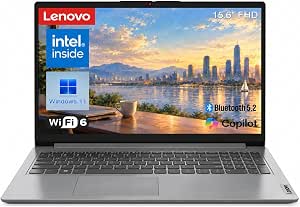 | Best Value for Everyday Multitasking | Processor: Intel Processor with Intel SoC Platform | Memory: 16GB SODIMM DDR4-2933 | Storage: 512GB PCIe 4.0 NVMe SSD | VIEW LATEST PRICE | See Our Full Breakdown |
| Lenovo ThinkPad E16 Gen 3 Laptop |  | Best for Remote Workers Needing Large Screens | Processor: Intel Core Ultra 5 with AI Boost NPU | Memory: 16GB DDR5 RAM | Storage: 512GB SSD + 500GB External HDD | VIEW LATEST PRICE | See Our Full Breakdown |
| Lenovo ThinkPad T14 Gen 6 Business Laptop |  | Best Premium Portable for Business | Processor: Intel Core Ultra 7 268V | Memory: 32GB LPDDR5X (Soldered) | Storage: 1TB NVMe SSD | VIEW LATEST PRICE | See Our Full Breakdown |
| Lenovo ThinkPad E16 Gen 3 16-Inch Business Laptop |  | Best for Upgradability and Eco-Conscious Buyers | Processor: AMD Ryzen 7 250 | Memory: 16GB DDR5 (Upgradeable) | Storage: 512GB SSD (M.2) | VIEW LATEST PRICE | See Our Full Breakdown |
| Lenovo V15 15.6-inch FHD Laptop, Ryzen 5 5500U, 16GB RAM, 512GB SSD, Windows 11 Pro |  | Best Value Business Workhorse | Processor: AMD Ryzen 5 5500U (6 cores, 12 threads) | Memory: 16GB RAM | Storage: 512GB PCIe NVMe M.2 SSD | VIEW LATEST PRICE | See Our Full Breakdown |
| Lenovo ThinkPad E16 Gen 3 16-Inch Laptop with Intel Core Ultra 7 255H |  | Best Premium Business Performance | Processor: Intel Core Ultra 7 255H (16 cores) | Memory: 32GB DDR5-5600 | Storage: 1TB M.2 PCIe 4.0 NVMe SSD | VIEW LATEST PRICE | See Our Full Breakdown |
| Lenovo IdeaPad Slim 3i 15.6-Inch FHD Laptop, Intel N150, 8GB RAM, 128GB Storage |  | Best Entry-Level for Basic Tasks | Processor: Intel N150 (4 cores) | Memory: 8GB LPDDR5-4800 | Storage: 128GB UFS 2.2 | VIEW LATEST PRICE | See Our Full Breakdown |
| Lenovo ThinkPad T16 Gen 4 Business Laptop, 16-inch WUXGA Display, Intel Core Ultra 7, 32GB RAM, 1TB SSD, Windows 11 Pro |  | Best High-End Mobility | Processor: Intel Core Ultra 7 (258V/255U) | Memory: 32GB RAM | Storage: 1TB NVMe SSD | VIEW LATEST PRICE | See Our Full Breakdown |
| Lenovo IdeaPad Slim 3i 15.6-inch FHD Laptop, Intel N150, 8GB RAM, 128GB Storage |  | Best Ultra-Portable Budget Option | Processor: Intel N150 (4 cores) | Memory: 8GB LPDDR5 | Storage: 128GB UFS 2.2 | VIEW LATEST PRICE | See Our Full Breakdown |
| Lenovo Slim 7i Aura Edition 14-Inch Laptop |  | Best Premium Ultrabook | Processor: Intel Core Ultra 7 256V | Memory: 16 GB | Storage: 1 TB SSD | VIEW LATEST PRICE | See Our Full Breakdown |
| Lenovo V15 15.6-Inch Laptop |  | Best for High-Memory Multitasking | Processor: Intel Core 7-240H, 10 cores | Memory: 32GB DDR5 | Storage: 1TB PCIe NVMe M.2 SSD | VIEW LATEST PRICE | See Our Full Breakdown |
| Lenovo IdeaPad Slim 3 15.6-Inch Touchscreen |  | Best Value Touchscreen | Processor: AMD Ryzen 7 5825U | Memory: 16GB DDR4 | Storage: 512GB SSD | VIEW LATEST PRICE | See Our Full Breakdown |
| Lenovo ThinkBook 16 Gen 8 Laptop |  | Best for Modern Connectivity | Processor: Intel Core Ultra 5 225U | Memory: 8GB DDR5 (Upgradable) | Storage: 512GB PCIe M.2 SSD | VIEW LATEST PRICE | See Our Full Breakdown |
| Lenovo V15 Gen 4 Business Laptop |  | Best Budget Business Laptop | Processor: Intel Core i5-13420H | Memory: 16GB DDR4 RAM | Storage: 512GB PCIe SSD | VIEW LATEST PRICE | See Our Full Breakdown |
| Lenovo laptop | Processor | Memory | Storage | Display |
|---|---|---|---|---|
| Lenovo IdeaPad Slim 3i 15.6-In | Intel N150 quad-core | 8GB LPDDR5-4800 | 128GB UFS 2.2 | 15.6-inch FHD anti-glare |
| Lenovo IdeaPad 1 15.6-inch FHD | Intel Processor with Intel SoC Platform | 16GB SODIMM DDR4-2933 | 512GB PCIe 4.0 NVMe SSD | 15.6-inch FHD TN, 220 nits |
| Lenovo ThinkPad E16 Gen 3 Lapt | Intel Core Ultra 5 with AI Boost NPU | 16GB DDR5 RAM | 512GB SSD + 500GB External HDD | 16-inch anti-glare |
| Lenovo ThinkPad T14 Gen 6 Busi | Intel Core Ultra 7 268V | 32GB LPDDR5X (Soldered) | 1TB NVMe SSD | 14-inch IPS, 1920 x 1200 |
| Lenovo ThinkPad E16 Gen 3 16-I | AMD Ryzen 7 250 | 16GB DDR5 (Upgradeable) | 512GB SSD (M.2) | 16-inch IPS, 1920 x 1200, 60Hz |
| Lenovo V15 15.6-inch FHD Lapto | AMD Ryzen 5 5500U (6 cores, 12 threads) | 16GB RAM | 512GB PCIe NVMe M.2 SSD | 15.6-inch FHD (1920×1080) Glossy |
| Lenovo ThinkPad E16 Gen 3 16-I | Intel Core Ultra 7 255H (16 cores) | 32GB DDR5-5600 | 1TB M.2 PCIe 4.0 NVMe SSD | 16-inch WUXGA (1920×1200) IPS Anti-Glare |
| Lenovo IdeaPad Slim 3i 15.6-In | Intel N150 (4 cores) | 8GB LPDDR5-4800 | 128GB UFS 2.2 | 15.6-inch FHD TN Anti-Glare |
| Lenovo ThinkPad T16 Gen 4 Busi | Intel Core Ultra 7 (258V/255U) | 32GB RAM | 1TB NVMe SSD | 16-inch WUXGA IPS (300 nits) |
| Lenovo IdeaPad Slim 3i 15.6-in | Intel N150 (4 cores) | 8GB LPDDR5 | 128GB UFS 2.2 | 15.6-inch FHD TN Anti-Glare |
| Lenovo Slim 7i Aura Edition 14 | Intel Core Ultra 7 256V | 16 GB | 1 TB SSD | 14-inch OLED, WUXGA |
| Lenovo V15 15.6-Inch Laptop | Intel Core 7-240H, 10 cores | 32GB DDR5 | 1TB PCIe NVMe M.2 SSD | 15.6-inch FHD LCD, anti-glare |
| Lenovo IdeaPad Slim 3 15.6-Inc | AMD Ryzen 7 5825U | 16GB DDR4 | 512GB SSD | 15.6-inch FHD Touchscreen |
| Lenovo ThinkBook 16 Gen 8 Lapt | Intel Core Ultra 5 225U | 8GB DDR5 (Upgradable) | 512GB PCIe M.2 SSD | 16-inch WUXGA IPS, Anti-glare |
| Lenovo V15 Gen 4 Business Lapt | Intel Core i5-13420H | 16GB DDR4 RAM | 512GB PCIe SSD | 15.6-inch FHD LCD |
More Details on Our Top Picks
Lenovo IdeaPad Slim 3i 15.6-Inch Laptop
This laptop targets students who need a basic machine for typing and browsing without breaking the bank. The Intel N150 processor handles light workloads efficiently, though it lacks the power for heavy multitasking found in the Lenovo IdeaPad 1. Its 128GB UFS storage is a significant limitation; you will likely need cloud storage or an external drive very quickly. However, the anti-glare FHD display and lightweight chassis make it portable for campus life. Unlike the ThinkPad models, it skips enterprise security features, focusing instead on essential connectivity like USB-C with Power Delivery. It is a functional tool for digital literacy, not a performance powerhouse.
Pros:- Lightweight design with MIL-STD-810H durability testing
- Includes USB-C with Power Delivery and DisplayPort
- Privacy shutter for the HD camera protects against accidental recording
- ENERGY STAR 9.0 and EPEAT Silver certified for efficiency
Cons:- 128GB UFS storage fills up rapidly with updates and media files
- Processor struggles with heavy multitasking compared to higher-tier models
Best for: Students or seniors who only need to browse the web, write documents, and stream video.
Not ideal for: Power users or gamers, as the integrated graphics and limited storage cannot handle demanding applications.
- Processor:Intel N150 quad-core
- Memory:8GB LPDDR5-4800
- Storage:128GB UFS 2.2
- Display:15.6-inch FHD anti-glare
- Weight:3.42 lbs
- Connectivity:Wi-Fi 6, Bluetooth 5.2
- OS:Windows 11 Home
Our verdict“This is the most affordable entry point for basic computing, provided you manage storage expectations carefully.”
Lenovo IdeaPad 1 15.6-inch FHD Laptop
Stepping up from the IdeaPad Slim 3i, this model offers a substantial leap in memory and storage. With 16GB of RAM and a 512GB NVMe SSD, it handles multiple browser tabs and office applications far more smoothly. The 87% screen-to-body ratio maximizes the workspace within a familiar chassis. However, the TN panel rated at 220 nits is a clear downgrade in visual quality compared to the IPS screens on ThinkPad models. It lacks a fingerprint reader and the USB-C port is data-only, meaning you cannot charge via USB-C. This is a pragmatic choice for home offices where cost efficiency matters more than premium display fidelity.
Pros:- 16GB RAM and 512GB SSD provide headroom for multitasking
- High screen-to-body ratio maximizes usable display area
- Includes Wi-Fi 6 and a variety of legacy ports
- Dolby Audio speakers enhance media consumption
Cons:- TN display is dim and has poor viewing angles compared to IPS alternatives
- Non-backlit keyboard makes typing in dark environments difficult
- USB-C port does not support charging or video output
Best for: Home users and remote workers who need ample storage and RAM for standard productivity tasks.
Not ideal for: Creative professionals or photographers, as the low-brightness TN display lacks color accuracy and viewing angles.
- Processor:Intel Processor with Intel SoC Platform
- Memory:16GB SODIMM DDR4-2933
- Storage:512GB PCIe 4.0 NVMe SSD
- Display:15.6-inch FHD TN, 220 nits
- Keyboard:Non-backlit
- Weight:3.42 lbs
- OS:Windows 11 Home
Our verdict“A solid value pick for general productivity that prioritizes internal capacity over display quality.”
Lenovo ThinkPad E16 Gen 3 Laptop
This laptop is designed for professionals who spend long hours at a desk and need screen real estate. The 16-inch anti-glare display offers a more comfortable workspace than the 14-inch ThinkPad T14 Gen 6. It includes an Intel Core Ultra 5 with an AI Boost NPU, which helps offload tasks during video calls. The inclusion of Ethernet and Thunderbolt 4 ensures reliable connectivity in office environments. Unlike the consumer-focused IdeaPads, this runs Windows 11 Pro, offering better management tools. The bundled 500GB external HDD is a nice bonus for backup, though it adds to the overall bulk you need to transport.
Pros:- 16-inch display provides ample room for split-screen workflows
- Includes Thunderbolt 4 and Ethernet for versatile connectivity
- Fingerprint power button and camera shutter enhance security
- Backlit keyboard supports productivity in varying light conditions
Cons:- Battery capacity and runtime details are not explicitly provided
- Integrated graphics are not specified for creative workloads
Best for: Remote employees and students who need a large display for spreadsheets and multitasking.
Not ideal for: Travelers who prioritize portability, as the 16-inch form factor is significantly larger than ultraportables.
- Processor:Intel Core Ultra 5 with AI Boost NPU
- Memory:16GB DDR5 RAM
- Storage:512GB SSD + 500GB External HDD
- Display:16-inch anti-glare
- Ports:Thunderbolt 4, USB-A, HDMI, Ethernet
- Charging:USB-C 65W Fast Charging
- OS:Windows 11 Pro
Our verdict“An excellent choice for desk-bound professionals who value screen size and business-grade connectivity over portability.”
Lenovo ThinkPad T14 Gen 6 Business Laptop
The ThinkPad T14 Gen 6 represents the peak of portability and performance in this lineup. Equipped with an Intel Core Ultra 7 268V and 32GB of LPDDR5X memory, it outperforms the ThinkPad E16 Gen 3 in raw processing power and efficiency. The 14-inch IPS display is sharp and consistent, though it lacks the immersive size of its 16-inch siblings. Its MIL-STD-810H build ensures it can survive the rigors of frequent travel. However, the soldered memory means you cannot upgrade RAM later, so buying the 32GB version is mandatory. It is an investment for executives who need reliability and power in a compact package.
Pros:- 32GB RAM and 1TB SSD handle heavy multitasking effortlessly
- MIL-STD-810H certification guarantees rugged durability
- Supports up to 3 external monitors via Thunderbolt 4
- IR camera supports facial recognition login
Cons:- Memory is soldered and cannot be upgraded after purchase
- Display is limited to 1920 x 1200 resolution, lacking higher pixel density options
Best for: Business travelers and executives who need high performance and durability in a compact 14-inch form factor.
Not ideal for: Users on a strict budget, as this premium build and specs come at a higher tier than the IdeaPad series.
- Processor:Intel Core Ultra 7 268V
- Memory:32GB LPDDR5X (Soldered)
- Storage:1TB NVMe SSD
- Display:14-inch IPS, 1920 x 1200
- Graphics:Integrated Intel Arc 140V
- Durability:MIL-STD-810H
- OS:Windows 11 Pro
Our verdict“The definitive choice for professionals who demand top-tier performance and build quality without carrying a heavy laptop.”
Lenovo ThinkPad E16 Gen 3 16-Inch Business Laptop
This model distinguishes itself from the Intel-based ThinkPad E16 Gen 3 by using an AMD Ryzen 7 250 processor. This chip offers strong multi-core performance for multitasking and includes an NPU for local AI tasks. A major advantage is its customer-replaceable components, allowing you to upgrade RAM and storage, unlike the soldered memory in the ThinkPad T14. The use of recycled plastic materials appeals to environmentally conscious buyers. However, the listed 5-hour battery life is modest for a business laptop, and the 60Hz display may feel less fluid than higher-refresh alternatives. It is a pragmatic, repairable choice for corporate fleets that prioritize long-term maintenance.
Pros:- AMD Ryzen 7 processor offers strong multi-core performance
- Upgradeable DDR5 memory and storage extend the device’s lifespan
- Built with recycled plastic materials for sustainability
- Includes self-healing BIOS for enhanced security
Cons:- 5-hour battery life is lower than many modern ultrabooks
- 60Hz display lacks smoothness for motion-intensive tasks
Best for: IT managers and eco-conscious users who value repairability and AMD processor efficiency.
Not ideal for: Mobile users who need all-day battery life, as the 5-hour estimate may require frequent charging.
- Processor:AMD Ryzen 7 250
- Memory:16GB DDR5 (Upgradeable)
- Storage:512GB SSD (M.2)
- Display:16-inch IPS, 1920 x 1200, 60Hz
- Battery:64Wh (approx. 5 hours)
- Graphics:Integrated AMD Radeon Graphics
- OS:Windows 11 Pro
Our verdict“A smart, sustainable choice for businesses that want long-term serviceability and robust AMD performance.”
Lenovo V15 15.6-inch FHD Laptop, Ryzen 5 5500U, 16GB RAM, 512GB SSD, Windows 11 Pro
This model stands out for balancing performance and connectivity without the premium price tag of ThinkPad lines. The Ryzen 5 5500U handles office multitasking better than the Intel N150 found in the IdeaPad Slim 3i, making it suitable for heavier spreadsheets or light data entry. Unlike the consumer-focused IdeaPads, this V15 includes Windows 11 Pro and an Ethernet port, features critical for stable corporate networks. However, the glossy display is a significant tradeoff, reflecting overhead lights in bright office environments, which contrasts with the anti-glare screens on most business competitors. It is a pragmatic choice for those who need business software compatibility and wired reliability but do not require the rugged build of a ThinkPad.
Pros:- Windows 11 Pro enables BitLocker and remote desktop capabilities.
- Integrated Ethernet port ensures stable wired connections.
- 16GB RAM and 512GB SSD provide ample room for business applications.
- Numeric keypad simplifies data entry tasks.
Cons:- Glossy display finish causes significant glare in lit rooms.
- Plastic chassis lacks the durability of ThinkPad models.
- Battery life is moderate compared to newer efficiency-focused chips.
Best for: Small business owners or office workers who need Windows 11 Pro, wired network access, and solid multitasking performance on a budget.
Not ideal for: Users working in bright environments or outdoors, as the glossy screen causes distracting reflections.
- Processor:AMD Ryzen 5 5500U (6 cores, 12 threads)
- Memory:16GB RAM
- Storage:512GB PCIe NVMe M.2 SSD
- Display:15.6-inch FHD (1920×1080) Glossy
- Operating System:Windows 11 Pro
- Connectivity:Wi-Fi 6, Bluetooth 5.3, HDMI, RJ45 Ethernet
- Weight:3.8 lbs
Our verdict“A practical, well-equipped budget business laptop for users who prioritize connectivity and OS features over portability or display quality.”
Lenovo ThinkPad E16 Gen 3 16-Inch Laptop with Intel Core Ultra 7 255H
This laptop targets professionals who need serious processing power and a larger workspace without moving to the more expensive T-series. The Intel Core Ultra 7 255H offers significant multi-core performance for compiling code or managing virtual machines, far exceeding the capabilities of the Lenovo V15. Its 32GB of DDR5 memory and 1TB SSD ensure that large datasets remain responsive. The anti-glare WUXGA display is a major advantage over the V15’s glossy screen, reducing eye strain during long work sessions. However, the 60Hz refresh rate limits motion clarity, making it less ideal for creative video work or gaming compared to higher-refresh alternatives. It is best for corporate users who value security features like Opal 2.0 encryption and Thunderbolt 4 connectivity over raw graphical power.
Pros:- Powerful 16-core Intel Core Ultra 7 processor for heavy workloads.
- 32GB DDR5 RAM and 1TB SSD handle large files and multitasking easily.
- Anti-glare 16-inch display reduces eye strain in office lighting.
- Robust security with IR camera, privacy shutter, and hardware encryption.
Cons:- Integrated graphics limit heavy 3D or video editing tasks.
- 60Hz display is not suitable for motion-sensitive creative work.
- Heavier than ultrabooks, impacting portability for frequent travelers.
Best for: Corporate professionals and developers who require high RAM, secure encryption, and Thunderbolt 4 for docking stations.
Not ideal for: Creative professionals who need high-refresh-rate displays or dedicated GPU power for 3D rendering.
- Processor:Intel Core Ultra 7 255H (16 cores)
- Memory:32GB DDR5-5600
- Storage:1TB M.2 PCIe 4.0 NVMe SSD
- Display:16-inch WUXGA (1920×1200) IPS Anti-Glare
- Graphics:Integrated Intel Arc 140T
- Connectivity:Thunderbolt 4, Wi-Fi 6E, HDMI 2.1
- Security:IR Camera, Privacy Shutter, Opal 2.0
Our verdict“The strongest choice for business users needing high memory, security, and a large anti-glare screen for daily productivity.”
Lenovo IdeaPad Slim 3i 15.6-Inch FHD Laptop, Intel N150, 8GB RAM, 128GB Storage
This model is designed for basic daily computing rather than professional workloads. The Intel N150 processor is efficient for web browsing and streaming but struggles with the multitasking demands that the Lenovo V15 handles easily. A key advantage is the inclusion of a 1-year Microsoft 365 subscription, adding tangible value for students or home users who need Word and Excel immediately. The anti-glare display and MIL-STD-810H testing provide better durability and visibility than many budget competitors. However, the 128GB UFS storage is a severe limitation, filling up quickly with updates and media files. It is not a replacement for a primary work machine but serves well as a secondary device for simple tasks.
Pros:- Includes a 1-year Microsoft 365 Personal subscription.
- MIL-STD-810H tested for durability against drops and spills.
- Lightweight 3.42-pound design enhances portability.
- Anti-glare screen with low blue light certification reduces eye strain.
Cons:- 128GB storage is insufficient for most modern users.
- TN panel has poor color accuracy and viewing angles.
- Non-backlit keyboard is difficult to use in low light.
Best for: Students or home users who primarily browse the web, watch video, and use Microsoft Office on a tight budget.
Not ideal for: Users who need to store large files locally or run multiple applications simultaneously.
- Processor:Intel N150 (4 cores)
- Memory:8GB LPDDR5-4800
- Storage:128GB UFS 2.2
- Display:15.6-inch FHD TN Anti-Glare
- Operating System:Windows 11 Home
- Weight:3.42 lbs
- Durability:MIL-STD-810H Tested
Our verdict“A durable, value-packed entry point for basic computing needs, provided the user manages storage carefully.”
Lenovo ThinkPad T16 Gen 4 Business Laptop, 16-inch WUXGA Display, Intel Core Ultra 7, 32GB RAM, 1TB SSD, Windows 11 Pro
While the ThinkPad E16 offers great performance, the T16 Gen 4 represents the traditional premium tier of Lenovo’s business line, focusing on build quality and reliability. It features a 16-inch WUXGA IPS display and 32GB of RAM, matching the E16’s capacity but often with superior chassis materials and keyboard feel. The inclusion of Thunderbolt 4 and a fingerprint reader aligns with enterprise security standards. However, the 6-pound weight is substantial for a laptop intended for mobility, making it less portable than the IdeaPad Slim 3i. Buyers should also note potential inconsistencies in listed specifications regarding memory type. This is a choice for those who prioritize the ThinkPad brand’s reputation for durability and support over the slightly lighter E-series or consumer lines.
Pros:- Premium build quality typical of the ThinkPad T-series.
- Large 16-inch screen with 32GB RAM for heavy multitasking.
- Comprehensive port selection including Thunderbolt 4.
- Backlit keyboard and fingerprint reader enhance usability and security.
Cons:- Heavy at 6 pounds compared to thinner ultrabooks.
- Listing inconsistencies in processor and memory specs require verification.
- Higher price point than the E-series for similar core specs.
Best for: Enterprise users who require top-tier build quality, extensive warranty support, and a large screen for data-heavy tasks.
Not ideal for: Frequent travelers who prioritize lightweight designs, as the 6-pound weight is cumbersome.
- Processor:Intel Core Ultra 7 (258V/255U)
- Memory:32GB RAM
- Storage:1TB NVMe SSD
- Display:16-inch WUXGA IPS (300 nits)
- Operating System:Windows 11 Pro
- Weight:6 lbs
- Connectivity:Thunderbolt 4, Wi-Fi 6E, HDMI
Our verdict“A robust, premium business laptop for users who value the ThinkPad T-series build and support over lighter alternatives.”
Lenovo IdeaPad Slim 3i 15.6-inch FHD Laptop, Intel N150, 8GB RAM, 128GB Storage
Structurally similar to the Frost Blue IdeaPad Slim 3i, this Arctic Grey variant emphasizes portability and modern connectivity in a slim profile. The 0.70-inch thickness and 3.42-pound weight make it easier to carry than the Lenovo V15, which is bulkier. It includes a USB-C port with Power Delivery, allowing for convenient charging with universal adapters, a feature missing from many budget laptops. However, the Intel N150 processor remains a bottleneck for multitasking, and the 128GB storage requires reliance on cloud services or external drives. The non-backlit keyboard is a persistent drawback for this series. This model is best for users who prioritize a slim form factor and modern port layout over raw performance or storage capacity.
Pros:- Slim 0.70-inch profile and light 3.42-pound weight.
- USB-C port supports Power Delivery and DisplayPort.
- Physical privacy shutter for the webcam.
- Copilot hotkey provides quick access to AI tools.
Cons:- 128GB storage fills up rapidly with basic updates.
- Non-backlit keyboard hinders nighttime use.
- TN panel offers limited color accuracy and viewing angles.
Best for: Students or commuters who need a lightweight, slim laptop for basic web-based tasks and cloud storage.
Not ideal for: Users who work in low-light environments due to the non-backlit keyboard and lack of local storage space.
- Processor:Intel N150 (4 cores)
- Memory:8GB LPDDR5
- Storage:128GB UFS 2.2
- Display:15.6-inch FHD TN Anti-Glare
- Operating System:Windows 11 Home
- Weight:3.42 lbs
- Dimensions:14.14 x 9.21 x 0.70 inches
Our verdict“A slim, lightweight option for basic users who value modern USB-C connectivity and portability over performance.”
Lenovo Slim 7i Aura Edition 14-Inch Laptop
This model stands out for its stunning OLED display and featherweight design, making it ideal for professionals who prioritize screen quality above all else. Compared with the Lenovo V15 Gen 4, which favors connectivity and expandability, the Slim 7i trades raw port variety for a sleeker, more portable chassis. The Intel Core Ultra 7 processor handles multitasking efficiently, though the integrated graphics mean this is not a machine for heavy video editing or gaming. The aluminum chassis feels premium in hand, but the 60Hz refresh rate may feel sluggish to those accustomed to higher-speed panels. It excels in battery life, offering up to 17 hours, which significantly outpaces many thicker business laptops.Pros:- Vibrant OLED panel with HDR support
- Extremely lightweight at 2.82 lbs
- Excellent battery life up to 17 hours
- Premium aluminum build quality
Cons:- No dedicated GPU for graphics-heavy tasks
- Standard 60Hz refresh rate
- Limited port selection compared to thicker models
Best for: Content creators and executives who need a portable, high-resolution screen for presentations and media consumption.
Not ideal for: Gamers or engineers requiring dedicated graphics and extensive port selection.
- Processor:Intel Core Ultra 7 256V
- Memory:16 GB
- Storage:1 TB SSD
- Display:14-inch OLED, WUXGA
- Weight:2.82 lbs
- Battery Life:Up to 17 hours
- Operating System:Windows 11 Pro
Our verdict“Choose this if visual fidelity and portability are your top priorities over raw graphical power.”
Lenovo V15 15.6-Inch Laptop
This laptop is engineered for users who need to keep dozens of applications open simultaneously, thanks to its 32GB of DDR5 RAM. Unlike the Lenovo ThinkBook 16 Gen 8, which ships with only 8GB and may require an immediate upgrade, this V15 comes ready for heavy workloads out of the box. The Intel Core 7-240H processor provides robust performance for spreadsheet crunching and data analysis. However, the display is a clear weak point; with only 250 nits brightness and a limited color gamut, it struggles in bright environments. The MIL-STD-810H testing adds durability, but the resealed nature of the unit for memory upgrades introduces minor warranty complexities compared to factory-sealed competitors.Pros:- 32GB RAM supports heavy multitasking
- Fast 1TB PCIe NVMe SSD
- Durable MIL-STD-810H certification
- Includes numeric keypad and Ethernet port
Cons:- Dim display (250 nits) with poor color accuracy
- Resealed unit may complicate warranty claims
- Integrated graphics limit visual workloads
Best for: Data analysts and power users who need massive memory capacity without manual upgrades.
Not ideal for: Designers and photographers who require accurate color reproduction and high brightness.
- Processor:Intel Core 7-240H, 10 cores
- Memory:32GB DDR5
- Storage:1TB PCIe NVMe M.2 SSD
- Display:15.6-inch FHD LCD, anti-glare
- Durability:MIL-STD-810H tested
- Operating System:Windows 11 Pro
- Weight:3.6 pounds
Our verdict“Ideal for productivity-focused professionals who value memory capacity over screen quality.”
Lenovo IdeaPad Slim 3 15.6-Inch Touchscreen
This model offers a 15.6-inch touchscreen at a competitive price point, making it a strong contender for students and casual users who prefer direct interaction. Compared to the Lenovo V15 Gen 4, which lacks touch capabilities and uses older DDR4 memory, the IdeaPad Slim 3 provides a more modern interface experience with its AMD Ryzen 7 processor. The Radeon integrated graphics handle light gaming and media playback better than some Intel UHD alternatives. However, the non-backlit keyboard is a significant inconvenience for night use, and the 720p webcam lags behind the 1080p cameras found on business-tier models like the ThinkBook. It balances performance and affordability well, but sacrifices premium build materials.Pros:- Responsive 15.6-inch touchscreen
- Capable AMD Ryzen 7 processor
- Good port selection including USB-C
- Affordable for the feature set
Cons:- Keyboard lacks backlighting
- Basic 720p webcam
- Plastic chassis feels less premium
Best for: Students and home users who want a responsive touchscreen for note-taking and media.
Not ideal for: Professionals who work in low-light environments due to the non-backlit keyboard.
- Processor:AMD Ryzen 7 5825U
- Memory:16GB DDR4
- Storage:512GB SSD
- Display:15.6-inch FHD Touchscreen
- Graphics:Integrated AMD Radeon
- Operating System:Windows 11 Home
- Weight:3.56 lb
Our verdict“A practical choice for users who prioritize touch input and balanced specs over premium build.”
Lenovo ThinkBook 16 Gen 8 Laptop
This laptop distinguishes itself with Thunderbolt 4/USB4 connectivity and an Intel AI Boost NPU, positioning it ahead of older models like the Lenovo V15 Gen 4 that rely on standard USB-A ports. The 16-inch WUXGA display offers more vertical workspace than standard 16:9 panels, benefiting document editing and coding. While the 8GB of DDR5 memory is a bottleneck for heavy multitasking, the system is designed for upgradeability, allowing users to expand RAM as needed. The aluminum top cover provides a sturdy feel, and security features like the fingerprint reader and privacy shutter are standard. It is a forward-looking machine, though buyers must budget for a memory upgrade to fully utilize its potential.Pros:- Thunderbolt 4 and HDMI 2.1 support
- Built-in Intel AI Boost NPU
- Robust security with fingerprint and TPM 2.0
- Large 16-inch WUXGA display
Cons:- Only 8GB RAM out of the box
- Display lacks touch capability
- Average color gamut for creative work
Best for: Business professionals who need modern ports, security features, and a large workspace.
Not ideal for: Users unwilling to upgrade RAM, as 8GB is insufficient for modern multitasking.
- Processor:Intel Core Ultra 5 225U
- Memory:8GB DDR5 (Upgradable)
- Storage:512GB PCIe M.2 SSD
- Display:16-inch WUXGA IPS, Anti-glare
- Ports:Thunderbolt 4, HDMI 2.1, Ethernet
- Security:Fingerprint reader, TPM 2.0
- Weight:3.75 lb
Our verdict“Best suited for tech-forward professionals who plan to upgrade memory for optimal performance.”
Lenovo V15 Gen 4 Business Laptop
This model serves as a reliable, no-nonsense workhorse for small businesses, offering Windows 11 Pro and a numeric keypad at an accessible price. Compared to the Lenovo IdeaPad Slim 3, which targets consumers with touch features, the V15 Gen 4 prioritizes traditional business inputs like the Ethernet port and privacy-focused webcam. The Intel Core i5-13420H provides sufficient power for office suites, video calls, and web browsing. However, the integrated Intel UHD Graphics share system memory, which can slow down performance when multitasking heavily. The display is a standard LCD with average brightness, making it less suitable for outdoor use or color-critical tasks, but it remains a solid entry-level choice for administrative roles.Pros:- Includes numeric keypad for data entry
- Windows 11 Pro for business features
- Essential ports including RJ45 Ethernet
- Cost-effective for office productivity
Cons:- Integrated graphics share RAM
- Basic LCD display with average brightness
- Heavier than modern ultrabooks
Best for: Small business owners and administrative staff needing a dependable, full-feature laptop.
Not ideal for: Creatives or gamers who need dedicated graphics and high-resolution displays.
- Processor:Intel Core i5-13420H
- Memory:16GB DDR4 RAM
- Storage:512GB PCIe SSD
- Display:15.6-inch FHD LCD
- Operating System:Windows 11 Pro
- Weight:3.6 pounds
- Connectivity:Wi-Fi, Bluetooth, HDMI, RJ45
Our verdict“A practical, budget-friendly option for standard office tasks and data entry.”

How We Picked
I evaluated these fifteen laptops by focusing on three core pillars: performance sustainability, build integrity, and value proposition. Performance wasn’t just about benchmark scores; I looked at how well each machine handles sustained workloads without thermal throttling, a common issue in thin-and-light designs. Build integrity was assessed by examining hinge durability, chassis flex, and keyboard travel, as these factors dictate long-term usability for business and creative professionals. Finally, I weighed the cost against the included specifications, paying close attention to whether RAM and storage were soldered or upgradeable, which significantly impacts the device’s lifespan.
The ranking logic prioritizes professional utility and reliability over raw specs on paper. A laptop with a slightly slower processor but superior battery life and a rugged chassis ranks higher for business users than a gaming-focused machine with mediocre build quality. I also considered the ecosystem integration, such as the presence of modern ports like USB4 and HDMI 2.1, which future-proof the device for current peripherals. This approach ensures that the recommendations serve real-world scenarios rather than just theoretical maximums.
| Lenovo laptop | Operating System |
|---|---|
| Lenovo IdeaPad Slim 3i 15.6-In | — |
| Lenovo IdeaPad 1 15.6-inch FHD | — |
| Lenovo ThinkPad E16 Gen 3 Lapt | — |
| Lenovo ThinkPad T14 Gen 6 Busi | — |
| Lenovo ThinkPad E16 Gen 3 16-I | — |
| Lenovo V15 15.6-inch FHD Lapto | Windows 11 Pro |
| Lenovo ThinkPad E16 Gen 3 16-I | — |
| Lenovo IdeaPad Slim 3i 15.6-In | Windows 11 Home |
| Lenovo ThinkPad T16 Gen 4 Busi | Windows 11 Pro |
| Lenovo IdeaPad Slim 3i 15.6-in | Windows 11 Home |
| Lenovo Slim 7i Aura Edition 14 | Windows 11 Pro |
| Lenovo V15 15.6-Inch Laptop | Windows 11 Pro |
| Lenovo IdeaPad Slim 3 15.6-Inc | Windows 11 Home |
| Lenovo ThinkBook 16 Gen 8 Lapt | — |
| Lenovo V15 Gen 4 Business Lapt | Windows 11 Pro |
Factors to Consider When Choosing Best Lenovo Laptops
Selecting the right Lenovo laptop requires looking beyond the brand name and understanding the specific lineage of the product. Lenovo segments its market sharply, and confusing an IdeaPad with a ThinkPad can lead to a mismatched investment. Here is what you need to weigh before making a decision.
Understanding the Lenovo Product Lines
Lenovo divides its laptops into distinct categories that serve very different user needs. ThinkPads are engineered for enterprise reliability, featuring MIL-STD-810H durability tests and legendary keyboards. IdeaPads target consumers and students, offering sleek designs but using more plastic and less durable hinges. ThinkBooks and V-Series sit in the middle, targeting small businesses with a balance of style and function. Mistaking a consumer-grade IdeaPad for a business-grade ThinkPad often results in early hardware failure if you travel frequently. Choose the line based on your durability requirements, not just the processor inside.
Processor Choice: Core Ultra vs. Ryzen vs. N-Series
The processor dictates your laptop’s ceiling. Intel Core Ultra chips (found in the T16 and Slim 7i) are designed for AI acceleration and high efficiency, making them ideal for modern productivity suites and light creative work. Ryzen 7 and Core i5/i7 chips offer strong multi-core performance for multitasking and heavier applications. In contrast, Intel N-Series (N150) chips are low-power solutions meant for basic web browsing and email. If you open more than ten browser tabs or run Zoom calls while editing documents, avoid the N-Series entirely. It is a false economy to buy an N-Series machine if your workflow exceeds basic consumption.
RAM and Storage: Soldered vs. Upgradeable
One of the biggest hidden costs in laptop buying is non-upgradeable memory. Many thin-and-light models, including some Slim 7i and IdeaPad Slim 3i units, have RAM soldered to the motherboard. This means if you buy 8GB, you are stuck with 8GB forever. In contrast, business models like the ThinkPad T14 or V15 often allow you to add more RAM later. If you plan to keep the laptop for more than three years, prioritize models with available SODIMM slots or buy a configuration with at least 16GB from the start. Storage is usually easier to upgrade, but check if the drive is a standard M.2 2280 or a shorter 2242 stick, which limits your replacement options.
Display Quality and Eye Comfort
Not all FHD screens are created equal. Budget Lenovo laptops often use panels with low color gamut coverage (around 45% NTSC) and lower brightness (250 nits), which can make colors look washed out and text hard to read in bright rooms. Premium models like the ThinkPad T16 and Slim 7i feature WUXGA or higher resolution panels with 100% sRGB coverage and higher brightness. If you do any photo editing, graphic design, or work in well-lit environments, the display quality is a critical differentiator. For standard document work, a standard FHD panel is acceptable, but verify the brightness rating if you often work outdoors or near windows.
Port Selection and Connectivity
Modern laptops are cutting ports for thinness, but this can create workflow friction. Business-focused models like the ThinkPad T14 and V15 typically retain HDMI, USB-A, and Ethernet ports, reducing the need for dongles. Consumer models like the IdeaPad Slim 3i may rely heavily on USB-C, forcing you to carry adapters for legacy peripherals. Check for USB4 or Thunderbolt 4 support on premium models, as these allow for faster data transfer and easier docking station connectivity. If you connect to multiple monitors or use older USB devices, a laptop with a robust native port selection saves money and hassle.
Frequently Asked Questions
Is the Lenovo ThinkPad worth the extra cost over an IdeaPad?
Yes, if you need durability and security. ThinkPads undergo rigorous stress testing for hinges, keyboards, and chassis flex, making them far more resistant to the wear and tear of daily commuting. They also include enterprise-grade security features like fingerprint readers, IR cameras for Windows Hello, and TPM 2.0 chips for data encryption. IdeaPads are more affordable but use more plastic and lack these security and durability enhancements. For a student or casual home user, an IdeaPad is fine; for a professional who travels, the ThinkPad’s longevity justifies the price difference.
Can I upgrade the RAM in the Lenovo IdeaPad Slim 3i?
Typically, no. Most IdeaPad Slim 3i models, especially those with Intel N-series processors, come with soldered RAM that cannot be upgraded after purchase. This is a design choice to keep the device thin and cheap. If you buy a model with 8GB, you are limited to that amount for the life of the machine. Always check the specific technical specifications of the SKU before buying, as a few rare configurations might offer a single empty slot, but assume it is fixed unless confirmed otherwise. Buying 16GB upfront is the safer bet if available.
Which Lenovo laptop is best for remote work and video conferencing?
The Lenovo ThinkPad T14 Gen 6 or T16 Gen 4 are excellent choices. They feature high-quality microphones with noise cancellation, 1080p IR cameras, and robust connectivity options. Their keyboards are also superior for long typing sessions, and the business-grade webcams handle low-light conditions better than consumer models. The V15 with Windows 11 Pro is also a strong contender due to its built-in BitLocker encryption and remote desktop capabilities, which are useful for accessing secure networks. Avoid models with 720p cameras or basic microphones if video calls are a primary part of your job.
Do I need Windows 11 Pro or is Home enough?
For most home users and students, Windows 11 Home is sufficient. However, if you are running a small business or working in a corporate environment, Windows 11 Pro is highly recommended. Pro includes BitLocker device encryption, which protects your data if the laptop is lost or stolen. It also supports Remote Desktop hosting, allowing you to access your PC from another device, and Hyper-V for running virtual machines. The cost difference is often minimal on business-class laptops, so if you value security and remote access, choose the Pro edition.
Are Lenovo laptops good for video editing?
It depends on the model. Entry-level IdeaPads and V-series with integrated graphics are not suitable for video editing; they will struggle with rendering and playback. For serious editing, look at the ThinkPad P-series (not included in this budget roundup but available) or the Slim 7i and ThinkPad T16 with dedicated graphics or powerful Core Ultra processors. Even with good CPUs, integrated graphics limit you to 1080p edits. If you edit 4K video, you need a laptop with dedicated VRAM. For basic 1080p social media clips, a Ryzen 7 or Core Ultra 7 with 16GB RAM can handle the workload adequately.
Conclusion
Choosing the right Lenovo laptop comes down to matching the machine’s strengths to your daily tasks. For business professionals who need reliability and security, the ThinkPad T16 Gen 4 is the definitive choice, offering a robust chassis and top-tier performance. Students and budget-conscious buyers will find the Lenovo V15 to be the best value, providing solid performance and Windows 11 Pro features without the ThinkPad price tag. If portability and premium design are your priorities, the Slim 7i Aura Edition delivers a sleek, lightweight experience with modern connectivity. For beginners or light users, the IdeaPad Slim 3i is adequate for web browsing and documents, but be aware of its limitations in multitasking and durability. Ultimately, the best laptop is the one that balances your performance needs with your budget constraints, ensuring you do not overpay for unused power or underbuy for your actual workload.