The best USB hubs for fitness enthusiasts make it easier to connect devices such as a laptop, phone, watch charger, camera, and training sensors without running out of ports. My best overall pick is the FIDECO 7-Port Powered USB-C Hub with 72W Adapter, a strong fit for a fixed workout or coaching setup with several devices. For a smaller desk, the UGREEN 4-Port USB 3.0 Hub keeps the setup simple, while the Atolla 7-Port Powered USB 3.0 Hub adds individual switches for convenient device control. The main tradeoffs are powered versus bus-powered operation, USB-A versus USB-C connections, and compactness versus extra ports and cable reach. Read on for the full breakdown and help matching a hub to your training setup.

Get the latest gadgets delivered free with Prime
- Fast, free delivery on millions of items
- Prime Video, Amazon Music and more included
- Member-only deals all year
Complete the kit



Key Takeaways
- Powered hubs suit multi-device workout stations: The FIDECO 72W model and other powered picks are better candidates when several accessories stay connected, while a small four-port hub is easier to carry and set up.
- Port count alone does not tell the whole story: The intpw and Gitfos C1 offer 15-port layouts, but their larger footprint makes more sense for a permanent coaching or equipment desk than a compact gym bag.
- USB-C port mix varies widely: The NEWQ combines USB-C and USB-A ports, while many simple hubs focus on USB-A, so check the plugs on your actual chargers and peripherals before choosing.
- Independent switches can simplify a busy station: Atolla’s individual controls are useful for disconnecting accessories without repeatedly pulling cables; simpler hubs trade that convenience for less desk clutter.
- Display and card features serve a different job: The Anker 7-in-1 USB-C Hub adds HDMI and card readers, making it more suited to reviewing or presenting workout footage than connecting many charging accessories.
| FIDECO 7-Port Powered USB-C Hub with 72W Adapter |  | Best for Multi-Device Charging | Total ports: 7 | Data ports: 2 USB-A and 2 USB-C | Charging ports: 1 USB-C PD 45W and 2 USB-A QC 3.0 | VIEW LATEST PRICE | See Our Full Breakdown |
| UGREEN 4-Port USB 3.0 Hub, USB-A, 0.5 ft |  | Best Compact Pick | Ports: 4 USB-A | Interface: USB 3.0 | Maximum data rate: 5Gbps | VIEW LATEST PRICE | See Our Full Breakdown |
| ABFCRTTW 7-Port USB 3.0 Hub with 4 ft Cable |  | Best for a USB-A-Heavy Setup | Ports: 7 USB-A | USB interface: USB 3.0 | Maximum data rate: Up to 5Gbps | VIEW LATEST PRICE | See Our Full Breakdown |
| Acer 4-Port USB 3.0 Hub with 2 ft Cable |  | Best for a Simple Fitness Desk | USB-A ports: 4 | Maximum data rate: Up to 5Gbps | Cable length: 2 ft | VIEW LATEST PRICE | See Our Full Breakdown |
| 7-in-1 USB-C Hub with 10Gbps Data Transfer, PD 45W & QC 18W Fast Charging |  | Best for an Accessible Desktop Setup | Ports: 4 USB-A and 3 USB-C | Data standard and speed: USB 3.2 Gen 2, up to 10Gbps | Charging outputs: USB-C PD 45W and USB-A QC 18W | VIEW LATEST PRICE | See Our Full Breakdown |
| NEWQ 4-Port USB 3.0 Hub with 2 USB-C and 2 USB-A Ports |  | Best Compact Hub for Workout Gear | Ports: 4 total: 2 USB-C 3.0 and 2 USB-A 3.0 | Data transfer rate: Up to 5Gbps | Cable length: 3.93 inches | VIEW LATEST PRICE | See Our Full Breakdown |
| intpw 15-Port Powered USB Hub 10Gbps (7 USB-C 3.2, 6 USB-A 3.2, 2 PD 45W Charging Ports) |  | Best for a High-Device Training Desk | Total ports: 15 | Data ports: 7 USB-C 3.2 and 6 USB-A 3.2 | Data transfer rate: Up to 10Gbps | VIEW LATEST PRICE | See Our Full Breakdown |
| FIDECO 7-Port USB 3.0 Hub with 4 ft Cable, 4 USB-A and 3 USB-C Ports |  | Best for Flexible Desktop Placement | Ports: 7 total: 4 USB-A and 3 USB-C | Data transfer rate: Up to 5Gbps | Host cable: 4 ft USB-C cable with attached USB-A adapter | VIEW LATEST PRICE | See Our Full Breakdown |
| Gitfos C1 15-in-1 Powered USB-C Hub, 10Gbps |  | Best for Mixed Data and Charging Needs | Total ports: 15 | USB-C data ports: 2 USB 3.2 | USB-A data ports: 1 USB 3.2 and 7 USB 3.0 | VIEW LATEST PRICE | See Our Full Breakdown |
| ACASIS 10-Port Powered USB 3.2 Hub with 5 USB-A and 5 USB-C Ports |  | Best for Organizing Frequently Swapped Devices | Ports: 10 total: 5 USB-A 3.2 and 5 USB-C 3.2 | Data transfer rate: Up to 10Gbps | Power adapter: 48W | VIEW LATEST PRICE | See Our Full Breakdown |
| Atolla 7-Port USB 3.0 Powered Hub with Smart Charging Port and Individual Switches |  | Best for Managing a Dedicated Fitness Setup | Data ports: 7 USB 3.0 | Separate charging port: 1 smart charging port, up to 2.4 A | Maximum data transfer rate: Up to 5 Gbps | VIEW LATEST PRICE | See Our Full Breakdown |
| Rosonway 7-Port Powered USB-C Hub with 4 USB-C and 3 USB-A Ports |  | Best for Mixed USB-C and USB-A Gear | Port configuration: 4 USB-C and 3 USB-A | Maximum data transfer rate: Up to 10 Gbps per port | Power adapter: 36 W (12 V/3 A) included | VIEW LATEST PRICE | See Our Full Breakdown |
| Anker 4-Port USB 3.0 Hub with 5Gbps Data Transfer |  | Best Compact Pick for a Simple Workout Desk | USB ports: 4 USB-A | Interface: USB 3.0 | Maximum data transfer rate: Up to 5 Gbps | VIEW LATEST PRICE | See Our Full Breakdown |
| UGREEN 7-in-1 Powered USB 3.0 Hub (5x USB-A, 2x USB-C) |  | Best for a Powered USB-A Desk with Mixed Accessories | Port configuration: 5 USB-A and 2 USB-C | Interface: USB 3.0 | Data transfer rate: Up to 5 Gbps, shared | VIEW LATEST PRICE | See Our Full Breakdown |
| Anker 7-in-1 USB-C Hub with 4K HDMI, USB-A, USB-C, and SD/TF Card Reader |  | Best for Connecting a Laptop to a Workout Display | Total connection options: 7 | Video output: HDMI, up to 4K at 60Hz | Data ports: 2 USB-A 3.0 and 1 USB-C | VIEW LATEST PRICE | See Our Full Breakdown |
| USB hubs for fitness enthusiast | Compatibility |
|---|---|
| FIDECO 7-Port Powered USB-C Hu | Windows, macOS, Linux |
| UGREEN 4-Port USB 3.0 Hub | Windows, macOS, Linux, Chrome OS, laptops, desktops, Xbox Series, PS5, and car systems |
| ABFCRTTW 7-Port USB 3.0 Hub wi | — |
| Acer 4-Port USB 3.0 Hub with 2 | — |
| 7-in-1 USB-C Hub with 10Gbps D | Windows, macOS, Linux, USB-C and USB-A devices |
| NEWQ 4-Port USB 3.0 Hub with 2 | Windows, macOS, Chrome OS, Linux, Unix |
| intpw 15-Port Powered USB Hub | — |
| FIDECO 7-Port USB 3.0 Hub with | USB-C or USB-A computers; Windows, macOS, and Linux |
| Gitfos C1 15-in-1 Powered USB- | — |
| ACASIS 10-Port Powered USB 3.2 | Windows XP/Vista/7/8/10/11, macOS, Linux |
| Atolla 7-Port USB 3.0 Powered | Windows, Mac OS X 10.x or later, and Linux |
| Rosonway 7-Port Powered USB-C | Windows, macOS, and Linux |
| Anker 4-Port USB 3.0 Hub with | — |
| UGREEN 7-in-1 Powered USB 3.0 | USB-A laptops, desktops, iMac, and Surface |
| Anker 7-in-1 USB-C Hub with 4K | — |
More Details on Our Top Picks
FIDECO 7-Port Powered USB-C Hub with 72W Adapter
For a training space with several gadgets to keep ready, I’d put this FIDECO ahead of the basic USB-A hubs here. Its four 10Gbps data ports can connect items such as a fitness watch cable, heart-rate monitor, and storage drive, while separate 45W PD and dual QC 3.0 charging ports handle compatible devices. The included 72W adapter gives it more room for powered peripherals than the bus-powered UGREEN or Acer hubs. There is a meaningful limit: the PD port is not recommended for laptop charging, so I wouldn’t choose it as a laptop dock. It also may need a power cycle if a computer fails to recognize it. Choose this when charging flexibility and fast data matter more than simplicity.
Pros:- Four USB 3.2 data ports support transfers up to 10Gbps.
- Dedicated USB-C PD 45W and two USB-A QC 3.0 charging ports separate charging from data connections.
- Included 72W adapter supports multiple connected peripherals.
- Aluminum enclosure and driver-free support for Windows, macOS, and Linux.
Cons:- The PD port is not recommended for charging laptops.
- May require a power cycle if the connected computer does not recognize it.
Best for: Home-gym users who connect several USB peripherals and want dedicated ports for charging compatible phones or fitness devices.
Not ideal for: Laptop users seeking a single hub for laptop power delivery, or buyers who only need a few basic USB-A connections.
- Total ports:7
- Data ports:2 USB-A and 2 USB-C
- Charging ports:1 USB-C PD 45W and 2 USB-A QC 3.0
- Maximum data rate:Up to 10Gbps
- Power adapter:72W (24V/3A)
- Enclosure:Aluminum, black
- Compatibility:Windows, macOS, Linux
- Host interface:USB Type-C
Our verdict“Pick this FIDECO if your workout setup needs fast data connections and several dedicated charging ports, but not laptop charging.”
UGREEN 4-Port USB 3.0 Hub, USB-A, 0.5 ft
For a small workout desk or a travel kit, this UGREEN is the straightforward choice: one USB-A connection becomes four, enough for a watch cable, a keyboard, a mouse, or a flash drive. Its 33g body and short 0.5 ft cable keep the setup tidy, and plug-and-play support across several operating systems avoids extra setup. Compared with the powered FIDECO, it has no dedicated charging ports or 10Gbps connections; its 5Gbps ceiling suits routine peripherals rather than the fastest large-file transfers. The all-USB-A layout also rules it out for newer USB-C-only accessories without adapters. I’d choose it for simple expansion and portability, not for charging a group of fitness devices.
Pros:- Expands one USB-A port into four USB-A connections.
- Supports data transfer up to 5Gbps.
- Compact, lightweight 33g design with a short cable for travel.
- Plug-and-play compatibility with Windows, macOS, Linux, and Chrome OS.
Cons:- USB-A ports only, so USB-C accessories need an adapter.
- Plastic enclosure and no dedicated charging ports.
Best for: Fitness enthusiasts with a USB-A laptop or desktop who need a lightweight hub for a few low-power peripherals and cables.
Not ideal for: Users with USB-C-only devices, high-speed transfer needs, or several gadgets that need dedicated charging.
- Ports:4 USB-A
- Interface:USB 3.0
- Maximum data rate:5Gbps
- Cable length:0.5 ft
- Dimensions:3.1 × 0.8 × 0.3 in
- Weight:33g
- Enclosure:Plastic, black
- Compatibility:Windows, macOS, Linux, Chrome OS, laptops, desktops, Xbox Series, PS5, and car systems
Our verdict“Choose the UGREEN for a compact way to connect everyday USB-A workout accessories, not for charging or high-speed storage.”
ABFCRTTW 7-Port USB 3.0 Hub with 4 ft Cable
When a workout station has lots of USB-A accessories, this seven-port hub gives you more connection points than the four-port Acer or UGREEN. The 4 ft cable can place the hub nearer a bike, treadmill console, or charging shelf while the computer stays elsewhere, and its aluminum enclosure is a more solid-feeling choice than the plastic-bodied options. All seven ports are USB-A, however, so newer USB-C fitness gear may need an adapter. The product data also states that it is for data transmission only and does not support charging; the listed USB-C port’s purpose is not clearly detailed. Compared with the powered FIDECO, this is about connecting peripherals, not keeping devices charged.
Pros:- Seven USB-A ports connect multiple peripherals at once.
- Four-foot cable allows flexible placement away from the computer.
- Aluminum enclosure supports heat dissipation.
- Plug-and-play compatibility with Windows, macOS, Linux, Unix, and Chrome OS.
Cons:- Does not support charging connected devices.
- All seven data ports are USB-A.
- The supported use of the listed 5V/3A USB-C port is unclear.
Best for: Home-gym owners with several USB-A peripherals who need a longer cable to position the hub near their equipment.
Not ideal for: Anyone looking to charge fitness watches or phones from the hub, or needing clear USB-C accessory support.
- Ports:7 USB-A
- USB interface:USB 3.0
- Maximum data rate:Up to 5Gbps
- Cable length:4 ft
- Listed USB-C port:5V/3A; supported use not specified
- Enclosure:Aluminum, silver
- Dimensions:1.2 × 0.66 × 5.3 in
- Power note:Data transmission only; does not support charging
Our verdict“Choose this hub if you need many USB-A data connections and a longer reach, but skip it for device charging.”
Acer 4-Port USB 3.0 Hub with 2 ft Cable
This Acer suits a compact desk setup where a few USB-A accessories—such as a keyboard, mouse, or fitness-device sync cable—need to share one computer port. Its 2 ft cable gives more placement room than the UGREEN’s 0.5 ft lead, while the slim, lightweight body and LED indicator make it easy to see when the hub is connected. Transfers reach 5Gbps, but this is not a charging hub: its USB-C connection is a power input only, and a separate 5V source may be needed for stable hard-drive transfers. Unlike the powered FIDECO, it has no dedicated device-charging outputs or high-speed 10Gbps data ports. It makes sense for routine connections, not a demanding multi-device station.
Pros:- Four USB-A ports cover common keyboard, mouse, flash-drive, and printer connections.
- Up to 5Gbps data transfer for routine file and peripheral use.
- Two-foot cable offers more placement flexibility than a very short hub lead.
- Slim, lightweight design with an LED indicator and plug-and-play setup.
Cons:- USB-C port is a power input only, not a data or device-charging port.
- A separate 5V USB-C power source may be needed for stable hard-drive transfers.
- Power adapter and cable are not included.
Best for: Beginners building a basic workout desk around a laptop, tablet, or console and a handful of USB-A peripherals.
Not ideal for: Users who need dedicated charging outputs, frequent hard-drive transfers without separate power, or USB-C data ports.
- USB-A ports:4
- Maximum data rate:Up to 5Gbps
- Cable length:2 ft
- Power input:5V USB-C
- USB-C port function:Power input only
- Dimensions:4.13 × 1.18 × 0.35 in
- Weight:1.6 oz
- Enclosure and compatibility:ABS; desktops, gaming consoles, laptops, tablets, ChromeOS, Linux, and Windows 11
Our verdict“Pick the Acer for straightforward USB-A expansion with a little extra cable reach, but not for charging or powered storage needs.”
7-in-1 USB-C Hub with 10Gbps Data Transfer, PD 45W & QC 18W Fast Charging
The angled layout makes this hub a strong fit for a fixed workout workstation, where easy access to ports matters more than keeping the hub tucked out of sight. Its 34° tilt and non-slip base help it stay put when connecting a watch cable or moving a storage device, while four USB-A and three USB-C ports offer more variety than the all-USB-A Acer and UGREEN. Data ports support 10Gbps transfers, with separate PD 45W and QC 18W charging ports for compatible devices when the power adapter is connected. Those charging ports do not transfer data, and the hub offers no video output. Compared with the FIDECO, its desk-friendly design stands out, but charging still depends on external power and the port roles need attention.
Pros:- Four USB-A and three USB-C ports support a mix of current and older accessories.
- USB 3.2 Gen 2 data ports support transfers up to 10Gbps.
- 34° angled design and non-slip base improve access and stability on a desk.
- Separate PD 45W and QC 18W charging outputs are available with a connected power adapter.
Cons:- Charging ports do not transfer data, and data ports do not provide video output.
- Fast charging requires the provided power adapter.
- Using both QC ports simultaneously reduces output to 9W each.
Best for: Home-gym users with a permanent desk or console station who value easy-to-reach mixed USB ports and separate charging outputs.
Not ideal for: Travelers wanting a small hub, laptop-dock shoppers needing video output, or users who want charging without an adapter.
- Ports:4 USB-A and 3 USB-C
- Data standard and speed:USB 3.2 Gen 2, up to 10Gbps
- Charging outputs:USB-C PD 45W and USB-A QC 18W
- Host interface:USB Type-C
- Design:34° angled with non-slip silicone base
- Enclosure and color:Aluminum, grey
- Compatibility:Windows, macOS, Linux, USB-C and USB-A devices
- Warranty:12 months
Our verdict“Choose this angled hub for an organized, accessible desktop station with mixed USB connections, provided you can supply power and do not need video output.”
NEWQ 4-Port USB 3.0 Hub with 2 USB-C and 2 USB-A Ports
For a fitness setup that only needs a few connections, I’d choose the NEWQ for its small footprint and useful mix of two USB-C and two USB-A data ports. It can connect items such as a watch cable, heart-rate monitor receiver, or storage drive without taking much desk or gym-bag space. Its 5Gbps transfer rate suits syncing workout files, though it won’t match the faster data ports on the intpw YH15 or ACASIS 10-Port hub. The tradeoff is that this is strictly a data hub: it does not provide device charging or video output. Compared with the FIDECO 7-Port hub, NEWQ is easier to pack but gives up three ports and a longer host cable. I’d pick it for a light, portable setup, not a crowded training desk.
Pros:- Two USB-C and two USB-A ports cover newer and older workout accessories.
- Compact, lightweight design is easy to pack alongside a laptop.
- Up to 5Gbps data transfer supports syncing and file transfers.
- Plug-and-play compatibility spans Windows, macOS, Chrome OS, Linux, and Unix.
Cons:- Does not support power delivery or charging connected devices.
- No video output for connecting an external display.
- Four ports offer less room for expansion than the FIDECO 7-Port hub.
Best for: Fitness enthusiasts who carry a laptop between home, work, and the gym and need a few mixed USB-A and USB-C data connections.
Not ideal for: People who want to charge a phone or fitness watch from the hub, connect a monitor, or attach several devices at once.
- Ports:4 total: 2 USB-C 3.0 and 2 USB-A 3.0
- Data transfer rate:Up to 5Gbps
- Cable length:3.93 inches
- Dimensions:4.1 × 1.14 × 0.35 inches
- Weight:0.04 kg
- Enclosure:Plastic, black
- Compatibility:Windows, macOS, Chrome OS, Linux, Unix
- Charging and video:No power delivery; no video output
Our verdict“Choose NEWQ if portability and a balanced mix of USB-A and USB-C data ports matter more than charging or a large port count.”
intpw 15-Port Powered USB Hub 10Gbps (7 USB-C 3.2, 6 USB-A 3.2, 2 PD 45W Charging Ports)
The intpw YH15 suits a dedicated training or content-creation station where a laptop, wearables, storage, and other peripherals all need connections at once. It brings 13 high-speed data ports alongside two separate 45W USB-C PD charging ports, so charging does not take away from its data connections. Its included 100W adapter supports the hub’s powered design, while the angled aluminum body keeps ports accessible on a busy desk. Compared with the Gitfos C1, the intpw offers more 10Gbps data ports, but the Gitfos adds a higher-wattage charging port and lists more charging options. The intpw’s main compromises are its need for external power and its lack of video output; it is also far more hub than a small wearable setup needs.
Pros:- Thirteen data ports provide substantial expansion for a multi-device workstation.
- All 13 data ports support transfer speeds up to 10Gbps.
- Two dedicated USB-C PD ports provide up to 45W charging each.
- Included 100W adapter and aluminum angled housing support powered desktop use.
Cons:- Requires the included 100W power adapter for full operation.
- Does not support video output.
- Dedicated PD ports do not transfer data, so charging uses separate connections.
Best for: Fitness creators and coaches who connect several cameras, drives, sensors, and USB accessories at a fixed workstation and want separate fast-charging ports.
Not ideal for: Traveling athletes or people with only a watch and phone to connect; its large powered setup is unnecessary for a small portable kit, and it cannot connect a monitor.
- Total ports:15
- Data ports:7 USB-C 3.2 and 6 USB-A 3.2
- Data transfer rate:Up to 10Gbps
- Charging ports:2 USB-C PD ports, up to 45W
- Power adapter:100W (20V/5A) DC
- Enclosure and design:Aluminum; 28-degree angled triangular shape
- Cable length:3 ft
- Protection:Surge, over-voltage, and over-current protection
- Video output:Not supported
Our verdict“Pick the intpw YH15 for a permanent, accessory-heavy fitness workstation that needs many fast data ports and separate charging.”
FIDECO 7-Port USB 3.0 Hub with 4 ft Cable, 4 USB-A and 3 USB-C Ports
The FIDECO’s strongest fitness-use advantage is simple: its four-foot host cable gives you more freedom to place the hub near a trainer, wearable dock, or workout accessory while the computer stays elsewhere on the desk. Seven data ports, including four USB-A and three USB-C, also make it more accommodating than the smaller NEWQ when several devices need to stay connected. The angled desktop design helps keep ports visible, and the attached adapter supports either USB-C or USB-A computers. But this is not a charging hub, and its optional 5V/3A auxiliary adapter is not included; power-hungry devices may need a different setup. Compared with the powered intpw YH15, FIDECO is simpler and less demanding, but it has fewer ports and tops out at 5Gbps.
Pros:- Seven data ports combine four USB-A and three USB-C connections.
- Four-foot host cable gives more placement flexibility than the short-cable NEWQ.
- Attached adapter works with USB-C or USB-A host computers.
- Angled form keeps ports visible and accessible on a desktop.
Cons:- Does not charge connected devices or the host computer.
- Optional 5V/3A auxiliary power adapter is not included.
- 5Gbps transfer speed is lower than the 10Gbps intpw and ACASIS hubs.
Best for: People who keep a laptop on a desk but need a longer reach to connect a training watch, sensors, and other USB accessories nearby.
Not ideal for: Buyers who need the hub to charge devices, run multiple power-hungry peripherals, or support faster-than-5Gbps transfers.
- Ports:7 total: 4 USB-A and 3 USB-C
- Data transfer rate:Up to 5Gbps
- Host cable:4 ft USB-C cable with attached USB-A adapter
- Auxiliary power input:USB-C, 5V/3A (15W); adapter not included
- Charging:Does not support charging
- Compatibility:USB-C or USB-A computers; Windows, macOS, and Linux
- Dimensions:6.3 × 1.9 × 1.2 inches
- Weight:0.12 kg
- Backward compatibility:USB 2.0 and USB 1.1
Our verdict“Choose FIDECO if cable reach and seven mixed data ports matter more than charging, high transfer speeds, or included auxiliary power.”
Gitfos C1 15-in-1 Powered USB-C Hub, 10Gbps
The Gitfos C1 is the more versatile choice for a fitness desk that needs a mix of data connections and device charging. Its 15 ports include fast USB 3.2 data ports, several lower-speed USB-A data ports, and dedicated charging connections, including a 100W USB-C PD port. That range makes it easier to keep a phone or other compatible device powered while leaving data ports available for accessories and storage. Compared with the intpw YH15, Gitfos lists more varied charging options, but fewer ports are specified at 10Gbps; its 65W adapter is also smaller than the intpw’s 100W supply. The aluminum enclosure, angled design, and non-slip feet favor a stable desk setup. It still requires external power and does not support video output; its charging ports are not intended for computers or other high-power devices.
Pros:- Fifteen ports combine data connections with dedicated charging options.
- USB 3.2 data ports support transfer speeds up to 10Gbps.
- 100W USB-C PD port and additional charging ports offer flexible device charging.
- Aluminum housing, angled layout, and non-slip feet suit a stable desktop setup.
Cons:- Requires the included 65W power adapter to operate.
- Does not support video output.
- Charging ports are not recommended for computers or other high-power devices.
Best for: Fitness enthusiasts with a fixed USB-C workstation who want many peripheral connections plus dedicated ports for charging phones and smaller devices.
Not ideal for: People who need monitor output, a compact travel hub, or a charging port intended to power a laptop or other high-power device.
- Total ports:15
- USB-C data ports:2 USB 3.2
- USB-A data ports:1 USB 3.2 and 7 USB 3.0
- Data transfer rate:Up to 10Gbps
- USB-C charging:1 × 100W PD; 2 ports up to 45W single or 20W dual
- USB-A charging:2 ports, up to 7.5W
- Included power adapter:65W DC
- Host connection:USB-C; 3.3 ft host cable included
- Enclosure and dimensions:Aluminum; 7.9 × 3.1 × 1.4 inches
Our verdict“Choose the Gitfos C1 for a powered USB-C desk setup that needs varied peripheral and smaller-device charging connections rather than monitor output.”
ACASIS 10-Port Powered USB 3.2 Hub with 5 USB-A and 5 USB-C Ports
For someone who regularly swaps workout accessories in and out, the ACASIS stands out for its individual port switches. You can turn a connection off without unplugging a watch cable, sensor receiver, or other device, while the even split of five USB-A and five USB-C ports reduces adapter juggling. Its 10Gbps data rate and included 48W power adapter make it a stronger desktop choice than the 5Gbps NEWQ or FIDECO hubs. The tradeoff is that the listed per-port power is limited to 5V/1.5A, so this is not a high-output charging station. Like the larger intpw YH15 and Gitfos C1, it also has no video output. Its 10 ports offer less capacity than those 15-port options, but the switches give ACASIS a more hands-on way to manage a moderately busy setup.
Pros:- Five USB-A and five USB-C ports accommodate a broad mix of accessories.
- Individual port switches provide direct control without repeated unplugging.
- Up to 10Gbps transfer rate supports faster data connections than the NEWQ and FIDECO hubs.
- Included 48W adapter, surge protection, and aluminum alloy housing suit desktop use.
Cons:- Per-port power is limited to 5V/1.5A, restricting charging output.
- Does not support video output.
- Ten ports provide less expansion than the 15-port intpw YH15 and Gitfos C1.
Best for: Athletes, coaches, or fitness creators who connect and disconnect several USB devices regularly and want individual control over each port.
Not ideal for: Buyers seeking video output, high-wattage charging, or capacity for more than ten connected devices.
- Ports:10 total: 5 USB-A 3.2 and 5 USB-C 3.2
- Data transfer rate:Up to 10Gbps
- Power adapter:48W
- Per-port power:Up to 5V/1.5A
- Port controls:Individual switches
- Housing:Aluminum alloy
- Cable:3.3 ft USB-A to USB-C/A cable
- Compatibility:Windows XP/Vista/7/8/10/11, macOS, Linux
- Video output:Not supported
Our verdict“Pick ACASIS if you want a powered, mixed-port hub with individual switches for managing workout accessories, rather than a high-output charger or display adapter.”
Atolla 7-Port USB 3.0 Powered Hub with Smart Charging Port and Individual Switches
The Atolla suits a workout station with several USB-A accessories—think a heart-rate monitor, training peripherals, and storage—because its seven switched data ports let me turn individual connections off without unplugging them. Unlike the compact Anker 4-Port USB 3.0 Hub, it also includes a separate 2.4 A charging port for a compatible device, while the included adapter powers the hub itself. The 100 cm cable gives some flexibility in placing it beside a computer or workout desk. Its main limitation is that all seven data ports share one upstream USB connection, so simultaneous transfers do not each get a dedicated 5 Gbps link. The plastic enclosure also feels less suited to rough handling than Rosonway’s aluminum hub. I’d choose Atolla for switchable USB-A connections, not fast charging or a USB-C-first setup.
Pros:- Seven USB 3.0 data ports provide room for several USB-A fitness and computer accessories.
- Individual switches make it easy to disconnect devices without pulling out cables.
- Dedicated smart charging port supplies up to 2.4 A.
- Includes a 5V/4A power adapter and a 100 cm cable.
Cons:- The seven data ports share a single upstream USB connection.
- Plastic enclosure is less substantial than the aluminum Rosonway hub.
- Charging is limited to one separate port rated up to 2.4 A.
Best for: Fitness enthusiasts with a USB-A computer and several workout peripherals who want individually switched ports plus a separate charging port.
Not ideal for: USB-C-only laptop owners, or anyone who needs high-power charging and dedicated bandwidth for several simultaneous transfers.
- Data ports:7 USB 3.0
- Separate charging port:1 smart charging port, up to 2.4 A
- Maximum data transfer rate:Up to 5 Gbps
- Power adapter:5V/4A included
- Cable length:100 cm
- Enclosure:Plastic
- Dimensions:6.2 × 1.69 × 0.9 in
- Compatibility:Windows, Mac OS X 10.x or later, and Linux
Our verdict“Choose Atolla if your USB-A workout setup needs many individually controlled connections and one dedicated charging port.”
Rosonway 7-Port Powered USB-C Hub with 4 USB-C and 3 USB-A Ports
For a fitness workspace built around newer USB-C accessories but still relying on USB-A devices, Rosonway offers the most balanced port mix here: four USB-C and three USB-A data ports. Each supports up to 10 Gbps, a faster stated rate than the 5 Gbps Atolla and UGREEN hubs, which can help when moving workout video or other large files. Its 36 W adapter and surge protection suit a desk with several attached devices, while the detachable host cable is easier to replace or reposition than a fixed lead. The tradeoff is that USB-C here does not mean a full-featured laptop dock: the ports lack PD charging and video output, and USB-C charging is limited to standard 1.5 A. I’d pick it over Atolla for modern data connections, but not for charging a laptop or powering a monitor.
Pros:- Combines four USB-C and three USB-A data ports in one powered hub.
- All ports support data transfer up to 10 Gbps.
- Includes a 36 W adapter, surge protection, and individual port switches.
- Aluminum enclosure and detachable 3.3 ft host cable.
Cons:- USB-C ports do not provide PD charging or video output.
- USB-C charging is limited to standard 1.5 A.
- Its 10 Gbps capability is for data, not a substitute for a full-featured USB-C dock.
Best for: Fitness enthusiasts using a USB-C computer with a mix of USB-C and USB-A training accessories or storage devices.
Not ideal for: Anyone expecting USB-C laptop charging, monitor output, or fast device charging from the hub.
- Port configuration:4 USB-C and 3 USB-A
- Maximum data transfer rate:Up to 10 Gbps per port
- Power adapter:36 W (12 V/3 A) included
- Host cable:Detachable, 3.3 ft USB-C
- USB-C charging:Standard 1.5 A; no PD charging
- Video output:Not supported
- Enclosure:Aluminum
- Compatibility:Windows, macOS, and Linux
Our verdict“Pick Rosonway when your fitness setup needs fast mixed USB-C and USB-A data connections, but not video or laptop charging.”
Anker 4-Port USB 3.0 Hub with 5Gbps Data Transfer
The Anker 4-Port is the simplest fit for a small training desk: it turns one USB-A connection into four, without the footprint or separate power adapter of the seven-port Atolla. Its lightweight body and 0.7 ft cable keep the setup close to a laptop, which is useful when connecting a few data accessories rather than building a permanent multi-device station. Data transfers reach up to 5 Gbps, but this hub does not charge connected devices, so it won’t replace a charger for a phone or fitness tracker. Compared with the powered Atolla, Anker gives up port switches, extra connections, and a dedicated charging port in exchange for a smaller, simpler arrangement. I’d choose it for a few USB-A peripherals; buyers with several devices or charging needs should step up to a powered hub.
Pros:- Compact, lightweight design is easy to keep beside a laptop.
- Adds four USB-A ports from one USB-A connection.
- Supports data transfer up to 5 Gbps.
- Designed for heat resistance and durability.
Cons:- Does not charge connected devices.
- Four ports provide less capacity than the powered Atolla or Rosonway hubs.
- Short 0.7 ft cable limits placement flexibility.
Best for: Runners or home-training users who connect a few USB-A accessories to a laptop and prioritize a compact, uncomplicated hub.
Not ideal for: People who need device charging, more than four connections, individual port switches, or USB-C ports.
- USB ports:4 USB-A
- Interface:USB 3.0
- Maximum data transfer rate:Up to 5 Gbps
- Connector cable length:0.7 ft
- Dimensions:4.23 × 1.23 × 0.39 in
- Weight:1.28 oz
- Enclosure:Plastic
- Charging:Not supported
Our verdict“Choose Anker for a portable four-port data hub when charging and a large, powered workout station are not priorities.”
UGREEN 7-in-1 Powered USB 3.0 Hub (5x USB-A, 2x USB-C)
UGREEN is a practical middle ground for a USB-A computer with a mix of older and newer accessories: it offers five USB-A and two USB-C data ports, plus individual switches for managing connections between workouts. Its included 24 W adapter helps keep several peripherals connected, unlike the bus-powered, four-port Anker. The 3.3 ft cable also allows more room to position the hub near a desk or training station. This is still a USB 3.0 hub with shared 5 Gbps bandwidth, so several simultaneous file transfers divide the available connection rather than receiving that rate independently. It also requires a USB-A host port and does not charge the laptop. Compared with Rosonway, UGREEN trades faster 10 Gbps connections and a USB-C host cable for a straightforward USB-A setup with more USB-A ports. I’d choose it for a mixed accessory collection, not a USB-C-only laptop.
Pros:- Five USB-A and two USB-C ports support a mix of data accessories.
- Individual switches make it easy to manage connected devices.
- Includes a 24 W power adapter for a powered multi-peripheral setup.
- 3.3 ft cable offers more placement flexibility than the short Anker cable.
Cons:- Requires a USB-A host connection, limiting use with USB-C-only computers.
- The 5 Gbps bandwidth is shared across the connected ports.
- Does not provide charging for the host laptop.
Best for: Fitness enthusiasts with a USB-A laptop or desktop who need powered connections for both USB-A and USB-C data accessories.
Not ideal for: Owners of USB-C-only computers, or users who need laptop charging, independent high-speed bandwidth, or video output.
- Port configuration:5 USB-A and 2 USB-C
- Interface:USB 3.0
- Data transfer rate:Up to 5 Gbps, shared
- Power adapter:24 W included
- Cable length:3.3 ft (1 m)
- Host connection:USB-A
- Compatibility:USB-A laptops, desktops, iMac, and Surface
- Warranty:2 years
Our verdict“Choose UGREEN for a powered, switchable mixed-port hub when your computer has USB-A and 5 Gbps shared bandwidth is enough.”
Anker 7-in-1 USB-C Hub with 4K HDMI, USB-A, USB-C, and SD/TF Card Reader
Among these picks, this Anker is the one that makes the most sense when a fitness enthusiast wants to connect a USB-C laptop to a larger workout display. Its HDMI output supports up to 4K at 60Hz, while SD and TF slots help transfer footage from compatible cameras and devices. It also provides two USB-A data ports, a USB-C data port, and up to 85 W laptop charging when paired with a suitable charger, which is not included. That makes it more versatile as a compact desk dock than the data-only UGREEN or Atolla. The tradeoff is fewer conventional USB data ports than those powered hubs, and only HDMI carries video; the USB-C data port does not. It also needs a compatible USB-C host with DP Alt Mode and Power Delivery, so it is not the choice for a USB-A computer.
Pros:- HDMI supports video output up to 4K at 60Hz.
- SD and TF card slots simplify transfers from compatible cameras and devices.
- Supports laptop charging up to 85 W with a suitable charger.
- Compact metal enclosure weighs 67 g.
Cons:- Charger is not included.
- The USB-C port is for data only; HDMI is the only video output.
- Requires a USB-C host that supports DP Alt Mode and Power Delivery.
Best for: Fitness enthusiasts who connect a compatible USB-C laptop to a workout display and transfer files from SD or TF cards.
Not ideal for: USB-A computer owners, or users who need many USB data ports, an included charger, or video through the USB-C data port.
- Total connection options:7
- Video output:HDMI, up to 4K at 60Hz
- Data ports:2 USB-A 3.0 and 1 USB-C
- Data transfer rate:Up to 5 Gbps
- Laptop charging:Up to 85 W; 100 W PD input
- Card slots:SD and TF
- Host compatibility:USB-C devices with DP Alt Mode and Power Delivery; USB4 and Thunderbolt 3/4/5
- Material and weight:Metal; 67 g
Our verdict“Choose this Anker when display output, card readers, and laptop charging matter more than a large bank of USB data ports.”
How We Picked
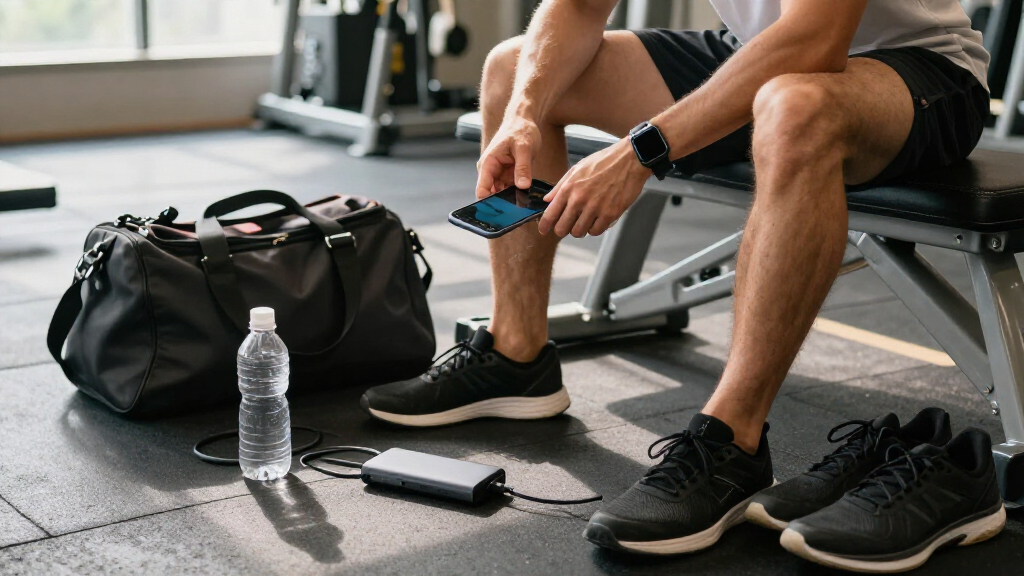
I ranked these hubs for the way fitness enthusiasts often connect a mix of training and everyday gear: phones, wearables, cameras, sensors, laptops, and chargers. The comparison prioritizes port mix, powered operation, useful cable reach, and ease of managing connected devices. I also weighed whether a hub’s layout makes sense at a fixed home-gym desk, a coaching station, or a portable training setup, rather than treating the largest port count as an automatic advantage.
The ranking favors products with a clear fit and a useful balance of connectivity and convenience. The FIDECO powered USB-C model leads for a multi-device station, while the smaller UGREEN and Anker hubs rank as straightforward options for lighter setups. High-capacity models earn a place for users who need many connections, but their size and added complexity narrow their audience. The products’ listed specifications inform this comparison; device compatibility, charging behavior, and data performance can depend on the connected equipment and the hub’s power arrangement.
Factors to Consider When Choosing Best USB Hubs For Fitness Enthusiasts
Before choosing a hub, map out the devices you expect to connect at the same time, then check how each one connects and what it needs from the hub. A workout station can include both data devices and chargers, and those jobs are not always interchangeable. These factors help avoid buying extra ports that do not fit your setup—or a small hub that cannot handle the way you train.
Count Devices You Use at the Same Time
Count simultaneous connections, not every device you own. A phone, keyboard, camera, and sensor may need data connections, while a watch charger might only need power; combining those lists shows how many ports must be available at once. Leave room for one or two occasional connections, such as a USB drive for workout footage. A 15-port hub can be useful at a coaching desk, but it adds bulk if you only connect a laptop and a couple of accessories. Choosing a hub with far more ports than your routine requires can add clutter without improving the setup. If your needs change week to week, prioritize a flexible port mix over an impressive total.
Match Power to the Devices You Connect
A hub’s port count does not tell you how much power it can supply across all connected devices. Powered hubs use an external adapter and generally suit a station with several accessories or charging needs; bus-powered models keep a mobile setup simpler but draw from the host device. Check the hub’s stated power details and the requirements of each device rather than assuming that a charging port can power every gadget at its fastest rate. Some USB ports transfer data, some provide charging, and some do both, depending on the design. A common mistake is plugging several power-hungry devices into one hub and expecting the same charging behavior as a dedicated wall adapter. For portable use, consider whether carrying the hub’s power supply is worth the added capability.
Choose Ports for Your Actual Cables
USB-A and USB-C describe connector shapes, not a guarantee of identical speed, charging, or display support. List the connectors on your laptop, phone, wearables, and accessories before choosing a hub, and account for any adapters you would need. Mixed-port hubs can reduce adapter clutter if your gear uses both USB-A and USB-C, while USB-A-heavy models can work well for older sensors and common accessories. Also check whether the hub connects to the host through USB-C or USB-A; the host connection affects compatibility with your computer. Do not assume every USB-C port on a hub can charge a laptop or output video. Verify those functions in the product specifications and against the devices you plan to connect.
Plan for Distance, Placement, and Movement
In a home gym, hub placement can matter as much as the number of ports. A longer cable may let the hub sit on a shelf or table away from a laptop, keeping cords clear of a workout area, while a short lead is tidier on a compact desk. Measure the distance from the host device to the intended hub location before buying, and leave slack so a cable does not pull loose when equipment moves. For a portable setup, a shorter cable can be easier to pack and less likely to snag. Avoid placing a hub where sweat, dust, foot traffic, or moving equipment can reach it. A well-placed smaller hub can be more practical than a larger one with every port occupied.
Separate Data Needs from Charging Needs
Fitness setups often combine devices that sync data with devices that only need charging, and those uses call for different checks. For a camera or training sensor, confirm the hub’s data speed and whether the connection supports the device’s workflow; for a wearable charger, check power output and compatibility. A fast data specification does not automatically mean fast charging, and a charging port may not transfer files. If you record workouts, a hub with a card reader or display output may reduce the need for separate accessories, but those extras add functions you may never use. Decide which tasks happen regularly before paying for features aimed at occasional media work. This distinction helps keep a training setup reliable without relying on a single port to do every job.
Pay for Convenience That Fits Your Routine
Extra features are most useful when they remove a repeated annoyance. Individual switches can help when you often disconnect devices without unplugging them, while a built-in card reader can simplify moving footage from a camera. A compact four-port hub is usually easier to carry between locations, whereas a powered multiport model makes more sense when equipment stays connected in one place. Consider the desk space, cable routing, and power supply alongside the feature list. If you are new to hubs, a straightforward model with the ports you need can be easier to manage than a large unit with several specialized connections. Spend more attention on reliable fit and useful controls than on a high port count alone.
Frequently Asked Questions
Do I need a powered USB hub for a home gym setup?
You may benefit from one if you plan to connect several devices at once or keep accessories powered at a fixed station. A powered hub has its own adapter, which reduces reliance on the laptop’s USB port for the hub’s power needs. That does not mean every port can provide high-speed charging, so check the listed output for the specific ports you plan to use. For a phone, one sensor, and a keyboard, a simpler hub may be enough. Choose based on your connected devices’ power needs, not port count alone.
Can a USB hub charge my smartwatch and phone while transferring workout data?
It can, if the hub’s ports support the required charging and data functions and the devices are compatible. Some hubs separate charging ports from data ports, so a port that charges a wearable may not connect it to an app or computer for syncing. Check each port’s stated role and the requirements of your chargers and devices. If you need simultaneous charging and file transfer, confirm that the hub supports both jobs at once. A dedicated wall charger may still be the simpler choice for devices that need more power.
Should I choose USB-A, USB-C, or a hub with both?
Start with the ports on your laptop and the cables used by your workout gear. USB-A remains common on older accessories, while USB-C is increasingly used by newer laptops and devices; a mixed hub can cover both without separate adapters. Connector shape does not by itself confirm data speed, charging output, or video support. If your host computer only has USB-C, make sure the hub’s host cable or connection matches it. A mixed layout is most useful when you already own devices with both connector types or expect to add them.
Will a long cable make a USB hub safer or more useful near exercise equipment?
A longer cable can let you place the hub on a shelf or table away from the laptop, which may help keep the workout area clearer. It does not make the hub safe around sweat, water, or moving equipment, so placement still matters. Measure the route and keep the cable away from walking paths, pedals, and moving parts. Avoid pulling a cable tight, since movement can disconnect devices or damage the connection. If the hub travels in a gym bag, a shorter lead may be easier to store and less likely to snag.
Is a 15-port hub a better choice for recording or coaching workouts?
It can be useful if a fixed station regularly connects several cameras, storage devices, sensors, and other peripherals. A large port count is less helpful if the hub’s power arrangement, connector mix, or placement does not suit those devices. Check whether the ports support the data speeds you need and whether the hub’s power supply can support the connected equipment. For reviewing footage on a display or importing memory-card files, a hub with HDMI or card-reader features may be more relevant than extra USB ports. Choose the layout around your actual workflow, since large hubs can take up more desk space and are less convenient to carry.
Conclusion
For a fixed setup with multiple devices, my best overall pick is the FIDECO 7-Port Powered USB-C Hub with 72W Adapter. The best value for a simple setup is the UGREEN 4-Port USB 3.0 Hub, while the best for beginners is the Anker 4-Port USB 3.0 Hub for buyers who want a straightforward way to add a few connections. For a larger permanent station, the intpw 15-Port Powered USB Hub suits users who need an expansive port layout; the best premium-style feature set for presentations and media work is the Anker 7-in-1 USB-C Hub with HDMI and card readers. Choose Atolla if individual switches fit your routine, or a compact four-port model if portability matters more than charging capacity. Match the hub to your devices, power needs, and placement before settling on one.