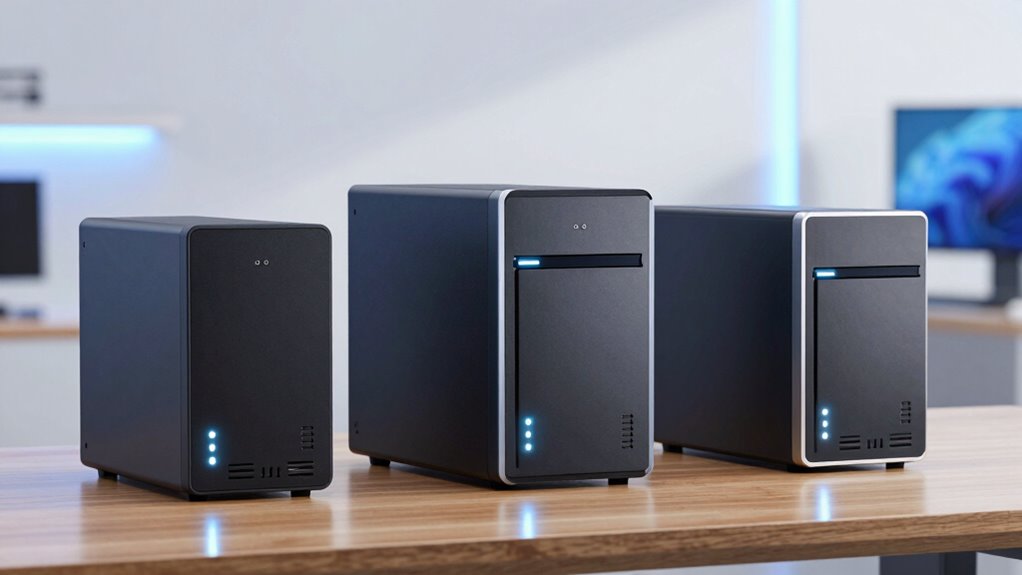

Choosing the right 6-bay NAS in 2026 depends heavily on your specific needs, whether you’re looking for raw performance, extensive storage capacity, or ease of use. The Synology DiskStation DS1621+ stands out as the best overall for demanding environments thanks to its scalability and high speeds. Meanwhile, the UGREEN NAS DXP6800 Plus offers a compelling mix of power and capacity for businesses that need serious storage without sacrificing performance. Both options highlight the core tradeoff: top-tier features often come with complexity or higher cost, while more straightforward models may limit expansion or advanced capabilities.

Get the latest gadgets delivered free with Prime
- Fast, free delivery on millions of items
- Prime Video, Amazon Music and more included
- Member-only deals all year
Complete the kit



Key Takeaways
- The Synology DS1621+ is ideal for users needing high scalability and performance, but it requires technical setup and additional drives.
- The UGREEN NAS DXP6800 Plus offers massive storage capacity and fast network speeds, suited for large business data management.
- QNAP TS-673A balances performance and expandability, supporting multiple operating systems and PCIe upgrades.
- TERRAMASTER F6-425 Pro emphasizes high-speed connectivity and AI features, perfect for media teams and content creators.
- TERRAMASTER F6-424 provides a solid, business-ready setup with robust CPU power and flexible RAID options, at a more accessible price.
| Synology DiskStation DS1621+ (Diskless) 6-Bay NAS |  | Best Overall High-Performance NAS | Digital Storage Capacity: 4 GB | CPU: AMD Ryzen Quad-core 2.2 GHz | Network Speed: 1 gigabits_per_second | VIEW ON AMAZON | See Our Full Breakdown |
| UGREEN NAS DXP6800 Plus 6-Bay Desktop NAS with Intel Core i3 Processor |  | Best for Large Capacity Business Storage | Processor: 12th Gen Intel Core i3 1215U | Storage Capacity: Up to 208TB | Network Ports: 1x 10GbE, 1x 2.5GbE | VIEW ON AMAZON | See Our Full Breakdown |
| QNAP TS-673A-8G 6 Bay High-Performance NAS |  | Best for Versatile Performance & Expandability | Processor: AMD Ryzen V1500B quad-core | Network Ports: 2 x 2.5GbE | SSD Slots: 2 x M.2 NVMe | VIEW ON AMAZON | See Our Full Breakdown |
| TERRAMASTER F6-425 Pro NAS Server, Intel Core i3-1315U, 8GB DDR5, Diskless |  | Best for Media & Content Creation | Processor: Intel Core i3-1315U 6-core | Network Ports: Dual 10GbE | Operating System: TOS 7 AI OS | VIEW ON AMAZON | See Our Full Breakdown |
| TERRAMASTER F6-424 NAS 6-Bay, Intel N95 4-Core CPU, 8GB DDR5 (Diskless) |  | Best for Business & General Use | CPU: Intel N95 4-core 3.4GHz | Memory: 8GB DDR5 | Ethernet: Dual 2.5G | VIEW ON AMAZON | See Our Full Breakdown |
| bay na | Form Factor | Processor | Network Ports | Memory |
|---|---|---|---|---|
| Synology DiskStation DS1621+ | desktop | — | — | — |
| UGREEN NAS DXP6800 Plus 6-Bay | desktop | 12th Gen Intel Core i3 1215U | 1x 10GbE, 1x 2.5GbE | 8GB DDR5 RAM |
| QNAP TS-673A-8G 6 Bay High-Per | desktop | AMD Ryzen V1500B quad-core | 2 x 2.5GbE | — |
| TERRAMASTER F6-425 Pro NAS Ser | — | Intel Core i3-1315U 6-core | Dual 10GbE | 8GB DDR5 |
| TERRAMASTER F6-424 NAS 6-Bay | — | — | — | 8GB DDR5 |
More Details on Our Top Picks
Synology DiskStation DS1621+ (Diskless) 6-Bay NAS
The Synology DiskStation DS1621+ makes a strong case as the top pick for those who need a scalable and fast NAS. Its AMD Ryzen processor and support for up to 16 drives mean it can handle intensive workloads and large storage needs. It excels in environments where data speed and expandability are priorities, thanks to options like 10GbE connectivity. However, it’s not the simplest to set up, especially for less tech-savvy users, and it requires separate purchase of drives, adding to the total cost. Compared with other models, its hardware performance and scalability stand out, but this can be a downside for users seeking a plug-and-play solution.
Pros:- High performance with 174% higher 4K random read IOPS
- Supports up to 16 drives with expansion units
- Fast network connectivity options including 10GbE
Cons:- Complex setup requiring technical knowledge
- No included drives, additional costs
- Heavy at 5.1 kg
Best for: Enterprise users and advanced home labs needing high performance and future expansion
Not ideal for: Beginners or those seeking a budget-friendly, easy-to-assemble NAS
- Digital Storage Capacity:4 GB
- CPU:AMD Ryzen Quad-core 2.2 GHz
- Network Speed:1 gigabits_per_second
- Form Factor:desktop
- Hardware Connectivity:Solid State Drive
- Item Weight:5.1 kg
Our verdict“A top-tier choice for demanding environments where scalability and speed outweigh simplicity.”
UGREEN NAS DXP6800 Plus 6-Bay Desktop NAS with Intel Core i3 Processor
The UGREEN NAS DXP6800 Plus is designed for demanding business environments, offering up to 208TB of storage with flexible RAID configurations. Its 12th Gen Intel Core i3 processor ensures robust performance for file management, backups, and media streaming. Network speeds are impressive with dual 10GbE and 2.5GbE ports, making it suitable for large data transfers. The downside? It’s a diskless setup, so you need to budget for drives separately, and its setup can be complex for less experienced users. Compared to other models, its massive capacity and processing power make it ideal for large-scale storage, but it’s less suitable for small home users due to complexity and cost.
Pros:- Massive storage capacity up to 208TB
- Fast dual 10GbE and 2.5GbE network ports
- Powerful 12th Gen Intel Core i3 processor
Cons:- Drives not included, additional purchase required
- Wired Ethernet only, no Wi-Fi support
- Complex setup process
Best for: Business users needing high capacity and fast network connectivity
Not ideal for: Home users or those looking for a ready-to-use, plug-and-play solution
- Processor:12th Gen Intel Core i3 1215U
- Storage Capacity:Up to 208TB
- Network Ports:1x 10GbE, 1x 2.5GbE
- Memory:8GB DDR5 RAM
- Supported RAID Levels:JBOD, Basic, RAID 0, 1, 5, 6, 10
- Form Factor:desktop
Our verdict“A robust, high-capacity NAS tailored for enterprise-grade storage and fast network performance.”
QNAP TS-673A-8G 6 Bay High-Performance NAS
The QNAP TS-673A offers a compelling blend of power and flexibility, thanks to its AMD Ryzen V1500B processor and support for multiple 2.5GbE ports. Its PCIe expansion slots and M.2 NVMe SSD support make it adaptable for various storage and caching needs. It runs QTS and QuTS hero OS, providing a versatile environment for both home and professional use. Compared to other options, its expandability and OS flexibility make it stand out, but setting up PCIe cards or SSDs can be intimidating for users unfamiliar with hardware upgrades. It’s better suited for those who want a high-performance, adaptable NAS.
Pros:- High-performance AMD Ryzen V1500B processor
- Multiple 2.5GbE ports for fast networking
- Supports PCIe expansion and SSD caching
Cons:- Setup can be complex for non-technical users
- Limited to 6 drive bays, may not suit very large storage needs
- Higher price point for advanced features
Best for: Tech-savvy users who want performance plus expansion options
Not ideal for: Beginners or users with limited technical knowledge
- Processor:AMD Ryzen V1500B quad-core
- Network Ports:2 x 2.5GbE
- SSD Slots:2 x M.2 NVMe
- Warranty:3 years
- Form Factor:desktop
Our verdict“A flexible, high-performance NAS ideal for users wanting expandability and powerful hardware.”
TERRAMASTER F6-425 Pro NAS Server, Intel Core i3-1315U, 8GB DDR5, Diskless
The TERRAMASTER F6-425 Pro is tailored for creative workflows, offering a capable Intel Core i3-1315U CPU and 8GB DDR5 RAM. Its dual 10GbE ports enable rapid data transfers, ideal for media streaming, editing, and virtualization. The inclusion of multiple M.2 NVMe slots and AI features enhances media workflows and real-time processing. It’s a strong choice for content creators, but being diskless, it demands additional drives, and its setup can be complex for beginners. Compared with other models, its focus on AI and media makes it more specialized, which is a plus for media professionals but potentially overkill for basic storage needs.
Pros:- High-speed data transfer with dual 10GbE ports
- AI-powered OS and media streaming features
- Supports online expansion and multiple RAID options
Cons:- Requires additional drives for storage
- Setup complexity for non-technical users
- Premium price for advanced features
Best for: Media professionals and content creators needing fast workflows
Not ideal for: Home users or small businesses with limited technical skills
- Processor:Intel Core i3-1315U 6-core
- Network Ports:Dual 10GbE
- Operating System:TOS 7 AI OS
- Memory:8GB DDR5
- Features:AI-native, virtualization, 4K streaming
Our verdict“A media-centric NAS perfect for demanding creative workflows and fast data needs.”
TERRAMASTER F6-424 NAS 6-Bay, Intel N95 4-Core CPU, 8GB DDR5 (Diskless)
The TERRAMASTER F6-424 offers a balanced mix of power, flexibility, and affordability. Its Intel N95 quad-core CPU and 8GB DDR5 RAM ensure smooth multitasking and reliable performance for small to medium-sized business needs. With dual 2.5G Ethernet ports and easy SSD installation, it caters well to users needing fast, dependable storage solutions. Compared to premium models, it might lack some AI features or extensive expansion options, but for general business use, it hits a sweet spot of performance and value.
Pros:- Powerful quad-core CPU and DDR5 memory
- Flexible RAID options and easy SSD upgrades
- Fast dual 2.5G Ethernet ports
Cons:- Diskless setup, additional drives needed
- Limited advanced features compared to premium models
- No included drives
Best for: Small to medium businesses and users seeking reliable, straightforward storage
Not ideal for: Media professionals requiring advanced AI or high-end media workflows
- CPU:Intel N95 4-core 3.4GHz
- Memory:8GB DDR5
- Ethernet:Dual 2.5G
- Storage Bays:6
- SSD Slots:2 M.2 NVMe
- RAID Support:RAID 0/1/5/6/10/JBOD
Our verdict“A dependable, business-ready NAS offering a solid balance of speed, expandability, and affordability.”

How We Picked
Our selection process focused on models that are widely recognized for their reliability, performance, and expandability in a 6-bay form factor. We considered the hardware specs such as processors, RAM, and network interfaces to ensure they meet demanding data management needs. We also evaluated user reviews, support for various RAID configurations, and additional features like expansion options or AI integration. Cost and ease of setup played roles, but greater emphasis was placed on models that serve different buyer profiles — from enterprise-grade solutions to more accessible options.
Factors to Consider When Choosing 6 Bay Nas
When selecting a 6-bay NAS, the decision hinges on understanding your storage needs, performance requirements, and technical comfort level. The most important factors include processor power, expandability, network speed, and whether the device comes preconfigured or requires additional hardware. For small businesses or home users, simplicity and cost may dominate, while enterprise users prioritize scalability and high performance. Compatibility with existing infrastructure, ease of setup, and future-proof features like PCIe slots or AI capabilities also influence the choice.
Performance and Scalability
Look for processors that match your workload — from Intel Core i3 or N95 chips for general business tasks to AMD Ryzen options for demanding applications. Scalability is key: models like the Synology DS1621+ support expansion units, offering future growth. If your storage needs are large or expected to grow, prioritize models with support for more drives or expansion options.
Network and Data Transfer
Fast network interfaces like 10GbE or multiple 2.5GbE ports can significantly reduce transfer times, especially for media workflows or large backups. Consider your existing infrastructure; if you lack 10GbE switches, a model with multiple 2.5GbE ports might suffice. For high-demand environments, dual port support and link aggregation improve redundancy and throughput.
Ease of Use and Setup
Some NAS devices, like Synology and QNAP, excel in user-friendly interfaces and straightforward setup procedures. Others, especially those with more advanced hardware or expansion options, may require technical knowledge. Decide whether you prefer a plug-and-play solution or are comfortable with more complex configurations for maximum flexibility.
Additional Features
Extras like M.2 NVMe slots for caching, AI-powered OS, virtualization support, or hardware encryption can add value for specific use cases. Be aware that these features often come at a premium and may involve additional setup complexity. Assess whether your workflow benefits from such capabilities or if a simpler model suffices.
Frequently Asked Questions
What should I prioritize when choosing a 6-bay NAS?
Focus first on your primary use case — whether it’s high-speed data transfer, large storage capacity, or ease of use. High-performance processors and network interfaces are crucial for demanding workflows, while a straightforward setup and good support matter more for beginners or home users. Scalability and future-proof features should guide those with long-term growth plans.
Is a diskless NAS a good choice?
Diskless NAS units offer flexibility, allowing you to choose your own drives and customize storage. However, they require additional investment and technical knowledge to install drives and configure the system. For users comfortable with hardware, diskless models provide customization; others might prefer pre-installed drives for simplicity.
How important is network speed in a 6-bay NAS?
Network speed directly impacts data transfer times, especially for large files or media streaming. For most professional environments, 10GbE ports are desirable, but for home or small office use, multiple 2.5GbE ports may be sufficient. Consider your existing network infrastructure to choose the right model.
Are expansion options necessary in a NAS?
Expansion options are valuable if you anticipate your storage needs will grow. Models like the Synology DS1621+ support expansion units, while others do not. For long-term planning, a scalable NAS can save money and effort in the future, but if your storage needs are stable, a less expandable model might be more straightforward and cost-effective.
What are the benefits of AI or media-specific features in NAS devices?
AI features and media-oriented capabilities, like real-time editing or media streaming, are beneficial for content creators and media teams. They enable smarter workflows and faster processing but come at a higher cost and increased complexity. If your primary goal is simple storage, these features may be unnecessary.
Conclusion
For users seeking maximum performance and scalability, the Synology DS1621+ remains the best choice, especially for enterprise or advanced home setups. Small business owners or those with extensive storage needs will find the UGREEN NAS DXP6800 Plus compelling for its capacity and processing power. Content creators and media professionals should consider the TERRAMASTER F6-425 Pro for its AI features and high-speed workflows. Meanwhile, those looking for a reliable, straightforward NAS for general business use might lean toward the TERRAMASTER F6-424. Each option caters to different priorities, ensuring you find a model aligned with your technical comfort level and long-term storage goals.
As an affiliate, we earn on qualifying purchases.Halloween Picks
halloween