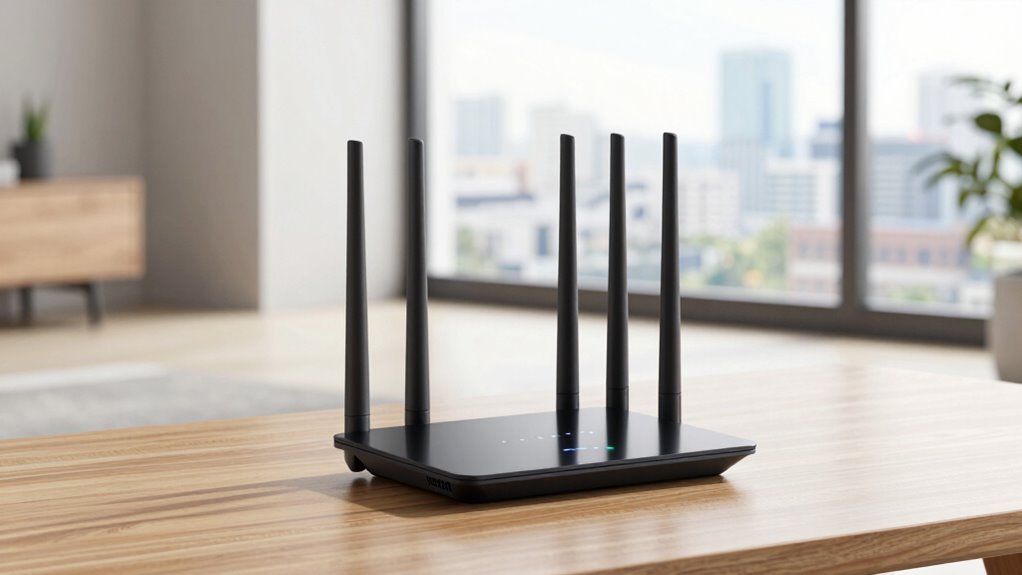

When searching for a long range Wi Fi router, the goal is to find a device that can deliver strong, stable internet across large spaces—whether that’s a sprawling home or a sizable office. The TP-Link Archer AX21 stands out as the best overall because of its reliable Wi-Fi 6 performance and affordability. For those prioritizing mesh coverage, the TP-Link Deco X55 offers seamless multi-unit expansion, while the TP-Link Deco XE70 Pro provides cutting-edge Wi-Fi 6E technology for future-proofing. Each option involves tradeoffs, such as cost versus coverage or advanced features versus ease of use. Keep reading for a detailed breakdown to help you determine the best fit for your long-range connectivity needs.

Get the latest gadgets delivered free with Prime
- Fast, free delivery on millions of items
- Prime Video, Amazon Music and more included
- Member-only deals all year
Complete the kit



Key Takeaways
- Mesh systems like the TP-Link Deco X55 excel at covering large, multi-room spaces with minimal dead zones.
- Wi-Fi 6E routers such as the Deco XE70 Pro offer faster speeds and less interference but come at a higher price and require compatible devices.
- Dual-band routers like the Archer AX20 provide solid coverage for smaller or less demanding environments at a lower cost.
- Wi-Fi 7 models like the Archer BE550 improve latency and throughput, making them better suited for gaming and high-bandwidth tasks.
- Tradeoffs between advanced features and ease of setup should guide your choice, especially if you’re new to networking.
| TP-Link AX1800 WiFi 6 Router (Archer AX21 V5) |  | Best Overall Long Range Wi-Fi Router | Technology: Wi-Fi 6 (802.11ax) | Bandwidth: 1.8 Gbps total (1200 Mbps on 5 GHz, 574 Mbps on 2.4 GHz) | Bands: Dual-band | VIEW ON AMAZON | See Our Full Breakdown |
| TP-Link Deco X55 AX3000 WiFi 6 Mesh System (3-Pack) |  | Best Value for Large Home Mesh Coverage | Wi-Fi Standard: Wi-Fi 6 (AX3000) | Coverage: Up to 6500 sq ft | Number of Devices Supported: Up to 150 | VIEW ON AMAZON | See Our Full Breakdown |
| TP-Link Deco XE70 Pro AXE4900 Tri-Band WiFi 6E Mesh Router – 1 Pack |  | Best for Future-Proof High-Speed Mesh Coverage | Wi-Fi Speed: Up to 4.9 Gbps | Bands: Tri-Band (6 GHz, 5 GHz, 2.4 GHz) | Processor: 1.0 GHz dual-core CPU | VIEW ON AMAZON | See Our Full Breakdown |
| TP-Link WiFi 6 Router AX1800 (Archer AX20) |  | Best Budget Long Range Wi-Fi Router | Wi-Fi Standard: 802.11ax (Wi-Fi 6) | Speed: Up to 1.8 Gbps | Bands: Dual Band | VIEW ON AMAZON | See Our Full Breakdown |
| TP-Link AXE5400 Tri-Band WiFi 6E Router (Archer AXE75) |  | Best for High-Speed, Future-Ready Homes | WiFi Speed: Up to 5.4 Gbps | Bands: Tri-Band (6 GHz, 5 GHz, 2.4 GHz) | Processor: 1.0 GHz dual-core CPU | VIEW ON AMAZON | See Our Full Breakdown |
| TP-Link AX6000 Wi-Fi 6 Dual Band Router (Archer AX80) |  | Best Overall for Extensive Coverage and Raw Speed | Wi-Fi Standard: Wi-Fi 6 | Max Speed: 4804 Mbps on 5.0 GHz, 1148 Mbps on 2.4 GHz | Antennas: 8 high-gain antennas with Beamforming | VIEW ON AMAZON | See Our Full Breakdown |
| TP-Link Tri-Band WiFi 7 Router (Archer BE550) |  | Best Future-Proof Speed and Coverage with WiFi 7 | WiFi Technology: WiFi 7 | Speed: up to 9.2 Gbps | Bands: Tri-band (6 GHz, 5 GHz, 2.4 GHz) | VIEW ON AMAZON | See Our Full Breakdown |
| GL.iNet GL-MT6000 Flint 2 Wi-Fi 6 Gaming Router Dual 2.5G Ports |  | Best High-Speed Gaming and Multi-Device Support | Wi-Fi Standard: Wi-Fi 6 | Speed: up to 6 Gbps | Number of Ports: 6 (2 x 2.5G, 4 x 1G) | VIEW ON AMAZON | See Our Full Breakdown |
| TP-Link BE6500 Dual-Band WiFi 7 Router (BE400) |  | Best for Wide Coverage and Easy Setup with WiFi 7 | Technology: Wi-Fi 7 | Max Speed: up to 5764 Mbps on 5 GHz, 688 Mbps on 2.4 GHz | Coverage: up to 2,400 sq. ft. | VIEW ON AMAZON | See Our Full Breakdown |
| long range wi fi router | Bands | Security | Coverage |
|---|---|---|---|
| TP-Link AX1800 WiFi 6 Router | Dual-band | Advanced security, VPN server support | — |
| TP-Link Deco X55 AX3000 WiFi 6 | — | TP-Link HomeShield | Up to 6500 sq ft |
| TP-Link Deco XE70 Pro AXE4900 | Tri-Band (6 GHz, 5 GHz, 2.4 GHz) | — | 2,900 sq ft |
| TP-Link WiFi 6 Router AX1800 | Dual Band | — | Extended with beamforming |
| TP-Link AXE5400 Tri-Band WiFi | Tri-Band (6 GHz, 5 GHz, 2.4 GHz) | — | Varies with mesh setup |
| TP-Link AX6000 Wi-Fi 6 Dual Ba | — | TP-Link HomeShield | — |
| TP-Link Tri-Band WiFi 7 Router | Tri-band (6 GHz, 5 GHz, 2.4 GHz) | WPA3, HomeShield | — |
| GL.iNet GL-MT6000 Flint 2 Wi-F | — | — | — |
| TP-Link BE6500 Dual-Band WiFi | — | WPA3, HomeShield | up to 2,400 sq. ft. |
More Details on Our Top Picks
TP-Link AX1800 WiFi 6 Router (Archer AX21 V5)
This model stands out for delivering a reliable balance of speed and coverage, making it ideal for most home users who need strong long-range performance without the complexity of newer WiFi standards. Compared with the TP-Link Deco X55, it offers similar coverage but lacks mesh capabilities, which could limit flexibility in larger or multi-story homes. Its dual-band setup with beamforming and high-gain antennas ensures enhanced signal reach, though it doesn’t support WiFi 6E or the 6 GHz band, which newer models like the Deco XE70 do. Setup is straightforward for those comfortable with network configuration, but beginners may find it slightly technical. The support for VPN and advanced security features adds value for privacy-conscious users. However, it requires a separate modem for most ISPs, and its performance can be constrained by older devices that lack WiFi 6 compatibility.
Pros:- Fast dual-band WiFi speeds up to 1.8 Gbps
- Supports multiple devices efficiently with OFDMA
- Extensive coverage with beamforming and high-gain antennas
- Compatible with all major ISPs
Cons:- Requires a separate modem for most ISPs
- No support for WiFi 6E or the 6 GHz band
- Setup may be challenging for less tech-savvy users
Best for: Homeowners seeking reliable, high-speed WiFi for medium to large homes with multiple devices, without needing mesh or WiFi 6E.
Not ideal for: Tech enthusiasts wanting the latest WiFi 6E features or those with very large homes that require mesh systems for seamless coverage.
- Technology:Wi-Fi 6 (802.11ax)
- Bandwidth:1.8 Gbps total (1200 Mbps on 5 GHz, 574 Mbps on 2.4 GHz)
- Bands:Dual-band
- Antennas:4 high-gain antennas
- Security:Advanced security, VPN server support
- Compatibility:Works with all major ISPs
Our verdict“This router is a solid choice for users needing dependable long-range WiFi coverage with WiFi 6, especially in medium to large homes.”
TP-Link Deco X55 AX3000 WiFi 6 Mesh System (3-Pack)
The Deco X55 excels at delivering seamless WiFi coverage over very large areas, up to 6500 sq ft, making it ideal for multi-story homes or properties with challenging layouts. Compared with the TP-Link AX1800, it sacrifices some raw speed for expansive coverage and mesh flexibility. The system supports up to 150 devices, which is more than enough for busy households, and its AI-driven mesh technology ensures stable connections throughout your space. Setup is simplified via the Deco app, though it requires a modem and doesn’t include built-in modem functions. Its security features with HomeShield add peace of mind for connected smart devices. The tradeoff is that it’s more expensive than traditional routers and may be overkill for smaller homes with fewer devices.
Pros:- Seamless coverage up to 6500 sq ft
- Supports up to 150 devices simultaneously
- Easy setup through the Deco app
- Includes comprehensive security with HomeShield
Cons:- Requires a separate modem for most ISPs
- Higher price point compared to single routers
- No built-in modem functionality
Best for: Large households needing extensive WiFi coverage with easy management and strong device support.
Not ideal for: Users with small apartments or minimal device counts, as the system’s full capabilities may be unnecessary and more costly.
- Wi-Fi Standard:Wi-Fi 6 (AX3000)
- Coverage:Up to 6500 sq ft
- Number of Devices Supported:Up to 150
- Ethernet Ports:3 per unit (6 total in 3-pack)
- Mesh Technology:AI-Driven Mesh
- Security:TP-Link HomeShield
Our verdict“This mesh system offers excellent long-range coverage for large homes, with simple management, ideal for busy multi-user environments.”
TP-Link Deco XE70 Pro AXE4900 Tri-Band WiFi 6E Mesh Router – 1 Pack
The Deco XE70 Pro makes a compelling case for those wanting top-tier speed and mesh flexibility, especially with its WiFi 6E support offering speeds up to 4.9 Gbps. Compared with the AX1800, it supports a wider range of devices and includes the new 6 GHz band, which reduces congestion and latency for demanding tasks. Its AI-powered mesh ensures smooth roaming across large homes, and the 2.5 Gbps WAN port provides future-proof wired connectivity. The device is suitable for tech-savvy users who want the latest in WiFi technology, but its high price and complex setup might deter casual users. It requires a compatible modem, and its feature set can be overwhelming for those unfamiliar with advanced networking.
Pros:- Supports WiFi 6E with speeds up to 4.9 Gbps
- Seamless mesh with AI-roaming technology
- Supports up to 200 devices
- Includes 2.5 Gbps WAN port for high-speed wired connection
Cons:- Premium price point
- Requires compatible modem for optimal use
- Advanced features may be complex for non-technical users
Best for: Tech enthusiasts and power users needing ultra-fast WiFi 6E performance across large, multi-device setups.
Not ideal for: Budget-conscious buyers or users with small homes who won’t utilize the high speeds or advanced features.
- Wi-Fi Speed:Up to 4.9 Gbps
- Bands:Tri-Band (6 GHz, 5 GHz, 2.4 GHz)
- Processor:1.0 GHz dual-core CPU
- Memory:512 MB High-Speed Memory
- Coverage:2,900 sq ft
- Features:EasyMesh, VPN, HomeShield
Our verdict“This router is ideal for users who demand cutting-edge WiFi speeds and seamless coverage in large, device-dense environments.”
TP-Link WiFi 6 Router AX1800 (Archer AX20)
The Archer AX20 offers solid WiFi 6 performance at a more accessible price point, making it suitable for those who want long-range coverage without overspending. It supports dual-band WiFi up to 1.8 Gbps, comparable to the AX1800, but with a more straightforward setup via the TP-Link tether app. Its four high-gain antennas and beamforming technology extend coverage, though it doesn’t support WiFi 6E or the 6 GHz band, which could limit future-proofing. It’s well-suited for small to medium homes with moderate device loads but might struggle in larger spaces or high-density environments. Like other budget options, it requires a separate modem and may have performance variability depending on device compatibility.
Pros:- Affordable WiFi 6 speeds up to 1.8 Gbps
- Excellent coverage with beamforming and high-gain antennas
- Easy setup with the TP-Link tether app
- Supports multiple devices efficiently
Cons:- Requires a separate modem for most ISPs
- No WiFi 6E or 6 GHz support
- Performance may be limited in very large homes
Best for: Budget-conscious users wanting reliable long-range WiFi in small to medium homes with multiple devices.
Not ideal for: Large households or those seeking the latest WiFi 6E features, as this model lacks the newest band support.
- Wi-Fi Standard:802.11ax (Wi-Fi 6)
- Speed:Up to 1.8 Gbps
- Bands:Dual Band
- Antennas:4 high-gain antennas
- Processor:1.5 GHz quad-core CPU
- Coverage:Extended with beamforming
Our verdict“This router provides good long-range WiFi coverage for budget-minded users in small to medium homes.”
TP-Link AXE5400 Tri-Band WiFi 6E Router (Archer AXE75)
The Archer AXE75 is designed for users who want the fastest speeds and the latest WiFi 6E technology. Its tri-band setup, supporting speeds up to 5.4 Gbps, includes the new 6 GHz band for ultra-low latency connections and less congestion. Compared with the AX1800 and even the AX3000 mesh, it offers a more robust hardware platform with a dual-core CPU and 512 MB RAM, suitable for demanding applications and heavy device loads. Its EasyMesh support enhances whole-home coverage, while VPN capabilities add security for remote access. The main tradeoff is the high price, which may be prohibitive for casual users, and its complexity might be overwhelming for those unfamiliar with advanced networking features.
Pros:- Supports WiFi 6E with speeds up to 5.4 Gbps
- Tri-band with dedicated 6 GHz for low latency
- Supports up to 200 devices with mesh capabilities
- Includes VPN server/Client and advanced security
Cons:- High cost may deter budget-conscious buyers
- Requires compatible modem for optimal performance
- Features can be complex for non-technical users
Best for: Power users and early adopters seeking the highest available WiFi speeds and best future-proofing in large homes.
Not ideal for: Casual users or those on a tight budget who won’t utilize WiFi 6E’s benefits or need extensive mesh coverage.
- WiFi Speed:Up to 5.4 Gbps
- Bands:Tri-Band (6 GHz, 5 GHz, 2.4 GHz)
- Processor:1.0 GHz dual-core CPU
- Memory:512 MB High-Speed Memory
- Coverage:Varies with mesh setup
- Features:EasyMesh, VPN, HomeShield
Our verdict“This router excels for tech-savvy users wanting cutting-edge WiFi 6E performance and extensive device support in large, demanding environments.”
TP-Link AX6000 Wi-Fi 6 Dual Band Router (Archer AX80)
The TP-Link AX6000 Archer AX80 stands out for its combination of high-speed Wi-Fi 6 technology and robust coverage, thanks to its eight high-gain antennas with Beamforming. Compared to the TP-Link AX1800, it offers significantly faster speeds and better device support, making it ideal for large households or small offices. However, its setup can be daunting for non-technical users, and it requires a separate modem for most ISPs. This router is perfect for those seeking top-tier performance and extensive coverage but who are comfortable with a more complex installation process.Pros:- Fast Wi-Fi speeds up to 4804 Mbps on 5 GHz, leveraging Wi-Fi 6 technology
- Eight high-gain antennas with Beamforming for wide, focused coverage
- Supports multi-gigabit wired connections via 2.5G port
- Compatible with Alexa for voice control
Cons:- Requires a separate modem for most ISPs, adding to setup complexity
- Setup process can be complex for non-technical users
Best for: Large households or small offices needing high-speed, reliable coverage with many connected devices
Not ideal for: Casual users or those with simple internet needs, as setup complexity and cost may outweigh benefits
- Wi-Fi Standard:Wi-Fi 6
- Max Speed:4804 Mbps on 5.0 GHz, 1148 Mbps on 2.4 GHz
- Antennas:8 high-gain antennas with Beamforming
- Multi-Gigabit Port:2.5G
- Technology:MU-MIMO, OFDMA
- Security:TP-Link HomeShield
- Smart Home Compatibility:Alexa
- ISP Compatibility:All major ISPs
Our verdict“This router is best suited for power users and large homes that prioritize speed and coverage over simplicity.”
TP-Link Tri-Band WiFi 7 Router (Archer BE550)
The TP-Link Archer BE550 delivers exceptional speeds up to 9.2 Gbps with WiFi 7, supporting multiple devices simultaneously across three bands. Unlike the AX6000, it leverages tri-band WiFi 7 technology, making it more future-proof for users with demanding bandwidth needs. While its speeds are impressive, actual internet performance depends heavily on your ISP plan, and it requires a compatible modem, which can add to setup costs. This model is ideal for tech enthusiasts and large households seeking cutting-edge wireless performance and extensive device support.Pros:- Exceptional WiFi speeds up to 9.2 Gbps with WiFi 7
- Supports tri-band operation across 6 GHz, 5 GHz, and 2.4 GHz bands
- Future-proof features like Multi-Link Operation and EasyMesh
- Robust security with WPA3 encryption
Cons:- Requires a compatible modem for internet connection
- Premium price point may be prohibitive for some users
Best for: Heavy internet users with high-bandwidth needs and future-proofing priorities
Not ideal for: Average users with modest internet plans or limited technical experience, due to higher cost and setup complexity
- WiFi Technology:WiFi 7
- Speed:up to 9.2 Gbps
- Bands:Tri-band (6 GHz, 5 GHz, 2.4 GHz)
- Max Speed 6 GHz:5760 Mbps
- Max Speed 5 GHz:2880 Mbps
- Max Speed 2.4 GHz:574 Mbps
- Ports:1 x 2.5G WAN, 4 x 2.5G LAN
- Security:WPA3, HomeShield
Our verdict“This router is best for users who want the latest WiFi standards and maximum future readiness, accepting a higher investment.”
GL.iNet GL-MT6000 Flint 2 Wi-Fi 6 Gaming Router Dual 2.5G Ports
The GL.iNet GL-MT6000 Flint 2 excels in high-speed Wi-Fi 6 performance, supporting speeds up to 6 Gbps and over a hundred simultaneous devices. Compared to the TP-Link AX6000, it offers dual 2.5G ports for fast wired connections and low latency, making it ideal for gaming and streaming. Its Linux-based OS and VPN support provide enhanced security, but setup can be complex, especially for less tech-savvy users. This router makes sense for gamers and streamers who need fast, reliable connections with extensive device support, despite some initial configuration hurdles.Pros:- High Wi-Fi 6 speeds up to 6 Gbps for demanding applications
- Supports over 100 devices simultaneously
- Dual 2.5G ports for fast wired connections
- Supports VPNs with OpenVPN & Wireguard
Cons:- Requires firmware update upon initial setup
- Setup process can be complex for beginners
Best for: Gamers, streamers, and tech-savvy users needing ultra-fast, low-latency connections
Not ideal for: Average users or those seeking plug-and-play simplicity, due to complex setup and limited pre-configured features
- Wi-Fi Standard:Wi-Fi 6
- Speed:up to 6 Gbps
- Number of Ports:6 (2 x 2.5G, 4 x 1G)
- Antenna Type:Retractable
- Security Protocol:WPA3
- Operating System:Linux
- Connectivity Technology:Wi-Fi, Ethernet, Multi-WAN
Our verdict“This router is best suited for gamers and advanced users needing high bandwidth and multiple device support, despite a steeper setup curve.”
TP-Link BE6500 Dual-Band WiFi 7 Router (BE400)
The TP-Link BE6500 combines WiFi 7 technology with a practical dual-band setup, offering speeds up to 5764 Mbps on 5 GHz and broad coverage of up to 2,400 sq. ft. for large homes. While it doesn’t support mesh systems like Deco X55, its comprehensive security features—including WPA3 and HomeShield—make it a strong choice for security-conscious users. Setup via the Tether app is straightforward, but the need for a separate modem limits its plug-and-play ease. This model is ideal for users seeking reliable, high-speed WiFi 7 performance across a wide area without the complexity of mesh systems.Pros:- Supports the latest Wi-Fi 7 for high-speed connectivity
- Wide coverage up to 2,400 sq. ft. suitable for large homes
- Advanced security with WPA3 and HomeShield
- Easy setup via Tether app
Cons:- Not compatible with mesh WiFi systems like Deco
- Requires a separate modem for internet access
Best for: Homeowners needing fast, reliable WiFi over large areas with easy setup
Not ideal for: Users wanting mesh integration or with limited space, as coverage is fixed and not extensible
- Technology:Wi-Fi 7
- Max Speed:up to 5764 Mbps on 5 GHz, 688 Mbps on 2.4 GHz
- Coverage:up to 2,400 sq. ft.
- Number of Devices:up to 90
- Ports:1x 2.5 Gbps WAN/LAN, 1x 2.5 Gbps LAN, 3x 1 Gbps LAN
- Dimensions:10.6 x 6 x 1.9 inches
- Security:WPA3, HomeShield
Our verdict“This router is best for large home users seeking high-speed WiFi 7 with straightforward setup and solid coverage, without mesh system complexity.”
How We Picked
These products were selected based on their ability to deliver strong, consistent Wi-Fi signals over long distances, supported by reviews of real-world performance. We prioritized routers with high transmission power, multiple antennas, and technologies like Wi-Fi 6 and Wi-Fi 6E that facilitate better range and speed. Ease of setup, build quality, and future-proof features also played roles in the ranking. Devices offering mesh capabilities were included because they significantly enhance coverage in large spaces. Our goal was to identify options that balance coverage, speed, and value, helping different types of users find the right long-range solution.
| long range wi fi router | Bands | Security |
|---|---|---|
| TP-Link AX1800 WiFi 6 Router | Dual-band | Advanced security, VPN server support |
| TP-Link Deco X55 AX3000 WiFi 6 | — | TP-Link HomeShield |
| TP-Link Deco XE70 Pro AXE4900 | Tri-Band (6 GHz, 5 GHz, 2.4 GHz) | — |
| TP-Link WiFi 6 Router AX1800 | Dual Band | — |
| TP-Link AXE5400 Tri-Band WiFi | Tri-Band (6 GHz, 5 GHz, 2.4 GHz) | — |
| TP-Link AX6000 Wi-Fi 6 Dual Ba | — | TP-Link HomeShield |
| TP-Link Tri-Band WiFi 7 Router | Tri-band (6 GHz, 5 GHz, 2.4 GHz) | WPA3, HomeShield |
| GL.iNet GL-MT6000 Flint 2 Wi-F | — | — |
| TP-Link BE6500 Dual-Band WiFi | — | WPA3, HomeShield |
Factors to Consider When Choosing Long Range Wi Fi Router
Choosing a long range Wi Fi router involves more than just picking the newest model. Several factors affect how well a router can cover large spaces and handle multiple devices. Understanding these considerations can help you avoid common pitfalls and select a device that matches your specific environment and usage patterns.Coverage Area and Signal Strength
To ensure your router can truly cover a large space, look for models with multiple antennas and high transmission power. Mesh systems are particularly effective for expansive homes because they distribute coverage evenly. Keep in mind that walls, floors, and other obstructions can weaken signals, so consider your environment when estimating needed range. Investing in a router with better hardware can prevent dead spots but may come with a higher price tag.
Wireless Standards and Speed
Wi-Fi 6 and Wi-Fi 6E are game changers for long-range performance because they are designed to handle more devices at higher speeds over greater distances. Wi-Fi 7 is on the horizon, promising even better performance for demanding applications like gaming or streaming. However, newer standards often mean higher costs and the need for compatible devices. Balancing your current device ecosystem with future-proofing is key to making a smart investment.
Mesh vs Traditional Routers
Mesh systems like the Deco X55 distribute Wi-Fi via multiple nodes, making them ideal for large or multi-story homes. Traditional routers with powerful antennas can also deliver long-range coverage but may require extenders or additional access points to achieve similar results. Mesh setups are easier to expand but tend to cost more upfront. Consider your space and whether adding units makes sense for your budget and setup preferences.
Ease of Setup and Management
Few things are more frustrating than a complicated setup, especially when dealing with large coverage areas. Look for routers with user-friendly apps and straightforward installation procedures. Features like automatic updates, parental controls, and device prioritization can also improve your experience. Advanced options often come with steeper learning curves, so weigh ease of use against your technical comfort level.
Price and Future Compatibility
Long-range routers span a wide price range, often reflecting their capabilities. While premium models deliver cutting-edge tech and broader coverage, they might be unnecessary for smaller spaces or less demanding users. Consider whether the router supports the latest standards and future updates, which can extend its lifespan and performance. Sometimes, investing a little more initially can save money in the long run by reducing the need for upgrades or additional equipment.
Frequently Asked Questions
Can a Wi-Fi 6 router really cover an entire large house?
Yes, Wi-Fi 6 routers with multiple antennas and high transmission power are designed to cover larger areas more effectively than older models. However, physical obstructions and the layout of your home can influence actual coverage. For very large or obstructed spaces, combining a Wi-Fi 6 router with mesh nodes often provides the most reliable coverage, ensuring dead zones are minimized.
Is Wi-Fi 6E worth it for long-range coverage?
Wi-Fi 6E introduces the 6 GHz band, which offers less interference and higher speeds, especially in congested environments. While it can improve long-range performance in theory, its benefits are most noticeable when paired with compatible devices and in environments where interference is an issue. If future-proofing and high-speed connectivity are priorities, investing in Wi-Fi 6E makes sense, but for simpler setups, Wi-Fi 6 might suffice.
Should I buy a mesh system or a powerful single router?
This depends on your space and layout. Mesh systems excel at covering large, multi-room, or multi-story homes with uniform signals, making them ideal for very large or complex spaces. A single high-power router can be a more cost-effective solution if your home is relatively open or smaller. In some cases, combining a good router with extenders or access points can offer similar coverage at a lower cost.
How important are antennas for long-range performance?
Antennas influence how well a router can transmit and receive signals over distance. More antennas and those with adjustable directions can help optimize coverage. However, antenna quality alone isn’t enough; the internal hardware and wireless standards are equally important. A router with a solid combination of hardware, antennas, and technology will perform better over long distances than one relying solely on external antennas.
Will upgrading to a Wi-Fi 7 router improve my coverage?
Wi-Fi 7 promises significant improvements in speed, latency, and capacity, which can enhance overall network performance, especially in demanding scenarios like gaming or streaming. However, coverage over long distances depends on hardware design and environment as much as on the standard. Upgrading to Wi-Fi 7 might improve your experience if your devices support it, but for pure range, focusing on routers with high-gain antennas and mesh capabilities remains vital.
Conclusion
The best choice depends on your specific needs. For overall reliability and balanced features, the TP-Link Archer AX21 offers excellent coverage at a reasonable price. If you want seamless multi-room coverage for a large house, a mesh system like the TP-Link Deco X55 makes sense. For users seeking cutting-edge tech and future-proofing, the TP-Link Deco XE70 Pro with Wi-Fi 6E is ideal. Beginners or those on a budget should consider dual-band options, while gamers or heavy streamers will benefit from Wi-Fi 6E or Wi-Fi 7 routers like the TP-Link Archer BE550. Ultimately, your environment, device ecosystem, and budget will guide the best long-range Wi-Fi solution for you.
Halloween Picks
halloween
As an affiliate, we earn on qualifying purchases.