
Preparing for power outages or reducing reliance on the grid makes a solar generator for home backup an essential investment. The best options combine high capacity, reliable performance, and ease of use, but tradeoffs exist around cost, portability, and charging speed. The Jackery Explorer 1000 stands out as the best overall due to its balance of capacity and portability, while the Jackery HomePower 3600 Plus offers massive power for larger homes. More affordable or compact models might suit smaller needs but often come with reduced capacity or slower recharge times. Continue reading for a detailed breakdown of the top picks and what to consider when choosing your home backup solar generator.

Get the latest gadgets delivered free with Prime
- Fast, free delivery on millions of items
- Prime Video, Amazon Music and more included
- Member-only deals all year
Complete the kit


Key Takeaways
- The top models balance capacity, portability, and charging options to meet diverse backup needs.
- Higher capacity units like the Jackery HomePower 3600 Plus are better suited for full-home backup but are less portable.
- Solar input wattage significantly affects recharge times; larger panels mean faster recharging during daylight.
- Build quality and durability vary, with premium models offering better weather resistance and longer lifespan.
- Price often correlates with capacity and features, so understanding your backup needs helps avoid overspending or underbuying.
| Portable Solar Generator 300W with 60W Solar Panel | 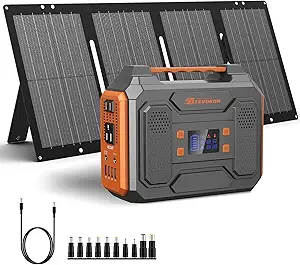 | Best for Outdoor and Emergency Use | Power: 300W | Solar Panel: 60W foldable monocrystalline | AC Outlets: 2 x 300W Max | VIEW ON AMAZON | See Our Full Breakdown |
| Jackery Explorer 300 Portable Power Station, 292Wh |  | Best for Lightweight Portability and Off-Grid Camping | Capacity: 292Wh | Weight: 7.5 lbs | Outlets: 2 AC, 1 USB-C PD, 2 USB-A, 1 Car port | VIEW ON AMAZON | See Our Full Breakdown |
| Jackery Solar Generator 1000 v2 with 200W Solar Panel, 1070Wh, 1500W AC |  | Best for Powerful, Fast-Charging Home Backup | Capacity: 1070Wh | AC Output: 1500W | Surge Peak: 3000W | VIEW ON AMAZON | See Our Full Breakdown |
| Jackery HomePower 3600 Plus Portable Power Station with 2x200W Solar Panels |  | Best for Large-Scale Home Backup and Mobility | Capacity: 3584Wh | AC Output: 3600W | Parallel Output: 7200W | VIEW ON AMAZON | See Our Full Breakdown |
| ABOK Ark3600 Portable Power Station with 3×200W Solar Panels |  | Best for High-Capacity, Expandable Home Backup | Capacity: 3840Wh (expandable to 11520Wh) | Recharge Time: 1.29 hours (AC + solar) | Charge Cycles: 4000+ | VIEW ON AMAZON | See Our Full Breakdown |
| ABOK Ark3600 Portable Power Station with 400W Solar Panel and 2000W Solar Input |  | Best for High-Capacity, Long-Term Off-Grid Power | Wattage: 3600 watts | Battery Capacity: 3840Wh (expandable to 11520Wh) | Battery Type: LiFePO₄ | VIEW ON AMAZON | See Our Full Breakdown |
| Anker SOLIX S2000 Portable Power Station, 2010Wh, 1500W |  | Best for Lightweight, Long-Lasting Essential Power | Capacity: 2010Wh | Continuous Output: 1500W | Peak Output: 3000W | VIEW ON AMAZON | See Our Full Breakdown |
| Jackery HomePower 3600 Plus Power Station, 3584Wh, 3600W AC Output |  | Best for High Capacity, Household-Scale Backup | Capacity: 3584Wh | AC Output: 3600W | Voltage: 120V & 240V in parallel | VIEW ON AMAZON | See Our Full Breakdown |
| solar generator for home backup | Capacity | Weight | Battery Type |
|---|---|---|---|
| Portable Solar Generator 300W | — | — | — |
| Jackery Explorer 300 Portable | 292Wh | 7.5 lbs | — |
| Jackery Solar Generator 1000 v | 1070Wh | 23.8 lbs | LFP |
| Jackery HomePower 3600 Plus Po | 3584Wh | Lightweight, specific weight not provided | — |
| ABOK Ark3600 Portable Power St | 3840Wh (expandable to 11520Wh) | — | LiFePO4 |
| ABOK Ark3600 Portable Power St | — | 92 pounds | LiFePO₄ |
| Anker SOLIX S2000 Portable Pow | 2010Wh | 35.7 lbs | LFP (Lithium Iron Phosphate) |
| Jackery HomePower 3600 Plus Po | 3584Wh | Lightweight and portable with wheels and telescopic handle | — |
More Details on Our Top Picks
Portable Solar Generator 300W with 60W Solar Panel
This compact 300W solar generator excels in portability, making it a strong choice for outdoor camping or quick emergency power needs. Its foldable 60W solar panel offers decent efficiency for small device recharging, but it falls short for larger home backup due to limited power capacity. Compared with the Jackery Explorer 300, it provides similar portability with added solar input flexibility, though its performance can decline if not maintained properly or used with high-power devices. It’s ideal for users who prioritize lightweight design and multiple charging options but should be avoided if your backup needs include running larger appliances or sustained power during outages.Pros:- Lightweight and highly portable for outdoor use
- Multiple charging options including solar, AC, and car power
- Safety protections and efficient cooling system for durability
- High conversion efficiency improves low-light performance
Cons:- Limited to devices under 300W, not suitable for high-power appliances
- Junction box not waterproof, requiring dry conditions for outdoor use
- Performance may decrease if not regularly maintained
Best for: Campers, outdoor enthusiasts, or preppers needing portable power for small devices and emergency situations
Not ideal for: Homeowners seeking a reliable backup for essential appliances during extended outages or high wattage devices
- Power:300W
- Solar Panel:60W foldable monocrystalline
- AC Outlets:2 x 300W Max
- DC Port:9V-12.6V/10A max
- USB Ports:3 x 5V/3A, 1 x quick charge 5V/3A, 9V/2A
- Charging Methods:AC, solar, car
- Battery Management System:Yes
- Conversion Efficiency:20.5%
Our verdict“This generator makes the most sense for users needing portable, small-scale power for outdoor activities or emergency kits, not as a primary home backup.”
Jackery Explorer 300 Portable Power Station, 292Wh
The Jackery Explorer 300 is a notably lightweight choice weighing just 7.5 pounds, making it ideal for camping and short-term outdoor backup. Its 292Wh capacity limits its use to small devices and low-wattage appliances, especially compared to larger models like the Jackery Solar Generator 1000 v2. While it offers multiple outlets—including USB-C, USB-A, and a car port—it doesn’t include a solar panel, which means additional investment is necessary for solar recharging. This makes it a solid pick for occasional outdoor use but less suitable for prolonged outages or powering larger home appliances continuously.Pros:- Extremely portable and lightweight design
- Multiple versatile charging options including USB-C PD
- LiFePO4 battery offers over 4,000 charge cycles for longevity
- Fast solar charging possible with separate panels
Cons:- Requires separate purchase of solar panel for solar charging
- Limited to 300W rated output, insufficient for larger devices
- Battery capacity may not meet prolonged backup needs
Best for: Hikers, weekend campers, or emergency kit owners needing portable power for small devices
Not ideal for: Homeowners wanting to back up multiple or high-wattage appliances during extended outages
- Capacity:292Wh
- Weight:7.5 lbs
- Outlets:2 AC, 1 USB-C PD, 2 USB-A, 1 Car port
- Peak Surge:600W
- Charge Cycles:4000+
- Dimensions:9.1 x 5.2 x 7.8 inches
- Battery Cell Type:LiFePO4
- Charge Time:4 hours
Our verdict“This power station is best for users who prioritize portability and occasional use, not for long-term home backup scenarios.”
Jackery Solar Generator 1000 v2 with 200W Solar Panel, 1070Wh, 1500W AC
The Jackery Solar Generator 1000 v2 offers a significant jump in capacity and power output, making it suitable for running essential home appliances during outages. Its 1070Wh capacity and 1500W AC output surpass smaller units like the Explorer 300, providing enough juice for more demanding devices. The fast-charging feature, capable of fully charging in just an hour, is a clear advantage over less capable systems. However, the solar panel and generator are shipped separately, adding to setup complexity and cost. While it’s portable for its size, it’s better suited for users who need substantial backup power with quick recharge times, rather than those seeking a lightweight, all-in-one portable solution.Pros:- High capacity of 1070Wh supports multiple appliances
- 1500W continuous AC power ideal for essential home devices
- Fast charging in about 1 hour enhances emergency readiness
- Durable, long-lasting battery with 10+ years lifespan
Cons:- Solar panel and generator are shipped separately, requiring additional setup
- Requires app activation for full fast charging functionality
- Not deliverable to PO Box addresses, complicating delivery
Best for: Homeowners seeking reliable, fast-charging backup power for critical appliances during outages
Not ideal for: Travelers or campers needing ultra-lightweight equipment, since the generator is heavier and requires separate panels
- Capacity:1070Wh
- AC Output:1500W
- Surge Peak:3000W
- Weight:23.8 lbs
- Ports:2 USB-C, 1 USB-A, 1 DC car port, 3 AC
- Battery Type:LFP
- Charge Cycles:4000
- Charging Time:1 hour (fast charging), 3 hours (600W charger), 6 hours (solar)
Our verdict“This generator suits homeowners who want a powerful, fast-charging backup solution capable of supporting essential appliances during outages.”
Jackery HomePower 3600 Plus Portable Power Station with 2x200W Solar Panels
The Jackery HomePower 3600 Plus stands out with its impressive 3584Wh capacity, designed for serious home backup needs or large outdoor setups. Its 3600W AC output can handle multiple appliances simultaneously, and the inclusion of two 200W solar panels offers flexible recharging, providing a practical solution for off-grid living or extended outages. The high cycle count of 6,000 ensures long-term reliability, and the portable design with wheels makes it easier to move during emergencies. However, the solar panels are shipped separately, and the overall size might limit portability for some users. This unit is best for those who need substantial, reliable power with multiple charging options, but less ideal for users seeking a lightweight, single-unit system.Pros:- High-capacity 3584Wh battery supports extensive backup needs
- Multiple charging options including solar, AC, and gas generator
- Lightweight, mobile design with wheels and telescopic handle
- Long lifespan of 10 years and 6,000 cycle life
Cons:- Solar panels shipped separately, potentially complicating setup
- Specific weight not provided, may be bulkier than expected
- Requires multiple units for expanded capacity or higher power demands
Best for: Homeowners, RVers, or off-grid enthusiasts needing large, reliable backup power with mobility
Not ideal for: Users with limited space or who require ultra-light portable systems for occasional use
- Capacity:3584Wh
- AC Output:3600W
- Parallel Output:7200W
- Voltage:120V & 240V
- Cycle Life:6,000 cycles
- Lifespan:10 years
- Weight:Lightweight, specific weight not provided
- Charging Time (AC+DC):2 hours
Our verdict“This power station is ideal for users seeking large-scale, reliable backup power with mobility, suitable for homes and RV use rather than small-scale or emergency-only setups.”
ABOK Ark3600 Portable Power Station with 3×200W Solar Panels
The ABOK Ark3600 offers an exceptionally high capacity of 3840Wh, with the ability to expand further to 11520Wh, making it a compelling choice for comprehensive home backup or off-grid living. Its fast recharging capability—under 1.3 hours with AC plus solar—outperforms many competitors, especially considering its long-lasting 10-year lifespan and 4000+ cycle count. The extensive array of 15 output ports provides unparalleled versatility for multiple devices simultaneously. However, the system’s bulkier size and reliance on separate solar panels for recharging can be drawbacks for portability and setup simplicity. This unit makes the most sense for users who need large, expandable power and are prepared for a more involved setup, rather than those seeking a small or lightweight solution.Pros:- Massive expandable capacity up to 11520Wh for extensive backup needs
- Fast recharging with AC and solar, under 1.3 hours for full recharge
- Multiple output ports for versatile device charging
- Long-lasting LiFePO4 battery with 10+ years lifespan
Cons:- Potentially high upfront cost due to high capacity and expandability
- Bulkier size and separate panels may limit portability
- Requires solar panels for optimal solar recharging, adding to cost and setup complexity
Best for: Homeowners with high power demands, off-grid dwellers, or large outdoor setups needing expandable, large-capacity power solutions
Not ideal for: Users with limited space or those who prioritize lightweight, all-in-one systems for occasional use
- Capacity:3840Wh (expandable to 11520Wh)
- Recharge Time:1.29 hours (AC + solar)
- Charge Cycles:4000+
- Battery Type:LiFePO4
- Output Ports:15 total including AC, USB, DC
- Recharging Options:AC, solar, car input
- Battery Life:Up to 10 years
Our verdict“This model is best suited for users needing large, expandable backup power with fast recharge times, accepting some size and complexity tradeoffs for performance.”
ABOK Ark3600 Portable Power Station with 400W Solar Panel and 2000W Solar Input
The ABOK Ark3600 stands out for its massive 3840Wh lithium iron phosphate battery, which is ideal for extended outages or large-scale outdoor use. Its expandable capacity up to 11520Wh surpasses most portable options, making it a strong choice for those who need long-term backup or frequent use without recharging. Compared with the Jackery HomePower 3600 Plus, it offers a higher capacity and longer lifespan, but this comes with a significant weight of 92 pounds, which means it requires wheels and can be cumbersome to move. The support for multiple input methods, including a robust 2000W solar input, allows for eco-friendly recharging, though it hinges on having a compatible solar panel, adding to initial setup costs. This model is best suited for large households or outdoor enthusiasts who prioritize capacity and durability over portability, accepting the tradeoff of weight and cost.
Pros:- High-capacity, expandable lithium iron phosphate battery for long-term reliability
- Supports multiple charging options including solar and AC, ensuring flexibility
- 15 output ports for versatile device and appliance connections
- Durable design with wheels and telescoping handle for easier mobility
Cons:- Heavy at 92 pounds, making movement difficult without wheels
- High initial cost may deter budget-conscious buyers
- Requires compatible solar panel for optimal eco-friendly charging
Best for: Homes needing serious, long-term backup power capacity and outdoor enthusiasts willing to manage its weight
Not ideal for: Users seeking a lightweight, portable solution for occasional use or small spaces
- Wattage:3600 watts
- Battery Capacity:3840Wh (expandable to 11520Wh)
- Battery Type:LiFePO₄
- Lifespan:over 4000 cycles, up to 10 years
- Output Power:3600W rated, 4500W peak
- Input Power:2000W solar input, 1500W AC
- Charging Time:1.29 hours (AC + PV), 3 hours (AC only)
- Number of Output Ports:15
- Weight:92 pounds
Our verdict“This is a top choice for those who prioritize capacity and longevity, accepting portability challenges and higher investment.”
Anker SOLIX S2000 Portable Power Station, 2010Wh, 1500W
The Anker SOLIX S2000 offers a compelling balance of portability and power, with a 2010Wh capacity and a lightweight 35.7-pound frame. Its design makes it well-suited for outdoor activities and backup needs where mobility is key, especially compared to the heavier ABOK Ark3600. The long lifespan of 10,000 cycles and support for up to 400W solar input provide peace of mind for frequent recharges, although its 1500W continuous output limits running larger appliances. Unlike the Jackery HomePower 3600 Plus, which focuses on higher capacity and household backup, the Anker’s compact size makes it more convenient for smaller households or individual use, but it may fall short for larger power needs or running multiple devices simultaneously. It’s ideal for users seeking a reliable, portable power source for essential devices in outdoor or emergency scenarios.
Pros:- Long-lasting battery with 10,000 cycle durability
- Compact, lightweight design for easy transport
- Multiple recharging options including solar, AC, and car outlets
- High power output suitable for most essential appliances
Cons:- Limited to 1500W continuous power, restricting larger device use
- No 12V DC port, limiting certain device connections
- Runtime depends heavily on device load and conditions
Best for: Individuals or small households needing a portable, long-lasting backup for essential appliances
Not ideal for: Large households or those requiring high-wattage appliances for extended periods
- Capacity:2010Wh
- Continuous Output:1500W
- Peak Output:3000W
- Battery Type:LFP (Lithium Iron Phosphate)
- Battery Cycle Life:10,000 cycles
- Dimensions:8.2 x 11.1 x 12.7 inches
- Weight:35.7 lbs
- Solar Input:Up to 400W
Our verdict“This unit is perfect for those needing a portable, reliable power source for essential devices, accepting some power and capacity limitations.”
Jackery HomePower 3600 Plus Power Station, 3584Wh, 3600W AC Output
The Jackery HomePower 3600 Plus offers a substantial capacity of 3584Wh and a robust 3600W AC output, making it suitable for powering essential household appliances during outages. Its ability to operate at both 120V and 240V in parallel increases its flexibility for different household setups. Compared to the ABOK Ark3600, it provides a more portable and lighter option, although it still weighs enough to warrant a wheeled cart for full mobility. Its multi-mode charging—including solar, AC, and even gas generator—adds to its versatility, but the higher price and weight may deter casual users or those with smaller backup needs. Designed for larger households or small businesses, this unit excels when durability and multiple charging options are needed, but it may be overkill for simple, short-term outages or minimal power requirements.
Pros:- High capacity with potential for larger backup needs
- Multiple charging options including solar, AC, and gas generator
- Long lifespan with high cycle count and safety features
- Portable design with wheels and telescoping handle for ease of transport
Cons:- Relatively heavy despite portability features
- Higher price point reflecting advanced features and capacity
- May require multiple units for full household power coverage
Best for: Large households or small businesses seeking a reliable, high-capacity backup solution
Not ideal for: Individuals with limited space or those needing a lightweight, portable unit for occasional use
- Capacity:3584Wh
- AC Output:3600W
- Voltage:120V & 240V in parallel
- Cycle Life:6,000 cycles
- Lifespan:10 years
- Charging Time (AC+DC):2 hours
- Charging Time (solar):4 hours
- Weight:Lightweight and portable with wheels and telescopic handle
Our verdict“This model suits larger households or small businesses requiring substantial capacity and flexibility, accepting its weight and cost as part of that package.”
How We Picked
I evaluated these solar generators based on several key criteria: total capacity (Wh), maximum AC and USB output power, solar input wattage, recharge time, build quality, and ease of use. Performance under real-world conditions was prioritized to ensure reliable backup during extended outages. I also considered versatility—such as multiple charging options and expansion capacity—and value, balancing features against cost. The ranking reflects a combination of these factors, favoring models that offer the best overall performance for typical home backup scenarios while highlighting tradeoffs like size and price.| solar generator for home backup | Battery Type |
|---|---|
| Portable Solar Generator 300W | — |
| Jackery Explorer 300 Portable | — |
| Jackery Solar Generator 1000 v | LFP |
| Jackery HomePower 3600 Plus Po | — |
| ABOK Ark3600 Portable Power St | LiFePO4 |
| ABOK Ark3600 Portable Power St | LiFePO₄ |
| Anker SOLIX S2000 Portable Pow | LFP (Lithium Iron Phosphate) |
| Jackery HomePower 3600 Plus Po | — |
Factors to Consider When Choosing Solar Generator For Home Backup
Choosing the right solar generator for home backup involves understanding several critical factors. Beyond just capacity, consider how quickly it can recharge via solar panels, its output power for running appliances, and how user-friendly it is. Recognizing common pitfalls—like underestimating power needs or overemphasizing portability—helps avoid costly mistakes. The following sections cover key considerations to help match a solar generator to your specific backup requirements.Capacity and Power Output
Capacity, measured in watt-hours (Wh), determines how long your generator can power essential devices. For full-home backup, a model with at least 2,000Wh is advisable, but smaller units may suffice for critical loads like phones and small appliances. The maximum AC output wattage indicates what appliances you can run simultaneously; ensure it matches or exceeds your highest-power device. Balancing capacity and output prevents undersizing, which could leave you unprotected during outages.
Solar Input and Recharging Speed
The ability to recharge via solar panels is a key advantage of these generators. Higher solar input wattage means faster recharging during sunny days, reducing downtime. Be aware that real-world conditions—like shading or panel orientation—can impact recharge times. Investing in a model with expandable solar input or multiple panels can be worthwhile if you expect prolonged outages or want quicker recovery after power loss.
Build Quality and Durability
Since a home backup generator might be stored for long periods or used outdoors, durability is important. Look for units with sturdy, weather-resistant shells and reliable internal components. Cheaper models may compromise on build quality, risking damage or failure when needed most. A well-constructed generator can offer peace of mind and longer service life, especially in challenging conditions.
Ease of Use and Maintenance
User-friendly interfaces, clear display panels, and simple setup are vital, especially during emergencies. Consider models with straightforward controls and minimal maintenance requirements. Also, check for features like automatic restart after recharging and versatile input options. These details can make a significant difference in stressful situations, ensuring your backup power operates smoothly when needed most.
Price and Value
While higher-capacity models tend to cost more, they often provide better long-term value for full-home backup needs. Smaller or less feature-rich units might seem budget-friendly but could fall short during extended outages. Matching your budget to your backup requirements is essential, and investing in a slightly more capable unit may save money and frustration later. Prioritize features that align with your specific power needs and expected usage scenarios.
Frequently Asked Questions
How long can a solar generator power my home during an outage?
The duration a solar generator can power your home depends on its capacity and your home’s power consumption. For instance, a 2000Wh unit running a small refrigerator or Wi-Fi router might last 8-12 hours, but larger appliances or entire house systems will drain capacity quickly. To extend backup periods, select a generator with higher capacity and consider supplementing with additional solar panels for recharging during outages. Planning your critical loads carefully maximizes runtime and ensures essential devices stay operational.
Can I run my entire home on a portable solar generator?
Running an entire home requires a very high-capacity generator with substantial continuous output power, often exceeding 3000W or more. Most portable units are designed for essential loads like phones, small appliances, or a few larger devices. For full-home backup, larger stationary or modular systems are more suitable, though they come with added cost and installation complexity. Carefully assess your home’s power needs to determine if a portable generator can meet your backup goals or if a dedicated home energy system is necessary.
How do I expand the capacity of my solar generator if needed?
Many models support expansion through additional batteries or solar input ports, but compatibility varies. Check if the generator has a dedicated expansion port or supports daisy-chaining with compatible units. Upgrading solar panels can also improve recharge times, indirectly increasing available runtime. Keep in mind that expanding capacity often involves higher upfront costs and more complex setup, so plan for future needs when selecting your initial system.
What’s the best way to ensure my solar generator is ready for an emergency?
Regular maintenance and pre-season testing are key to ensuring readiness. Keep the unit fully charged and store it in a cool, dry place, and periodically run it to verify operation. Keep spare solar panels or extension cords on hand to maximize solar input when needed. Also, familiarize yourself with the operation manual and test your backup setup under simulated conditions, so you’re prepared to rely on it during an actual outage.
Are portable solar generators safe to use indoors?
Most portable solar generators are designed for indoor and outdoor use, but always verify the manufacturer’s safety instructions. Ensure proper ventilation during operation to prevent heat buildup, and keep the unit away from water or high humidity areas. Using a generator indoors in a well-ventilated space is generally safe, but avoid sealed or poorly ventilated rooms. Reading the manual thoroughly helps prevent common safety issues and ensures safe operation in emergency situations.
Conclusion
This roundup offers tailored options depending on your backup needs. The Jackery Explorer 1000 makes the best all-around choice for most households, providing a solid balance of capacity, portability, and versatility. For those with larger homes or seeking the highest power, the Jackery HomePower 3600 Plus offers unmatched capacity, though at the expense of portability. Beginners or small-scale users might prefer more compact or affordable models like the Portable Solar Generator 300W. If you prioritize premium build quality and maximum runtime, the Anker SOLIX S2000 offers a compelling option. Ultimately, matching your backup needs, budget, and technical comfort level will guide your best choice.
As an affiliate, we earn on qualifying purchases.Fall Picks
fall essentials