
GPU VRAM is dedicated memory on your graphics card that helps handle high-resolution images, textures, and demanding tasks. The amount you need depends on your usage—gaming at 1080p may only need 2-4 GB, but 4K gaming or creative work often requires 8 GB or more. Insufficient VRAM causes lag, artifacts, and crashes. To get the best performance, it’s important to match VRAM size to your needs, and if you want more details, you’ll find helpful tips ahead.
Key Takeaways
- The amount of VRAM needed depends on your primary use: gaming, creative work, or professional applications.
- 1080p gaming typically requires 2-4 GB VRAM, while 4K gaming may need 8-12 GB for optimal performance.
- Creative tasks with large files and high-res textures generally demand more VRAM than standard gaming.
- Insufficient VRAM causes lag, visual artifacts, and crashes during demanding tasks or high-resolution gameplay.
- More VRAM isn’t always better; choose based on current needs and future software requirements to avoid unnecessary expenses.
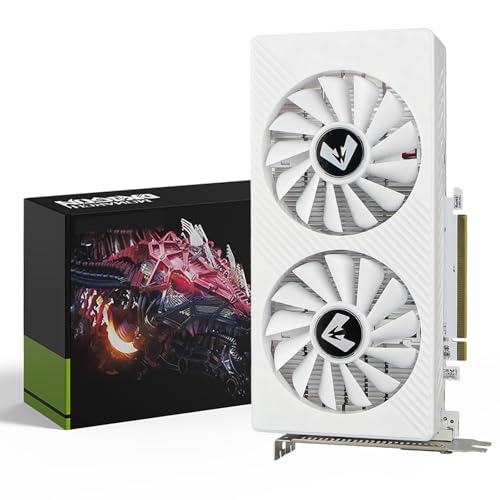
MOUGOL AMD Radeon RX 580 Gaming Graphics Card, 8GB GDDR5 256-Bit, Dual Fan Cooling, DP/HDMI/DVI Video Output, PCI Express X16 3.0, Computer GPU Support Windows 11/10/7 Desktop PC
【8GB GDDR5 High-Capacity VRAM】: Equipped with 8GB of Samsung GDDR5 memory and a massive 256-bit bus width, this…
As an affiliate, we earn on qualifying purchases.
As an affiliate, we earn on qualifying purchases.
What Is GPU VRAM and Why Does It Matter?
Have you ever wondered why some graphics cards handle games and creative tasks more smoothly than others? It all comes down to GPU VRAM, which is dedicated memory on the graphics card. VRAM capacity determines how much data the card can store temporarily, affecting performance during high-demand tasks. But it’s not just about size; memory bandwidth matters too. Higher bandwidth allows data to flow quickly between VRAM and the GPU, reducing lag and bottlenecks. This is essential when rendering complex scenes or working with large files. Without sufficient VRAM or bandwidth, your GPU struggles to keep up, causing stutters, lower frame rates, or longer rendering times. Understanding what GPU VRAM is and why it matters helps you choose a card that matches your gaming or creative needs. memory bandwidth also plays a crucial role in overall GPU performance, especially in data transfer speeds that impact real-time processing. Additionally, the capacity of VRAM influences how well your GPU can handle future software updates and more demanding applications. To optimize performance, it’s important to consider both the type of GPU technology and the specific tasks you intend to perform. A thorough understanding of VRAM requirements can assist in selecting the right graphics card for your specific workload.

maxsun AMD Radeon RX 550 4GB GDDR5 ITX Computer PC Gaming Video Graphics Card GPU 128-Bit DirectX 12 PCI Express X16 3.0 DVI-D Dual Link, HDMI, DisplayPort
AMD Radeon RX 550 Chipset, Silver plated PCB & all solid capacitors provide lower temperature, higher efficiency &…
As an affiliate, we earn on qualifying purchases.
As an affiliate, we earn on qualifying purchases.
How GPU VRAM Size Impacts Gaming and Creative Performance
The size of your GPU’s VRAM directly influences how well your system performs during gaming and creative tasks. Insufficient VRAM can cause VRAM bottlenecks, leading to lower frame rates, stuttering, and longer load times. When your tasks demand more memory than available, your GPU struggles to process textures, models, or high-resolution assets efficiently. Additionally, VRAM size impacts memory bandwidth, which affects how quickly data moves between VRAM and the GPU core. Limited VRAM combined with low memory bandwidth can bottleneck performance, especially in demanding games or creative applications like video editing and 3D rendering. To guarantee smooth performance, you need enough VRAM to handle your workload without hitting these bottlenecks, particularly at higher resolutions or detail settings. Thermal management techniques in some high-quality graphics cards can also support better thermal management and longevity, further enhancing performance. Modern GPUs often incorporate local automation features that optimize performance and temperature control to maintain consistent operation. Understanding your specific workload requirements can help determine the optimal VRAM size for your needs, especially considering how luxury lifestyle elements like high-end hardware can influence overall system efficiency.

Skytech Gaming Legacy 4 Gaming PC, AMD Ryzen 9 9950X3D 4.3GHz, NVIDIA RTX 5090 32GB VRAM, X870 Board, 4TB Gen4 NVMe SSD, 64GB DDR5 RAM 6000, 1200W Gold ATX 3 PSU, 420 ARGB AIO, WI-FI 7, Windows 11
AMD Ryzen 9 9950X3D 4.3GHz (5.7GHz Turbo Boost) CPU Processor | 4TB Gen4 NVMe M.2 SSD – Up…
As an affiliate, we earn on qualifying purchases.
As an affiliate, we earn on qualifying purchases.
Signs Your GPU Needs More VRAM
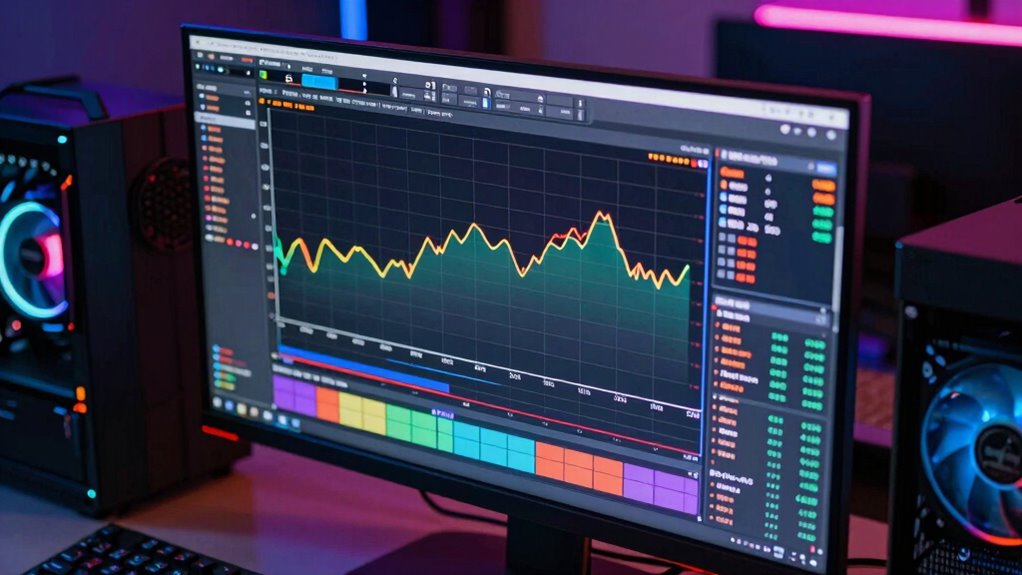
If you notice your games or applications suddenly slow down or lag, it could be a sign your GPU needs more VRAM. Graphical artifacts like strange lines or colors might also appear, indicating memory issues. Additionally, increased system crashes during demanding tasks often point to insufficient VRAM capacity. Monitoring your system’s performance with appropriate tools can help identify if GPU VRAM capacity is limiting your experience, and understanding system performance can guide you in making necessary upgrades. Being aware of upgrading VRAM options can help you optimize your system for smoother graphics and improved reliability. Recognizing the importance of support breakfast in related contexts can also highlight the value of proper system support and maintenance. Moreover, understanding the Twin Flame connection and signs can metaphorically relate to recognizing when your system is “calling” for an upgrade to achieve better harmony.
Noticeable Performance Drops
As you play demanding games or run intensive applications, you might start noticing sudden slowdowns or stuttering, which often indicate your GPU is struggling with its current VRAM capacity. When your VRAM can’t keep up with the graphic textures being processed, the system slows down to compensate, causing noticeable performance drops. You may also experience longer load times or reduced frame rates during high-intensity scenes. These issues become more apparent when the game or app pushes the limits of your GPU’s memory. If you find yourself frequently lowering graphic settings to maintain smooth gameplay, it’s a sign your GPU needs more VRAM. Upgrading your VRAM capacity can help handle larger textures and complex visuals, ensuring a smoother, more responsive experience. Additionally, understanding how mental wellbeing impacts overall performance can help you maintain the focus needed to optimize your gaming setup. Recognizing the importance of hardware capacity can guide you in making effective upgrades for better gaming performance. Properly managing your hardware resources is essential to prevent performance drops, and being aware of your system limitations can help you plan upgrades more effectively before experiencing severe issues. Regularly monitoring your GPU’s VRAM usage with performance metrics can help you identify when an upgrade is necessary.
Graphical Artifacts Appear
When your GPU runs out of VRAM, you might notice strange visual glitches that don’t belong in the game or application. One common sign is color banding, where smooth gradients suddenly display harsh lines or stripes instead of seamless shifts. Rendering glitches can also appear as flickering textures, missing details, or distorted images. These artifacts happen because your GPU can’t store enough data to render scenes properly, forcing it to reuse memory or generate errors. As a result, visuals become inconsistent, distracting, and less immersive. If you see these graphical artifacts, it’s a clear sign that your GPU needs more VRAM to handle complex textures and high-resolution assets effectively. Upgrading your VRAM can eliminate these issues and improve visual stability. Additionally, understanding GPU memory management helps you better grasp how VRAM affects rendering performance and artifact prevention. Proper VRAM allocation is crucial for maintaining smooth graphics and avoiding these visual disruptions. Recognizing these signs early can help you optimize your system and prevent further performance issues, especially by monitoring how your GPU handles memory usage during demanding tasks.
Increased System Crashes
Increased system crashes can be a clear sign that your GPU is struggling due to insufficient VRAM. When your VRAM can’t handle demanding applications or games, crashes become more frequent and unpredictable. Sometimes, hardware compatibility issues may also cause crashes if your GPU isn’t properly optimized for your system. Ensuring your software is up to date can help mitigate these problems, as developers release updates that improve stability and compatibility. If crashes persist despite software updates, it’s likely your GPU needs more VRAM to manage larger textures or complex scenes. Upgrading your VRAM can provide the additional buffer needed to keep your system stable during intensive tasks, preventing crashes caused by overburdened memory.

Create idea 3PCS ATX 8 Pin Male to Female 180 Degree Angle Adapter GPU Down Angle Connector Power Adapter Board for Desktop Graphics Card Black
Type: ATX 8-pin Female to 8-pin Male 180 degree angle adapter, used for desktop graphics cards. These adapters…
As an affiliate, we earn on qualifying purchases.
As an affiliate, we earn on qualifying purchases.
VRAM Needs for Different Gaming Resolutions
When you upgrade your gaming resolution, your VRAM needs increase because higher resolutions demand more data to render detailed images. Your game settings, like textures and anti-aliasing, also influence how much VRAM you’ll require. Understanding how resolution and settings interact helps you choose the right VRAM for smooth gameplay.
Resolution Impact on VRAM
Have you ever wondered how your gaming resolution affects VRAM requirements? Higher resolutions, like 4K, demand more VRAM because they push your GPU to process larger textures and frame buffers. This increase can lead to higher VRAM latency if your card’s memory isn’t optimized, causing potential performance drops. Overclocking VRAM might help reduce latency and improve data transfer rates, but it won’t compensate for the sheer amount of VRAM needed at higher resolutions. Lower resolutions, such as 1080p, require less VRAM since fewer pixels need to be rendered and stored. As you upgrade your resolution, you’ll need to contemplate not just VRAM capacity but also how your GPU manages memory bandwidth to maintain smooth gameplay.
Gaming Settings and VRAM
Adjusting your gaming settings directly impacts VRAM needs, especially as you select higher resolutions or enable demanding features like ray tracing or ultra-quality textures. Your VRAM capacity determines how smoothly your game runs at different gaming resolutions. For example:
- At 1080p, most games need around 2-4 GB of VRAM.
- At 1440p, expect to require 4-6 GB for ideal performance.
- At 4K, VRAM needs increase to 8-12 GB or more for high-quality settings.
- Enabling features like ray tracing notably raises VRAM demands across all resolutions.
Choosing the right VRAM capacity based on your gaming resolution ensures your system handles the graphics load without stuttering or lag, providing a seamless gaming experience.
Do Creative Tasks Require More VRAM Than Gaming?
Creative tasks often demand more VRAM than gaming because they involve processing large files, high-resolution textures, and complex rendering. When working with creative software like Photoshop, Blender, or Premiere, VRAM allocation becomes critical for smooth performance. These applications require more memory to handle detailed models, multi-layered projects, and high-definition video files. Unlike gaming, where VRAM mainly stores textures and frame buffers, creative work involves real-time rendering and manipulation of massive data sets. Insufficient VRAM can cause lag, crashes, or reduced quality. Consequently, if you’re into creative tasks, you’ll generally need a GPU with more VRAM to ensure efficient workflow and prevent bottlenecks. In short, creative tasks often surpass gaming in VRAM requirements due to their data-intensive nature.
How to Choose the Right GPU VRAM for Your Budget and Needs
Choosing the right GPU VRAM depends on balancing your specific needs with your budget. First, determine your typical use—gaming, creative work, or professional tasks—and match VRAM size accordingly. Second, consider future-proofing; more VRAM helps handle upcoming software updates or games. Third, look into VRAM overclocking potential to boost performance without extra cost. Fourth, understand GPU memory caching, which can optimize data flow and improve efficiency with less VRAM. Higher VRAM isn’t always necessary if you’re mainly gaming at 1080p, but creative tasks or 4K gaming may demand more. Balancing these factors ensures you get the best performance for your investment and avoid overspending on unnecessary VRAM.
Myths About GPU VRAM Debunked
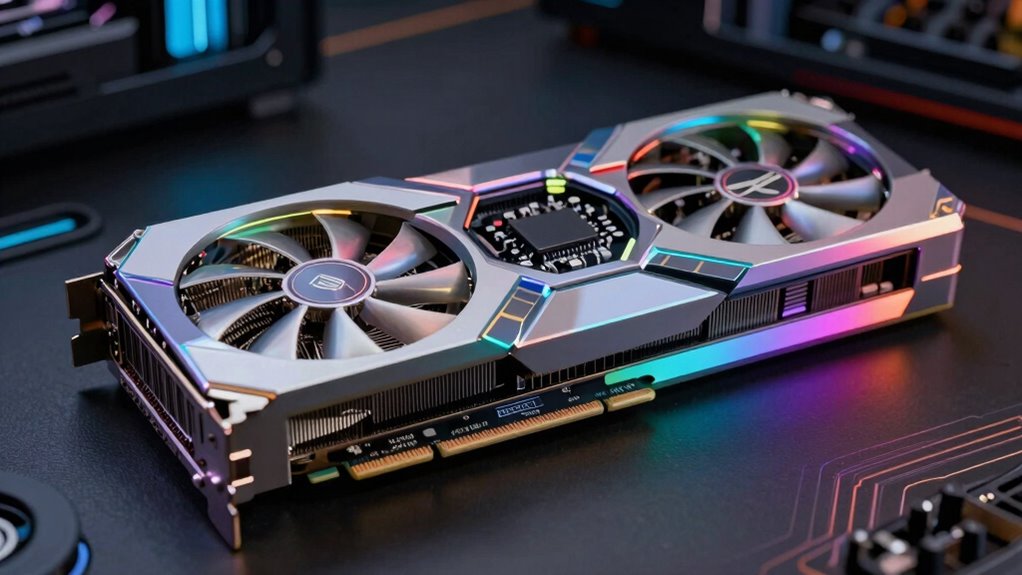
Many common misconceptions about GPU VRAM persist, leading you to make ill-informed decisions. One myth is that having more VRAM always improves gaming performance; however, VRAM bottlenecks only occur when your applications demand more memory than available, which isn’t always the case. Another false belief is that high VRAM prevents GPU memory leaks; in reality, leaks are software issues unrelated to VRAM size. Some users think upgrading VRAM solves all performance problems, but bottlenecks often stem from other system components or inefficient code. Overestimating VRAM needs can result in wasted money without tangible benefits. Understanding these myths helps you avoid unnecessary upgrades and guarantees you focus on the real factors affecting your GPU’s performance.
Tips to Optimize and Future-Proof Your GPU VRAM
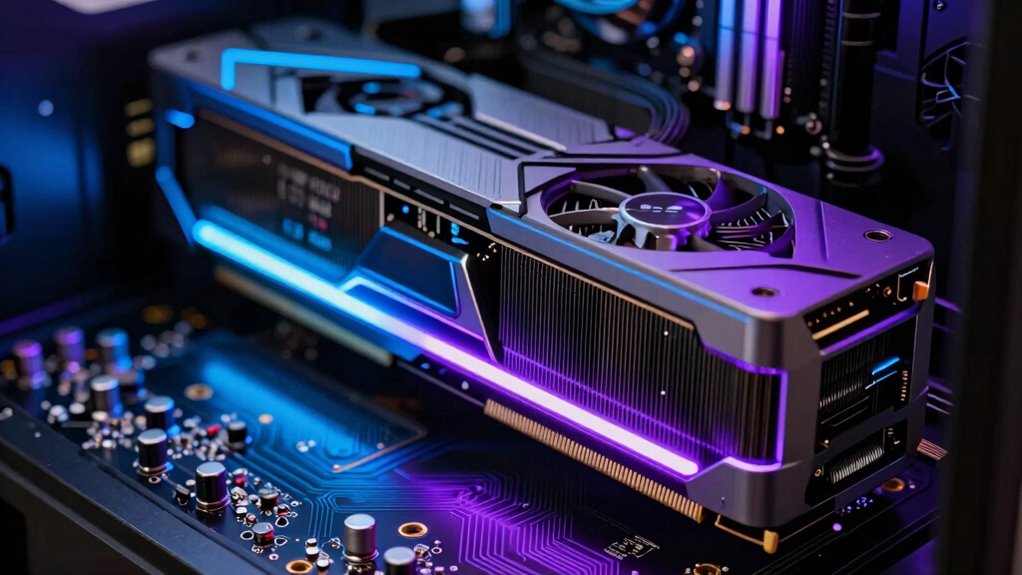
To effectively optimize and future-proof your GPU VRAM, focus on balancing your current needs with upcoming software demands. Start with VRAM overclocking cautiously—small increases can boost performance, but monitor stability to avoid overheating. Next, prioritize VRAM temperature management by ensuring proper airflow and cleaning dust from heatsinks, which helps maintain ideal operating temperatures. Consider upgrading your GPU’s VRAM if you notice frequent bottlenecks or plan to run demanding applications long-term. Additionally, keep your drivers updated to optimize VRAM usage and compatibility. Finally, adjust in-game settings to reduce VRAM load when necessary, preventing unnecessary strain. These steps help extend your GPU’s lifespan and guarantee it’s ready for future software innovations.
Frequently Asked Questions
How Does VRAM Compare to System RAM for Gaming?
VRAM and system RAM serve different roles in gaming. VRAM handles graphics, so higher VRAM improves texture quality and reduces the VRAM bottleneck, especially at higher resolutions. System RAM supports game data and background processes. While enough system RAM ensures smooth multitasking, having sufficient VRAM ensures your GPU can process detailed graphics without lag. Both are essential, but VRAM directly impacts gaming performance at higher settings or resolutions.
Can Increasing VRAM Improve Non-Gaming, Everyday Tasks?
Increasing VRAM can improve everyday performance if your tasks involve high-resolution images or multitasking with demanding applications. While VRAM efficiency is essential, more VRAM doesn’t always mean better performance for simple tasks like browsing or document editing. However, if you run graphic-rich programs or multiple monitors, extra VRAM helps prevent slowdowns. So, upgrading VRAM benefits those with specific needs, but for basic tasks, it might not make a noticeable difference.
Is VRAM More Important Than GPU Core Count?
VRAM isn’t the be-all, end-all—core count significance often outweighs it, especially for gaming and intensive tasks. Think of VRAM as a highway’s width; if it’s too narrow, you hit a bottleneck, slowing everything down. However, a higher core count boosts processing power, making your GPU faster overall. In most cases, core count matters more, but having enough VRAM prevents bottlenecks during demanding tasks.
How Often Should I Upgrade My GPU VRAM?
You should upgrade your GPU VRAM whenever you notice VRAM bottlenecks during gaming or creative tasks, typically every 2-3 years. Upgrading VRAM benefits include smoother performance and better handling of high-resolution textures. Keep an eye on your GPU’s VRAM usage; if it consistently hits maximum, it’s time for an upgrade. Regular upgrades guarantee your system keeps up with evolving software demands and prevents performance dips.
Does VRAM Size Affect GPU Overclocking Potential?
Yes, VRAM size can affect your GPU overclocking potential. A larger VRAM capacity reduces the chance of a VRAM bottleneck, allowing higher clock speeds without hitting overclocking limitations. When VRAM is insufficient, your overclock might cause instability or performance drops, especially in memory-intensive tasks. Upgrading VRAM can provide more headroom for overclocking, but make certain your GPU cooling and power supply are also capable of supporting the increased performance.
Conclusion
Now that you understand the ins and outs of GPU VRAM, are you truly ready to choose the right card? Remember, the perfect amount can transform your experience — or hold you back in surprising ways. As technology evolves, so do the demands. Will you stay ahead or fall behind? The choice is yours, but the clock is ticking. Make your move wisely — your future gaming and creative endeavors depend on it.