
TL;DR

Get the latest gadgets delivered free with Prime
- Fast, free delivery on millions of items
- Prime Video, Amazon Music and more included
- Member-only deals all year
An IGN opinion report argues that PlayStation’s reported plan to end physical disc production in January 2028 makes player control over game access more important. The report links the shift to declining physical sales and rising digital purchases, while warning that digital licenses, delistings and online requirements can limit long-term access. The source does not establish the reported plan’s details or confirm that physical game access will end entirely.
An IGN opinion report argues that PlayStation’s reported plan to end physical disc production in January 2028 makes player control over game access more important, as digital purchases increasingly rely on store and publisher licensing. The report says physical copies can be lent, kept or resold, while access to digital games may depend on account systems, servers and licensing terms.
The report presents the proposed production change as part of a broader shift away from physical games, not as proof that all PlayStation games will become inaccessible on disc in 2028. It cites consumer spending on physical games falling from just under $6 billion in May 2016 to barely more than $1.5 billion in May of the report’s publication year. It also says physical spending rose 3% that May, described as the first year-on-year growth since 2009. The source does not identify the underlying data provider in the supplied material.
For PlayStation, the report says digital purchases grew from 27 of every 100 games in 2016 to 78 of every 100 in the report’s current year. It argues that digital purchases do not always give customers the same control as a physical copy: access can be governed by a license, and games can be delisted when rights expire or publishers make other business decisions. A digital purchase’s terms and offline availability can vary by game and platform.
The report points to Spec Ops: The Line, Resident Evil: Operation Raccoon City, Deadpool and Super Mario Maker as examples of games it describes as difficult or impossible to obtain digitally after delisting. It also recalls early always-online requirements for SimCity and Diablo 3, which it says left players unable to access games during server problems. These examples illustrate risks around access, but do not establish that every digital game can be withdrawn or that every physical disc works independently of updates or online services.
What Physical Copies Let Players Control
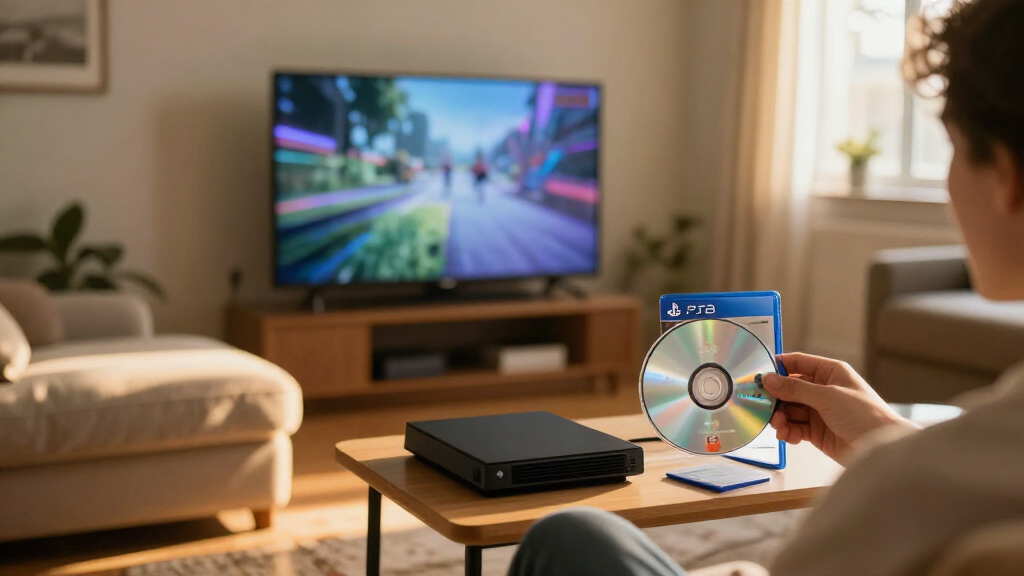
The argument matters to players because format affects what they can do after purchase. A physical copy may be passed to a friend, sold, or retained when a digital storefront no longer offers a game. That can support informal sharing and preserve access to older releases, although the actual capabilities of a disc depend on the title, its updates and any online requirements.
The report also raises a preservation concern: game content can change when music or other licensed material is removed, while a disc may retain an earlier version. That is not a guarantee that every disc preserves a complete or playable version, but it shows why long-term access and ownership are not identical. If physical production shrinks, players may have fewer ways to access games outside account-based storefronts.
As an affiliate, we earn on qualifying purchases.
The Shift Toward Digital Purchases
The report places PlayStation’s reported move within a market where digital game purchases have become more common. Its figures suggest that the change reflects consumer buying patterns as well as platform strategy. However, the supplied source does not provide detailed methodology for the spending and purchase-share numbers, so they should be understood as figures cited by the report rather than independently verified statistics here.
It also mentions possible pressure from console manufacturing costs, citing reports from hardware leakers that PS6 production costs could approach $1,000. The article attributes to PlayStation chief Hideaki Nishino the view that it is “not realistic” for Sony to absorb rising component costs. The source presents a digital-only next console as a possible cost-saving approach, not a confirmed PS6 plan. It briefly connects the trend to Nintendo’s Switch 2 game-key cards and Xbox’s emphasis on Game Pass.
“There’s a misconception amongst players that once you’ve bought a digital game, you own it. You don’t.”
— IGN opinion report
As an affiliate, we earn on qualifying purchases.
Details of the Disc Plan Remain Open
The supplied material does not include a direct PlayStation statement confirming the January 2028 production date, explaining which discs or markets would be affected, or setting out what would happen to existing physical games. It is also unclear whether the reported change would apply to all PlayStation game discs or only particular production arrangements.
The report’s concern about digital access should not be read as a claim that every digital purchase can be revoked at any time. Store policies, license terms, console settings and individual games differ. The source does not provide specific terms for the storefronts it discusses, nor does it establish that a future digital-only console has been confirmed.
As an affiliate, we earn on qualifying purchases.
Watch for Sony’s Formal Details
The next useful development would be a formal PlayStation explanation of the reported production change: its scope, timing, regional impact and implications for retail availability. Players and retailers will also be watching for any announcements about future console formats and whether physical releases will continue through other production or distribution arrangements.
Until those details are available, the report’s figures and the January 2028 date should be treated as claims presented in an opinion article, not a complete account of Sony’s policy. The broader question for consumers remains whether digital storefronts and publishers will provide dependable long-term access as physical options decline.
game resell and lending accessories
As an affiliate, we earn on qualifying purchases.
As an affiliate, we earn on qualifying purchases.
Key Questions
Is PlayStation definitely ending physical game production in January 2028?
The supplied source reports that date, but does not include a direct Sony statement or details defining which products or markets it covers. The plan’s scope is not confirmed by the material provided.
Does buying a digital game mean a player owns it outright?
The IGN report argues that digital purchases commonly grant access under a license, rather than the same control associated with a physical copy. Exact terms and offline access can differ by platform and game.
Why does the report say physical games matter?
It says physical copies can be lent, resold and kept, and may preserve versions of games that later change through licensing or updates. Those benefits depend on the game and whether it needs online services or additional downloads.
Is PlayStation’s next console confirmed to be digital-only?
No. The report suggests a digital-only console could help reduce costs, based partly on hardware-cost speculation, but it does not establish that Sony has confirmed such a plan.
Source: fediverse
Halloween Picks
halloween
As an affiliate, we earn on qualifying purchases.