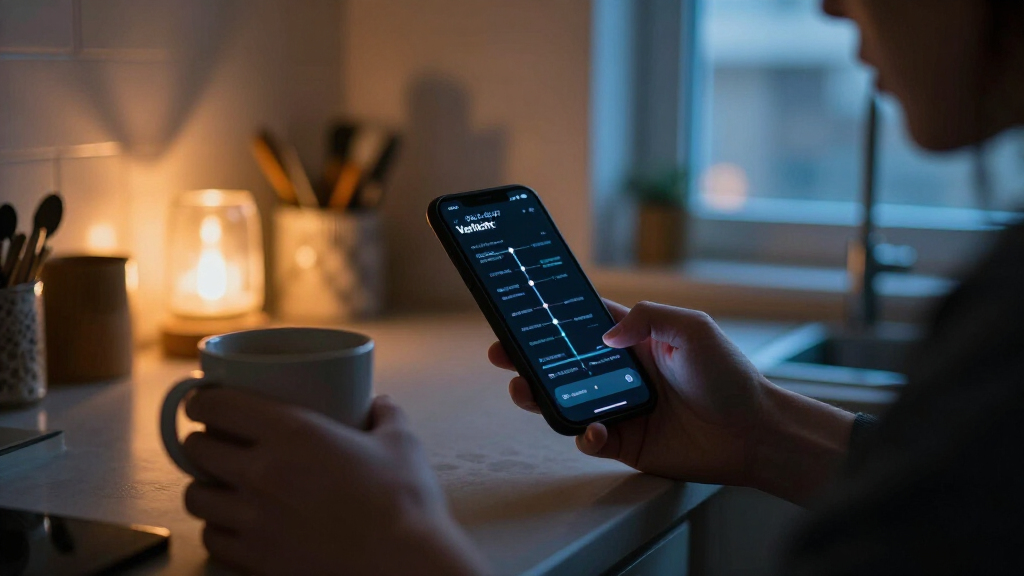

🔍 Read the full analysis: “BLACKOUT — 03:12–05:47, Verlicht”: An AI Narrative To Explore on ThorstenMeyerAI.com

Get the latest gadgets delivered free with Prime
- Fast, free delivery on millions of items
- Prime Video, Amazon Music and more included
- Member-only deals all year
TL;DR
ThorstenMeyerAI.com presents “BLACKOUT — 03:12–05:47, Verlicht,” an interactive design experience that uses a system running low on resources as its central narrative. The page depicts strain and recovery through changes in status, language and visual rhythm, though the project description does not specify the underlying system or the “detail” teased in its account.
ThorstenMeyerAI.com has published “BLACKOUT — 03:12–05:47, Verlicht”, a live interface narrative that follows a system as it runs low on resources and begins to recover. The project uses changing status messages, language and visual rhythm to show the progression, making the way a tool communicates during strain the focus rather than treating failure as a brief interruption.
The project is framed as a late-night field manual. Its description says capacity fades in stages, and the page guides readers through those changes rather than reducing scarcity to a progress bar or an alarm. Recovery is presented as something the reader watches unfold, not as a hidden switch that simply restores normal operation.
ThorstenMeyerAI.com describes the experience as a design exploration for people building AI tools and automated workflows. It asks how an interface can retain trust when an operation is running on reserve and has not yet returned to normal. The page also points readers to a full design teardown, described as explaining decisions from the first signs of strain through the point when the interface begins to feel whole again.
The project description teases “one detail” in the return that changes how the failure reads, but does not identify it in the published summary. It also provides no technical measurements, named system, or account of user testing. The confirmed development is therefore the publication of a narrative design experience and a case-study preview, not a reported performance result or a claim that the approach has been validated.
A live interface narrative · ThorstenMeyerAI.com
BLACKOUT 03:12–05:47, Verlicht
An interactive design experience follows a system as its resources run low and recovery begins. Through shifting status, language and visual rhythm, the page makes the strained interval itself part of the story.
When system strain becomes the story
01 / Design premiseInterfaces make routine operation easy to read, but can leave users guessing when a process slows, loses capacity or needs time to recover. BLACKOUT centers that less polished interval and asks how an interface can communicate its changing state.
Status in motion
Changing status messages give the experience a progression instead of reducing scarcity to a single alarm or progress bar.
Language + rhythm
Words and visual pacing shift as capacity fades, making the way a tool communicates during strain central to the interaction.
Wait, retry or intervene?
When an AI tool or workflow is constrained, users may need to decide what to do. The project offers a case to examine, not measured proof of better decisions.
A recovery the reader witnesses
02 / Narrative arcPresented as a late-night field manual, the experience guides readers through a staged fade and a gradual return. Recovery is shown unfolding rather than appearing as a hidden switch back to normal.
Strain appears
The system begins to signal that it is operating with less capacity.
State changes
Status, language and visual rhythm carry the progression forward.
The interval holds
Limited capacity stays visible instead of becoming a brief interruption.
Recovery unfolds
The reader watches the interface begin to feel whole again.
What the published description confirms
03 / Scope + evidenceWhat is BLACKOUT?
A live interface narrative from ThorstenMeyerAI.com about a system running low on resources and moving through recovery.
What is it exploring?
How an interface might communicate strain and recovery when an AI tool or automated workflow has limited capacity.
Does it show improved trust?
No result is reported. Trust is posed as a design question; the description provides no user research or measured effect.
What is the teased return detail?
The description says one detail changes how the failure reads, but does not identify it. The full teardown is presented as the place to learn more.
Open questions remain
04 / Reporting boundariesThe project description does not name the system or depleted resource, explain “03:12–05:47, Verlicht,” identify the detail in the return, or report technical measurements and user testing. It is unclear whether the experience is a metaphor, an operational interface prototype, or both. Claims that the design improves trust, prevents errors or improves recovery outcomes are not supported by the published summary.
Making System Strain Visible
Interfaces often make routine operation easy to read while giving users little explanation when a process slows, loses capacity or needs time to recover. BLACKOUT puts that less polished interval at the center of the experience. Its design premise is that what an interface communicates during failure can shape whether users understand the system’s state and trust its recovery.
For teams building AI products and automated workflows, that is a practical design concern: users may need to decide whether to wait, retry, or intervene when a system is constrained. A progression conveyed through status and visual changes could make the process more legible than a single warning, but the project description does not establish that it improves trust or changes user behavior. It offers a design case to examine, not evidence of measured impact.
As an affiliate, we earn on qualifying purchases.
A Case Study in Recovery
ThorstenMeyerAI.com presents BLACKOUT as both a live page and a preview of a broader design teardown. The described sequence runs from early signs of strain to a gradual return, using narrative pacing to make resource depletion part of the interaction. The title gives a time range, “03:12–05:47,” and the word “Verlicht,” but the available description does not explain their significance.
The project’s framing differs from an interface that treats an interruption as a short-lived alert and then returns immediately to its normal state. Here, the change in capacity and the process of recovery form the page’s central story. No details are supplied about the technical implementation, the resource being depleted, or whether the experience represents a particular real-world incident.
““when an operation is running on reserve, how can the interface earn trust while the system is still finding its way back?””
— ThorstenMeyerAI.com
As an affiliate, we earn on qualifying purchases.
Details Behind the Blackout
The published description does not state what resource runs low, what system the page depicts, or whether the narrative maps to a specific technical scenario. It does not identify the design choices behind the teased “one detail” in the return, nor does it provide results from user research or testing. The meaning of “03:12–05:47, Verlicht” is also not explained.
It is consequently unclear whether the project is intended as a metaphor, a prototype for operational interfaces, or both. The description supports reporting that the page explores a design question; it does not support claims that the approach has been proven to increase user trust, prevent errors, or improve recovery outcomes.
As an affiliate, we earn on qualifying purchases.
The Teardown May Add Detail
ThorstenMeyerAI.com invites readers to visit the live experience and read its full design teardown. That account may clarify how the sequence was built, what the title’s time range refers to, and which detail in the recovery changes the interpretation of the preceding failure. No publication date for additional material or further development is specified in the project description.
Until those details are available, BLACKOUT is best understood as a published design narrative that makes resource scarcity and recovery visible. Whether its approach can be applied to live AI products, and whether users find it more informative than conventional status indicators, remains unreported.
Source: ThorstenMeyerAI.com
As an affiliate, we earn on qualifying purchases.
Key Questions
What is “BLACKOUT — 03:12–05:47, Verlicht”?
It is a live interface narrative from ThorstenMeyerAI.com about a system running low on resources and moving through recovery. The page uses status, language and visual changes to tell that story.
What does the project say it is exploring?
It explores how an interface can communicate when an AI tool or automated workflow is operating with limited capacity, including how to show strain and recovery without presenting the event as a brief interruption.
Does the project show that this design improves trust?
No such result is reported in the project description. It poses trust as a design question, but provides no user-testing results or measured evidence of an effect.
What is the teased detail in the recovery?
The description says a detail in the return changes how the failure reads, but does not reveal what it is. The full design teardown is presented as the place to learn more.
What happens next?
Readers can view the live room and access the full design teardown. The available description does not specify when further information will be published.
Source: ThorstenMeyerAI.com
Halloween Picks
halloween
As an affiliate, we earn on qualifying purchases.