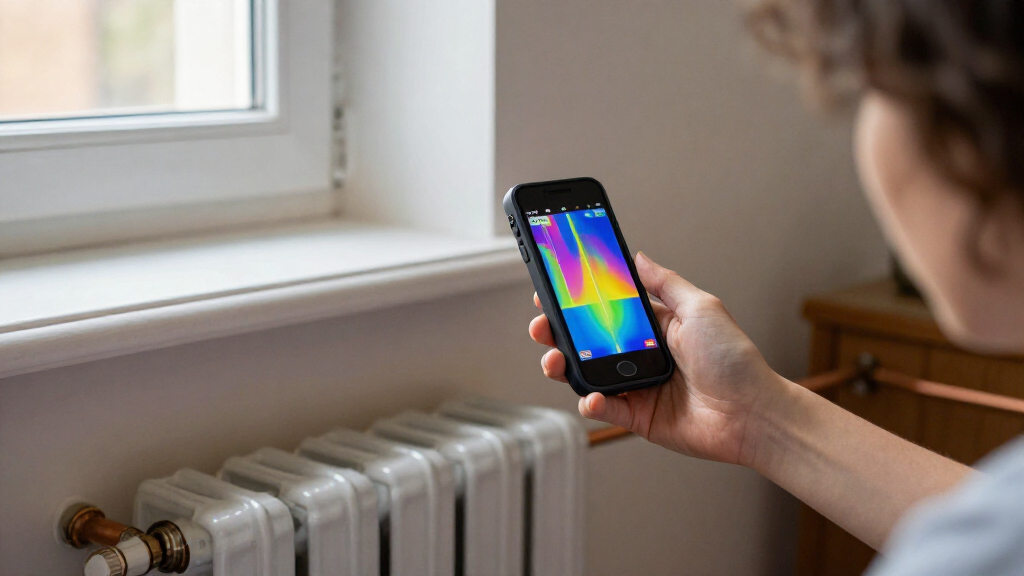

Smartphone thermal cameras turn a compatible phone or tablet into a tool for spotting heat patterns in electrical, mechanical, and building inspections. My best overall pick is the TOPDON TC001 Max, which stands out for its dual-lens design; the VEVOR 512 × 384 model is a standout for high-resolution imaging and macro work, while the FLIR Edge Pro suits buyers who want wireless operation. The main tradeoffs are image detail versus portability, direct plug-in convenience versus wireless flexibility, and phone compatibility versus specialized features. A higher resolution can reveal smaller temperature patterns, but it does not replace correct focus, suitable measurement range, or sound inspection technique. Read on for the full comparison and guidance on choosing a camera that fits your phone and work.

Get the latest gadgets delivered free with Prime
- Fast, free delivery on millions of items
- Prime Video, Amazon Music and more included
- Member-only deals all year
Complete the kit



Key Takeaways
- Dual-lens capability separates the TC001 Max: it is the leading choice here for buyers who want more than a basic plug-in thermal view.
- The VEVOR model makes a resolution-first case: its listed 512 × 384 super-resolution and macro lens target users who need detailed close-up imaging, though buyers should check what the resolution mode means for their intended measurements.
- Wireless use changes how a camera fits the job: the FLIR Edge Pro avoids a direct phone-port connection, a practical distinction for awkward inspection angles or when a case makes plug-in modules inconvenient.
- Macro lenses are purpose-built, not universally better: the Thermal Master P3 with manual macro lens is aimed at close-up inspection, while standard models make more sense for broader scans.
- Compatibility is a deciding factor across this lineup: connector type, operating system, app support, and device fit can matter more than a headline sensor specification.
| GOYOJO GW192A USB-C Thermal Imaging Camera for Smartphones |  | Best Lightweight Everyday Pick | Infrared resolution: 192 × 192 | Pixel pitch: 12 μm | Field of view: 50° | VIEW LATEST PRICE | See Our Full Breakdown |
| Thermal Master P3 Thermal Camera for iOS and Android |  | Best for Close-Up Technical Work | Native / enhanced resolution: 256 × 192 / 512 × 384 | Refresh rate: 25 Hz | Temperature sensitivity: 0.035°C | VIEW LATEST PRICE | See Our Full Breakdown |
| AMPBANK M192 USB-C Thermal Camera |  | Best for Phone-to-PC Reporting | Native infrared resolution: 192 × 192 | Enhanced resolution: Up to 384 × 384 TISR; 240 × 240 mode also available | Refresh rate: 25 Hz | VIEW LATEST PRICE | See Our Full Breakdown |
| Thermal Master P1 USB-C Thermal Camera for iPhone and Android |  | Best for Awkward-to-Reach Inspections | Native / enhanced IR resolution: 160 × 120 / 320 × 240 | Thermal sensitivity: 0.04°C NETD | Refresh rate: 25 Hz | VIEW LATEST PRICE | See Our Full Breakdown |
| TOPDON TC001 Max Dual-Lens Thermal Camera |  | Best for Identifying Heat Sources in Context | Thermal resolution: 256 × 192 IR; enhanced to 512 × 384 with TISR | Refresh rate: 25 Hz | Thermal sensitivity: ≤40 mK NETD | VIEW LATEST PRICE | See Our Full Breakdown |
| TOPDON TC001 Mini Thermal Imaging Camera for iPhone, Android, iPad, and Windows |  | Best for Guided Inspections | IR sensor resolution: 96 × 96 | Processed thermal image resolution: 384 × 384 | Thermal sensitivity: ≤40 mK | VIEW LATEST PRICE | See Our Full Breakdown |
| UNI-T UTi120Mobile Thermal Camera for Android, 120 × 90 IR Resolution |  | Best for Android Connector Flexibility | Infrared resolution: 120 × 90 | Compatibility: Android phones and tablets; USB-C and Micro USB | Temperature range: -20°C to 400°C (-4°F to 752°F) | VIEW LATEST PRICE | See Our Full Breakdown |
| VEVOR Thermal Imaging Camera for USB‑C Android & iOS, 512 × 384 Super Resolution with Macro Lens, 25 Hz |  | Best for High-Detail Imaging | Resolution: 512 × 384 pixels (super resolution) | Refresh rate: 25 Hz | Thermal sensitivity: ≤40 mK | VIEW LATEST PRICE | See Our Full Breakdown |
| FLIR Edge Pro Wireless Thermal Imaging Camera for iOS and Android | 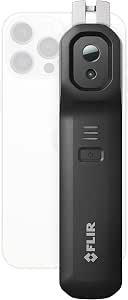 | Best for Wireless Reach | Native IR resolution: 160 × 120 | Enhanced image resolution: 480 × 360 | Temperature accuracy: ±3°C or ±5% | VIEW LATEST PRICE | See Our Full Breakdown |
| Thermal Master P3 Thermal Camera for iPhone and Android with Manual Macro Lens |  | Best for Close-Up Circuit Work | Thermal resolution: 256 × 192 native; 512 × 384 enhanced | Thermal sensitivity: ≤35 mK | Temperature range: -4°F to 1,112°F (-20°C to 600°C) | VIEW LATEST PRICE | See Our Full Breakdown |
| TOPDON TC002C Duo USB-C Thermal Imaging Camera | 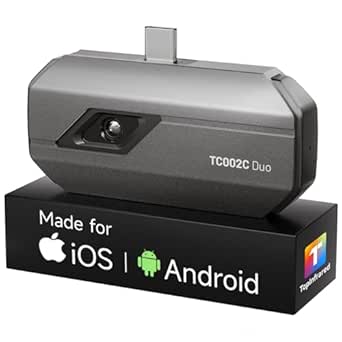 | Best for Cross-Platform USB-C Use | Compatibility: USB-C smartphones and tablets running iOS, Android, or Windows; temporarily incompatible with Mac devices and Android 16 | Thermal resolution: 256 × 192 | Super resolution: 512 × 384 with TISR | VIEW LATEST PRICE | See Our Full Breakdown |
| smartphone thermal camera | Temperature range | Compatibility | Refresh rate | Thermal sensitivity |
|---|---|---|---|---|
| GOYOJO GW192A USB-C Thermal Im | -4°F to 752°F (-20°C to 400°C) | iPhone 15/16/17 series and Android phones | — | — |
| Thermal Master P3 Thermal Came | -4°F to 1,112°F (-20°C to 600°C) | Android, USB-C iPhone, older iPhone with included Lightning adapter, Windows with supplied extension cable | 25 Hz | — |
| AMPBANK M192 USB-C Thermal Cam | -4°F to 842°F (-20°C to 450°C) | USB-C iOS, Android, and Windows devices; not Mac | 25 Hz | 40 mK |
| Thermal Master P1 USB-C Therma | -4°F to 1,112°F (-20°C to 600°C) | — | 25 Hz | 0.04°C NETD |
| TOPDON TC001 Max Dual-Lens The | -4°F to 1,022°F (-20°C to 550°C) | — | 25 Hz | ≤40 mK NETD |
| TOPDON TC001 Mini Thermal Imag | -4°F to 1,022°F (-20°C to 550°C) | iOS, Android, and Windows | 25 Hz | ≤40 mK |
| UNI-T UTi120Mobile Thermal Cam | -20°C to 400°C (-4°F to 752°F) | Android phones and tablets; USB-C and Micro USB | — | — |
| VEVOR Thermal Imaging Camera f | -4°F to 1,022°F | Android 8.0+ and iOS 12.0+ | 25 Hz | ≤40 mK |
| FLIR Edge Pro Wireless Thermal | — | iOS and Android phones or tablets | — | — |
| Thermal Master P3 Thermal Came | -4°F to 1,112°F (-20°C to 600°C) | Android phones, iPhone 15 and newer, older iPhones with included Lightning adapter, and Windows computers | — | ≤35 mK |
| TOPDON TC002C Duo USB-C Therma | -4°F to 1022°F | USB-C smartphones and tablets running iOS, Android, or Windows; temporarily incompatible with Mac devices and Android 16 | 25 Hz | 40 mK |
More Details on Our Top Picks
GOYOJO GW192A USB-C Thermal Imaging Camera for Smartphones
The GOYOJO GW192A keeps smartphone thermal imaging simple: its 0.48-ounce body plugs into a USB-C phone, with no separate battery or pairing to manage. Its 192 × 192 resolution is a practical fit for finding broad heat patterns around plumbing, HVAC equipment, or a fuse panel, while the 50° field of view takes in more of a scene than a narrowly framed close-up camera. Compared with the Thermal Master P3, the GOYOJO is lighter and less feature-heavy, but the P3 offers higher native resolution, manual focus, and a faster-moving image at 25 Hz. The GOYOJO’s broad temperature range is useful for varied household and automotive checks; however, its listed compatibility is less expansive, and the product data gives no refresh rate or app-feature detail. I’d choose it for straightforward, portable inspections rather than fine-detail diagnostics.
Pros:- Lightweight 0.48-ounce design is easy to carry with a phone
- USB-C connection avoids separate batteries and wireless pairing
- 50° field of view suits scanning larger areas
- Temperature range reaches from -4°F to 752°F
Cons:- 192 × 192 resolution offers less detail than the Thermal Master P3’s 256 × 192 native sensor
- Product data does not specify refresh rate or app analysis features
- Compatibility is listed for iPhone 15/16/17 series and Android phones, without broader device detail
Best for: Homeowners and DIYers who want a very light USB-C camera for checking broad heat patterns in HVAC, plumbing, electrical, or automotive work.
Not ideal for: Technicians inspecting small circuit components or buyers who need clearly documented refresh rate, focus controls, and advanced app functions.
- Infrared resolution:192 × 192
- Pixel pitch:12 μm
- Field of view:50°
- Temperature range:-4°F to 752°F (-20°C to 400°C)
- Temperature accuracy:±2%
- Connector:USB-C
- Compatibility:iPhone 15/16/17 series and Android phones
- Dimensions and weight:1.77 × 0.43 × 1.34 inches; 0.48 ounces
Our verdict“Choose the GOYOJO GW192A for a lightweight, direct-plug camera for general household checks, not close-up component work.”
Thermal Master P3 Thermal Camera for iOS and Android
The Thermal Master P3 is the strongest fit here for buyers who need to inspect small targets, not just scan a room. Its manual focus works as close as 8 mm, which helps separate components on a circuit board, while its 256 × 192 native sensor, 25 Hz refresh rate, and 15× digital zoom make live inspection more useful than the simpler GOYOJO GW192A. The stated 512 × 384 enhanced resolution and app alerts add flexibility, and its broad temperature range reaches 1,112°F. It also stands out for device reach: the package supports USB-C phones, older iPhones with a Lightning adapter, and Windows through a supplied cable. The tradeoff is a heavier body than the GOYOJO, plus phone-powered operation means the stated 5–8 hours depends on the connected device. I’d pick it for hands-on diagnostic work, not just occasional home scanning.
Pros:- Manual focus supports inspection as close as 8 mm
- 25 Hz refresh rate and 15× digital zoom aid live troubleshooting
- Native 256 × 192 resolution with stated 512 × 384 enhanced output
- Supports Android, USB-C iPhones, older iPhones with adapter, and Windows with cable
Cons:- At 0.928 ounces, it is heavier than the GOYOJO GW192A
- Windows use requires the supplied extension cable
- Continuous use depends on power from the connected phone
Best for: Electronics repairers, HVAC technicians, and detail-focused DIYers who need close-focus inspection, app tools, and compatibility across phone and Windows workflows.
Not ideal for: Buyers seeking the lightest, simplest camera for occasional broad-area checks, or anyone who expects a standalone device with its own power source.
- Native / enhanced resolution:256 × 192 / 512 × 384
- Refresh rate:25 Hz
- Temperature sensitivity:0.035°C
- Temperature range:-4°F to 1,112°F (-20°C to 600°C)
- Temperature accuracy:±3.6°F (±2°C)
- Minimum focusing distance:8 mm
- Digital zoom:15×
- Compatibility:Android, USB-C iPhone, older iPhone with included Lightning adapter, Windows with supplied extension cable
- Dimensions and weight:2.32 × 1.06 × 0.68 inches; 0.928 ounces
Our verdict“Pick the Thermal Master P3 if close-focus work and broad device compatibility matter more than minimum weight and simplicity.”
AMPBANK M192 USB-C Thermal Camera
The AMPBANK M192 earns its place for buyers who want to carry an inspection from phone to computer. Alongside its USB-C connection, it includes PC analysis software for reports and data export, plus a case and extension cable—more useful accessories for documented work than the stripped-down GOYOJO GW192A provides. The 25 Hz refresh rate, adjustable emissivity, and high/low temperature alarms also support active checks rather than simple image capture. Its native 192 × 192 sensor is in the same class as the GOYOJO, with selectable TISR enhancement up to 384 × 384; that is not the same as native sensor resolution. The main limitation is platform support: it works with compatible iOS, Android, and Windows devices but not Mac, and it requires USB-C and the ThermCam app. I’d favor it for users who need records and thresholds, not Mac-based workflows.
Pros:- PC software supports thermal reports and data export
- 25 Hz refresh rate with high and low temperature alarms
- Selectable TISR enhancement up to 384 × 384
- Includes carrying case, cleaning cloth, and 50 cm extension cable
Cons:- Not compatible with Mac
- Requires a USB-C device and the ThermCam app
- TISR enhancement does not change the 192 × 192 native sensor resolution
Best for: Inspectors, maintenance staff, and serious DIYers using USB-C devices who want temperature alarms and a path to PC-based reporting.
Not ideal for: Mac users, people without a compatible USB-C device, or buyers who want a simple camera without a required companion app.
- Native infrared resolution:192 × 192
- Enhanced resolution:Up to 384 × 384 TISR; 240 × 240 mode also available
- Refresh rate:25 Hz
- Thermal sensitivity:40 mK
- Temperature range:-4°F to 842°F (-20°C to 450°C)
- Measurement accuracy:±2°C or 2%
- Compatibility:USB-C iOS, Android, and Windows devices; not Mac
- Features:10 color palettes, adjustable emissivity, high/low temperature alarms, PC analysis software
- Dimensions and weight:2.76 × 1.73 × 0.55 inches; 1.05 ounces
Our verdict“Choose the AMPBANK M192 for alarm-based inspections and PC reporting, provided Mac compatibility is not part of your workflow.”
Thermal Master P1 USB-C Thermal Camera for iPhone and Android
The Thermal Master P1 is the practical choice when the inspection point is hard to reach. Its included 19-inch extension cable lets you keep the phone in hand while positioning the camera near a pipe, appliance, or tight access space—a different advantage from the pocket-focused Thermal Master P3. The P1 also brings a 52° × 39° field of view, 25 Hz refresh rate, temperature alerts, and up to 15× zoom, giving it a useful toolkit for broad checks and tracking a hot spot. Its 160 × 120 native sensor is lower resolution than the P3’s 256 × 192 sensor, even though the P1 lists enhanced output to 320 × 240. IP54 protection and stated 1-meter drop protection add reassurance for work areas, but the camera still relies on a compatible USB-C device for power. I’d choose it for access and durability, not maximum image detail.
Pros:- 19-inch extension cable helps reach difficult inspection areas
- IP54 protection and stated 1-meter drop protection suit worksite handling
- 25 Hz refresh rate, alerts, and 1–15× zoom support active checks
- Temperature range reaches -4°F to 1,112°F
Cons:- 160 × 120 native resolution is lower than the Thermal Master P3’s 256 × 192
- Requires a compatible USB-C device and draws power from it
- Measures surface heat and cannot see through walls
Best for: Home inspectors and maintenance workers who need to position a camera in cramped or awkward spaces while keeping their phone accessible.
Not ideal for: Users prioritizing fine thermal detail, or anyone without a compatible USB-C phone, tablet, or Windows device.
- Native / enhanced IR resolution:160 × 120 / 320 × 240
- Thermal sensitivity:0.04°C NETD
- Refresh rate:25 Hz
- Temperature range:-4°F to 1,112°F (-20°C to 600°C)
- Temperature accuracy:±2°C / ±3.6°F
- Field of view:52° × 39°
- Zoom and power:1–15× zoom; 0.32 W
- Protection and runtime:IP54; 1-meter drop protection; 5–8 hours
- Dimensions and weight:2.36 × 1.18 × 0.39 inches; 0.6 ounces
Our verdict“Choose the Thermal Master P1 when reaching the inspection target matters more than having the highest native resolution.”
TOPDON TC001 Max Dual-Lens Thermal Camera
The TOPDON TC001 Max stands apart from the other picks by pairing thermal imaging with a visible-light camera. That second view can help identify which pipe, connector, or appliance component corresponds to a warm area, rather than leaving the reader with a heat pattern alone. Its 256 × 192 thermal resolution, stated TISR enhancement to 512 × 384, and 25 Hz refresh rate put it closer to the Thermal Master P3 than the 192 × 192 GOYOJO GW192A on listed imaging detail. The apps add photo and video capture, temperature analysis, graphs, and color palettes, while USB-C and Lightning adapters broaden device support. The tradeoff is that buyers need the correct adapter and compatible device, and the listed accuracy is expressed as ±2°C / ±2%, which leaves some ambiguity about how the figures apply. I’d choose this model when scene context matters as much as heat detection.
Pros:- Visible-light and thermal imaging help relate heat patterns to real components
- 256 × 192 thermal resolution with stated enhancement to 512 × 384
- USB-C and Lightning adapters support a range of phones and tablets
- Apps offer video, temperature analysis, and real-time graphs
Cons:- Requires a compatible device and the appropriate included adapter
- Listed temperature accuracy, ±2°C / ±2%, is not explained further
- Its feature set is more than needed for basic broad-area scans
Best for: Inspectors and repairers who need visible-light context alongside thermal images to identify the physical source of a heat pattern.
Not ideal for: Buyers seeking the simplest single-sensor plug-in camera, or those who need a clearly stated accuracy method and already have a preferred phone-specific workflow.
- Thermal resolution:256 × 192 IR; enhanced to 512 × 384 with TISR
- Refresh rate:25 Hz
- Thermal sensitivity:≤40 mK NETD
- Temperature range:-4°F to 1,022°F (-20°C to 550°C)
- Temperature accuracy:±2°C / ±2%
- Connectivity:USB-C and Lightning adapters
- Compatible devices:Android, iPhone, iPad, and Windows
- Dimensions and weight:7.1 × 4.2 cm; 33 g
- App functions:Photo and video capture, temperature analysis, graphs, and color palettes
Our verdict“Pick the TOPDON TC001 Max if matching thermal findings to visible objects is worth more to you than a simpler single-camera setup.”
TOPDON TC001 Mini Thermal Imaging Camera for iPhone, Android, iPad, and Windows
The TOPDON TC001 Mini is a compact pick for buyers who want more than a live heat map: its software adds inspection guides, alarms, analysis tools, and reports. The sensor is 96 × 96, with processing that produces 384 × 384 images, so that enhanced output should not be mistaken for native sensor detail. Compared with the UNI-T UTi120Mobile, it covers a much wider temperature span and supports Windows as well as mobile devices, though the UNI-T has a higher native resolution. A 25 Hz refresh rate and sensitivity of ≤40 mK suit routine home, HVAC, electrical, and automotive checks. The tradeoff is the phone-powered, no-screen design: you need a compatible connected device, and this is less suited to buyers who prioritize native image resolution over guided workflow.
Pros:- Analysis tools, alarms, reporting, and AI-assisted insights support a guided inspection workflow.
- Broad -4°F to 1,022°F measurement range covers many home, HVAC, electrical, and automotive tasks.
- Compatible with iOS, Android, and Windows devices.
- Compact 30 g design draws power from the connected device rather than needing a separate camera battery.
Cons:- The native IR sensor is 96 × 96; 384 × 384 images are processed output.
- Requires a compatible connected phone, tablet, or computer to operate.
Best for: Home inspectors and DIY troubleshooters who want guided checks, alarms, and report tools across mobile and Windows devices.
Not ideal for: Buyers who need high native thermal resolution or a standalone camera that works without a connected device.
- IR sensor resolution:96 × 96
- Processed thermal image resolution:384 × 384
- Thermal sensitivity:≤40 mK
- Refresh rate:25 Hz
- Temperature range:-4°F to 1,022°F (-20°C to 550°C)
- Accuracy:±2%
- Compatibility:iOS, Android, and Windows
- Weight:30 g
Our verdict“Choose the TC001 Mini if guided inspection tools and broad device compatibility matter more to you than higher native sensor resolution.”
UNI-T UTi120Mobile Thermal Camera for Android, 120 × 90 IR Resolution
The UNI-T UTi120Mobile earns its place for a practical detail that can decide compatibility before image quality does: it supports both USB-C and Micro USB Android phones and tablets. Its 120 × 90 sensor is a step above the TOPDON TC001 Mini’s 96 × 96 native sensor, but it does not offer the TOPDON’s stated processed 384 × 384 output or Windows compatibility. Adjustable emissivity from 0.1 to 0.99 helps when checking materials with different surface characteristics, while seven palettes and thermal, blending, and picture-in-picture modes give users ways to read scenes. The included extension cord can also make awkward inspections easier. Its boundaries are clear: Android only, a 400°C upper limit, and modest sensor resolution make it less suitable for cross-platform work or very fine component detail.
Pros:- USB-C and Micro USB support accommodates a wider range of Android devices.
- Adjustable emissivity from 0.1 to 0.99 supports readings across varied surface types.
- Seven palettes plus thermal, blending, and picture-in-picture display modes.
- Includes an extension cord and carry case for flexible handling and storage.
Cons:- Works with Android phones and tablets only.
- The 120 × 90 sensor offers limited detail for small components or fine inspection work.
- Its 400°C maximum is lower than the TOPDON TC001 Mini and Thermal Master P3 ranges.
Best for: Android users with USB-C or Micro USB devices who want adjustable emissivity and flexible image display modes.
Not ideal for: iPhone owners, Windows users, or inspectors who need a wider temperature range or greater thermal detail.
- Infrared resolution:120 × 90
- Compatibility:Android phones and tablets; USB-C and Micro USB
- Temperature range:-20°C to 400°C (-4°F to 752°F)
- Accuracy:±2°C / ±2%
- Adjustable emissivity:0.1 to 0.99
- Response time:2 milliseconds
- Palettes:7
- Display modes:Thermal, blending, and picture-in-picture
Our verdict“Pick the UTi120Mobile if Android connector flexibility and adjustable emissivity matter more than cross-platform support or high-resolution imaging.”
VEVOR Thermal Imaging Camera for USB‑C Android & iOS, 512 × 384 Super Resolution with Macro Lens, 25 Hz
The VEVOR VT256 is the resolution-led option in this group, pairing stated 512 × 384 super-resolution imaging with a macro lens for close inspection of small parts such as circuit boards. That makes it a stronger fit for detail-focused work than the UNI-T UTi120Mobile, whose 120 × 90 sensor is aimed at broader checks. The 25 Hz refresh rate, ≤40 mK sensitivity, and -4°F to 1,022°F range also suit moving scenes and varied inspection tasks. USB-C compatibility with Android and iOS gives it wider phone coverage than the Android-only UNI-T, though buyers should confirm their device connection and adapter needs. This is still a phone-dependent camera with no built-in display, and the product data identifies 512 × 384 as super resolution without specifying a native sensor resolution.
Pros:- 512 × 384 super-resolution output is suited to detailed thermal viewing.
- Included macro lens supports close-up PCB and small-component inspection.
- ≤40 mK sensitivity and 25 Hz refresh rate support subtle temperature differences and smoother viewing.
- USB-C compatibility covers Android 8.0+ and iOS 12.0+ devices.
Cons:- Needs a compatible phone or tablet for display and control.
- No built-in screen limits use when the connected device is unavailable.
- Native IR sensor resolution is not specified in the supplied product data.
Best for: Electronics technicians and detail-oriented inspectors who want a macro lens and high-resolution thermal output from a phone-connected camera.
Not ideal for: Buyers who need a standalone imager, a built-in screen, or clearly specified native sensor resolution.
- Resolution:512 × 384 pixels (super resolution)
- Refresh rate:25 Hz
- Thermal sensitivity:≤40 mK
- Temperature range:-4°F to 1,022°F
- Connectivity:USB-C with 8-pin adapter
- Compatibility:Android 8.0+ and iOS 12.0+
- Macro lens:Included
- Weight:1.12 ounces
Our verdict“Choose the VT256 if close-up inspection and detailed processed images are your priority and you are comfortable relying on a connected phone.”
FLIR Edge Pro Wireless Thermal Imaging Camera for iOS and Android
The FLIR Edge Pro stands apart from the plug-in cameras here because its Bluetooth and Wi-Fi connectivity lets you position the imager apart from the phone—handy around corners or in cramped inspection spots. Its 160 × 120 native sensor is paired with VividIR enhancement to 480 × 360, while MSX overlays visual detail to help make thermal scenes easier to interpret. Compared with the VEVOR VT256, the FLIR gives up the stated 512 × 384 output and macro lens, but offers wireless placement and autofocus. Its specified accuracy is ±3°C or ±5% under operating conditions, and the body is not water resistant. That makes it better suited to indoor building and equipment checks than wet or exposed work. Buyers seeking maximum native resolution should look to a higher-resolution option instead.
Pros:- Wireless Bluetooth and Wi-Fi connections allow camera placement apart from the phone.
- VividIR enhancement and MSX visual overlays add context to thermal images.
- Autofocus reduces the need for manual focus adjustments.
- Compatible with iOS and Android phones or tablets.
Cons:- Not water resistant, limiting suitability for wet or exposed work.
- Native IR resolution is 160 × 120, below the VEVOR VT256’s stated 512 × 384 output.
- Temperature accuracy is specified as ±3°C or ±5% under defined operating conditions.
Best for: Building inspectors and maintenance workers who need to position the camera away from their phone in tight or awkward spaces.
Not ideal for: Users who work in wet conditions or need macro close-ups and the highest stated image resolution in this lineup.
- Native IR resolution:160 × 120
- Enhanced image resolution:480 × 360
- Temperature accuracy:±3°C or ±5%
- Connectivity:Bluetooth and Wi-Fi
- Compatibility:iOS and Android phones or tablets
- Focus type:Autofocus
- Macro focus range:30 cm
- Water resistance:Not water resistant
Our verdict“Choose the Edge Pro if wireless camera placement and MSX visual context matter more than water resistance or the highest resolution.”
Thermal Master P3 Thermal Camera for iPhone and Android with Manual Macro Lens
The Thermal Master P3 is the close-focus specialist here: its manual macro lens can focus as near as 8 mm, making it better suited to circuit boards and tiny components than the wireless FLIR Edge Pro, whose listed macro focus range is 30 cm. It also pairs a 256 × 192 native sensor with 512 × 384 enhanced output, ≤35 mK sensitivity, and a 25 Hz frame rate. The temperature ceiling reaches 1,112°F, higher than the VEVOR VT256 and TOPDON TC001 Mini, which helps when inspecting hotter equipment. Phone and Windows compatibility, hot- and cold-spot tracking, alerts, and reporting add flexibility. The tradeoff is a phone-powered design with no built-in battery; older iPhones also need the included Lightning adapter, so compatibility checks matter.
Pros:- Manual focus supports macro inspection as close as 8 mm.
- 256 × 192 native resolution with 512 × 384 enhanced output and ≤35 mK sensitivity.
- Measures up to 1,112°F and includes hot- and cold-spot tracking.
- IP54 dust and splash protection and 1 m drop testing add practical durability.
Cons:- Requires a compatible phone or Windows computer for power and operation.
- Older iPhones require the included Lightning adapter.
- Manual focusing takes more user adjustment than the FLIR Edge Pro’s autofocus.
Best for: Electronics repair technicians and inspectors who need close-focus PCB imaging, hot-spot tracking, and a high maximum temperature.
Not ideal for: Buyers who want a standalone thermal camera or who need a simple connection without checking phone and adapter compatibility.
- Thermal resolution:256 × 192 native; 512 × 384 enhanced
- Thermal sensitivity:≤35 mK
- Temperature range:-4°F to 1,112°F (-20°C to 600°C)
- Accuracy:±3.6°F / ±2%
- Field of view:40° × 30°
- Frame rate:25 Hz
- Compatibility:Android phones, iPhone 15 and newer, older iPhones with included Lightning adapter, and Windows computers
- Durability:1 m drop-tested; IP54 dust and splash protection
Our verdict“Pick the Thermal Master P3 for close-up circuit work and high-temperature checks, provided your phone or computer is compatible.”
TOPDON TC002C Duo USB-C Thermal Imaging Camera
The TC002C Duo suits buyers who want one compact thermal camera for compatible USB-C phones and tablets across iOS, Android, and Windows. Its 256 × 192 sensor gets a boost from TISR processing to produce 512 × 384 images, while the 25 Hz refresh rate helps keep moving heat patterns easier to follow during repairs. Compared with the UNI-T UTi120Mobile, which has 120 × 90 IR resolution, the TOPDON offers more native thermal detail; its listed temperature range also reaches from -4°F to 1022°F for varied inspection tasks.
The tradeoff is compatibility: it is temporarily incompatible with Mac devices and Android 16, so buyers should check their device before choosing it. Its 40 mK sensitivity and stated ±2°C or 2% accuracy make it suitable for practical troubleshooting, but this is still a phone-connected inspection tool rather than a standalone camera. At 1.1 oz, it is easy to carry, and photo and video recording help document findings.
Pros:- Supports compatible USB-C devices running iOS, Android, or Windows
- TISR boosts image output to 512 × 384 from a 256 × 192 thermal sensor
- 25 Hz refresh rate and a temperature range of -4°F to 1022°F suit varied inspection tasks
- Compact 1.1 oz design supports portable use, with photo and video recording
Cons:- Temporarily incompatible with Mac devices and Android 16
- Requires a compatible connected phone or tablet rather than operating as a standalone camera
Best for: Repair technicians and DIY inspectors who use a compatible USB-C iPhone, Android device, or Windows tablet and want a lightweight camera with broad temperature coverage.
Not ideal for: Mac users and people running Android 16, because the listed compatibility excludes those devices for now; also a poor fit for buyers who need a standalone thermal camera.
- Compatibility:USB-C smartphones and tablets running iOS, Android, or Windows; temporarily incompatible with Mac devices and Android 16
- Thermal resolution:256 × 192
- Super resolution:512 × 384 with TISR
- Refresh rate:25 Hz
- Thermal sensitivity:40 mK
- Temperature range:-4°F to 1022°F
- Temperature accuracy:±2°C or 2%
- Measurement distance:Up to 16.4 ft (5 m)
- Dimensions and weight:2.8 × 1.7 × 0.55 in (71 × 42 × 14 mm); 1.1 oz (30 g)
Our verdict“Choose the TC002C Duo if you want a compact, cross-platform USB-C thermal camera with enhanced image output, but check device compatibility before buying.”
How We Picked
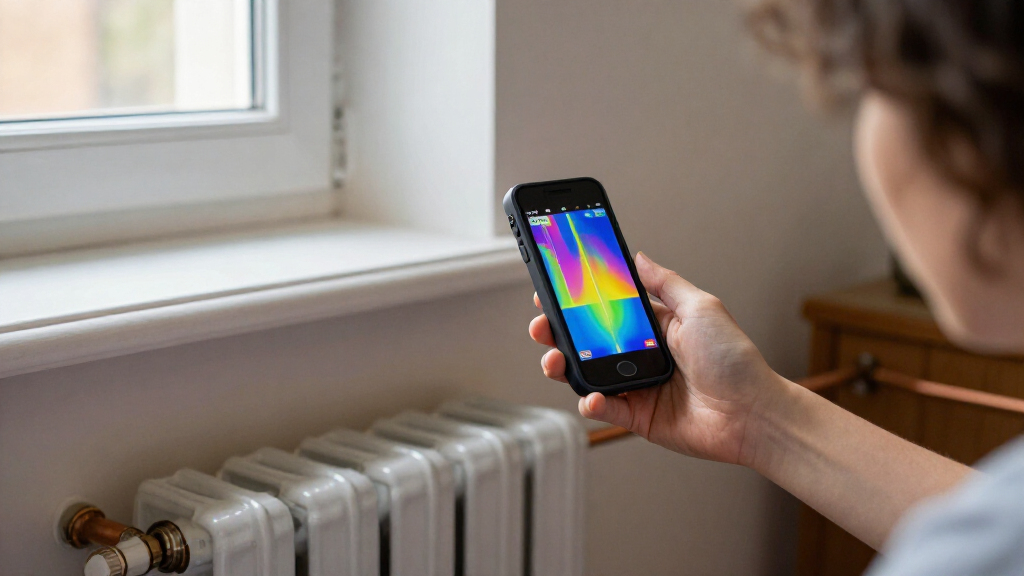
I compared these 11 smartphone thermal cameras around the decisions that affect actual use: stated thermal resolution, lens and focus options, refresh rate where specified, phone and tablet compatibility, connection style, portability, and the kinds of inspection each design supports. I gave weight to features that change what a buyer can see or how easily they can position the camera, rather than treating a longer spec list as automatic proof of better performance.
The ranking reflects how well each model serves a distinct buyer need, with versatility and practical usability favoring the leading all-around options. Specialized macro tools, compact plug-in designs, and wireless cameras can be the better choice for narrower jobs, but their tradeoffs affect their place in an overall list. I also account for uncertainty in product naming and specifications: buyers should confirm the exact model, connector, supported devices, and app requirements before purchase.
| smartphone thermal camera | Temperature accuracy |
|---|---|
| GOYOJO GW192A USB-C Thermal Im | ±2% |
| Thermal Master P3 Thermal Came | ±3.6°F (±2°C) |
| AMPBANK M192 USB-C Thermal Cam | — |
| Thermal Master P1 USB-C Therma | ±2°C / ±3.6°F |
| TOPDON TC001 Max Dual-Lens The | ±2°C / ±2% |
| TOPDON TC001 Mini Thermal Imag | — |
| UNI-T UTi120Mobile Thermal Cam | — |
| VEVOR Thermal Imaging Camera f | — |
| FLIR Edge Pro Wireless Thermal | ±3°C or ±5% |
| Thermal Master P3 Thermal Came | — |
| TOPDON TC002C Duo USB-C Therma | ±2°C or 2% |
Factors to Consider When Choosing Smartphone Thermal Cameras
Before choosing among smartphone thermal cameras, I would start with the inspection itself, then check whether the camera and phone work together. A sensor specification alone cannot tell you whether a module will focus at the distance you need, fit around your phone case, or produce a useful image in the manufacturer’s app.
Match Resolution to the Size of the Target
Resolution affects how much spatial detail an image can show, which matters when you need to distinguish a small hot component from nearby surfaces. For broad checks on walls, pipes, or equipment, a lower-resolution image may be sufficient if the target fills enough of the frame. Small circuit components and close-up inspection call for more pixels on the target, but resolution does not guarantee accurate temperature readings. A common mistake is to compare a super-resolution label directly with a sensor’s native resolution without checking how the image is generated. I would also look at the camera’s field of view and focus distance, since these determine how much of the scene fits in frame and whether the target appears sharp. Pay for more detail when the job genuinely involves small targets, not just because a larger number looks reassuring.
Choose the Lens and Focus for Your Working Distance
Thermal cameras are designed around particular viewing distances, so a lens suited to a room scan may not resolve a tiny part on a workbench. Macro lenses can help with close targets, but their narrow working range may make general inspections slower or less convenient. Manual focus gives the user more control, yet it adds a step and can be harder to adjust while holding a phone in one hand. Fixed-focus designs are simpler for routine scans, though they may be less adaptable when the target distance changes. Before buying a macro option, check the stated focus distance and whether the camera can also handle ordinary inspection distances. The right lens is the one that keeps your typical target clear, not the one with the most specialized label.
Check Phone Compatibility Before Comparing Features
A camera that does not connect to your phone or run its app is not a useful bargain, regardless of its imaging specifications. Confirm the exact connector, operating-system support, and required app version for the specific model and your device. USB-C compatibility can still vary by phone, tablet, operating system, and case design; a connector that fits physically does not always confirm full software support. Wireless models avoid some port and case issues, but they add another connection to manage and may require their own charging or setup routine. Also check whether the manufacturer lists support for the phone’s current operating system, rather than relying on a broad iOS or Android label. If you share the camera between devices, prioritize explicit support for each one.
Decide Whether Wireless or Plug-In Operation Suits the Job
Plug-in cameras are compact and usually keep the phone and thermal image together, which can be convenient for quick checks and carrying in a small kit. Their position is tied to the phone, however, so inspecting behind a panel or around an obstruction can be awkward. A wireless design can be easier to place at a different angle while you view the image on the phone, but it introduces pairing, battery, and connection considerations. Think through where you will hold the camera, not just where you will store it. For frequent short inspections, a direct connection may reduce setup steps; for difficult access or shared viewing, wireless operation may be worth the extra coordination. Test your workflow against the device layout and protective case you actually use.
Treat Temperature Readings as Measurements With Limits
A thermal image shows infrared energy, not a direct view of internal temperature, and a displayed reading depends on setup and surface properties. Shiny metal, reflective materials, distance, and environmental conditions can all affect what the camera reports. Buyers doing electrical or building diagnostics should check the camera’s measurement range, stated accuracy, and emissivity controls rather than relying on color palettes alone. A vivid hot spot can be a useful clue, but it does not by itself identify the cause or prove a component is failing. For repeat inspections, use consistent distance, angle, and settings so images are easier to compare over time. If a reading will guide a safety-critical repair, verify it with an appropriate instrument and established procedure.
Consider App Tools, Reports, and Long-Term Workflow
The companion app can shape the experience as much as the camera module, especially if you need to save images, annotate findings, or share reports. Check whether the app supports the analysis tools your work calls for, such as adjustable temperature ranges, spot measurements, or image export. A camera with impressive hardware may be a poor fit if its software does not preserve useful measurement data or works unreliably on your device. Think about how often you will review images later and whether you need a consistent record for maintenance or client communication. Buyers who only want occasional troubleshooting can favor a simpler workflow, while regular inspectors should examine software support before paying for advanced hardware. App compatibility and update history are worth checking before committing to a model.
Frequently Asked Questions
Will a USB-C thermal camera work with every USB-C Android phone?
No. A matching port does not guarantee that a phone supports the required data connection, operating-system version, or manufacturer app. Check the exact phone model against the camera maker’s compatibility information, including app availability and minimum software requirements. Cases and port placement can also affect physical fit, especially with a compact module. If you plan to use the camera with more than one device, confirm support for each one before choosing.
Is the VEVOR model’s 512 × 384 super resolution the same as native sensor resolution?
Not necessarily; the product’s super-resolution wording does not by itself confirm the sensor’s native pixel count or how the output is produced. Buyers should check the manufacturer’s detailed specifications for native resolution, image processing, and measurement behavior. This distinction matters most when comparing fine details or relying on readings from small targets. For close-up work, also verify the macro lens’s focus distance, since a high-resolution output cannot compensate for an out-of-focus image.
Should I choose a macro-lens camera for electronics repair?
A macro lens can be useful when you need to inspect small components at close range, which is why the Thermal Master P3 with manual macro lens has a distinct role in this lineup. It is not automatically the best choice for general home or building scans, where a broader field of view and less adjustment may be more convenient. Check the lens’s working distance and whether the camera can focus clearly on the targets you repair. If you need both close-up board inspection and room-scale scans, compare whether a dual-lens option better fits your range of tasks.
Is a wireless thermal camera better than a plug-in model?
Wireless operation is useful when the camera needs to sit at an angle or position that is difficult to achieve while attached to a phone. The FLIR Edge Pro represents that approach in this roundup, while direct plug-in models favor a compact, connected setup. Wireless use can add pairing steps and another battery to manage, so it is not automatically more convenient for quick checks. Choose based on how you hold and position the camera during your usual inspections, and check the app and device support before deciding.
Can I use a smartphone thermal camera to confirm a wiring or appliance fault?
A thermal camera can help locate unusual heat patterns, but an image alone does not confirm the cause of a fault. Surface finish, reflected heat, distance, and measurement settings can affect readings, especially on shiny materials. Use thermal imaging as a screening aid and follow safe inspection practices; do not open energized equipment unless qualified to do so. For decisions involving safety or costly repairs, verify the finding with suitable test equipment or a qualified technician.
Conclusion
For the broadest mix of smartphone thermal imaging needs, I recommend the TOPDON TC001 Max as the best overall pick because its dual-lens design gives it a more versatile position than a basic plug-in camera. The VEVOR 512 × 384 model is my resolution-focused choice for buyers who need detailed imaging and macro capability, while the FLIR Edge Pro makes the most sense for people who value wireless placement. For close-up electronics work, choose the Thermal Master P3 with manual macro lens; for beginners, a straightforward compact plug-in model such as the TOPDON TC001 Mini is a simpler starting point than a specialized manual-focus setup. I would treat best value as the model that meets your required focus range and works with your phone without paying for features your inspections will not use. Before ordering any pick, confirm exact device compatibility and the camera’s measurement specifications for your intended task.