

Cloud backup and sync serve different needs: backup creates copies of your files for recovery after data loss or hardware failure, while sync keeps your files up-to-date across devices for easy access and collaboration. Backup is ideal for security and disaster recovery, whereas sync is better for real-time editing. Choosing the right one depends on your priorities. To better understand how to protect your data effectively, keep exploring these solutions.

Get the latest gadgets delivered free with Prime
- Fast, free delivery on millions of items
- Prime Video, Amazon Music and more included
- Member-only deals all year
Key Takeaways
- Cloud backup creates copies of files for data recovery, focusing on security and protecting against hardware failure or accidental deletion.
- Cloud sync keeps files updated across devices in real-time, facilitating collaboration and seamless access to the latest versions.
- Backup services transfer data securely, often encrypting and storing in multiple data centers for disaster resilience.
- Sync services monitor and update only modified files, allowing instant access and collaboration across devices.
- Choosing between backup and sync depends on whether your priority is data security and recovery or real-time access and collaboration.
cloud backup service subscription
As an affiliate, we earn on qualifying purchases.
As an affiliate, we earn on qualifying purchases.
What Are Cloud Backup and Cloud Sync?
Cloud backup and cloud sync are two ways to store and manage your data online, but they serve different purposes. Cloud backup creates a copy of your files, safeguarding them in case of device failure or data loss. It often uses robust encryption protocols to protect your information during transfer and storage, ensuring privacy. Cloud sync, on the other hand, keeps your files updated across multiple devices, allowing seamless access and collaboration. The user interface plays an essential role in both, making it easy to set up, manage, and recover your data. While backups focus on security and recovery, sync emphasizes real-time updates. Understanding these distinctions helps you choose the right solution for your needs, ensuring your data remains safe and accessible. Additionally, choosing the right cloud solution can enhance your data security by providing specific features tailored to your needs, such as cloud storage protocols that align with best practices in data protection. Recognizing the importance of content formats can further optimize how you organize and access your data across platforms, especially when considering the different data management strategies involved in backup versus sync solutions. Moreover, understanding the encryption standards used in cloud services adds an extra layer of confidence in your data’s privacy and security.
cloud sync software for multiple devices
As an affiliate, we earn on qualifying purchases.
As an affiliate, we earn on qualifying purchases.
How Do Cloud Backup and Sync Work?

When you set up cloud backup or sync, your data is transferred to remote servers through specific processes that guarantee its safety and accessibility. Cloud backup typically stores your data in a designated location, often separate from your original files, while sync updates files across devices in real-time. Understanding how these processes work helps you choose the right solution for your needs. Additionally, being aware of recent law updates can influence how you manage your data security and compliance. Proper planning in solar system design can also ensure your data and systems remain protected during power outages or adverse weather conditions. Recognizing regional flavors and local preferences can further enhance your approach to data management by tailoring security measures to specific environments. Incorporating best practices for data security can further safeguard your information during these processes, especially when considering the contrast ratio that affects the clarity and quality of your visual data displays.
Data Transfer Processes
Understanding how data moves between your device and remote servers is key to grasping the differences between backup and sync services. When you upload files, data transfer protocols like HTTPS or FTP guide the process, ensuring your information travels securely. Backup services often transfer data in chunks or blocks, sometimes compressing it to save bandwidth, and use encryption techniques such as AES to protect your files during transit. Sync services, on the other hand, continuously monitor your files and update changes in real-time, often employing more dynamic data transfer protocols to efficiently sync only modified parts. Both methods prioritize security, but their transfer processes differ: backups focus on completeness and security, while sync emphasizes real-time updates with selective data transfer.
Storage Location Differences
While both backup and sync services store your data remotely, they differ considerably in where they save your files. Backup services typically use storage location options across multiple regional data centers, ensuring your data is protected even if one center experiences issues. Sync services, however, usually save files directly into designated folders, often tied to specific data centers based on your location or provider settings. This can influence access speed and data sovereignty.
| Backup Storage Locations | Sync Storage Locations |
|---|---|
| Multiple regional centers | Single designated folder |
| Redundant data protection | Real-time updates |
| Geographic flexibility | Location-dependent |
| Disaster resilience | Faster local access |
Understanding these differences helps you choose based on security, speed, and regional considerations.
Real-Time Synchronization
Ever wondered how cloud backup and sync services keep your files updated in real-time? When you make a change, sync services immediately reflect it across all devices, thanks to continuous monitoring. This process relies on file versioning, which saves different versions as you update files, so you can revert if needed. Cloud sync systems also respect user permissions, ensuring only authorized users can modify or access specific files. Backup services, however, typically create scheduled copies rather than real-time updates, focusing on data safety rather than instant synchronization. Understanding these differences helps you choose the right service for your needs—whether you need real-time collaboration or secure, versioned backups. Both methods rely on constant data monitoring and permissions management to keep your files current and protected.
As an affiliate, we earn on qualifying purchases.
Key Features to Consider When Choosing Cloud Backup or Sync

When choosing between cloud backup and sync, consider how they protect your data with security measures like encryption and access controls. Think about your storage needs, as options vary from limited to extensive capacities, depending on your provider. Ensuring these features align with your priorities helps you pick the right solution for your data management. Additionally, leveraging a centralized analytics/command center can help you monitor and optimize your data protection strategies effectively. To further tailor your choices, assess the security features offered by providers to ensure your data remains safe. Understanding the data protection measures in place can give you added confidence in your selection, especially when evaluating the scalability options provided by different services. Considering the privacy policies of providers can also help you understand how your data is handled and protected.
Data Security Measures
Choosing between cloud backup and sync services requires careful attention to data security measures. You want to guarantee your files stay protected from unauthorized access or breaches. Look for providers that use strong encryption protocols, both during data transmission and while stored, to keep your information secure. Access control features are equally important; they allow you to set permissions and restrict who can view or modify your files. Confirm that the service offers multi-factor authentication and detailed activity logs for added security oversight. These measures help prevent data leaks and unauthorized access. Additionally, considering natural pools can inspire eco-friendly solutions that complement your backup strategies by emphasizing sustainable practices. Prioritizing robust encryption and access control ensures your data remains confidential and safe, whether you’re backing up sensitive files or syncing important documents across devices.
Storage Capacity Options
Storage capacity options are a crucial factor to take into account because they directly impact how much data you can store and how scalable your solution is. When choosing between cloud backup and sync, consider the available storage plans and whether they can grow with your needs. Look for providers that offer flexible options, so you’re not limited as your data expands. Also, check their encryption protocols to ensure your stored files remain secure, especially if you’re storing sensitive information. User access controls are just as essential—they determine who can view or modify your data. A service with robust storage capacity options, strong encryption, and customizable user access settings gives you peace of mind and the flexibility to adapt your storage as your requirements evolve.
As an affiliate, we earn on qualifying purchases.
Common Use Cases for Cloud Backup and Cloud Sync
Understanding the common use cases for cloud backup and cloud sync can help you decide which solution best fits your needs. If you want to protect your files from accidental deletion, corruption, or hardware failure, cloud backup is ideal. It offers file versioning, so you can recover earlier versions if needed. On the other hand, if you need seamless access and collaboration across devices, cloud sync is your go-to. It keeps your files synchronized in real-time, enabling offline access when you’re offline or have limited internet. Cloud sync is perfect for working on documents across multiple devices or sharing files with others. Recognizing these scenarios helps you choose the right approach based on whether your priority is backup security or flexible, real-time access. Additionally, understanding how body-based healing methods can complement digital solutions can provide a more holistic approach to your overall well-being. Knowing the difference between backup and sync can further clarify which option aligns best with your specific needs.
Pros and Cons of Cloud Backup
Cloud backup offers significant advantages by providing a reliable way to protect your data from accidental loss, hardware failures, or cyber threats. It typically uses robust encryption protocols to keep your files secure during transfer and storage, giving you peace of mind. However, some cloud backup services have complex user interfaces that can be challenging to navigate, especially if you’re new to the technology. This steep learning curve might discourage regular use or cause frustration. Additionally, backups can take time depending on your internet speed, and ongoing costs may add up over time. Despite these drawbacks, cloud backup remains a strong choice for safeguarding critical data, especially when security features like encryption protocols are prioritized and the user interface is user-friendly. Understanding the importance of filtration and suction basics can help you optimize your data protection strategies. Staying updated on cybersecurity measures can further enhance your data safety. Recognizing the user interface of your chosen service can significantly impact how easily you manage your backups and restores. Being aware of regional regulations can also ensure compliance with data privacy laws relevant to your location, just as understanding security zone info is crucial for maintaining comprehensive security.
Pros and Cons of Cloud Sync
While cloud backup focuses on creating copies of your data for safekeeping, cloud sync offers a different way to keep your files up-to-date across multiple devices. One major advantage is file versioning, which allows you to access previous versions of your files if needed. This feature helps recover accidental changes or deletions quickly. Cloud sync also enhances collaboration tools, making it easier to work with others in real-time. However, it can pose risks if you accidentally delete or overwrite files, as changes sync instantly across devices. Additionally, syncing large files or numerous devices may slow down your internet or device performance. Overall, cloud sync streamlines your workflow and keeps your files current but requires careful management to prevent data loss. Incorporating file management features can help you better control your synchronized data.
How to Decide Between Cloud Backup and Sync for Your Files
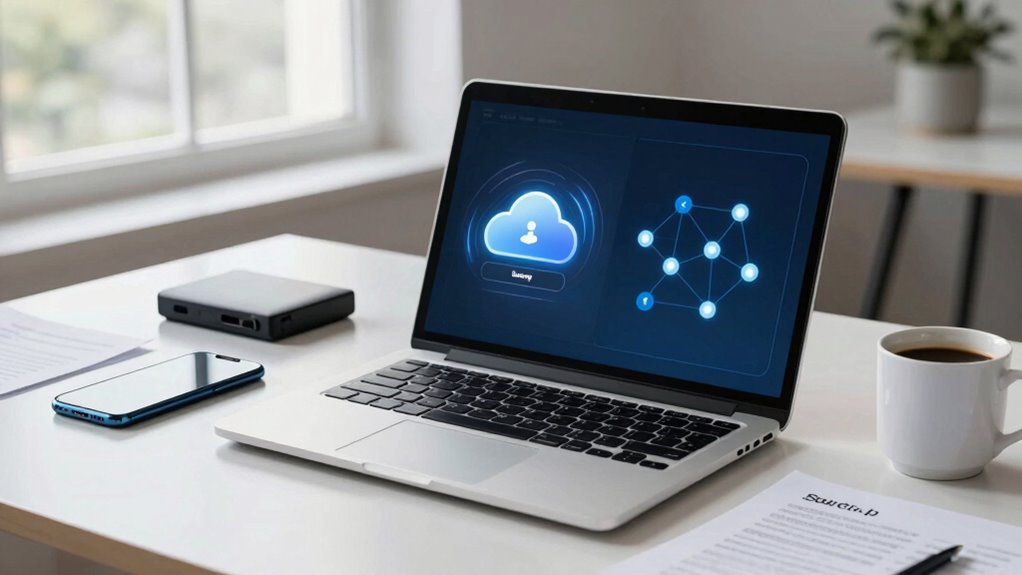
Choosing between cloud backup and sync depends on what you need most for your files. If you prioritize protecting data with file versioning, cloud backup is your best choice, as it keeps multiple versions of files in case of accidental edits or deletions. On the other hand, if quick user access and collaboration are crucial, then sync services are ideal—they allow real-time updates and easy sharing across devices.
To decide, consider these points:
- Do you need to restore previous versions of files easily? Opt for backup.
- Will multiple users need immediate access and editing? Choose sync.
- Is data security during access a concern? Backup typically offers more control over versions and access restrictions.
Your choice hinges on balancing version control with accessibility.
Tips for Safely Setting Up Cloud Backup and Sync
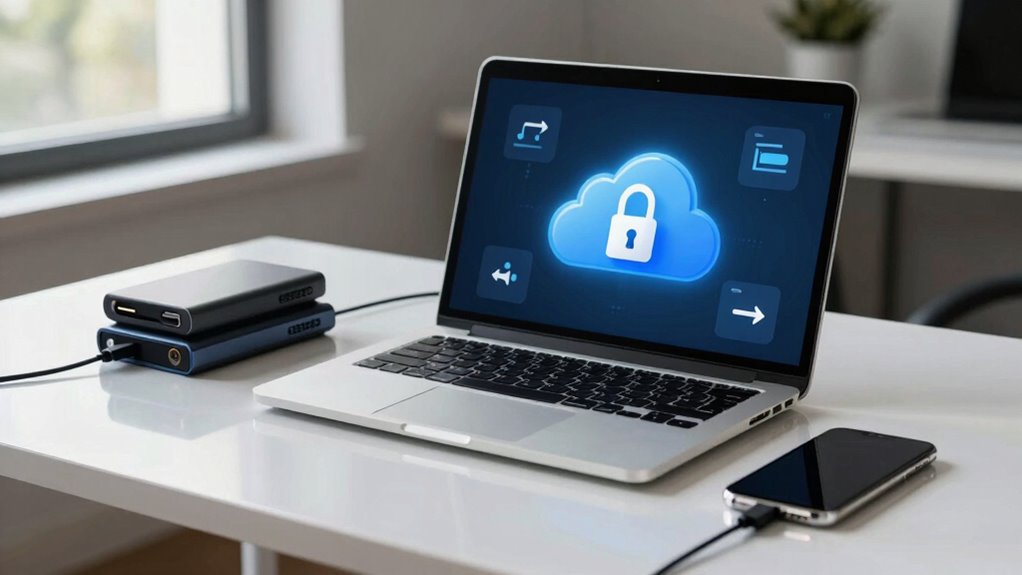
Setting up your cloud backup and sync services safely is vital to protect your data from unauthorized access or loss. Begin by enabling strong user authentication, such as two-factor authentication, to add an extra security layer. Always choose a reputable provider with a clear, user-friendly interface that makes managing your security settings straightforward. When configuring your account, review privacy policies and guarantee data encryption both during transfer and storage. Keep your software updated to patch vulnerabilities. Limit access to your account by controlling permissions and regularly checking activity logs. A well-designed user interface helps you easily monitor your backups and sync status, reducing the risk of overlooked security issues. Following these tips assures your data stays safe while syncing seamlessly across devices.
Frequently Asked Questions
Can Cloud Backup and Sync Be Used Together Effectively?
Yes, you can use cloud backup and sync together effectively. Backup safeguards your files with real-time collaboration and version history, preventing data loss. Sync keeps your files updated across devices, making collaboration seamless. Combining both ensures your data is securely stored with version control, while also staying accessible and current across all your devices. This dual approach offers thorough protection and productivity, especially when working remotely or managing important files.
How Secure Are Cloud Backup and Sync Services?
Cloud backup and sync services are generally secure if they use strong encryption protocols like AES-256, safeguarding your data during transfer and storage. They also employ data redundancy, storing multiple copies across servers to prevent data loss. However, you should choose reputable providers, enable two-factor authentication, and regularly update your passwords to maximize security. While no system is foolproof, these practices markedly reduce your risk of data breaches.
What Are the Cost Differences Between Backup and Sync Solutions?
You’ll find that backup and sync solutions differ in cost due to their pricing models and storage tiers. Backup services often charge based on the amount of data stored, with tiered pricing for increased storage capacity, while sync services may offer free plans with limited space and charge for premium tiers. Generally, backups tend to be more cost-effective for large data volumes, but costs can vary depending on your specific storage needs.
How Do I Restore Files From Cloud Backup or Sync?
They say, “Better safe than sorry,” and that’s true for restoring files. To restore from cloud backup or sync, access your service’s interface, select the file or version you need, and click restore. Use file versioning to retrieve previous versions if necessary. For offline access, make sure your files are synced locally beforehand, so you can restore even without internet. Always double-check you’re restoring the correct file version.
Are There Limits on File Size or Storage for These Services?
Yes, both cloud backup and sync services have file size restrictions and storage capacity limits. You might find that some services cap individual file sizes, often around 2 to 5 GB, while overall storage capacity varies—ranging from free plans with limited space to paid options offering terabytes. Always check the specific service’s terms to guarantee your files fit within their file size restrictions and storage capacity limits before uploading.
Conclusion
Choosing between cloud backup and sync is like picking the right tool for the job—you’ll want what suits your needs best. Backup keeps your files safe like a sturdy vault, while sync ensures your files are always up-to-date like a reliable messenger. By understanding their differences and considering your specific use case, you can make a smart choice. With the right setup, your files will be protected and accessible, just like a trusted friend watching over your digital life.
Halloween Picks
halloween
As an affiliate, we earn on qualifying purchases.