
📊 Full opportunity report: Acoustic Dampening, Placement, and the “Rig in the Closet” Setup on ThorstenMeyerAI.com — validation score, market gap, and execution plan.

Get the latest gadgets delivered free with Prime
- Fast, free delivery on millions of items
- Prime Video, Amazon Music and more included
- Member-only deals all year
TL;DR
This article explains how moving AI workstations out of the workspace and using proper placement techniques can significantly reduce noise. It covers the benefits and challenges of ‘rig in the closet’ setups and best practices for ventilation and soundproofing.
Moving AI workstations into separate rooms or enclosed cabinets is the most effective way to reduce noise, according to industry experts. This approach is increasingly adopted as a practical solution for quiet work environments, especially when high-power hardware generates significant heat and sound.
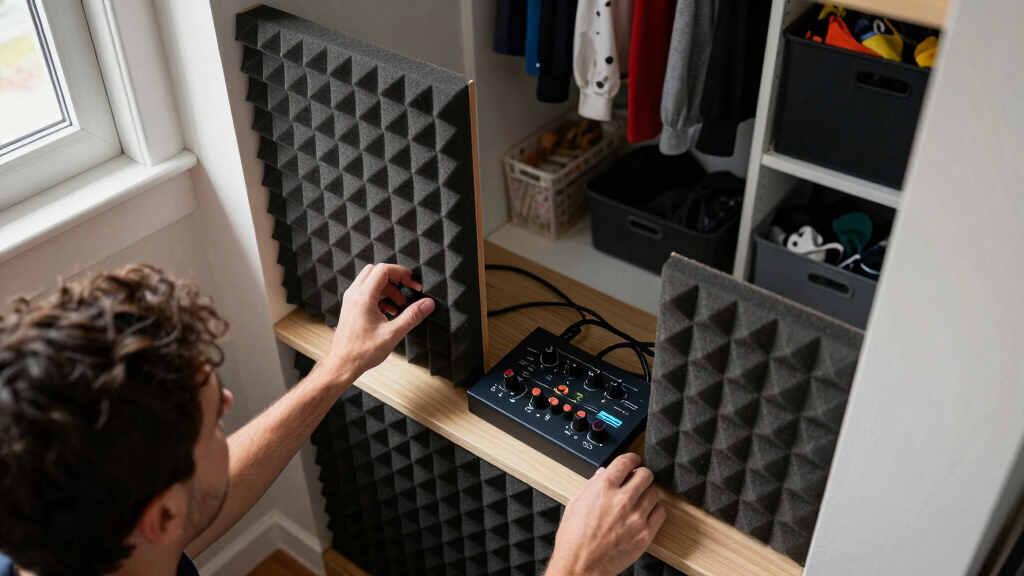
Experts emphasize that the most effective noise reduction strategy is to physically distance the workstation from the user, such as placing it in another room or a closet. This method eliminates airborne and structure-borne noise transmission, making additional acoustic treatments unnecessary. The ‘rig in the closet’ setup, where a high-performance GPU or inference rig is housed in an enclosed space, can be highly effective if proper ventilation is maintained. Without adequate airflow, trapped heat can cause thermal throttling and increased fan noise, negating the benefits of enclosure. Proper ventilation, including passive vents or active exhaust fans, is essential to prevent overheating. Specialized soundproof cabinets combine acoustic dampening with temperature control, providing a balanced solution for quiet, high-performance setups.Acoustic dampening
& the rig in the closet.
The most powerful noise fix isn’t a material — it’s a floor plan. A rig you can’t hear because it’s in another room beats any amount of foam. Tap the approaches in Part 1 to see what actually works.
(another room)
(levers 1–4)
(door / barrier)
(acoustic foam)
Contain the noise, not the heat
Why Proper Placement and Ventilation Matter for AI Workstations
Implementing effective placement and ventilation strategies can dramatically improve working conditions by reducing noise pollution and preventing overheating. For professionals working with AI or high-performance computing, these methods enable quieter environments, less thermal stress on hardware, and potentially longer equipment lifespan. This approach also reduces the need for costly acoustic treatments or modifications to workspaces, making it a practical, scalable solution for many users.
As an affiliate, we earn on qualifying purchases.
The Evolution of Noise Management in High-Power Workstations
Traditionally, noise mitigation focused on acoustic foam and soundproofing within a workspace. However, experts now increasingly recommend relocating noisy hardware away from the user, leveraging network-based workflows where the physical location of the machine is less critical. The concept of 'rig in the closet' has gained popularity among AI practitioners, especially as hardware power and heat output have grown. You can learn more about best practices for acoustic dampening and placement. Proper ventilation remains a key challenge, with specialized soundproof cabinets emerging as a solution to combine noise suppression with heat dissipation. These developments reflect a shift towards more sophisticated, scalable noise management strategies aligned with the demands of modern AI workloads.
"The most effective noise reduction is just moving the rig into another room. Once you do that, acoustic foam becomes almost irrelevant."
— Thorsten Meyer, AI hardware expert
As an affiliate, we earn on qualifying purchases.
Remaining Challenges in Heat Dissipation and Noise Isolation
While moving hardware into separate rooms and using specialized enclosures is effective, the optimal design for ventilation and thermal management in 'rig in the closet' setups is still evolving. There is no one-size-fits-all solution, and different hardware configurations may require tailored airflow and cooling strategies. The long-term reliability of sealed, soundproof cabinets under continuous high load also remains an area for ongoing research.
high airflow server closet enclosure
As an affiliate, we earn on qualifying purchases.
As an affiliate, we earn on qualifying purchases.
Future Developments in Quiet, High-Performance AI Hardware Enclosures
Advances are expected in integrated cooling and soundproofing technologies, such as smarter airflow systems and materials that improve thermal dissipation without increasing noise. Manufacturers may also develop more affordable, scalable solutions for small-scale setups, making 'rig in the closet' configurations accessible to a broader audience. Ongoing research into passive cooling methods and noise reduction will further refine best practices for managing high-power AI hardware.
quiet high-performance GPU enclosure
As an affiliate, we earn on qualifying purchases.
As an affiliate, we earn on qualifying purchases.
Key Questions
Is placing my AI rig in a closet the best way to reduce noise?
Yes, moving the rig into a separate room or closet can significantly reduce noise at the workspace, provided proper ventilation is maintained to prevent overheating.
What are the main challenges of a 'rig in the closet' setup?
The primary challenge is managing heat buildup. Without adequate airflow, the hardware can throttle or fail prematurely. Proper ventilation and possibly active cooling are essential.
Can I use acoustic foam instead of moving the rig?
Acoustic foam absorbs sound reflections within a room but does not block airborne or structure-borne noise. Moving the rig away is far more effective for noise reduction.
Are soundproof cabinets worth the investment?
For high-power, noisy hardware, soundproof cabinets with integrated cooling can be a worthwhile investment, especially in shared or quiet work environments.
What should I consider when ventilating a closet or cabinet for my rig?
You need active airflow, such as exhaust fans or ducted ventilation, to prevent heat buildup. Thermostat-controlled airflow systems are ideal for maintaining optimal temperatures.
Source: ThorstenMeyerAI.com
Halloween Picks
halloween
As an affiliate, we earn on qualifying purchases.