
TL;DR
Open a free Amazon Business account
Business pricing, bulk buying and tax-exempt orders.
Create a free accountAs an affiliate, we earn on qualifying purchases.
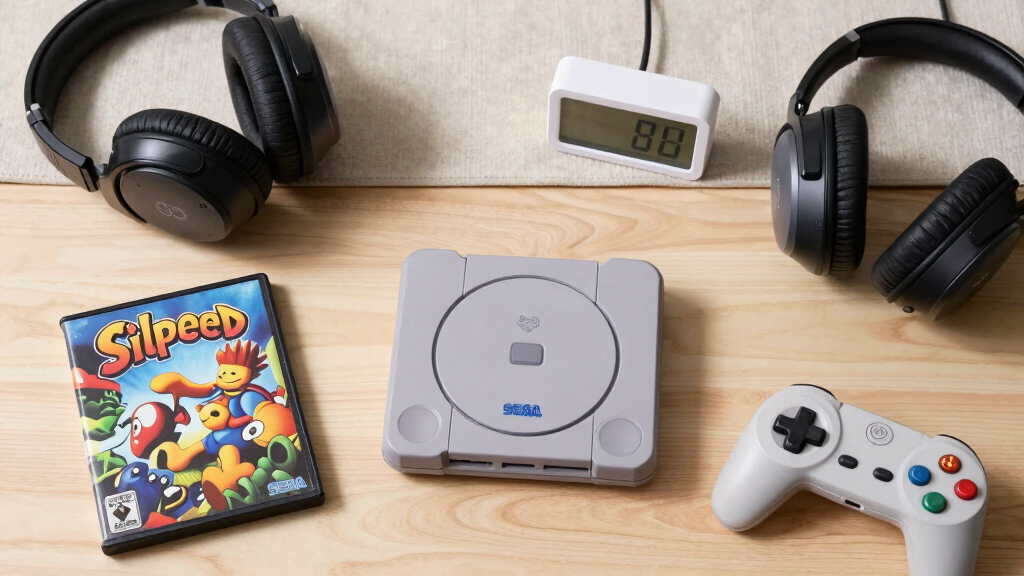
This article examines the artistic and technical aspects of Sega CD’s Silpheed, focusing on its innovative graphics and engineering solutions. It provides insights into its development and significance for gaming history.
Sega’s Silpheed for the Sega CD is gaining renewed attention for its distinctive blend of artistic style and technical innovation. The game, released in 1993, is recognized for its pioneering use of full-motion video and detailed sprite work, which pushed the hardware’s limits. Experts and enthusiasts are now analyzing its design to understand its impact on game development and visual storytelling.
Silpheed was developed by Game Arts and published by Sega, utilizing the Sega CD’s capabilities to produce high-quality, animated cutscenes and detailed backgrounds. The game’s art style combines anime-inspired character designs with a space-themed setting, all rendered through a combination of digitized images and vector graphics. Its engineering involved innovative use of compression techniques and hardware acceleration to achieve smooth animation and complex visual effects despite the console’s limitations.
Developers faced significant challenges in balancing visual fidelity with performance constraints. The game’s programmers implemented custom routines to optimize sprite rendering and video playback, which allowed for the seamless integration of animated sequences. This technical feat contributed to Silpheed’s reputation as a visually impressive title for its time, setting a benchmark for future space shooters and FMV games.
Why Silpheed’s Art and Engineering Still Matter Today
The artistic and technical choices made in Silpheed exemplify early efforts to blend cinematic storytelling with interactive gameplay. Its innovative use of digitized images and smooth animation influenced subsequent titles in the genre. Understanding these design decisions offers valuable insights into the evolution of game graphics and hardware utilization, highlighting how developers overcame technical limitations to create compelling visual experiences.
Moreover, Silpheed’s success demonstrated the potential of the Sega CD platform, encouraging further experimentation with FMV and multimedia integration in games. Its legacy persists in modern game development, where blending art and technology remains a central challenge and opportunity.
As an affiliate, we earn on qualifying purchases.
Development Challenges and Artistic Choices in Silpheed
Released in 1993, Silpheed was part of the early wave of CD-based games that aimed to exploit the storage capacity for richer multimedia content. The game’s art style was heavily influenced by anime aesthetics, with detailed character sprites and elaborate space backgrounds. The developers faced the challenge of translating these artistic visions into the limited processing power of the Sega CD, which required innovative programming and compression techniques.
The game’s engineering involved developing custom routines for sprite scaling, rotation, and smooth scrolling, which were not standard features of the hardware. The use of full-motion video sequences was groundbreaking at the time, requiring precise timing and synchronization to avoid lag or visual artifacts. These efforts contributed to Silpheed’s reputation as a technical showcase for the platform.
“We pushed the Sega CD hardware to its limits, especially in rendering detailed sprites and seamless animations, to bring Silpheed’s space battles to life.”
— Game Arts Developer
As an affiliate, we earn on qualifying purchases.
Remaining Technical and Artistic Questions
While much has been documented about Silpheed’s visual style and technical achievements, specific details about the programming routines and compression algorithms used remain limited. It is not yet clear how much of the game’s design was driven by hardware constraints versus artistic choice, and some aspects of the development process are still under research.
As an affiliate, we earn on qualifying purchases.
Future Research and Preservation Efforts
Further analysis of original development documents and interviews with the creators could shed light on the detailed engineering techniques. Preservation efforts are underway to maintain the game’s original assets and source code, ensuring its legacy for future study. Additionally, modern emulation projects aim to replicate the game’s visual effects more accurately, providing new opportunities for appreciation and analysis.
As an affiliate, we earn on qualifying purchases.
Key Questions
What makes Silpheed’s art style unique?
Silpheed combines anime-inspired character designs with detailed space backgrounds, utilizing digitized images and vector graphics to create a distinctive visual aesthetic that was innovative for its time.
How did developers overcome hardware limitations?
They used custom programming routines, compression techniques, and hardware acceleration to optimize sprite rendering and animation, enabling smooth visuals despite the Sega CD’s constraints.
Why is Silpheed considered a technical milestone?
Because it showcased advanced use of full-motion video, digitized graphics, and animation techniques that set a standard for multimedia integration in early CD-based games.
What is still unknown about the game’s development?
Details about the specific algorithms and routines used in its programming are not fully documented, leaving some aspects of its engineering still under research.
Will there be future releases or remasters of Silpheed?
There are currently no official plans, but ongoing preservation and emulation projects aim to keep the game accessible and studied for years to come.
Source: hn
Flea & tick season Picks
flea and tick prevention
As an affiliate, we earn on qualifying purchases.




![Dungeon Crawling [ToothyBJ]](https://techieus.com/wp-content/uploads/2026/09/dungeon-crawling-toothybj-featured-260x140.jpg)