
TL;DR

Get the latest gadgets delivered free with Prime
- Fast, free delivery on millions of items
- Prime Video, Amazon Music and more included
- Member-only deals all year
Intel has unveiled a new processor architecture claiming to outperform ARM chips in performance per watt. The development could reshape the competitive landscape for energy-efficient computing, but details remain preliminary.
Intel has claimed a significant breakthrough in energy efficiency, announcing a new processor architecture that they say surpasses ARM chips in performance per watt. This development could challenge ARM’s dominance in low-power devices, but the details are still emerging and have not yet been independently verified.
Intel revealed its latest chip design during a technology conference, asserting that it achieves higher performance levels while consuming less power compared to current ARM-based processors. The company attributes this to innovations in transistor architecture and power management techniques.
According to Intel, initial benchmarks indicate a performance per watt improvement of approximately 20% over leading ARM chips in similar workloads. However, these results have not been independently validated, and Intel has not disclosed comprehensive technical data or independent testing results.
Industry analysts note that such claims, if confirmed, could impact markets for mobile devices, laptops, and data centers, where energy efficiency is critical. Yet, skepticism remains about whether these early claims can be sustained in diverse real-world scenarios.
Potential Shift in Low-Power Computing Leadership
This announcement could mark a turning point in the ongoing competition between Intel and ARM, especially in sectors prioritizing energy efficiency. If Intel’s claims are validated, it may threaten ARM’s current dominance in smartphones, tablets, and energy-efficient servers, prompting a major strategic shift within the industry.
For consumers and enterprise users, improved performance per watt means longer battery life, lower energy costs, and reduced environmental impact. The development also signals increased investment by Intel into energy-efficient architectures, possibly accelerating innovation in the sector.
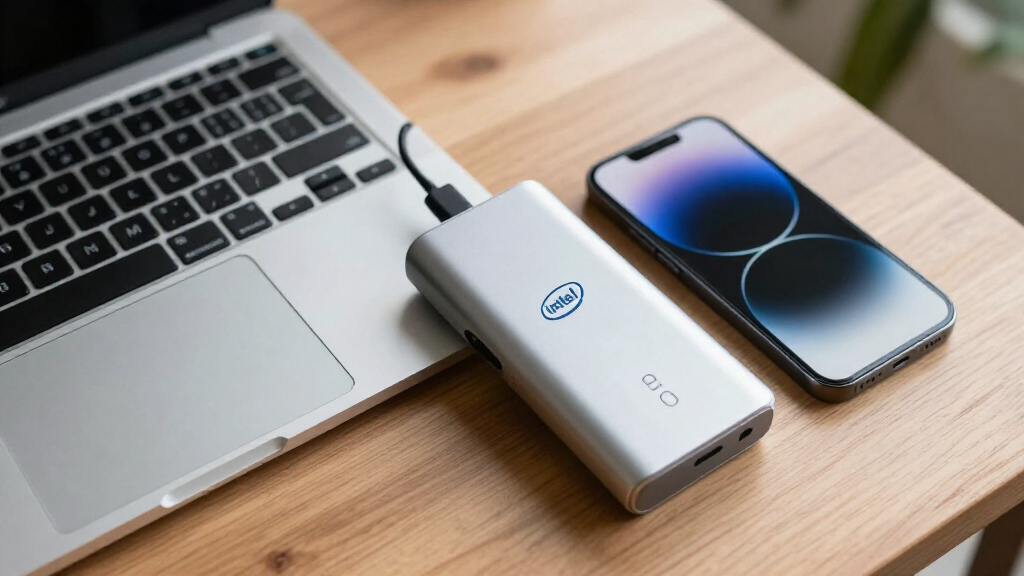
Intel energy-efficient laptop processor
As an affiliate, we earn on qualifying purchases.
As an affiliate, we earn on qualifying purchases.
Recent Trends in Energy-Efficient Chip Development
Over the last few years, ARM-based processors have gained market share in mobile devices and data centers due to their superior energy efficiency. Companies like Apple, Amazon, and Google have heavily invested in ARM architecture for their low-power chips.
Meanwhile, Intel has faced challenges competing in these segments, primarily due to its historically higher power consumption and less efficient designs. The company has been working on new architectures, such as its 3D transistor technology and other process innovations, to close this gap.
Previous efforts by Intel to improve energy efficiency have yielded incremental gains, but the recent announcement suggests a potential leap forward. Industry experts emphasize that independent verification will be critical to assess the true impact of these claims.
As an affiliate, we earn on qualifying purchases.
Verification and Real-World Performance Still Unclear
It is not yet confirmed whether Intel’s claimed performance per watt improvements can be replicated outside controlled benchmarks. Independent testing, technical disclosures, and real-world performance data are still pending, leaving some skepticism among industry observers.
Additionally, the longevity and scalability of the new architecture under various workloads remain to be seen. The industry is awaiting further details from Intel and third-party evaluations.
As an affiliate, we earn on qualifying purchases.
Upcoming Independent Tests and Industry Reactions
In the coming months, independent labs and industry analysts will evaluate Intel’s new chip architecture through benchmark testing and technical analysis. Intel is expected to release more detailed specifications and performance data soon.
Market players, including ARM licensees and other chipmakers, will monitor these developments closely, potentially adjusting their strategies based on the verification results. Intel may also showcase the new chips in upcoming product launches or demonstrations.
As an affiliate, we earn on qualifying purchases.
Key Questions
Can Intel really outperform ARM on performance per watt?
Intel claims to have achieved this breakthrough, but independent verification is still pending. The industry awaits further testing to confirm the results.
What does this mean for consumers and businesses?
If validated, this could lead to more energy-efficient devices, longer battery life, and lower operational costs, especially in mobile and data center applications.
Will this development impact the current market leaders?
Potentially, yes. A verified improvement in performance per watt could challenge ARM’s dominance in low-power markets and prompt shifts in strategic focus among chipmakers.
When will we see products based on this new architecture?
Intel has not announced specific product timelines yet. Industry experts expect to see prototypes or early products within the next 12-18 months, pending validation.
What technical innovations are behind this claimed breakthrough?
Intel attributes the improvements to advances in transistor design and power management techniques, but detailed technical disclosures are not yet available.
Source: hn
Fall Picks
fall essentials
As an affiliate, we earn on qualifying purchases.