
TL;DR

Get the latest gadgets delivered free with Prime
- Fast, free delivery on millions of items
- Prime Video, Amazon Music and more included
- Member-only deals all year
Gaza is pioneering a local recycling project that transforms rubble into Lego-like bricks for rebuilding. The initiative responds to material shortages caused by the blockade and ongoing conflict, offering a temporary reconstruction solution. The project remains experimental and faces technical, logistical, and safety challenges.
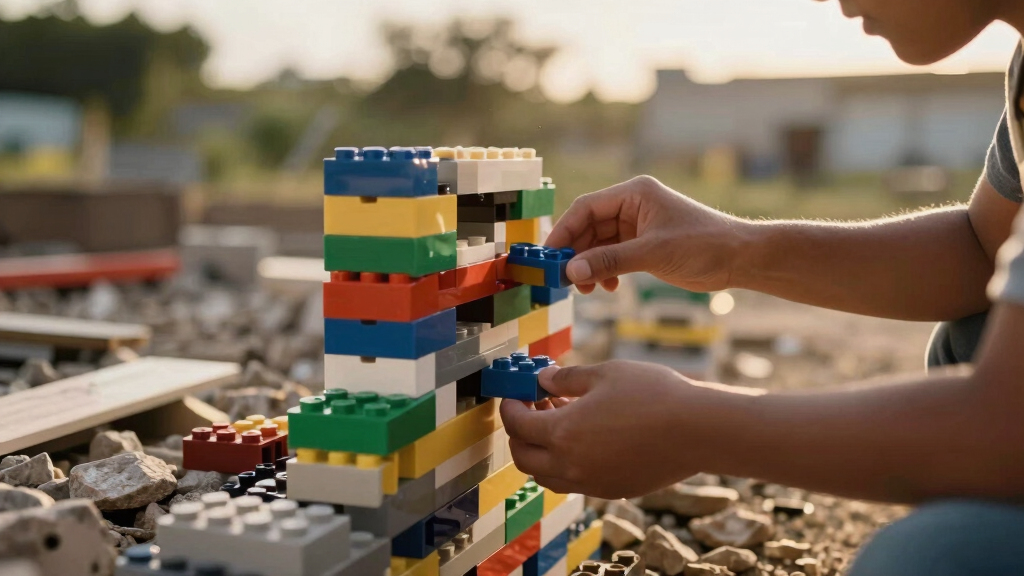
Gaza’s reconstruction efforts are increasingly relying on recycled rubble turned into Lego-like interlocking bricks, a local response to severe shortages of traditional building materials caused by ongoing blockade and conflict.
In Gaza, a makeshift workshop led by Suleiman Abu Hassanin is producing interlocking bricks from crushed concrete and rubble, aiming to rebuild homes and shelters without relying on scarce cement and steel. The project, called Green Rock, emerged out of necessity after years of restrictions on building materials and recent destruction from Israeli air strikes, which have generated over 60 million tons of rubble in the enclave.
The process involves crushing and sorting debris, mixing it with local soil and alternative binding agents, and compressing it into bricks using a hand-built machine. These bricks are designed to interlock without traditional mortar, reducing the need for cement, which remains heavily restricted. Early tests suggest the bricks offer better thermal and sound insulation than tents currently housing displaced families. Production currently ranges between 1,000 and 1,500 bricks daily, enough for small shelters within weeks, but scaling up faces significant obstacles, including power outages, limited equipment, and ongoing restrictions.
Why It Matters
This project exemplifies how local ingenuity and resourcefulness are shaping Gaza’s response to reconstruction amid a prolonged crisis. It offers a cost-effective, immediate alternative to traditional rebuilding methods, creating employment opportunities and fostering community participation. However, it also highlights the limitations of such efforts, given safety concerns about hazardous materials in rubble and the need for larger-scale infrastructure, which remains out of reach under current conditions. The initiative underscores the broader challenge of rebuilding Gaza in a context of persistent blockade and conflict.
Products Worth Considering

LG UltraGear 32GX850A-B 32-Inch 4K UHD Glossy OLED Gaming Monitor

Sony WH-1000XM6 Wireless Noise-Canceling Over-Ear Headphones, Blue, Bundle

Bose QuietComfort Wireless Noise-Cancelling Over-Ear Headphones, Black
As an affiliate, we earn on qualifying purchases.
Background
Gaza’s reconstruction has been hampered for years by the Israeli blockade, which restricts the entry of cement, steel, and other essential materials. The recent escalation in conflict has intensified destruction, leaving hundreds of thousands displaced and with limited options for rebuilding. Previous efforts relied heavily on international aid and imported materials, but ongoing restrictions and damaged infrastructure hinder large-scale reconstruction. The Green Rock project reflects a shift toward localized, improvised solutions driven by scarcity and immediate needs.
“We were facing a simple equation: destruction without solutions. So we tried to turn it into a resource.”
— Suleiman Abu Hassanin
“The bricks meet engineering standards and provide better insulation, but the process remains experimental and limited in scale.”
— Engineer Wajdi Jouda
What Remains Unclear
It is not yet clear whether the recycled bricks can be scaled for large neighborhood rebuilding or if safety standards for hazards like asbestos and unexploded ordnance can be fully addressed. The long-term durability and structural integrity of these bricks remain untested at a large scale.
What’s Next
Next steps include further testing of brick safety and durability, exploring ways to scale production, and seeking funding and technical support to expand the project. Monitoring safety concerns and potential integration into broader reconstruction efforts will be critical.
Key Questions
Can these rubble-based bricks replace traditional building materials?
Currently, they are seen as a temporary solution for small shelters and community projects, not a full replacement for conventional construction materials.
Are the recycled bricks safe for long-term use?
Safety testing is ongoing, particularly regarding hazardous materials in rubble. Full safety certification has not yet been achieved.
How many bricks can the project produce daily?
Between 1,000 and 1,500 bricks per day, sufficient for small shelters or partial rebuilding projects.
What are the main challenges facing this project?
Technical limitations, lack of proper equipment, power outages, and ongoing restrictions on materials and movement are significant hurdles.
Will this method help rebuild entire neighborhoods?
At this stage, it is unlikely due to scale, safety, and infrastructure challenges, but it may support small-scale or temporary structures.