
TL;DR

Get the latest gadgets delivered free with Prime
- Fast, free delivery on millions of items
- Prime Video, Amazon Music and more included
- Member-only deals all year
Node.js 26.0.0 has been released, introducing the Temporal API as a default feature, updating the V8 engine to version 14.6, and enhancing the HTTP client with Undici 8.0.2. This marks a significant step in modernizing the platform.
Node.js 26.0.0 has been officially released, now with the Temporal API enabled by default, marking a major update for the platform. This release also includes updates to the V8 JavaScript engine and the Undici HTTP client, reflecting ongoing efforts to modernize Node.js for developers and enterprise users.
The key highlight of Node.js 26.0.0 is the activation of the Temporal API by default, providing developers with a more robust and feature-rich alternative to the legacy Date object. The Temporal API was contributed by Richard Lau and is now integrated as a core part of the platform, aiming to improve date and time handling in JavaScript applications.
In addition, the release updates the V8 engine to version 14.6.202.33, which introduces features such as iterator sequencing and the proposal for upsert operations. The update to Undici, the HTTP client library, to version 8.0.2, brings new features and performance improvements essential for high-performance server applications.
Several deprecations and removals are also part of this release, including the removal of legacy stream modules, the deprecation of certain crypto features, and the transition away from older HTTP header writing methods. These changes are part of Node.js’s ongoing effort to modernize and streamline its core modules.
Why It Matters
This release is significant because enabling the Temporal API by default provides developers with a more reliable and comprehensive toolkit for date/time management, which has historically been a pain point in JavaScript. The updates to V8 and Undici also improve performance and security, making Node.js more suitable for modern, scalable applications.
Furthermore, the deprecations and removals indicate a shift towards more standardized and future-proof APIs, encouraging developers to update their codebases accordingly. The upcoming long-term support (LTS) in October 2026 will solidify Node.js 26’s role in production environments.
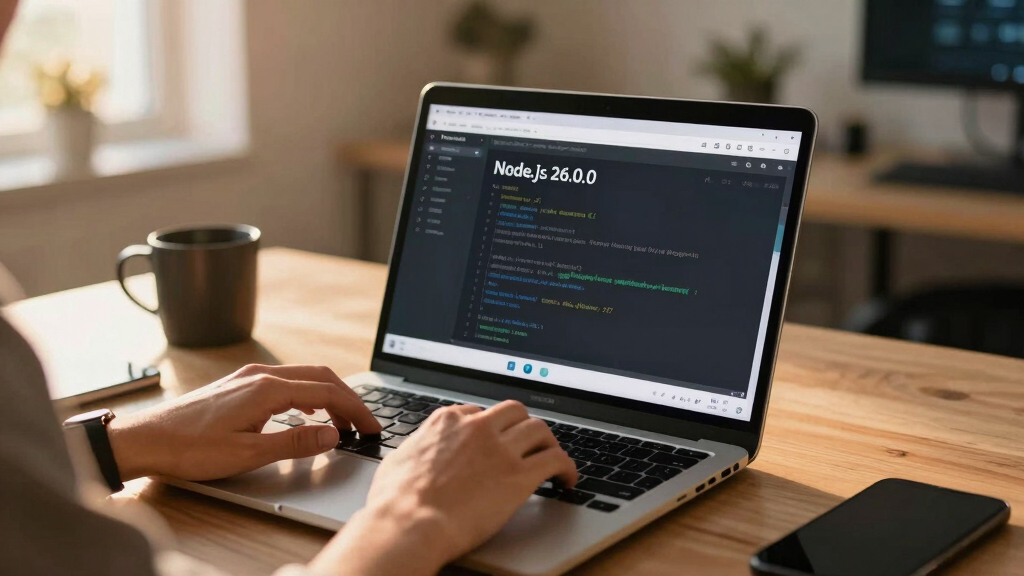
Node.js 26.0.0 development server
As an affiliate, we earn on qualifying purchases.
As an affiliate, we earn on qualifying purchases.
Background
Node.js has progressively integrated modern JavaScript features over recent releases. The inclusion of the Temporal API as an experimental feature was announced earlier, but now it is enabled by default, reflecting community and developer demand for better date/time handling. The V8 engine update aligns Node.js with the latest Chrome JavaScript engine, ensuring compatibility and performance gains. The release also follows a pattern of deprecating legacy modules and APIs to encourage modernization.
Prior to this, Node.js 20 and 24 introduced other significant features, but the default activation of Temporal marks a pivotal shift towards modern JavaScript standards in the platform.
“The Temporal API is now enabled by default in Node.js 26, providing developers with a more reliable way to handle date and time operations.”
— Richard Lau
“The update to V8 14.6 and Undici 8.0.2 ensures Node.js remains at the forefront of JavaScript engine and HTTP client performance.”
— Node.js Release Team
As an affiliate, we earn on qualifying purchases.
What Remains Unclear
It is not yet clear how widely adoption of the Temporal API will be in existing projects or how quickly legacy code will transition away from older date handling methods. Learn more about the Temporal API. Additionally, the full impact of deprecated modules’ removal on legacy applications remains to be seen.
As an affiliate, we earn on qualifying purchases.
What’s Next
Developers are encouraged to evaluate Node.js 26.0.0 in their environments, particularly testing the new Temporal API. The Node.js team will monitor community feedback and plan for the LTS release scheduled for October 2026. Further updates may include additional features, bug fixes, and security patches based on user feedback.
HTTP client libraries for Node.js
As an affiliate, we earn on qualifying purchases.
As an affiliate, we earn on qualifying purchases.
Key Questions
What is the Temporal API in Node.js 26?
The Temporal API is a modern, comprehensive date/time API for JavaScript that offers more reliable and feature-rich handling of date and time operations than the legacy Date object. It is now enabled by default in Node.js 26.
When will Node.js 26 enter long-term support (LTS)?
Node.js 26 will enter LTS in October 2026, making it the recommended version for production use from that date onward.
What are the major engine updates in this release?
The V8 JavaScript engine has been updated to version 14.6.202.33, bringing new features like iterator sequencing and proposals for upsert operations, which can improve performance and language capabilities.
Are there any breaking changes in Node.js 26?
Yes, several legacy modules and APIs have been deprecated or removed, including the removal of certain stream modules and the transition away from older HTTP header writing methods. Developers should review the deprecation notices and update their code accordingly.
Source: Hacker News
Halloween Picks
halloween
As an affiliate, we earn on qualifying purchases.